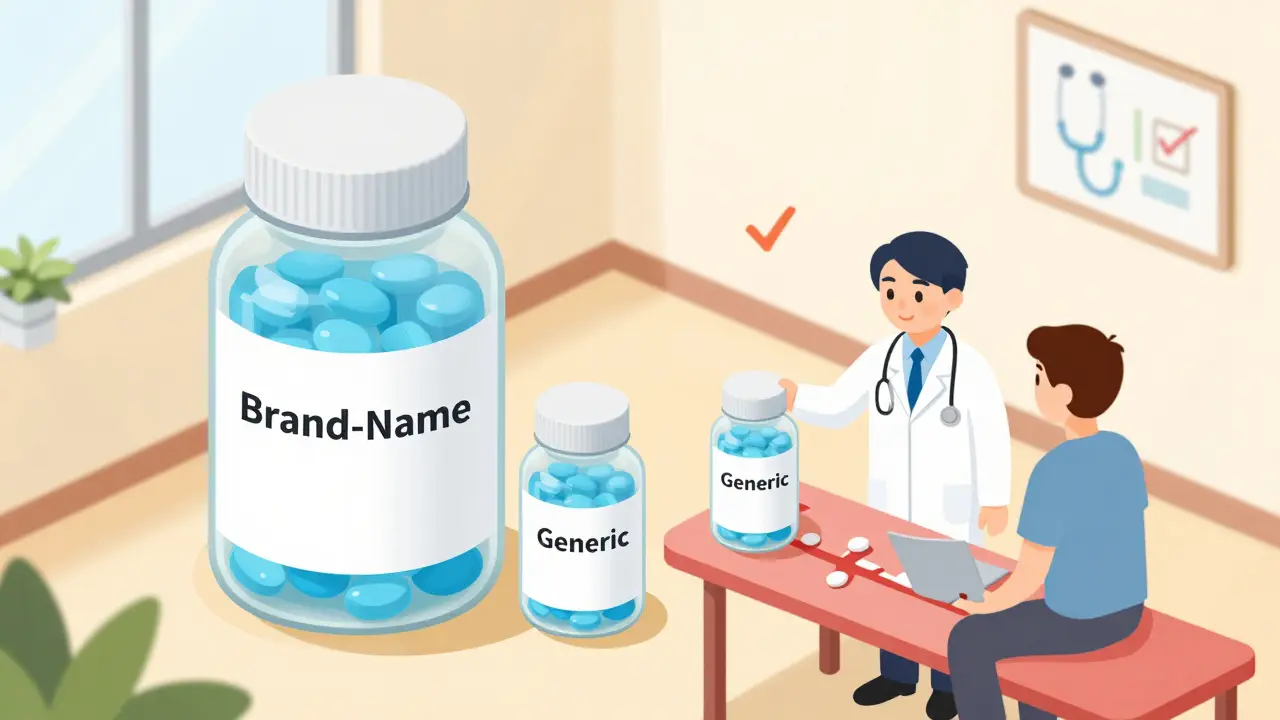
When you pick up a prescription, you might see a small label: generic. It’s cheaper. It’s just as effective. But if you’ve ever been told by your doctor to switch from a brand-name drug to a generic version, you’ve probably heard something like: "It’s the same thing." And yet - you still feel uneasy.
Here’s the truth: the science says generics are identical in active ingredients, strength, and how your body absorbs them. The FDA requires them to match brand-name drugs within a 90% confidence interval for bioequivalence - meaning the amount of medicine entering your bloodstream must be within 80% to 125% of the brand. That’s not a loophole. That’s the standard. And it’s backed by thousands of studies.
Doctors Know Generics Work - So Why Don’t They Always Prescribe Them?
Primary care doctors prescribe generics in nearly 50% of cases. Hospital doctors? Around 31%. Private specialists? As low as 22%. Why the gap?
It’s not because they think generics are weaker. A 2016 study of 151 physicians found no link between a doctor’s belief in generic cost savings and their actual prescribing habits. In fact, the American College of Physicians has been clear since 2016: "Clinicians should prescribe generic medications, if possible, rather than more expensive brand-name medications." They say it improves adherence - and adherence saves lives.
So what’s really going on? It’s psychology. It’s habit. It’s fear - not of the drug, but of the patient’s reaction.
One internist in Texas told me: "I’ve had patients cry when I switched them to generic lisinopril. They said, ‘But my old pill was blue, and this one’s white. It doesn’t feel right.’"
That’s not irrational. It’s human. We associate color, shape, and brand with trust. A red capsule from Pfizer feels more "real" than a white tablet from a nameless manufacturer - even if both contain exactly 10 mg of the same active ingredient.
The Cost Difference Is Staggering - And It Matters
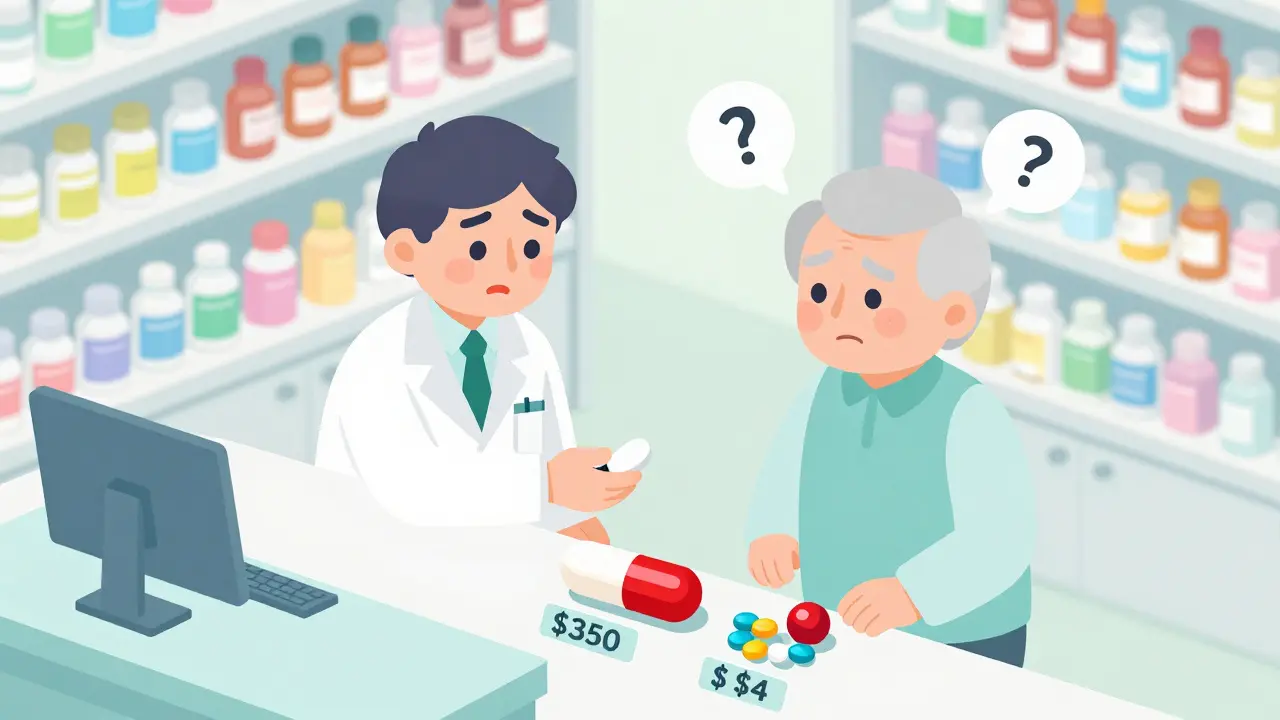
Generics cost 80% to 85% less than brand-name drugs. For a blood pressure medication like losartan, the brand might run $350 a month. The generic? $4 at Walmart.
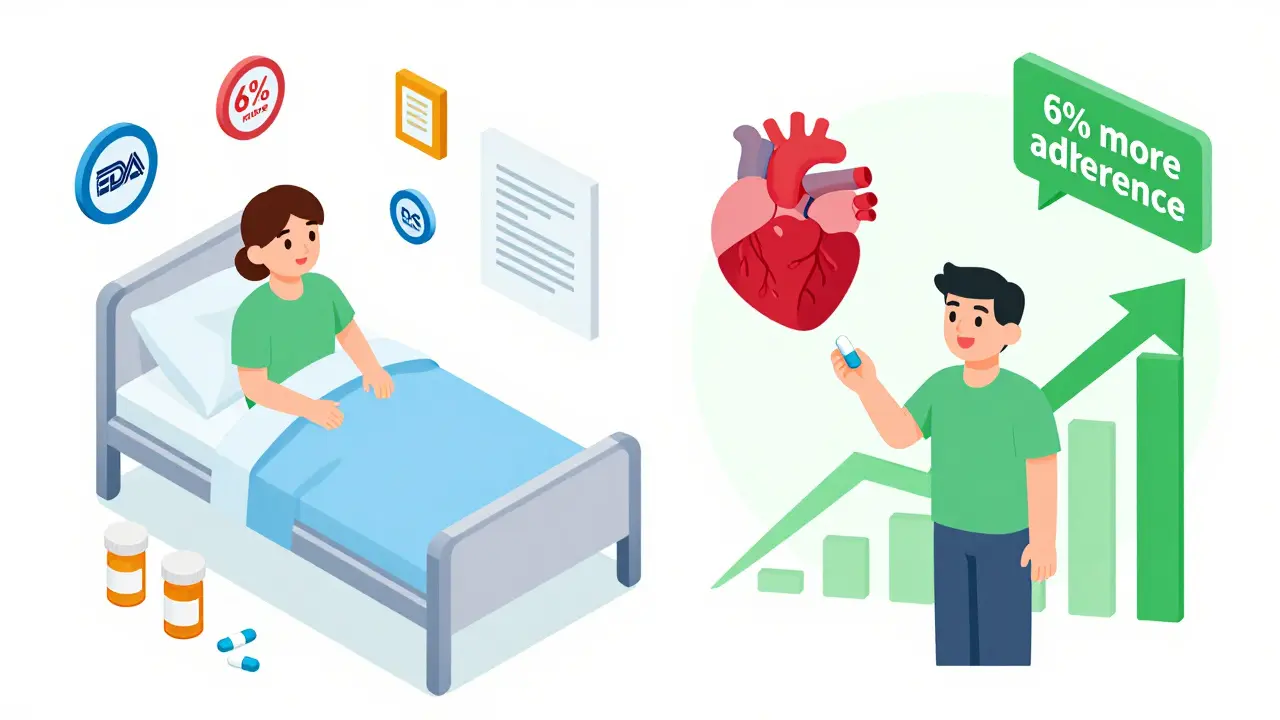
That’s not a minor difference. That’s life-changing for people on fixed incomes. Studies show patients taking generics are 6% more likely to stick with their medication. That translates to 2.2% fewer hospitalizations for chronic conditions like diabetes or heart disease.
The Congressional Budget Office estimates that if doctors prescribed generics for every new prescription - not just the ones filled - Medicare Part D could save $17.3 billion a year. That’s money that could cover insulin for thousands of people who skip doses because they can’t afford it.
And yet - only 72% of new prescriptions are written as generics. The rest? Still brand-name, even when a generic exists.
Why Do Patients Fear Generics? It’s Not About Quality
The FDA inspects generic drug factories just as often as brand-name ones - about 1,000 domestic and 500 foreign inspections a year. The same Good Manufacturing Practices apply. The same quality controls.
But patients still worry. Why?
Because they’ve been conditioned to think brand = better. Advertising. Packaging. The way doctors say, "I prescribe this brand because I know it works." Even when they mean it as reassurance, it plants doubt.
A 2015 FDA study found patients had "mixed perceptions" about generics - not because they were ineffective, but because they looked different. One woman with asthma refused a generic inhaler because the nozzle felt "too stiff." The active ingredient was identical. But the design changed. And that was enough to make her stop using it.
That’s the hidden problem: it’s not about the medicine. It’s about the experience.
The Exceptions Are Real - And Doctors Know Them
There are cases where switching isn’t automatic.
The FDA maintains a list of 15 drugs with a narrow therapeutic index - meaning tiny changes in blood levels can cause serious harm. Drugs like warfarin, levothyroxine, and phenytoin fall into this category. For these, doctors often stick with the brand - not because generics are unsafe, but because the margin for error is razor-thin.
Even then, many patients do fine on generics. A 2020 study in the Journal of the American Pharmacists Association found no increase in adverse events when switching from brand to generic warfarin - as long as patients were monitored closely.
So the real issue isn’t the drug. It’s communication.
What Doctors Should Say - And What They Often Don’t
Most doctors don’t explain the switch. They say: "This is cheaper. We’ll try it."
That’s not enough.
What works better? Saying: "This generic has the same active ingredient as your old pill. The FDA requires it to work the same way. The only difference is the color, shape, and price. I’ve seen hundreds of patients switch successfully. If you feel any change - even small - let me know right away. We can adjust."
That’s not just information. It’s reassurance.
The FDA’s "Look Alike Sound Alike" program has cut patient confusion by 37% since 2018 - not by changing pills, but by training pharmacists to explain the switch before handing over the bottle.
Doctors need to do the same.
Changing the Mindset - One Prescription at a Time
Doctors who complete FDA-sponsored training on generics increase their prescribing rates by 23% within six months. That’s not because they suddenly learned new science. It’s because they learned how to talk about it.
Residency programs are catching up. In 2015, only 29% of internal medicine programs taught generic prescribing. By 2026, that number is up to 68%.
And it’s working. Patients who understand why they’re switching are more likely to stay on the medication. One Medicare survey found users of generics had 12.7% higher adherence than those on brand-name drugs.
It’s not magic. It’s clarity.
What You Can Do - Whether You’re a Patient or a Doctor
If you’re a patient:
- Ask: "Is there a generic version?"
- Ask: "Will it work the same way?"
- Ask: "What should I watch for?"
- Don’t assume the brand is better - assume the generic is equal, unless proven otherwise.
If you’re a doctor:
- Don’t just write "dispense as written" unless necessary.
- Explain the switch before the patient leaves the office.
- Use the word "equivalent," not "cheaper."
- Follow up if the patient reports changes - even if they’re psychological.
There’s no conspiracy. No hidden flaw in generics. Just a gap between science and perception.
Generics aren’t a compromise. They’re the standard - and they’ve saved billions in healthcare costs while keeping millions of people healthy.
The real question isn’t whether they work.
It’s whether we’re willing to trust them enough to use them - for everyone.


