When a blockbuster drug loses its patent, the brand company doesn’t just sit back and watch its profits vanish. Instead, many of them launch something called an authorized generic - a drug that’s identical to the brand-name version, but sold under a generic label at a lower price. At first glance, this seems counterintuitive. Why would a company help kill its own brand? The answer isn’t about altruism. It’s about control.
What Exactly Is an Authorized Generic?
An authorized generic isn’t a copy. It’s the real thing - same active ingredients, same inactive ingredients, same pills, same factory, same packaging (minus the brand logo). It’s made by the original manufacturer and sold under a different name, usually through a subsidiary like Greenstone (Pfizer’s authorized generic arm) or Prasco. The FDA doesn’t require a new approval because it’s covered under the original New Drug Application (NDA). All the company has to do is notify the agency. This is different from a traditional generic. Those are made by other companies, must prove bioequivalence through the Abbreviated New Drug Application (ANDA) process, and can have different fillers, dyes, or coatings. For some drugs - especially those with narrow therapeutic windows like warfarin or levothyroxine - those small differences matter. Patients and doctors notice. Authorized generics don’t have that problem. They’re the exact same product.Why Do Brand Companies Do This?
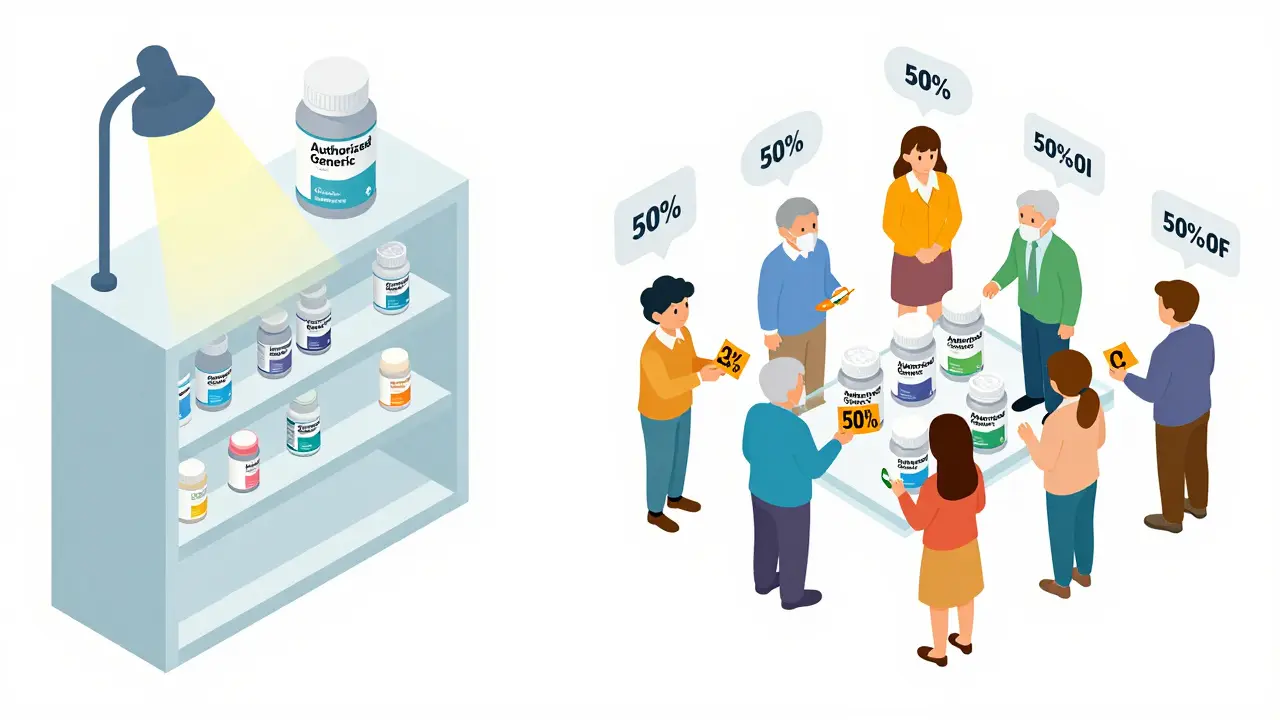
The main reason is simple: they want to keep some of the money. When a patent expires, the brand drug typically loses 80-90% of its revenue within a year. That’s not a decline - it’s a collapse. But if the brand company launches its own authorized generic, it doesn’t lose everything. It splits the market. The brand stays on the shelf for patients who don’t mind paying more. The authorized generic goes to the price-sensitive crowd - Medicare beneficiaries, Medicaid recipients, people with high-deductible plans, and insurers negotiating bulk discounts. This isn’t charity. It’s price discrimination. Same product. Two prices. Two customer segments. Same company collecting both.The Hatch-Waxman Act and the 180-Day Edge
The real chess move comes with the Hatch-Waxman Act. This 1984 law gives the first generic company to challenge a patent a 180-day exclusivity period. During that time, no other generic can enter the market. That’s a golden window - the first generic can charge near-brand prices and rake in massive profits. But here’s where brand companies strike back. If they launch an authorized generic during that 180-day window, they become the first generic. Not the challenger. Not the competitor. They’re the one who gets the exclusivity. The Federal Trade Commission found in 2011 that when brand companies did this, prices dropped faster and stayed lower. The first generic company couldn’t charge premium prices anymore because the brand’s own version was already there, priced the same. That crushed their profit potential. In some cases, it made the whole generic entry unprofitable. It’s not just competition. It’s sabotage - legal, FDA-approved sabotage.Timing Is Everything
From 2010 to 2019, researchers tracked 854 authorized generic launches in the U.S. The pattern was clear: 75% of them came after generic competition had already started. But that’s changing. New data from 2020-2023 shows brand companies are launching authorized generics before any generic hits the market. They’re doing it preemptively. Why? Because they’ve learned that waiting too long lets the first generic build momentum. If you’re the first to offer a generic version - even if you’re the brand - you control the narrative, the shelf space, and the price. Some companies are even bundling authorized generics with exclusive distribution deals. They’ll only sell them through mail-order pharmacies or specific retail chains, keeping them away from the same shelves as their branded product. That way, patients don’t directly compare prices. The brand stays premium. The authorized generic stays cheap. No confusion. No backlash.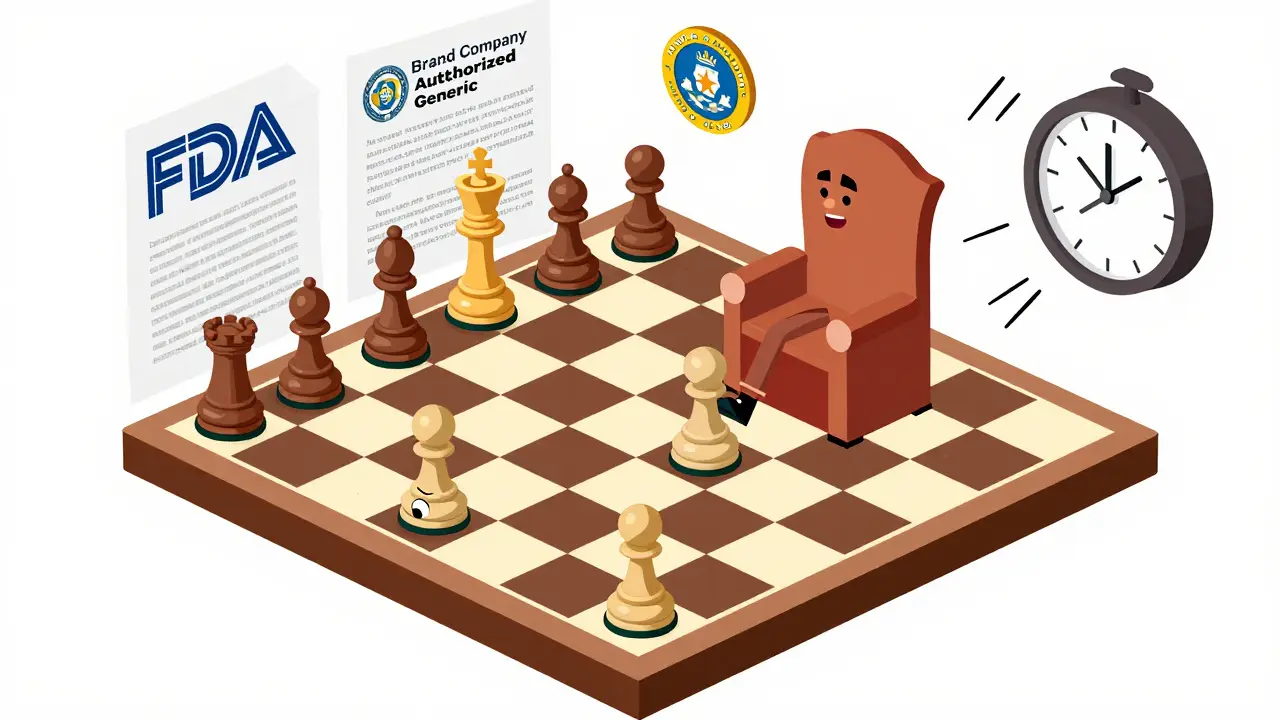
Why Patients Don’t Mind
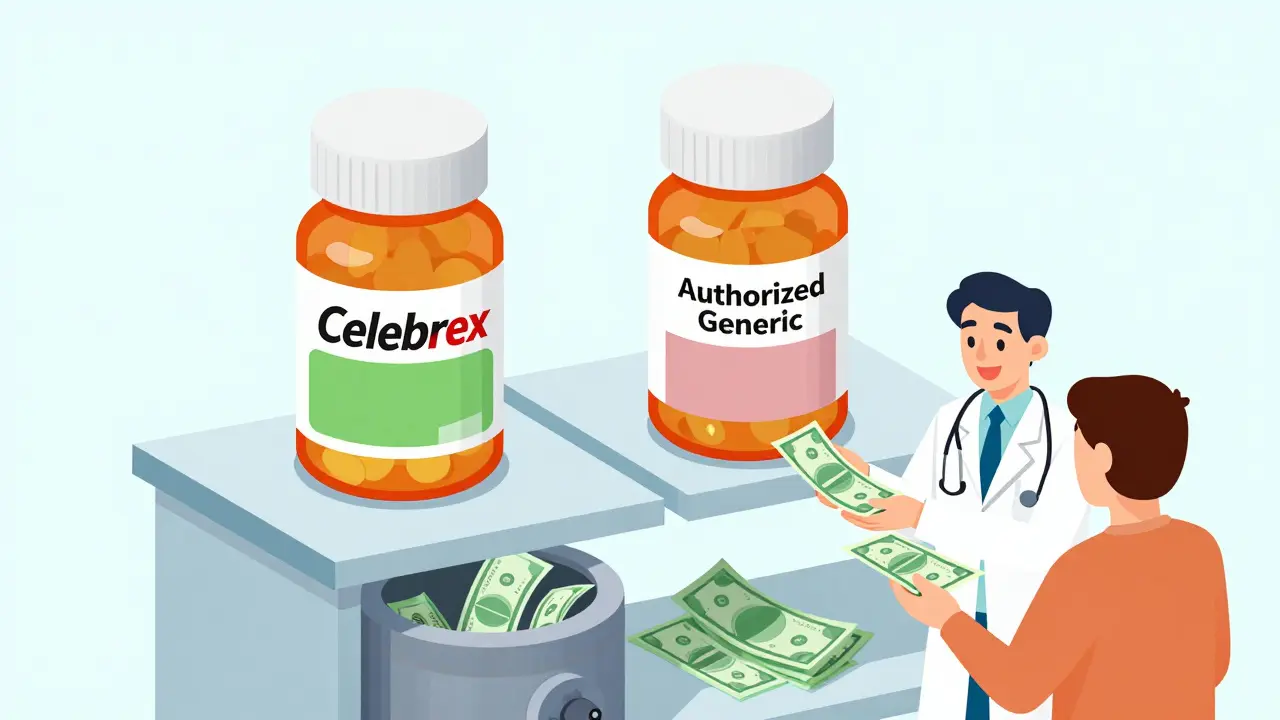
You might think patients would hate this. But they don’t. A 2005 Roper Public Affairs study found over 80% of Americans wanted the option of authorized generics. Why? Because they know it’s the same drug. No guesswork. No risk of side effects from different fillers. No doctor having to re-explain why the pill looks different. For chronic conditions - diabetes, high blood pressure, epilepsy - consistency matters. If your doctor prescribes Celebrex and you get a generic version that doesn’t work the same way, you’re not just frustrated. You’re at risk. With an authorized generic, you get the same drug you’ve always trusted, just cheaper.The Financial Math
Let’s say a drug brings in $1 billion a year in sales. When the patent expires, the brand loses 85% of that - down to $150 million. Without an authorized generic, that $850 million goes entirely to competitors. But if the brand launches an authorized generic and captures 20% of the remaining generic market - which is common - they keep $150-$200 million in revenue. That’s not a small win. That’s a lifeline. And it’s not just about revenue. It’s about assets. The brand company already has the manufacturing lines, the quality control systems, the supply chain. Shutting them down after patent expiry is expensive. Keeping them running with an authorized generic line makes economic sense. Companies like Pfizer and Amneal have built entire divisions around this model. It’s not a side hustle. It’s core business.What’s Next? Authorized Biosimilars
The same logic is now being applied to biologics - complex drugs made from living cells, like Humira or Enbrel. These drugs are expensive, hard to copy, and their patents are starting to expire. The FDA hasn’t officially defined what an “authorized biosimilar” would look like. But brand companies are already testing the waters. Why wait for regulators to catch up? If they can launch a version of their own biologic under a generic label before competitors even get approval, they can dominate the emerging market. It’s the same playbook. Same strategy. Just a more complex molecule.