Side Effect Risk Estimator
Select the factors that apply to you to estimate your susceptibility to drug side effects.
Ready to Analyze
Select options and click calculate to see your estimated risk profile.
Have you ever started a new medication expecting relief, only to be hit with a headache, nausea, or drowsiness? You are not alone. These unintended consequences are known as drug side effects. While the term often conjures images of severe medical emergencies, the reality is far more nuanced. Most side effects are mild, temporary, and manageable. However, understanding what they are, why they happen, and how to handle them is crucial for your health.
We often hear terms like "side effect," "adverse reaction," and "allergic reaction" used interchangeably in casual conversation. But in medicine, these distinctions matter. A side effect isn't necessarily a sign that something has gone wrong; it’s often just the drug doing its job in parts of the body where we don’t want it to. Let’s break down the science behind these reactions, separate fact from fear, and look at real-world examples so you can take control of your medication routine.
The Real Definition: What Is a Side Effect?
To understand side effects, we first need to clear up some confusion. The U.S. Food and Drug Administration (FDA) defines side effects as "unwanted undesirable effects that are possibly related to a drug." However, this definition has evolved. In modern pharmacology, a side effect is simply any effect of a drug other than the one intended.
Here is the key distinction that many patients miss: side effects can be harmful, neutral, or even beneficial. For example, consider finasteride, a drug commonly prescribed to shrink an enlarged prostate. One of its well-known side effects is hair loss. Decades later, doctors discovered that this same mechanism could help men with male pattern baldness grow hair. Suddenly, a "side effect" became the primary reason people took the drug.
It is also important to differentiate between a side effect and an adverse drug reaction (ADR). An ADR is specifically a harmful response to a normal dose of a drug. All ADRs are side effects, but not all side effects are adverse. If a sedative makes you sleepy (the goal) but also causes dry mouth (unintended), the dry mouth is a side effect. If that dry mouth becomes severe enough to stop you from eating, it may cross into the realm of an adverse event.
| Term | Definition | Example |
|---|---|---|
| Side Effect | Any unintended effect, good or bad. | Dry mouth from antihistamines. |
| Adverse Drug Reaction (ADR) | A harmful, unintended effect at normal doses. | Bleeding stomach lining from NSAIDs. |
| Allergic Reaction | An immune system response to the drug. | Hives or swelling after penicillin. |
Why Do Side Effects Happen?
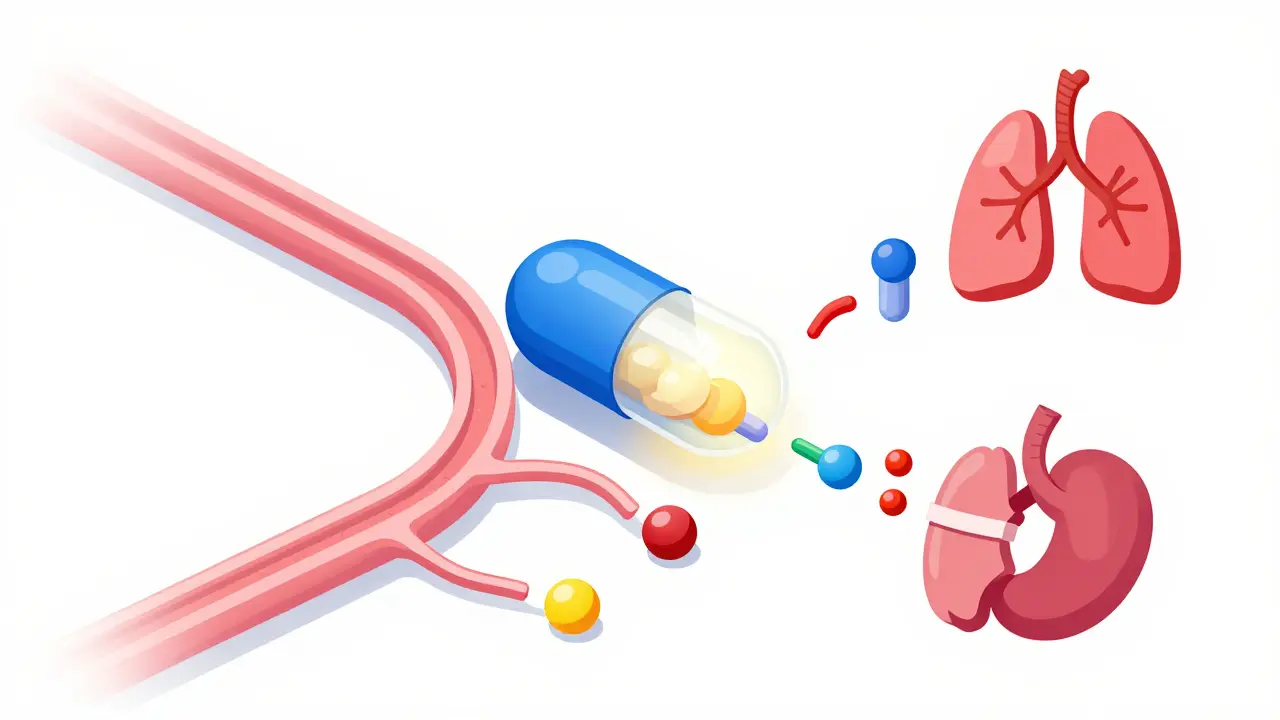
You might wonder why a pill designed to lower blood pressure would also cause fatigue. The answer lies in how drugs interact with our complex biology. Medications rarely target just one specific receptor in the body. They circulate through your bloodstream, interacting with various tissues and organs.
Dr. Jerry Avorn, a professor at Harvard Medical School, famously noted that "many side effects represent therapeutic effects in the wrong tissue." Beta-blockers, for instance, slow down the heart to reduce strain on it. But because similar receptors exist in the lungs, these drugs can sometimes narrow airways, causing breathing difficulties in asthmatics. The drug is working exactly as designed; it’s just working in two places instead of one.
Beyond basic biology, several factors increase your risk of experiencing side effects:
- Age: As we age, our bodies process drugs differently. Patients over 65 experience adverse drug reactions 3 to 5 times more frequently than younger adults, largely due to changes in kidney and liver function.
- Polypharmacy: This is the medical term for taking multiple medications simultaneously. Research shows that using five or more medications increases the risk of side effects by 88%. Each new drug adds potential interactions.
- Genetics: Your DNA plays a huge role. Enzymes in your liver, particularly those in the CYP450 family, break down drugs. Genetic variations mean some people metabolize drugs quickly (reducing effectiveness) while others do so slowly (increasing toxicity).
- Underlying Conditions: Kidney disease, for example, can prevent the body from flushing out medications, leading to higher concentrations in the blood and increased side effects.
How Common Are They Really?
Reading the long list of potential side effects on a medication guide can be terrifying. It’s easy to assume that every single item on that list will happen to you. But that’s not how probability works.
Regulatory agencies like the European Medicines Agency (EMA) categorize side effects by frequency to give you context:
- Very common: Affects 1 or more in 10 people (≥10%).
- Common: Affects 1 to 10 in 100 people (1-10%).
- Uncommon: Affects 1 to 10 in 1,000 people (0.1-1%).
- Rare: Affects 1 to 10 in 10,000 people (0.01-0.1%).
- Very rare: Affects fewer than 1 in 10,000 people (<0.01%).
A 2023 Consumer Reports survey found that 57% of adults believed all listed side effects would definitely happen to them. In reality, most people experience zero or only one minor side effect. The lists are comprehensive to ensure legal transparency and patient awareness, not to predict individual outcomes.
Real-World Examples of Drug Side Effects
Let’s look at concrete examples across different medication classes to see how side effects manifest in daily life.
Non-Steroidal Anti-Inflammatory Drugs (NSAIDs): Drugs like ibuprofen and naproxen are staples in medicine cabinets. They work by blocking enzymes that cause pain and inflammation. However, these same enzymes protect the stomach lining. Consequently, about 15-30% of regular users develop gastritis or stomach irritation. Taking these meds with food can mitigate this risk.
Antibiotics: When you take antibiotics to kill bacteria causing an infection, they don’t distinguish between "bad" bacteria and the "good" bacteria in your gut. This imbalance leads to antibiotic-associated diarrhea, affecting 5-30% of patients depending on the specific antibiotic. Probiotics taken a few hours apart from the antibiotic can help restore balance.
Cancer Treatments: Chemotherapy targets rapidly dividing cells. Cancer cells divide fast, but so do cells in your hair follicles and digestive tract. This is why hair loss and nausea are common. Up to 90% of patients experience chemotherapy-induced nausea and vomiting, though modern anti-nausea medications have made this much more manageable.
Diabetes Medications (SGLT2 Inhibitors): These drugs help remove excess sugar through urine. A rare but serious side effect identified in clinical trials was an increased risk of lower limb amputations. Because of this, the FDA issued a boxed warning-the strongest safety alert-for certain drugs in this class.
Type A vs. Type B Reactions
Pharmacologists classify side effects into two main categories based on predictability. Understanding this helps you know whether a side effect is likely to go away if you adjust the dose.
Type A Reactions (Augmented): These account for 85-90% of all adverse drug reactions. They are predictable, dose-dependent, and related to the drug’s primary mechanism. For example, if you take too much insulin, your blood sugar drops too low (hypoglycemia). This is a Type A reaction. Usually, lowering the dose resolves the issue.
Type B Reactions (Bizarre): These are unpredictable, idiosyncratic, and not dose-dependent. They often involve allergic responses or unique genetic interactions. For instance, a small percentage of people might develop a severe skin rash from a medication that thousands of others take without issue. These cannot be predicted by adjusting the dose and usually require stopping the drug entirely.

Managing Risks and When to Seek Help
You don’t have to guess when a symptom is a side effect versus a coincidence. Here is a practical approach to managing medication risks.
1. Read the Patient Package Insert (PPI) The FDA requires manufacturers to provide plain-language guides for high-risk medications. Unlike the dense technical label, PPIs highlight the most common and serious side effects in understandable language. Studies show that patients who read PPIs are significantly better equipped to recognize early warning signs.
2. Monitor for Red Flags While dry mouth or mild dizziness might be annoying, certain symptoms require immediate attention. Seek medical help if you experience:
- Difficulty breathing or swallowing (signs of anaphylaxis).
- Severe, persistent vomiting or diarrhea.
- Yellowing of the skin or eyes (jaundice, indicating liver stress).
- Unexplained bruising or bleeding.
- Sudden, severe headaches or vision changes.
3. Don’t Stop Abruptly It is tempting to quit a medication the moment you feel a side effect. However, suddenly stopping certain drugs-like beta-blockers, antidepressants, or steroids-can cause dangerous withdrawal symptoms or rebound effects. Always consult your provider before discontinuing therapy.
4. Leverage Technology The FDA’s MedWatcher app allows users to report side effects directly to the agency. Additionally, apps that track your medications can alert you to potential interactions. With polypharmacy being a major risk factor, having a digital record of everything you take is a smart safety net.
The Role of Reporting and Safety Systems
Your voice matters in drug safety. The FDA’s Adverse Event Reporting System (FAERS) relies heavily on reports from patients and healthcare providers. Currently, only about 10-15% of serious adverse events are reported. This underreporting creates blind spots.
When enough people report the same issue, regulators can identify "signals." For example, widespread reports of tendon ruptures led to updated warnings for fluoroquinolone antibiotics. By reporting your experiences, you contribute to a global database that helps protect future patients. The WHO’s Programme for International Drug Monitoring processes millions of reports annually, helping to update safety guidelines worldwide.
Remember, the goal of medicine is always a risk-benefit analysis. No drug is perfectly safe, but no untreated condition is either. By understanding side effects, you empower yourself to make informed decisions alongside your healthcare provider, ensuring that the benefits of your treatment continue to outweigh the risks.
Are side effects permanent?
Most side effects are temporary and resolve once the drug leaves your system or your body adjusts to it. However, some medications can cause long-term damage, such as nerve damage from certain chemotherapy drugs or hearing loss from aminoglycoside antibiotics. This is why monitoring and regular check-ups are essential.
Can natural supplements have side effects?
Yes. Just because a product is "natural" doesn't mean it's harmless. Supplements can interact with prescription drugs, cause allergic reactions, or have their own side effects. For example, St. John's Wort can reduce the effectiveness of birth control pills and antidepressants.
What is the difference between a side effect and an allergy?
A side effect is a predictable pharmacological action, like drowsiness from an antihistamine. An allergy is an immune system response, characterized by symptoms like hives, swelling, wheezing, or anaphylaxis. Allergies are unpredictable and can occur even with tiny doses.
Why do older adults get more side effects?
As we age, our kidneys and liver become less efficient at filtering and breaking down drugs. This leads to higher concentrations of the medication in the blood for longer periods. Additionally, older adults often take multiple medications (polypharmacy), increasing the chance of interactions.
Should I report mild side effects to the FDA?
While the FDA prioritizes serious and unexpected events, reporting mild side effects helps build a complete picture of a drug's safety profile. Over time, patterns emerge that might reveal risks not seen in initial clinical trials. You can use the FDA's MedWatch form or mobile app to submit reports.


