Vitamin K Consistency Calculator
Select your daily foods and portions to calculate your vitamin K intake. Consistency is key for safe warfarin therapy.
Your Vitamin K Consistency Analysis
How to Use This Calculator
Enter your typical servings of vitamin K-rich foods to calculate your daily intake. The goal is to keep your intake consistent between days. If your intake differs by more than 20% from your usual amount, your INR may be affected.
Important: Only use this tool to track your routine. If you've recently changed your diet or have unusual symptoms, contact your anticoagulation clinic immediately.
When you're on warfarin, your diet isn't about eating healthy or avoiding certain foods-it's about keeping things consistent. One day you eat a big plate of spinach, the next day you skip it entirely, and suddenly your blood doesn't clot the way it should. That’s not a myth. It’s science. And it’s why millions of people on warfarin are told the same thing by their doctors: don’t change how much vitamin K you eat. Just keep it the same.
Why Vitamin K Matters with Warfarin
Warfarin works by blocking vitamin K from helping your blood clot. That’s the whole point-it keeps clots from forming in your heart, legs, or lungs. But vitamin K doesn’t just disappear when you take the pill. It’s still in your body, still active, still competing with warfarin. When you eat a lot of vitamin K, your body has more of it to work with, which makes warfarin less effective. Eat less, and warfarin works too well-your blood becomes too thin.The result? Your INR number jumps or drops. INR stands for International Normalized Ratio. It’s the test that tells your doctor how long your blood takes to clot. For most people on warfarin, the goal is between 2.0 and 3.0. Go below 2.0, and you’re at risk for a clot. Go above 3.0, and you’re at risk for bleeding. A change of just 100 micrograms of vitamin K in a day can shift your INR by 0.5 to 1.0. That’s enough to push you out of the safe zone.
What Foods Are High in Vitamin K?
Vitamin K1, the kind that affects warfarin, comes mostly from plants. The highest sources are dark leafy greens. Here’s what you’re really dealing with:- Cooked kale: 1,062 mcg per cup
- Cooked spinach: 889 mcg per cup
- Raw Swiss chard: 299 mcg per cup
- Cooked Brussels sprouts: 156 mcg per cup
- Raw broccoli: 85 mcg per cup
- Asparagus: 70 mcg per cup
- Green tea: 41-88 mcg per serving
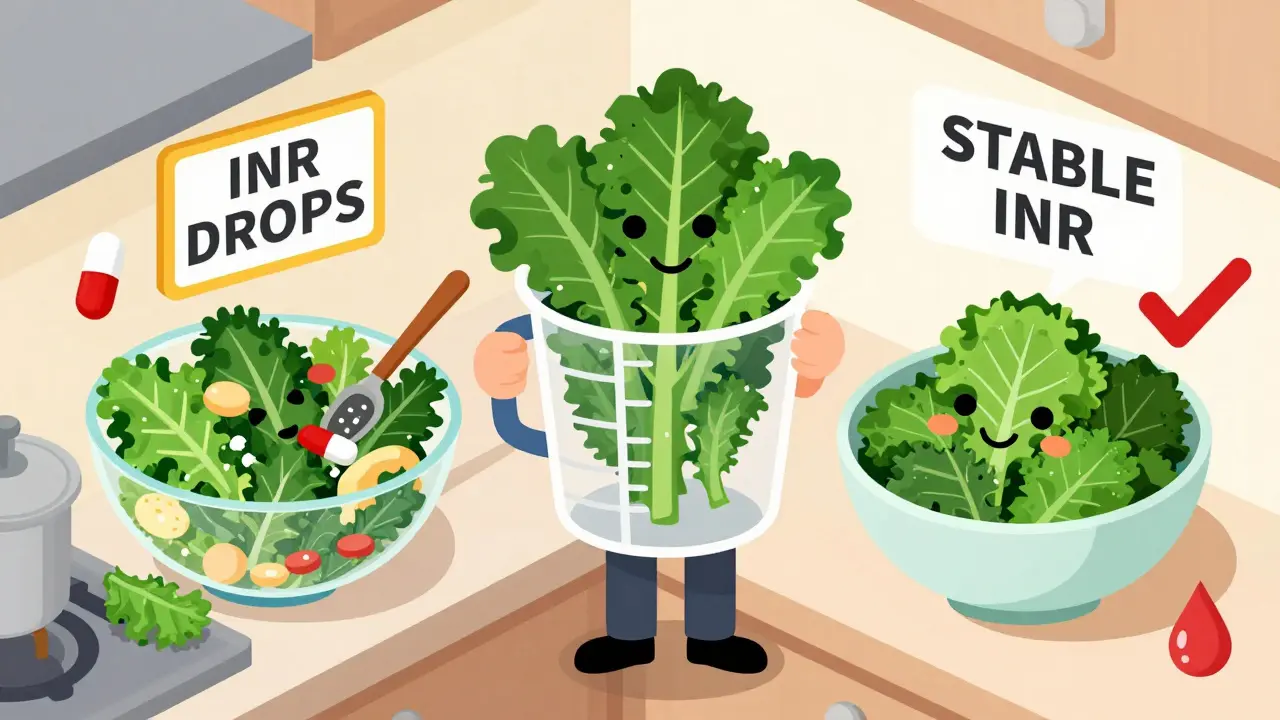
These aren’t “bad” foods. They’re nutritious. But if you suddenly start eating kale every day when you used to eat none, your INR will drop fast. A Reddit user shared how their INR fell from 2.8 to 1.9 after three days of kale salads during a cleanse. Their warfarin dose had to be raised by 15%.
It’s not just greens. Fermented foods like natto (a Japanese soy dish) are packed with vitamin K2, which also affects warfarin. Some cheeses, egg yolks, and chicken liver contain it too. But the biggest issue for most people? Leafy greens. They’re the main reason INR levels go off track.
Consistency Over Restriction
You don’t need to stop eating spinach. You don’t need to avoid broccoli. You don’t need to become a bland-food-only person. What you need is routine.Studies show that people who keep their daily vitamin K intake within 20% of their normal amount stay in the therapeutic INR range 78% of the time. Those who swing wildly? Only 42%.
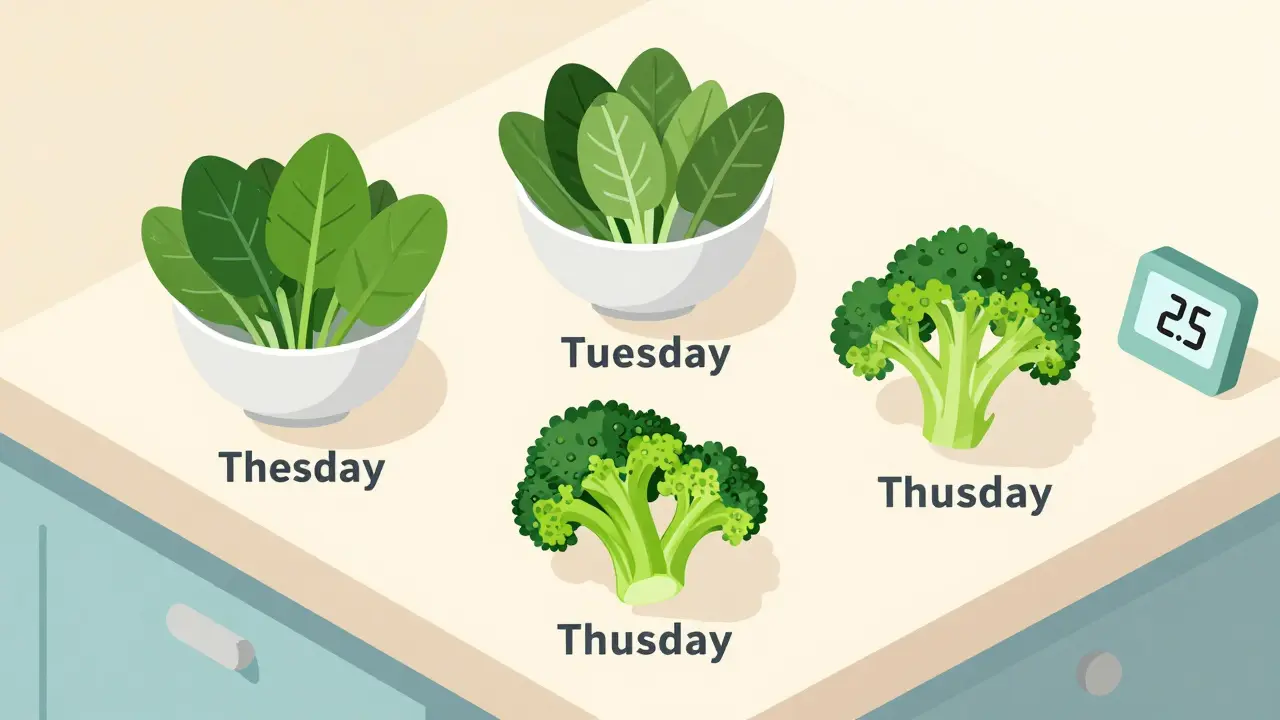
One patient in the Stop the Clot registry kept their INR stable for eight years by eating exactly two cups of cooked spinach every Tuesday and Thursday. No more. No less. That’s it. No fancy diet. No deprivation. Just consistency.
The American Heart Association, the Anticoagulation Forum, and the Mayo Clinic all agree: it’s not about how much vitamin K you eat-it’s about how consistently you eat it. If you normally have a small salad with dinner three times a week, keep doing that. If you never eat greens, don’t suddenly start. If you’re thinking about switching to a vegan diet or doing a juice cleanse? Talk to your doctor first.
What About Restaurant Meals and Seasonal Changes?
This is where things get messy. Restaurant salads? You have no idea how much spinach or kale is in them. A “side salad” at one place might be 20 grams of lettuce. At another, it’s a whole bunch of raw kale. That’s a 500-mcg difference-enough to throw off your INR.Seasonal changes are another trap. In spring and summer, fresh greens are everywhere. In winter, they’re scarce. Many people report their INR drifting in March and April because they start eating more salads. Others see spikes in winter when they switch to canned or frozen vegetables, which often have less vitamin K than fresh.
One solution? Measure. Use a measuring cup for leafy greens. Don’t guess. If you normally eat one cup of cooked spinach, stick to one cup. If you eat half a cup, keep it at half. Write it down. Keep a simple food diary. Note the greens you eat, the portion size, and the day. You don’t need to track every meal-just the big vitamin K sources.
What About Supplements and Multivitamins?
If you take a daily multivitamin, check the label. Many contain vitamin K-usually around 20-80 mcg. That’s fine, as long as you take the same one every day. Switching brands or skipping days can cause the same problem as skipping spinach.Some people take vitamin K supplements thinking they’ll help with bone health. That’s risky. Even 100 mcg of extra vitamin K a day can interfere with warfarin. Talk to your doctor before taking anything with vitamin K.
Same goes for herbal supplements. Ginkgo biloba, garlic, ginger, green tea extract, and even cranberry juice can interact with warfarin. Some make it stronger. Others make it weaker. Don’t assume they’re “safe” because they’re natural.
What Happens If You Eat Too Much Vitamin K?
If you eat a huge amount-say, a whole raw kale salad for lunch and dinner-your INR can drop fast. That doesn’t mean you need to panic. But you should call your anticoagulation clinic. They might adjust your warfarin dose the next day. A 10-20% increase in your dose can often bring things back in line.On the flip side, if you suddenly eat almost no vitamin K for a few days, your INR can climb. That’s when you’re at risk for bleeding. You might notice easy bruising, nosebleeds, or blood in your urine or stool. If your INR goes above 10-even without bleeding-you may need oral vitamin K to bring it down quickly. This isn’t something to wait on.

How Often Should You Get Tested?
When you’re first starting warfarin, you’ll get INR tests every few days. Once you’re stable, it’s usually every 2-4 weeks. But if you change your diet, start a new medication, get sick, or travel, you’ll need more frequent testing.Doctors recommend testing within 3-5 days after a major dietary change. If you ate a ton of greens one week, get tested the next. Don’t wait until your next scheduled visit.
There’s even new research showing that when doctors include your vitamin K intake in their dosing algorithms-along with your age, weight, and genetics-patients spend 12.7% more time in the safe INR range. That’s not just helpful. It’s life-changing.
Real Tips That Work
Here’s what actually helps people stay stable:- Choose 1-2 vitamin K foods you like and eat them the same amount, every week.
- Use measuring cups for greens. A cup of cooked spinach is 889 mcg. Don’t wing it.
- Take your multivitamin every day, same time, same brand.
- Ask for plain salads at restaurants. Add dressing on the side so you can control the amount.
- See a registered dietitian who specializes in anticoagulation. Patients who do this are 20% more likely to stay in range.
- Don’t start a new diet without talking to your doctor first.
One woman in Bristol, who’s been on warfarin for 12 years, eats one cup of cooked broccoli every Monday and Wednesday. She never changes it. She doesn’t even think about it anymore. That’s the goal-not perfection. Just routine.
What If You’re Confused?
You’re not alone. Many people feel overwhelmed. The good news? You don’t need to memorize a list of vitamin K values. You just need to keep your intake steady. If you’re unsure, ask your pharmacist or anticoagulation clinic. They’ve seen it all.And remember: vitamin K isn’t the enemy. Warfarin isn’t the enemy. Inconsistency is the enemy. Your body likes routine. Your blood likes routine. Stick to it, and you’ll stay safe.
Can I eat spinach if I’m on warfarin?
Yes, you can eat spinach-but only if you eat about the same amount every week. If you normally have one cup of cooked spinach twice a week, keep doing that. If you’ve never eaten it before, don’t start suddenly. Consistency matters more than avoidance.
What happens if I skip my warfarin dose because I ate a lot of greens?
Never skip your warfarin dose on your own. Eating a lot of vitamin K doesn’t mean you should skip your pill. Instead, call your anticoagulation clinic. They may increase your next dose to balance it out. Skipping your dose can lead to dangerous clots.
Do frozen vegetables have less vitamin K than fresh ones?
Frozen vegetables often have slightly less vitamin K than fresh, because the blanching process before freezing breaks down some of it. But the difference isn’t huge. If you switch from fresh to frozen, don’t expect your INR to drop dramatically-but do track it. Consistency still matters: if you switch to frozen, stick with it.
Is it safe to drink green tea while on warfarin?
Yes, but keep it consistent. One to two cups a day is fine if that’s your normal amount. If you suddenly start drinking five cups daily, your INR may drop. Green tea contains vitamin K and also compounds that can affect how your body processes warfarin. Stick to your usual habit.
Should I take a vitamin K supplement to help my warfarin work better?
No. Taking extra vitamin K can make warfarin less effective and increase your risk of clots. Even small doses (like 50-100 mcg) can interfere. Only take supplements if your doctor prescribes them for a specific reason.
How long does it take for dietary changes to affect my INR?
It can take 2-5 days for a big change in vitamin K intake to show up in your INR. That’s why doctors recommend testing 3-5 days after a major dietary change. Don’t wait until your next scheduled test.
Can I eat kale if I’m on warfarin?
Yes, but only if you eat the same amount every time. Kale has over 1,000 mcg of vitamin K per cup. If you eat one cup on Monday and three cups on Wednesday, your INR will swing dangerously. Pick a fixed amount and stick to it-like one cup twice a week.
If you’ve been on warfarin for a while, you’ve probably learned that this isn’t about dieting. It’s about rhythm. Your body finds balance in repetition. Eat the same foods, in the same amounts, at the same times. That’s how you stay out of the hospital. That’s how you live well with warfarin.


