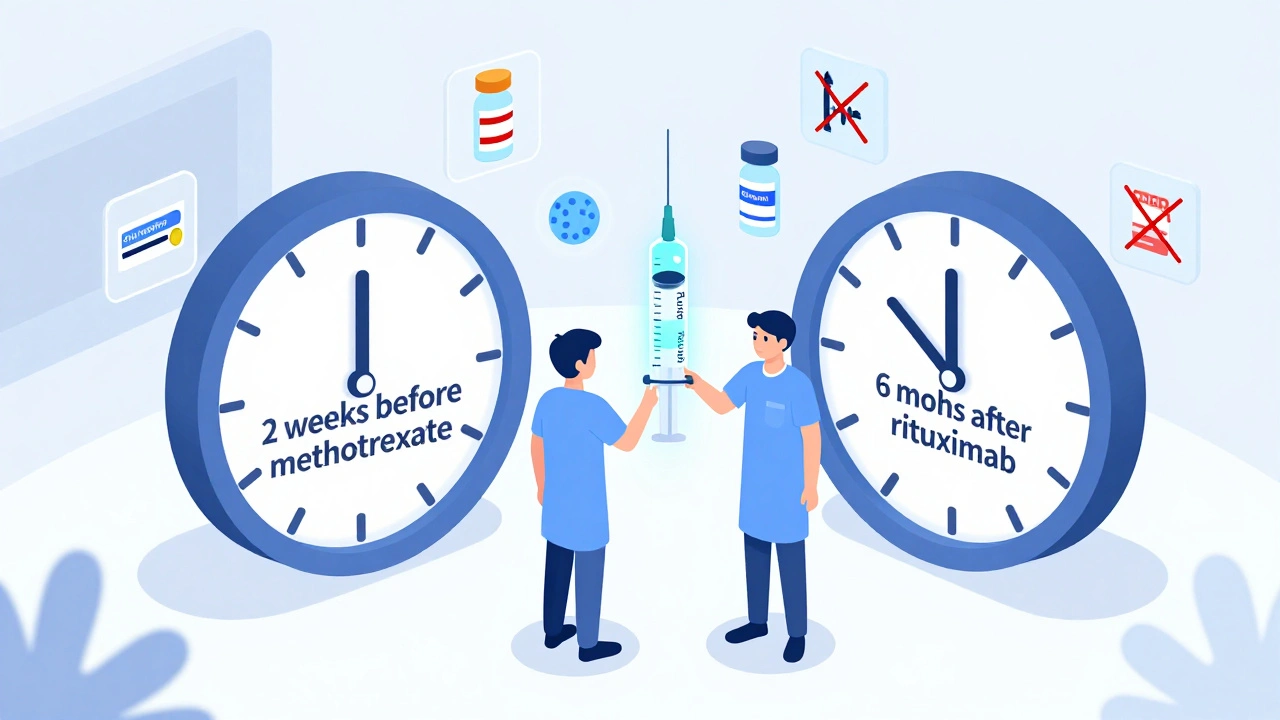
Getting vaccinated while on immunosuppressants isn’t just about when you schedule the shot-it’s about whether it works at all. If you’re taking drugs like rituximab, methotrexate, or azathioprine for autoimmune disease, cancer, or after an organ transplant, your immune system is already working at half-speed. A vaccine given at the wrong time might as well be a placebo. The difference between a strong immune response and no protection at all often comes down to timing.
Why Timing Matters More Than You Think
Most people assume vaccines work the same way for everyone. But for those on immunosuppressants, the body’s ability to build immunity is severely limited. Studies show that up to 60% of patients on B-cell depleting therapies like rituximab don’t develop protective antibodies after standard COVID-19 or flu shots if vaccinated too soon after treatment. That’s not a small risk-it’s life-threatening during flu season or a pandemic. The goal isn’t just to get the shot. It’s to get it when your immune system still has enough strength to respond. That means planning ahead, not reacting. The CDC recommends vaccinating at least 14 days before starting immunosuppressive therapy. But that’s the bare minimum. Many specialists now say 2 to 4 weeks is safer, especially for mRNA vaccines like Pfizer and Moderna.How Different Drugs Change the Game
Not all immunosuppressants are created equal. Some shut down your immune system for months. Others only slow it down temporarily. Your timing plan depends entirely on what you’re taking.- Rituximab (and other B-cell depleters): These drugs wipe out your antibody-producing cells. The American College of Rheumatology says wait at least 6 months after your last dose before getting any non-flu vaccine. Even then, you need a blood test to check if your B-cells have come back (above 50 cells/μL). Many patients get shingles or pneumonia during this waiting period because they can’t be protected.
- Methotrexate: This common rheumatoid arthritis drug reduces vaccine response by nearly 30%. But here’s the good news: holding it for two weeks after your flu shot can boost antibody levels significantly. No need to stop it for other vaccines unless your doctor advises it.
- TNF inhibitors (like Humira or Enbrel): Pause for one dose before vaccination, then wait four weeks after to restart. This simple window improves response rates without risking a disease flare.
- IVIG (intravenous immunoglobulin): This isn’t an immunosuppressant, but it acts like one. If you’ve had a high dose (1 gram per kg or more), you need to wait up to 11 months before getting a live vaccine like MMR or shingles. After the shot, hold off on more IVIG for four weeks.
- Cyclophosphamide: If you’re on IV cycles, stop for one cycle before vaccination and wait four weeks after. Oral versions need a 4-week hold before and after live vaccines.
Conflicting Guidelines-What Do You Do?
You might get different advice from your rheumatologist, oncologist, and primary care doctor. That’s because guidelines aren’t all the same. The CDC says 14 days before starting any immunosuppressant. The American Society of Hematology says 2 to 4 weeks. The European League Against Rheumatism says 7 to 10 days is enough for biologics. The IDSA 2025 draft guidelines say 3 to 6 months after rituximab-no exceptions. This isn’t confusion-it’s reality. Each group is looking at different patient populations. Rheumatologists focus on autoimmune disease. Oncologists treat cancer. Hematologists manage blood disorders. Their priorities differ. What’s safe for one might be too risky for another. The bottom line: Don’t guess. Ask your specialist to check the latest guidelines for your specific drug and condition. If they don’t know, ask them to look up the ACR 2022 or IDSA 2025 guidelines. You’re not being difficult-you’re being smart.
Live vs. Inactivated Vaccines: A Critical Difference
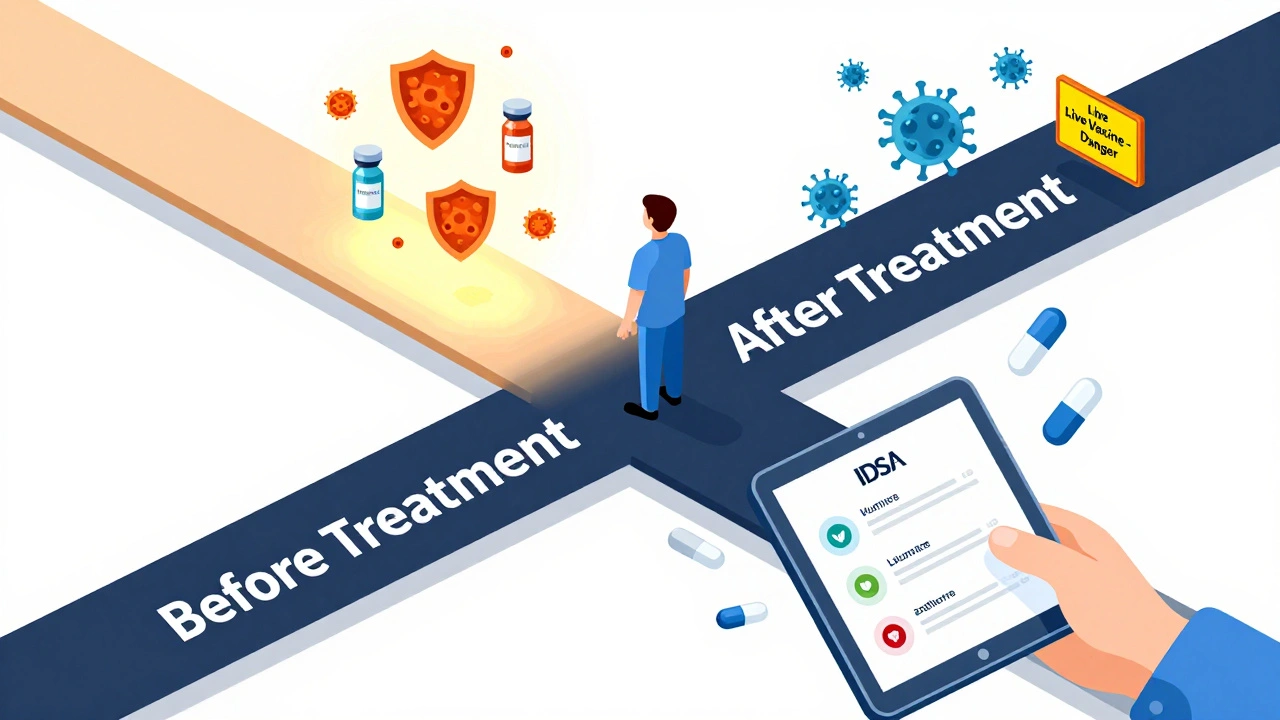
Not all vaccines are the same. Live vaccines-like MMR, varicella (chickenpox), and the nasal flu spray-contain weakened versions of the virus. For someone with a healthy immune system, that’s fine. For someone on immunosuppressants, it can be dangerous. Never get a live vaccine while on immunosuppressants. Even if you’re not currently on treatment, if you’ve had B-cell depletion in the past 6 months, it’s still too risky. Instead, opt for inactivated vaccines: the flu shot (not the spray), Shingrix (for shingles), pneumococcal shots, and COVID-19 mRNA vaccines. Shingrix is especially important. People on immunosuppressants are 3 to 5 times more likely to get shingles. And once you get it, the pain can last for years. But Shingrix works best if given before treatment starts. If you’ve already started, ask your doctor if you’re eligible for a delayed schedule.Real Problems Real People Face
In a 2023 survey at Massachusetts General Hospital, 42% of patients on rituximab missed their window for the shingles vaccine because they had to wait six months. Of those, 18% got shingles anyway. One patient wrote on a forum: “I waited six months. Got the shot. Two weeks later, I got shingles. My doctor said it was ‘unavoidable.’ But I don’t feel like it was.” On the flip side, patients who timed their flu shots right-three weeks before chemo-report going years without infection. One cancer survivor said: “I haven’t had the flu in three years, even though my white blood cell count is always low. Timing saved me.” The difference? Planning. Coordination. Knowing exactly when to pause meds and when to get the shot.What You Can Do Right Now
You don’t need to wait for your next appointment to take action. Here’s what to do today:- Make a list of every medication you take, including doses and how often.
- Check your last vaccine dates-especially flu, pneumonia, and shingles.
- Call your specialist’s office and ask: “When is the safest time for me to get my next vaccine based on my current meds?”
- If you’re due for a vaccine soon, ask if you can delay your next dose of immunosuppressant by one cycle.
- Ask if you need a blood test to check your B-cell count before getting vaccinated.
The Future: Personalized Timing Is Coming
The days of fixed waiting periods might be numbered. New research from the NIH-funded VAXIMMUNE study is testing whether measuring immune markers-like B-cell counts or T-cell activity-is better than waiting six months after rituximab. Early results suggest some patients recover faster than others. Why force everyone to wait the same amount of time? Epic Health Records is already building a tool that will automatically warn doctors when a patient’s meds conflict with vaccine timing. It’s set to launch in 2025. Until then, you’re your own best advocate.What to Ask Your Doctor
If your doctor says “just get the shot,” push back. Ask these questions:- Which of my medications will affect this vaccine?
- Do I need to pause any of them? For how long?
- Should I get a blood test before the vaccine?
- Is this a live or inactivated vaccine?
- What happens if I get the vaccine too soon after my last dose?
Can I get vaccinated while taking methotrexate?
Yes, but timing matters. For the flu shot, holding methotrexate for two weeks after vaccination can increase antibody response by up to 27%, according to clinical trials. For other vaccines like COVID-19 or pneumococcal, you usually don’t need to stop methotrexate. Always check with your rheumatologist-your disease activity matters too.
How long after rituximab should I wait to get a vaccine?
For non-flu vaccines like shingles or COVID-19, wait at least 6 months after your last rituximab dose. For the flu shot, some guidelines allow vaccination as early as 4 months if community transmission is high. But the safest approach is to wait 6 months and confirm your B-cell count is above 50 cells/μL. Never rush this-your body needs time to rebuild its ability to respond.
Is it safe to get a live vaccine like MMR if I’m on immunosuppressants?
No. Live vaccines are not safe for anyone on immunosuppressants, even if you feel fine. These vaccines contain weakened viruses that can replicate and cause illness in people with weakened immune systems. Always choose inactivated versions-like Shingrix instead of Zostavax, or the flu shot instead of the nasal spray.
What if I need a vaccine but I’m about to start immunosuppressant therapy?
Get vaccinated at least 14 days before starting, but aim for 2 to 4 weeks if possible. This gives your immune system time to respond before the drugs start suppressing it. If you’re already on treatment, talk to your doctor about whether you can pause your medication briefly to get the shot safely.
Can I get the COVID-19 vaccine if I’m on IVIG?
Yes, but timing matters. If you received a high dose of IVIG (1 gram per kg or more), you should wait at least 3 months after your last infusion before getting the vaccine. After vaccination, avoid another IVIG dose for 4 weeks. This ensures your body can respond to the vaccine without interference from the antibodies you just received.


