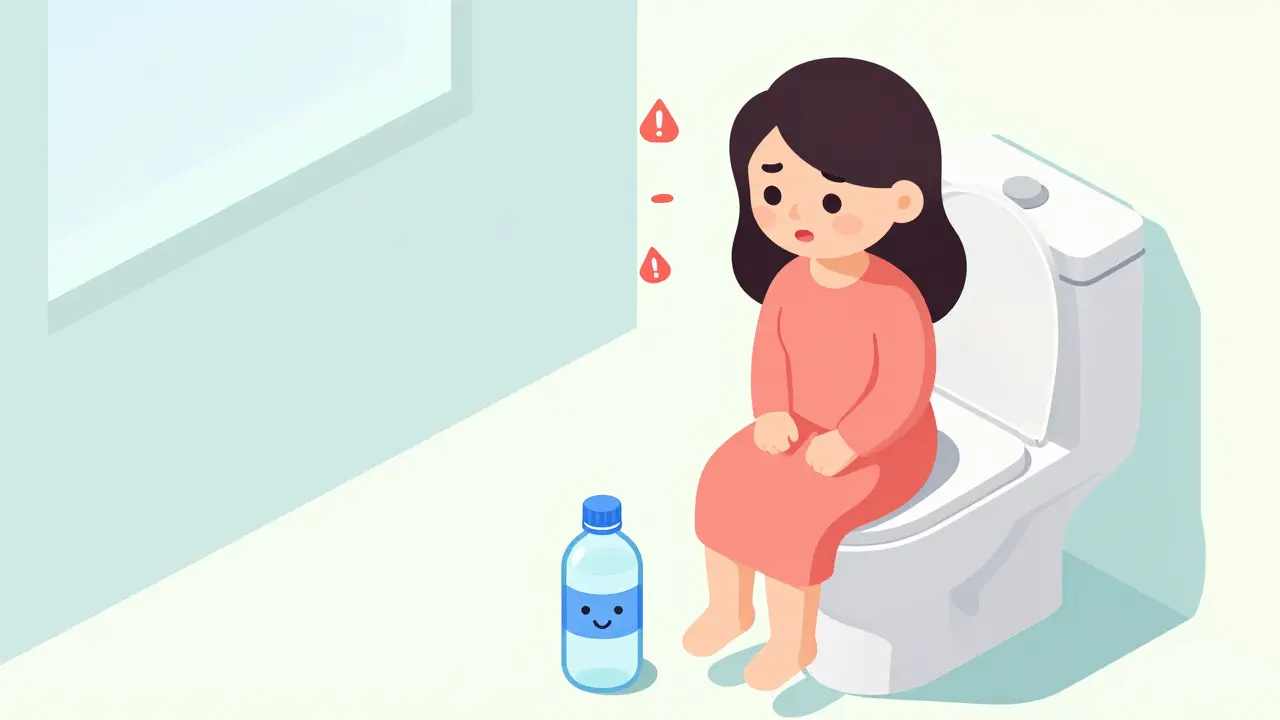
That burning sensation when you pee. The sudden, urgent need to run to the bathroom every twenty minutes. The dull ache in your lower back that won’t quit. If you’ve dealt with a urinary tract infection (UTI), which is a bacterial infection affecting any part of the urinary system, including the kidneys, ureters, bladder, and urethra, you know it’s not just annoying-it’s miserable. You are far from alone. Approximately 150 million cases are diagnosed globally each year, according to the World Health Organization. For women, especially, this is a common reality, with incidence rates roughly thirty times higher than in men due to anatomical differences like a shorter urethra.
Getting the right treatment quickly isn’t just about comfort; it’s about safety. Left unchecked, these infections can travel up to the kidneys or even enter the bloodstream, leading to serious conditions like sepsis. But here is the good news: most uncomplicated UTIs are straightforward to treat with the right antibiotic, and there are proven ways to stop them from coming back. Let’s break down what causes them, how they are treated today, and what you can do to keep them away.
Why Do UTIs Happen? Understanding the Causes
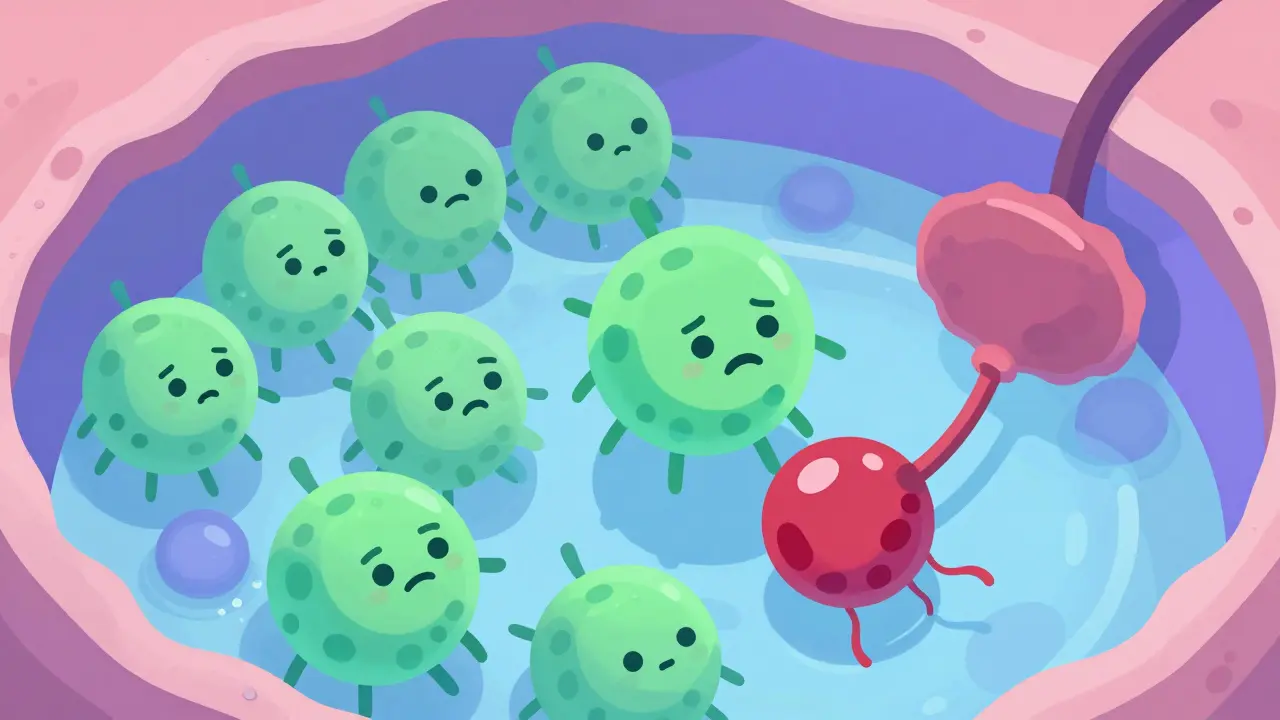
At its core, a UTI happens when bacteria invade the urinary tract. While we often think of the urinary system as sterile, it’s actually quite accessible to germs from the outside world. The primary culprit is Escherichia coli, also known as E. coli. This bacterium, first discovered by German physician Theodor Escherich in 1885, is responsible for 75% to 95% of uncomplicated UTI cases. E. coli normally lives harmlessly in our intestines, but because the anus is close to the urethra, it’s easy for these bacteria to migrate and cause trouble.
Other bacteria play a role too. Klebsiella species account for 5% to 10% of cases, while Proteus mirabilis and Enterococcus faecalis each make up 1% to 5%. The risk varies significantly based on anatomy and lifestyle. Women have a urethra that is only about 4 cm long, compared to 20 cm in men. This short distance gives bacteria very little ground to cover before reaching the bladder. Sexual activity also increases risk, as intercourse can push bacteria into the urethra. Additionally, certain contraceptives, like spermicides containing nonoxynol-9, can disrupt the natural balance of bacteria in the vagina, increasing UTI risk by 2.5-fold.
Age is another factor. Postmenopausal women face higher risks due to changes in vaginal flora caused by lower estrogen levels. Conversely, men over 50 may develop UTIs if they have an enlarged prostate, which can block urine flow and allow bacteria to grow. Understanding these root causes helps explain why prevention strategies target hygiene, hydration, and hormonal health.
Recognizing Symptoms: Lower vs. Upper Infections
Not all UTIs feel the same. The symptoms depend largely on where the infection has settled. Most UTIs are "lower" infections, meaning they affect the bladder (cystitis) or the urethra (urethritis). These are incredibly common and usually present with distinct signs:
- Dysuria: A burning or stinging sensation during urination, reported by 92% of patients in NHS surveys.
- Frequency and Urgency: Feeling like you need to pee constantly, even if only a small amount comes out. About 85% of patients report frequency, and 78% report urgency.
- Suprapubic Pain: Discomfort or pressure in the lower abdomen, above the pubic bone.
- Hematuria: Blood in the urine, which can look pink, red, or cola-colored. This occurs in about 25% of cases.
If the infection spreads upward to the kidneys, it becomes a "upper" UTI, known as pyelonephritis. This is more serious and requires immediate medical attention. Symptoms shift from local discomfort to systemic illness:
- Flank Pain: Sharp pain in the back or side, below the ribs, reported by 89% of patients with kidney infections.
- Fever and Chills: A temperature above 38.3°C (101°F) is common, along with shaking chills.
- Nausea and Vomiting: Gastrointestinal upset affects about 62% of those with upper UTIs.
If you experience fever, back pain, or vomiting alongside urinary symptoms, don’t wait. Seek medical care immediately, as kidney infections can escalate quickly.
Antibiotic Treatments: What Works Best?
When you see a doctor for a suspected UTI, the goal is to eliminate the bacteria quickly. However, the choice of antibiotic depends on whether the infection is uncomplicated or complicated, and increasingly, on local resistance patterns. Here is how current guidelines, such as those from the Infectious Diseases Society of America (IDSA), approach treatment in 2026.
| Antibiotic | Typical Dosage & Duration | Efficacy Rate | Key Considerations |
|---|---|---|---|
| Nitrofurantoin | 100 mg twice daily for 5 days | ~90% | First-line choice. Should not be used for kidney infections (pyelonephritis) as it doesn't penetrate renal tissue well. |
| Trimethoprim-sulfamethoxazole (Bactrim) | 160/800 mg twice daily for 3 days | ~85% | Effective only if local E. coli resistance is below 20%. Higher resistance rates in North America limit its use. |
| Fosfomycin Trometamol | 3g single dose | ~86% | Convenient one-time dose. Popular in Europe; efficacy confirmed in multicenter trials. |
For complicated UTIs or pyelonephritis, the treatment is more aggressive. Doctors may prescribe fluoroquinolones like ciprofloxacin (500 mg twice daily for 7-14 days) or intravenous antibiotics like ceftriaxone. It’s crucial to finish the entire course of antibiotics, even if you feel better after a day or two. Stopping early can lead to recurrence and contribute to antibiotic resistance.
Resistance is a growing concern. According to CDC surveillance data, E. coli resistance to trimethoprim-sulfamethoxazole exceeds 30% in parts of North America. This is why doctors sometimes order a urine culture before prescribing, especially for recurrent or complicated cases. Dr. Lindsay E. Nicolle, lead author of IDSA’s 2023 UTI guidelines, emphasizes that culturing is critical in complicated cases but may be omitted in simple cystitis in areas with low resistance.
Prevention Strategies That Actually Work
Treating a UTI is reactive; preventing one is proactive. If you suffer from recurrent UTIs-defined as two or more in six months, or three or more in a year-you’re not stuck. Evidence-based strategies can significantly reduce your risk.
Hydration is key. Drinking enough water helps flush bacteria out of the urinary tract. A 2022 randomized trial published in JAMA Internal Medicine found that drinking at least 1.5 liters of water per day reduced UTI risk by 48%. Aim for clear or pale yellow urine throughout the day.
Behavioral adjustments matter. Urinating shortly after sexual intercourse can help wash away bacteria introduced during sex. Studies suggest this simple habit decreases incidence by 50%. Also, wipe from front to back after using the toilet to prevent dragging intestinal bacteria toward the urethra. Avoid spermicides and diaphragms if you notice a correlation with UTIs, as these can irritate the urethra and alter vaginal flora.
Consider supplements. Non-antibiotic options have gained traction. Cranberry products containing proanthocyanidins (PACs) may prevent bacteria from sticking to the bladder wall. A 2022 Cochrane review showed that 36mg of PACs daily reduced UTIs by 39% in women with recurrent infections. However, Dr. Stephen F. Badalato from Mayo Clinic warns that 80% of commercial cranberry juices contain insufficient active compounds, so look for standardized extracts. Another promising option is D-mannose, a sugar that prevents E. coli from adhering to the bladder lining. A 2021 study in European Urology found D-mannose powder (2g daily) had 83% efficacy in preventing recurrence, outperforming some antibiotics.
Hormonal therapy for postmenopausal women. Vaginal estrogen therapy can restore healthy vaginal flora and reduce UTI frequency by 70%, according to Mayo Clinic findings. This is particularly effective for women who experience dryness and tissue thinning after menopause.
New Developments and Future Outlook
The landscape of UTI treatment is evolving. For years, no new classes of antibiotics were approved for UTIs. That changed recently. In 2024, the FDA approved gepotidacin, the first new UTI antibiotic in two decades. It showed 92% efficacy against multidrug-resistant E. coli in phase 3 trials, offering hope for patients with resistant infections.
In Europe, the EMA approved EB8018, a FimH adhesin inhibitor, in 2023. Instead of killing bacteria, it prevents them from attaching to the urinary tract walls, reducing recurrence by 75% compared to placebo. Research is also focusing on microbiome restoration. A 2024 study in Nature Medicine demonstrated that Lactobacillus crispatus vaginal suppositories reduced UTIs by 55% in recurrent sufferers, suggesting that restoring good bacteria could be a powerful preventive tool.
Despite these advances, caution is needed. The CDC projects that without new interventions, 40% of UTIs could become untreatable by 2030 due to antimicrobial resistance. This underscores the importance of using antibiotics wisely and embracing preventive measures.
How long does it take for a UTI to go away with antibiotics?
Most people start feeling better within 24 to 48 hours of starting appropriate antibiotic therapy. For uncomplicated cystitis, symptoms typically resolve completely within 3 to 7 days. However, you must finish the full prescribed course to ensure all bacteria are eliminated and to prevent resistance.
Can I cure a UTI without antibiotics?
While some minor UTIs may resolve on their own in 25-43% of cases, relying on this is risky. Untreated UTIs can progress to kidney infections or sepsis, which are life-threatening. Home remedies like cranberry juice or D-mannose are best used for prevention, not treatment. Always consult a healthcare provider for proper diagnosis and treatment.
What is the difference between a bladder infection and a kidney infection?
A bladder infection (cystitis) is a lower UTI causing burning, frequency, and pelvic pain. A kidney infection (pyelonephritis) is an upper UTI that includes these symptoms plus fever, chills, nausea, and flank (back) pain. Kidney infections are more severe and require stronger, often longer, antibiotic treatment.
Are home UTI test strips accurate?
Home UTI test strips, like AZO Test Strips, can detect nitrites and leukocytes in urine, indicating possible infection. However, they have a false negative rate of 20-30%. They are useful for screening but should not replace a professional diagnosis, especially if symptoms are severe or persistent.
Why do women get UTIs more often than men?
Women have a shorter urethra (about 4 cm) compared to men (about 20 cm), making it easier for bacteria to reach the bladder. Additionally, the female urethra is closer to the anus, facilitating the transfer of E. coli bacteria. Hormonal changes, sexual activity, and contraceptive methods also contribute to higher risk in women.