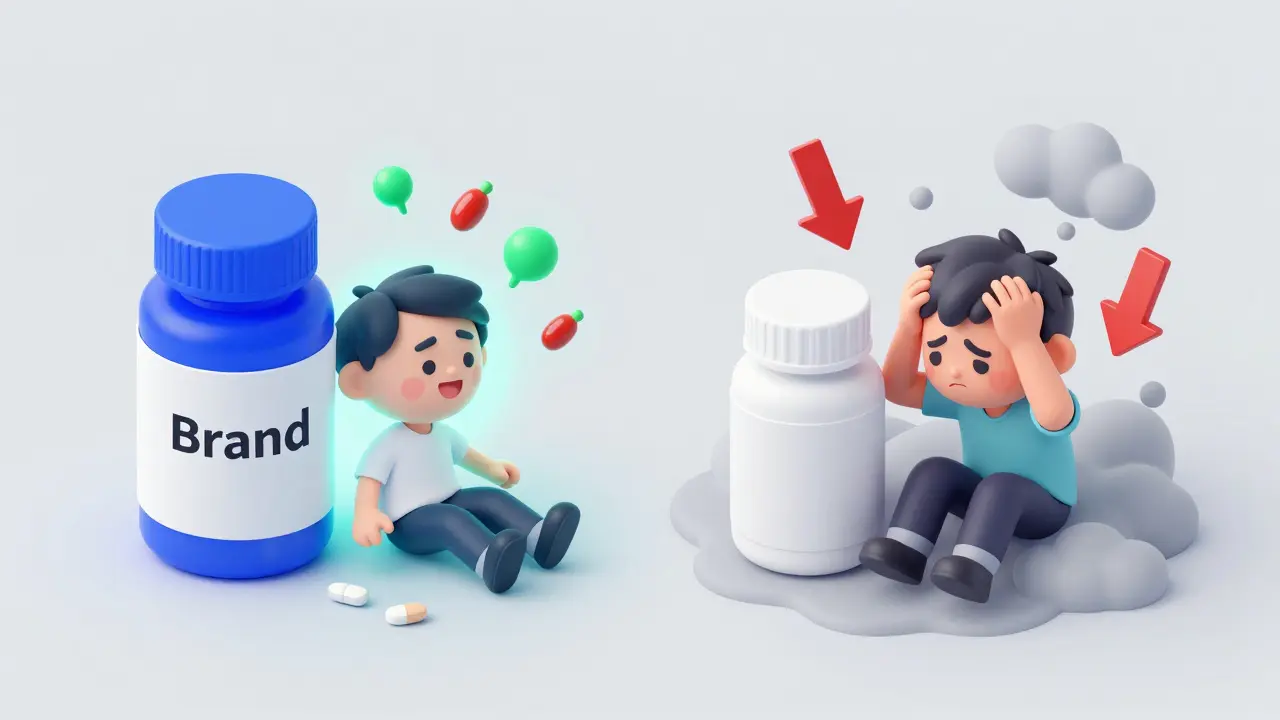
You take a pill for your headache. It’s the exact same chemical compound as the expensive brand-name version you used last year. The dosage is identical. The manufacturer followed every strict bioequivalence rule set by regulators. Yet, somehow, the pain lingers longer, or maybe you feel a sudden wave of nausea that wasn’t there before. You aren’t imagining it. Your brain is reacting to the label on the bottle.
This phenomenon is known as the labeling effect, which refers to the psychological impact that drug packaging and naming have on patient perception and physiological response. It turns out that whether a medicine is labeled as 'generic' or 'brand-name' significantly alters how effective you think it is-and often, how effective it actually becomes in your body. This isn't just about marketing; it's about deep-seated cognitive biases that can undermine treatment success.
The Psychology Behind the Pill
To understand why a piece of paper or plastic changes biology, we have to look at two powerful forces: the placebo effect and its darker cousin, the nocebo effect. The placebo effect happens when you believe a treatment will work, so your brain releases natural chemicals (like endorphins) that genuinely alleviate symptoms. The nocebo effect is the opposite: if you expect side effects or failure, your body often delivers exactly that.
Research has shown that brand-name labels act as a strong positive cue. In a landmark study published in Psychology & Health in 2016, researchers led by Dr. Keith Petrie gave participants pills for headaches. Some got real ibuprofen, others got sugar pills (placebos). Crucially, some pills were labeled as 'brand-name' and others as 'generic.' Here is the twist: the brand-name placebos worked almost as well as the real drug. Participants reported significant pain relief even though they took nothing active. However, the generic-labeled placebos failed to provide this benefit. In fact, they were significantly less effective than the active ibuprofen.
Why does this happen? Brand names carry an aura of quality, rigorous testing, and trust. They signal 'premium care.' Generic labels, despite containing the exact same active ingredient, often trigger skepticism. Patients associate them with being 'cheap,' 'lesser,' or 'incomplete.' This subconscious doubt activates the nocebo pathway, dampening the therapeutic response.
When Labels Lead to Stopping Treatment
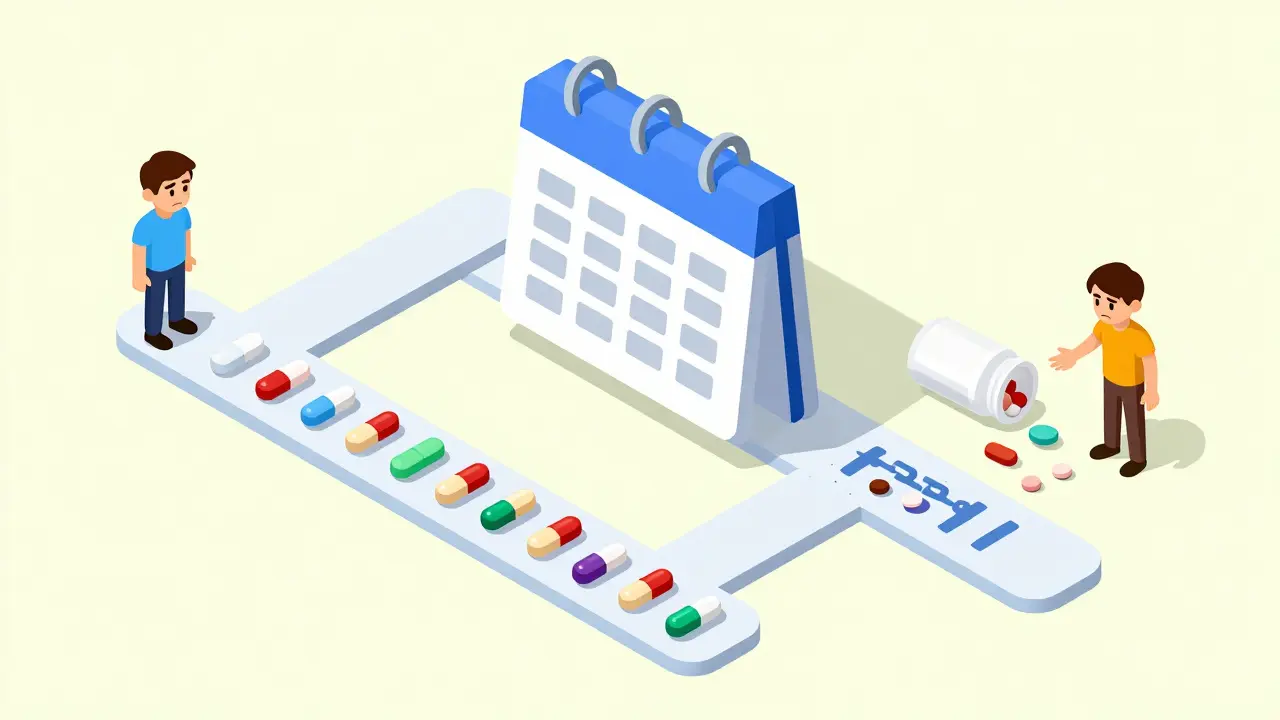
The labeling effect doesn't just change how you feel during treatment; it changes whether you stick with it. Adherence-the act of taking your medication as prescribed-is already a massive problem in healthcare. The World Health Organization estimates that only about 50% of patients with chronic conditions like hypertension or diabetes take their meds correctly.
A 2019 study in the European Journal of Public Health highlighted how dangerous this disconnect can be. Researchers conducted a randomized controlled experiment where participants received identical placebo pills for seven days. Half were told they were taking a brand-name drug; the other half were told it was generic. The results were stark:
- Discontinuation Rate: 54% of those in the generic group stopped taking the pills before the trial ended, compared to only 33% in the brand-name group.
- Pain Reporting: The generic group reported statistically higher pain levels (a mean difference of 1.2 points on a 10-point scale).
- Non-Adherence: Nearly 28% of the generic group consumed non-prescribed pills (like over-the-counter remedies) because they didn't trust the assigned medication, versus 14% in the brand group.
This behavior is costly. When patients abandon effective generic treatments due to perceived inferiority, they often switch back to expensive brand-name drugs or seek alternative therapies that may not be covered by insurance. This erodes the financial benefits of generics, which account for roughly 90% of prescriptions filled in the US but only about 23% of total drug spending.
It’s Not Just in Your Head: Real Label Discrepancies
While much of the labeling effect is psychological, there is a practical component that fuels patient distrust: actual differences in drug labeling documentation. Even if the pill inside is chemically identical, the paperwork surrounding it-the Summary of Product Characteristics (SmPC)-often differs between originator and generic versions.
A 2020 analysis published in Pharmacy examined 31 drug products and found that 100% had misalignments between the originator and generic labels. More alarmingly, nearly half (48.4%) of these labels demonstrated critical potential influence on patients. For example, one generic might list a side effect as 'common' while the brand lists it as 'rare,' or vice versa. These discrepancies accumulate over time because generic manufacturers are not always required to update their labels in sync with the original brand owner.
For patients, especially those with lower health literacy, these inconsistencies create confusion. If you read a scary side effect on a generic label that isn't mentioned on the brand label you remember from years ago, you’re likely to suspect the generic is unsafe. This validates the nocebo fear: "See? It really is different."
| Factor | Brand-Name Label | Generic Label |
|---|---|---|
| Perceived Efficacy | High (Strong placebo boost) | Low (Susceptible to nocebo effect) |
| Cost | High (Often 10x more expensive) | Low (Typically 80-85% cheaper) |
| Adherence Rates | Higher (Patients trust the name) | Lower (Higher discontinuation rates) |
| Side Effect Reporting | Lower attribution to drug | Higher attribution to drug (Nocebo) |
| Label Consistency | Standardized (Reference listed) | Variable (Skinny labeling issues) |
Who Is Most Affected?
The labeling effect is not uniform across all patients. Research indicates that certain groups are far more vulnerable to the negative impacts of generic labeling. The most significant factor appears to be health literacy. In the 2019 European Journal of Public Health study, patients with lower health literacy had a discontinuation rate of 67% for generic-labeled placebos, compared to 41% for those with high health literacy.
Why? Patients with higher health literacy understand the concept of bioequivalence. They know that the FDA requires generic drugs to perform within 80-125% of the reference drug’s pharmacokinetic parameters. They view the generic as a rational economic choice. Those with lower literacy rely more on heuristics-mental shortcuts like "expensive equals better"-and are therefore more prone to the nocebo effect.
Additionally, conditions that rely heavily on subjective reporting-such as pain management, anxiety disorders, and depression-are particularly susceptible. If you are treating high blood pressure, you have a hard number (the cuff reading) to verify efficacy. If you are treating a migraine or anxiety, you rely on how you feel. If the label makes you feel skeptical, your brain amplifies the discomfort.
Bridging the Gap: Solutions for Patients and Providers
So, what can be done? We cannot simply ban generic labels without destroying the healthcare economy. Generics save the US healthcare system approximately $373 billion annually. Instead, we need to mitigate the psychological friction.
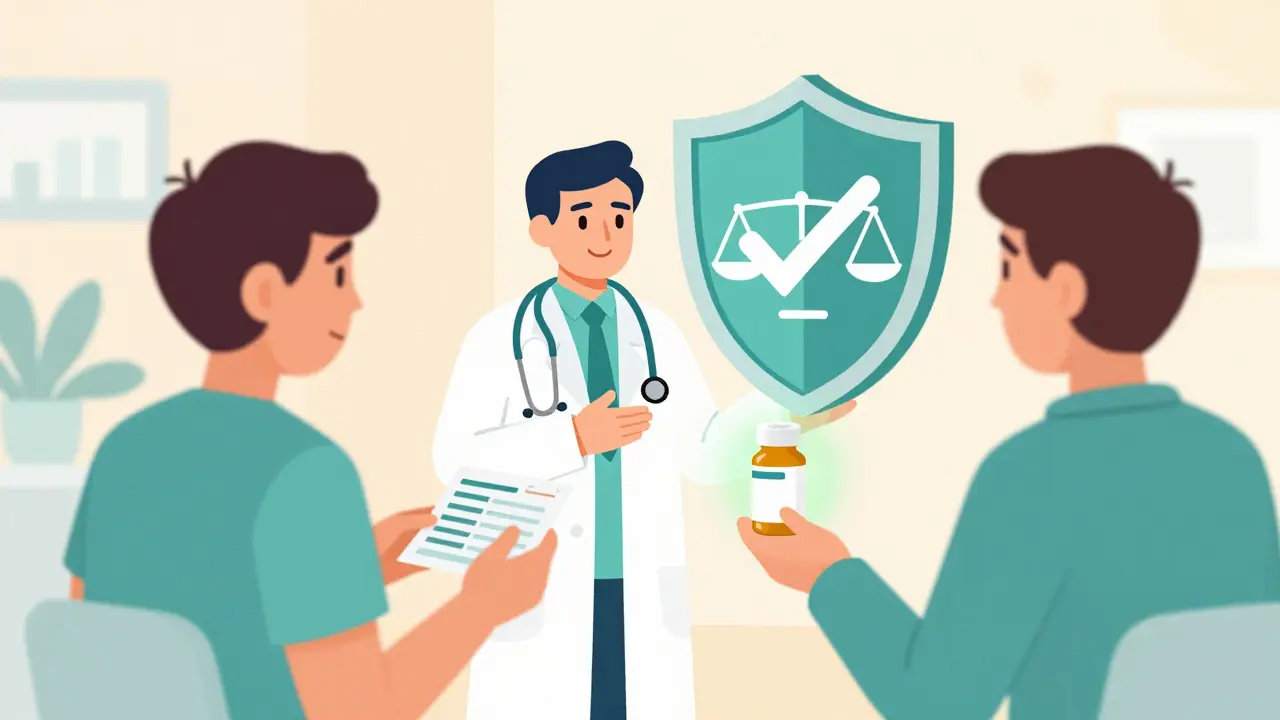
For Healthcare Providers: Communication is key. Doctors and pharmacists should explicitly state that the generic is therapeutically equivalent to the brand. A simple script can help: "This generic contains the exact same active ingredient as [Brand Name]. It works the same way, but costs significantly less." Studies show that adding phrases like "therapeutically equivalent to [Brand Name]" to generic labels can reduce discontinuation rates by up to 15%.
For Patients: Be aware of your own biases. If you switch to a generic and feel worse, ask yourself: Is this a physical reaction, or did I expect it to fail? Try to give the medication a fair trial period (at least 1-2 weeks) before judging its efficacy. If side effects persist, consult your doctor rather than immediately switching back to the brand. Sometimes, the inactive ingredients (fillers, dyes) in generics differ, and true allergies or sensitivities do occur-but this is rare and distinct from the labeling effect.
Regulatory Improvements: The FDA and other global bodies are beginning to address this. The FDA’s 2023 draft guidance proposes standardized labeling elements to reduce perception gaps. Furthermore, initiatives like the Generic Pharmaceutical Association’s "Generic You Can Count On" campaign aim to educate the public directly. As these efforts mature, we may see a future where the label itself is designed to build trust rather than trigger doubt.
Conclusion
The labeling effect proves that medicine is not just chemistry; it is also psychology. While generic drugs are scientifically proven to be safe and effective, the stigma attached to their labels can undermine their power. By understanding this dynamic, patients can make more informed choices, and providers can better support adherence. The next time you pick up a generic prescription, remember: the name on the box shouldn't dictate the healing inside you.
Are generic drugs really the same as brand-name drugs?
Yes, legally and chemically, they must contain the same active ingredient in the same dose and strength. Regulatory agencies like the FDA require generics to demonstrate 'bioequivalence,' meaning they absorb into the bloodstream at a similar rate and extent as the brand-name drug. The only differences are usually in inactive ingredients (like fillers or colors), size, shape, and price.
What is the nocebo effect in relation to generic drugs?
The nocebo effect occurs when negative expectations lead to negative outcomes. If a patient believes a generic drug is inferior or less effective, their brain may amplify pain, fatigue, or side effects, or reduce the perceived benefit of the medication. This is a psychosomatic response driven by the label, not the chemical composition.
Why do some people feel worse on generics?
Mostly, this is due to the labeling effect and nocebo bias. However, in rare cases, individuals may be sensitive to specific inactive ingredients (excipients) used in the generic formulation, such as certain dyes or gluten-based fillers. If symptoms persist, it is worth discussing with a pharmacist to check for specific allergens, but often the issue is psychological expectation.
Can doctors prevent the labeling effect?
Yes, through education and framing. When prescribing a generic, doctors can explicitly reassure patients about its equivalence to the brand name. Positive framing, such as explaining that the generic is the 'standard of care' and widely used, helps counteract skepticism. Clear communication reduces anxiety and improves adherence.
Is it safe to switch between brand and generic multiple times?
Generally, yes, for most medications. However, frequent switching can confuse patients and exacerbate the nocebo effect if they attribute minor fluctuations in health to the switch. For narrow therapeutic index drugs (like certain seizure or thyroid medications), consistency is crucial, and doctors may prefer keeping patients on one specific manufacturer to avoid any variability in absorption.