HAS-BLED Risk Calculator for SSRI-Anticoagulant Patients
Your Risk Assessment
This tool calculates your HAS-BLED score based on established bleeding risk factors for patients taking SSRIs with anticoagulants. A higher score indicates greater risk of serious bleeding events.
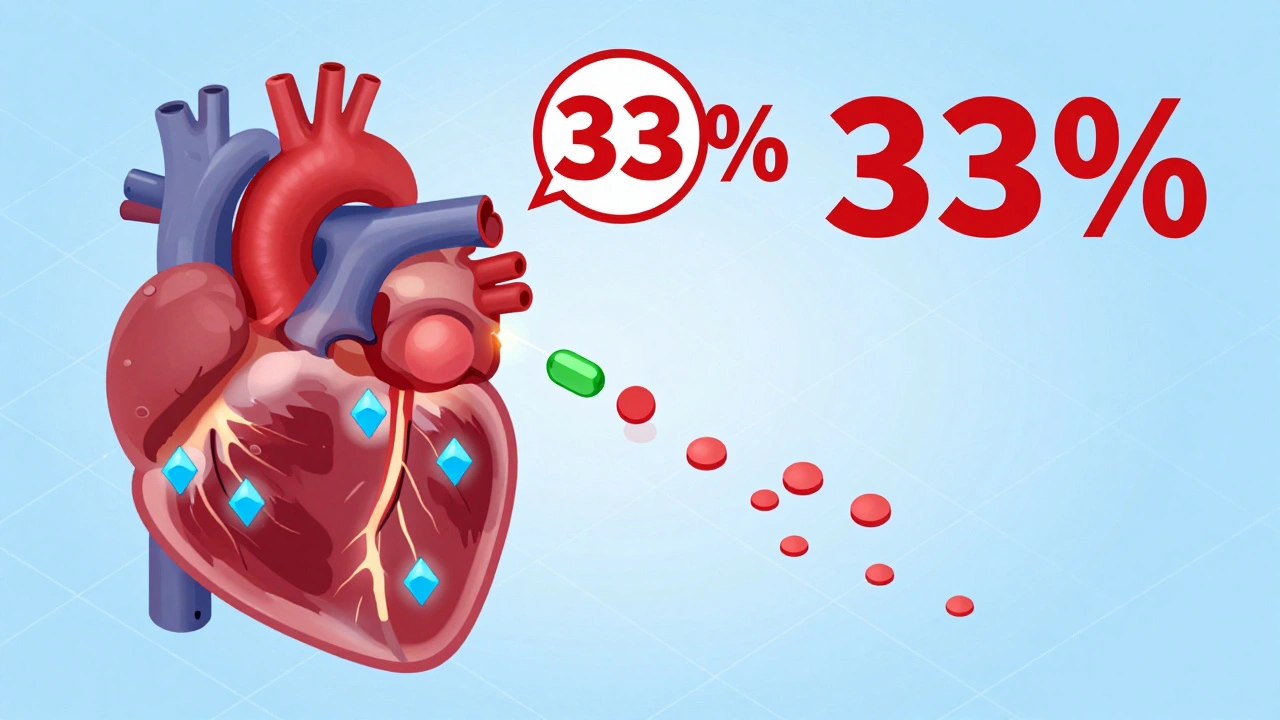
Combining SSRIs with anticoagulants is more common than you might think. About 22% of people with atrial fibrillation also have depression or anxiety - and SSRIs are the most prescribed antidepressants for them. But here’s the problem: this combination increases your risk of serious bleeding. Not a little. Not rarely. SSRIs and anticoagulants together raise your chance of major bleeding by 33% compared to taking anticoagulants alone. That’s not a theoretical concern - it’s backed by data from over 42,000 real patient cases studied in 2024.
Why This Happens: It’s Not About Blood Thinning
Most people assume the danger comes from both drugs making blood thinner. That’s not quite right. Anticoagulants like warfarin or apixaban work by blocking clotting factors in your blood. SSRIs - like sertraline, escitalopram, or fluoxetine - don’t do that. Instead, they mess with your platelets. Platelets are the tiny blood cells that rush to a cut and stick together to stop bleeding. They need serotonin to work properly. SSRIs block the serotonin transporter on platelets. That means serotonin gets sucked out of them and can’t help them clump together. Studies show this reduces platelet function by 30-40%. It’s like giving your platelets a dull knife when they need a sharp one. A 2025 study from Mokhtarian and colleagues tested this directly. They exposed blood samples to therapeutic doses of citalopram - a common SSRI - and measured clotting time, thrombin generation, and other key markers. The result? No change. SSRIs didn’t affect the coagulation cascade at all. The bleeding risk comes purely from platelet dysfunction.When Is the Risk Highest?
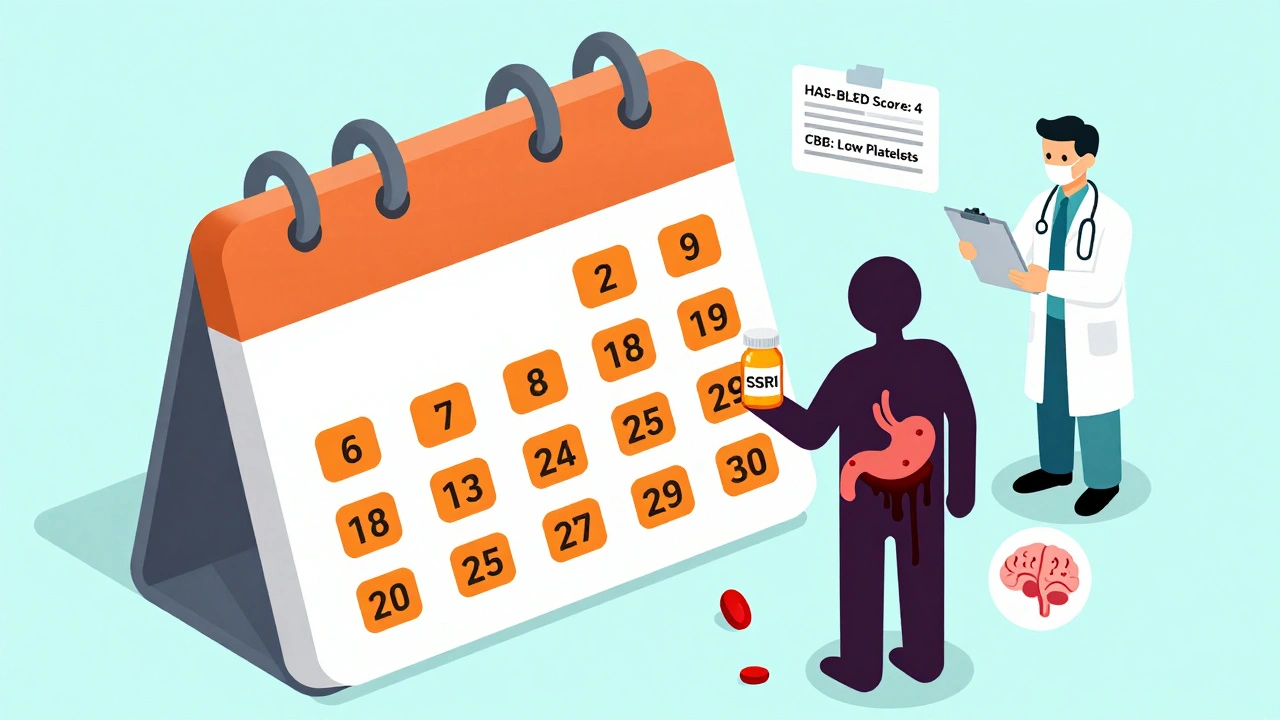
The danger isn’t steady. It spikes right after you start taking both drugs together. The 2024 JAMA Network Open study found the biggest jump in bleeding risk happens in the first 30 days. That’s when your platelets are still adjusting to the serotonin depletion. After six months, the risk drops significantly - but it doesn’t disappear. This timing matters because doctors often start SSRIs when a patient is already on an anticoagulant. They don’t always realize the window of highest risk. If you’ve just switched antidepressants or started a new blood thinner, watch for signs of bleeding more closely during the first month.Where Does the Bleeding Happen?
Not all bleeding is the same. The data shows where it most often occurs:- Gastrointestinal bleeding - 58% of cases. This includes stomach ulcers, bleeding in the intestines, or dark, tarry stools.
- Intracranial hemorrhage - 17% of cases. Brain bleeds are rare but life-threatening.
- Other major bleeding - 25% of cases. This includes nosebleeds that won’t stop, excessive bruising, or bleeding after minor injuries.
Not All Anticoagulants Are the Same
If you’re on warfarin, your risk is higher than if you’re on a DOAC like apixaban or rivaroxaban. The 2024 study showed warfarin combined with SSRIs increased bleeding risk by 28%, while DOACs increased it by 22%. The difference wasn’t statistically significant, but it’s still worth noting. Why? Warfarin has a narrow window. It’s easy to overshoot, especially if your diet changes or you start new medications. DOACs are more predictable. They don’t need regular blood tests. And they don’t interact as much with other drugs. If you’re on warfarin and need an antidepressant, switching to a DOAC might be a safer move - but only if your doctor thinks it’s right for your heart condition.Are Some SSRIs Riskier Than Others?
You might think the strongest SSRI - like paroxetine - would be the most dangerous. After all, it blocks serotonin reuptake more powerfully. But the data says otherwise. In the 2024 study, paroxetine carried the same risk as escitalopram, which is much weaker. Sertraline - the most commonly prescribed SSRI in this group - also showed no difference. This contradicts earlier theories from smaller studies. One 2018 analysis suggested warfarin + paroxetine was riskier than warfarin + rivaroxaban. But when you look at large, real-world data, the SSRI type doesn’t seem to matter. The class effect - any SSRI - is what counts. That means you can’t pick a “safer” SSRI to avoid bleeding. The choice should be based on your depression symptoms, side effects, and other medications - not bleeding risk.Who’s at the Highest Risk?
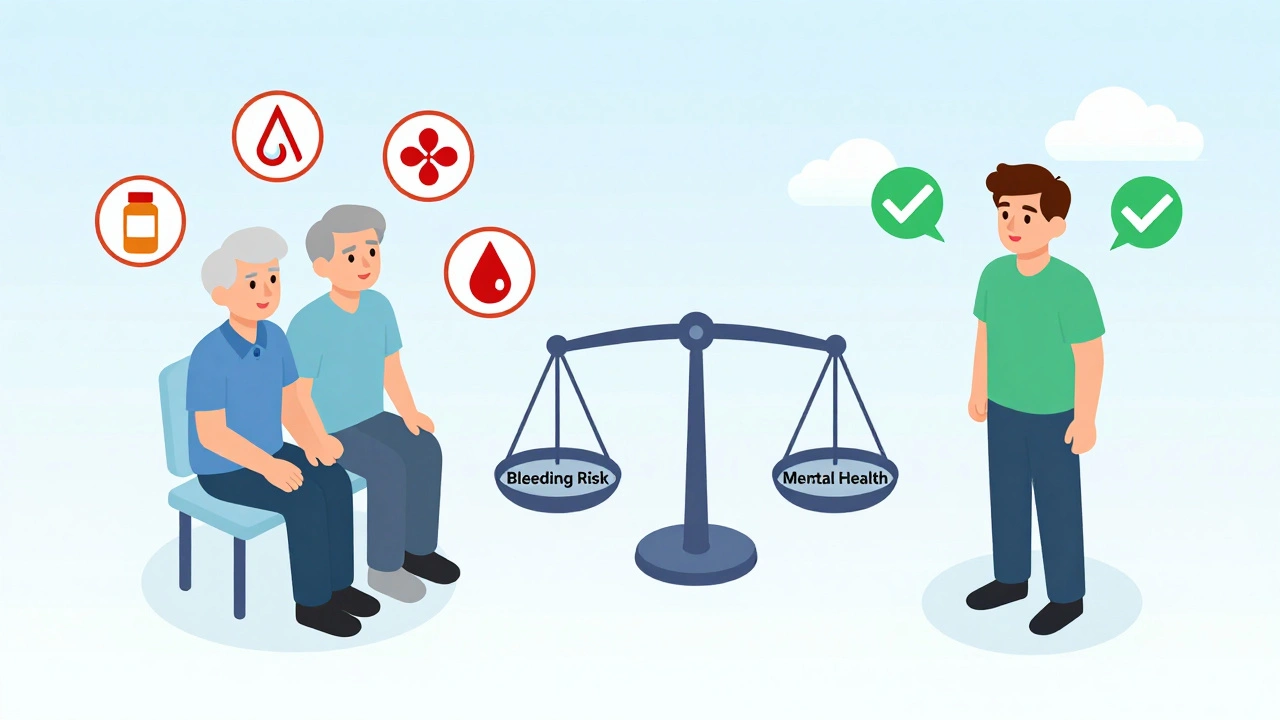
Not everyone on this combo will bleed. But some people are much more vulnerable:- People with a HAS-BLED score of 3 or higher (that means high bleeding risk from factors like high blood pressure, kidney disease, or past bleeding)
- Older adults, especially over 75
- People taking NSAIDs like ibuprofen or naproxen
- Those with a history of ulcers or gastrointestinal bleeding
- Patients on multiple blood thinners (like aspirin or clopidogrel)
What Should You Do?
If you’re on an anticoagulant and your doctor suggests an SSRI:- Ask if you can try a non-SSRI antidepressant first - especially if you’re older or have other bleeding risks.
- If you must take an SSRI, get a clear plan for monitoring. That means checking for blood in your stool, unusual bruising, or headaches.
- For warfarin users: expect more frequent INR checks - possibly twice a week for the first month.
- Get a baseline blood test (CBC) and fecal occult blood test before starting the combo.
- Never start or stop an SSRI without talking to your doctor. Abrupt changes can worsen depression or trigger withdrawal.


