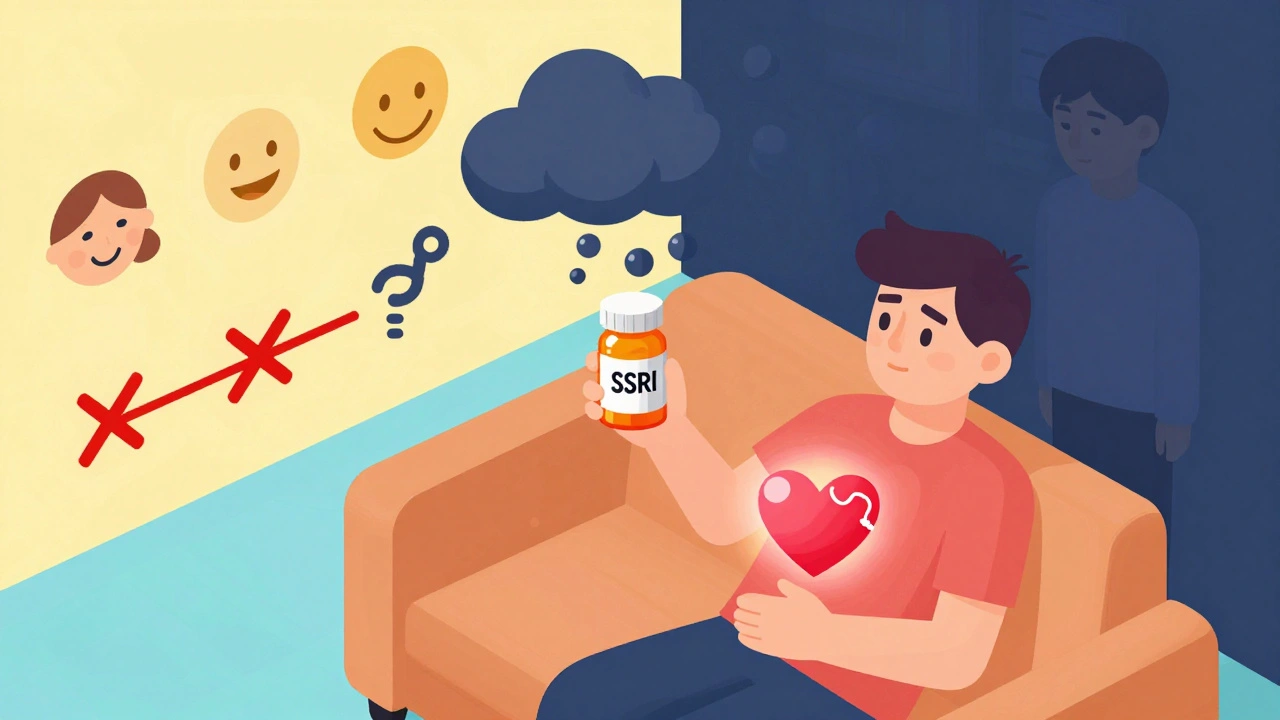
It’s not rare to hear someone say, "I started feeling better emotionally, but I lost interest in sex." For many people taking antidepressants, this isn’t just a side effect-it’s a dealbreaker. Up to 70% of users report sexual problems like low desire, trouble getting or keeping an erection, delayed or absent orgasm, or dryness. And yet, doctors rarely bring it up first. If you’re dealing with this, you’re not alone. And more importantly, you don’t have to live with it.
Why Do Antidepressants Kill Libido?
The problem starts with serotonin. Antidepressants like fluoxetine (Prozac), sertraline (Zoloft), and paroxetine (Paxil) work by boosting serotonin levels in the brain. That helps lift mood. But serotonin doesn’t just affect emotions-it also shuts down the brain’s sexual response system. It blocks dopamine and norepinephrine, two chemicals your body needs to feel arousal, maintain erection, and reach orgasm.
This isn’t just "feeling tired." It’s a biological override. Men on SSRIs report 64% lower libido, 58% with erectile issues, and 53% with delayed ejaculation. Women face 61% drop in desire, 52% with reduced lubrication, and 49% unable to climax. These aren’t guesses. They come from 25 clinical trials reviewed by the American Academy of Family Physicians.
And here’s the catch: depression itself causes sexual problems in 35-50% of untreated cases. So when you start an antidepressant, you’re trying to fix one problem-but accidentally making another worse. That’s why it’s critical to know whether your low sex drive is from the illness or the medicine.
Not All Antidepressants Are Equal
The risk isn’t the same across all meds. Some are far worse than others.
Paroxetine (Paxil) has the highest rate of sexual side effects. For every 2 to 4 people taking it, one will develop orgasm problems. Sertraline and citalopram aren’t much better. Fluoxetine is slightly less likely to cause issues-but still bad enough that many patients quit.
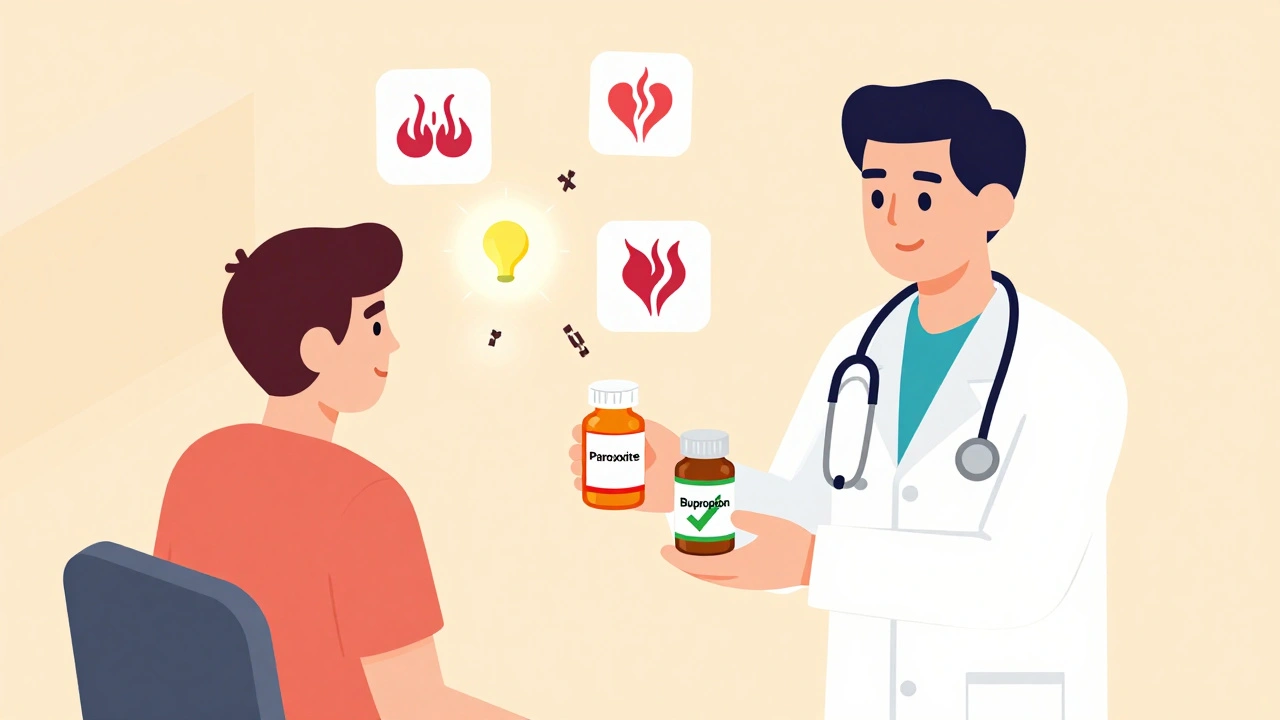
Then there’s bupropion (Wellbutrin). It works differently. Instead of boosting serotonin, it targets dopamine and norepinephrine directly. That’s why it’s the go-to alternative. Studies show people switching from SSRIs to bupropion see sexual function improve in 68% of cases. In head-to-head trials, bupropion caused 2 to 3 times fewer sexual problems than sertraline or fluoxetine.
Other lower-risk options include:
- Mirtazapine (Remeron): Helps with sleep and appetite too, with minimal sexual impact.
- Agomelatine (Valdoxan): Used in Europe, works on melatonin receptors, rarely causes sexual side effects.
- Nefazodone (Serzone): Very low sexual side effect rate-but rarely used now because of rare liver risks.
SNRIs like venlafaxine (Effexor XR) are about as bad as SSRIs. Tricyclics like clomipramine? Also high risk. So if you’re on one of these and struggling, switching isn’t just an option-it’s often the smartest move.
What Can You Do Right Now?
You don’t have to wait months for a new prescription. There are proven steps you can take, even while staying on your current med.
1. Ask for a Dose Check
Many people are on higher doses than they need. Reducing the dose by 20-30% helps 20-30% of patients regain sexual function without losing mood control. Talk to your doctor about trying a lower dose for 4 weeks. Track your symptoms. If your mood stays stable, you might not need the higher amount.
2. Try a "Drug Holiday" (With Supervision)
Some people take a break from their antidepressant on weekends. For example, skip your pill Friday night through Sunday night. This works best with longer-acting drugs like fluoxetine, which stays in your system for days. It’s riskier with paroxetine-it leaves your body fast, and you could get withdrawal symptoms like dizziness or brain zaps.
Never do this alone. Talk to your doctor first. And don’t try it if you’ve had recent depression relapses.
3. Add a Sexual Aid
For men: Sildenafil (Viagra) or tadalafil (Cialis) can help. In trials, 65-70% of men on SSRIs saw improved erections after taking sildenafil. Placebo? Only 25%.
For women: Adding low-dose bupropion (150mg daily) to an SSRI helped 58% of women in a 2019 trial regain sexual desire and orgasm. It’s not approved for this use, but doctors prescribe it off-label all the time.
For both: Cyproheptadine (an old allergy med) can help with anorgasmia. A 2021 study showed 52% of patients on SSRIs regained orgasm after taking 4mg nightly-compared to just 18% on placebo.
What About Switching Medications?
Switching isn’t simple. You can’t just stop one and start another. You need a cross-taper.
For example: If you’re on paroxetine and want to switch to bupropion, your doctor will slowly lower your paroxetine over 2-4 weeks while slowly increasing bupropion. Why? Paroxetine leaves your body fast. Stopping it cold turkey can cause nausea, anxiety, or electric-shock sensations.
Fluoxetine? Easier. It sticks around for days, so you can often switch more quickly.
Success rates? About 80% of people who switch to bupropion see improvement. But 15-20% find the new drug doesn’t work as well for their depression. That’s why tracking mood is essential. Use a simple app or journal to rate your mood daily before and after the switch.
The Hidden Risk: PSSD
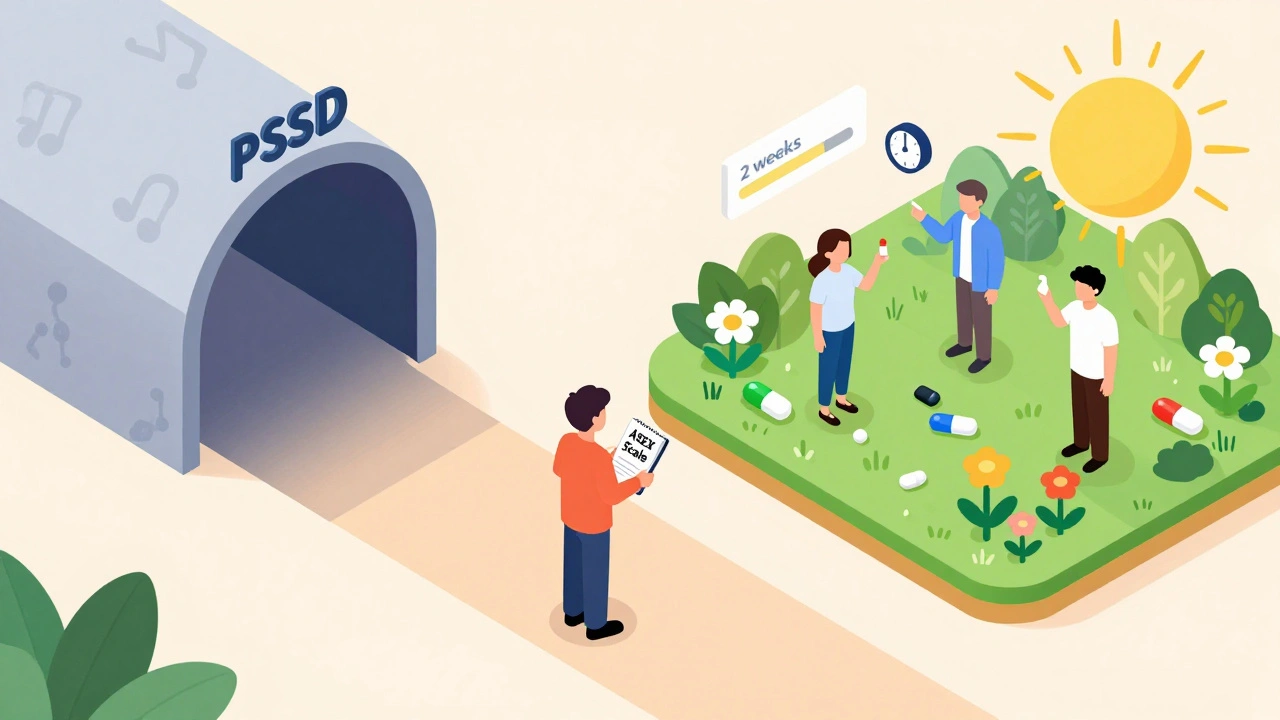
Most people assume that once they stop the antidepressant, their sex life comes back. That’s true for most. But for a small group-0.5% to 1.2%-it doesn’t. This is called Post-SSRI Sexual Dysfunction (PSSD). Symptoms include permanent low libido, genital numbness, or inability to climax-even years after quitting.
It’s rare, but real. There are 28 documented case reports since 2010. Some people report symptoms lasting 6 to 24 months. Others say they never fully recovered. The cause isn’t fully understood, but it’s linked to long-term serotonin changes in the brain.
If you’ve been on SSRIs for more than a year and you’re thinking of quitting, talk to your doctor about the risk. Don’t panic-but don’t assume everything will bounce back.
What’s New in 2025?
The field is changing fast. In 2022, the FDA required stronger warnings on antidepressant labels about sexual side effects. That’s because over 1,200 reports came in from New Zealand’s monitoring system alone between 2018 and 2022.
New drugs are coming. Esketamine (Spravato), approved in 2019 for treatment-resistant depression, has only a 3.2% rate of sexual side effects. But it costs $880 per dose and requires clinic visits. Not practical for everyone.
Even more promising? A new experimental drug called SEP-227162. In early trials, it caused 87% fewer sexual side effects than sertraline. It’s in Phase II now. If it works, it could be the first antidepressant designed to avoid this problem entirely.
And in Europe, doctors are starting to use genetic testing. If you’re a CYP2D6 poor metabolizer, your body processes paroxetine too slowly. That means higher blood levels-and higher risk of side effects. Testing can tell you if you’re at risk before you even start.
Real Talk: What Patients Actually Do
On Reddit’s r/antidepressants, 78% of 1,243 posts mentioned relationship damage because of sexual side effects. 42% said they quit their meds without telling their doctor. That’s dangerous. Stopping suddenly can trigger withdrawal or relapse.
GoodRx data shows 23% of people stop SSRIs within 90 days because of sexual issues. Women are 1.7 times more likely to quit for this reason than men.
And here’s the kicker: On Drugs.com, only 18% of users reported sexual function improved after 6 months. But clinical trials say 30-40%. Why the gap? Because in real life, people don’t get checked with detailed questionnaires. They just feel it-and give up.
What Should You Do Next?
Here’s your action plan:
- Track your symptoms for 2 weeks. Note desire, arousal, orgasm, and satisfaction on a scale of 1-10.
- Ask your doctor if you’re on a high-risk drug (paroxetine, sertraline, citalopram).
- Request a switch to bupropion, mirtazapine, or agomelatine if you’re on an SSRI/SNRI.
- Ask about add-ons: Could sildenafil or low-dose bupropion help?
- Use the ASEX scale (Arizona Sexual Experience Scale). It’s a simple 5-question tool doctors use to measure sexual function. Print it out and bring it to your next appointment.
Remember: Your mental health matters. But so does your body. You deserve both. There’s no shame in wanting to feel desire again. And there’s no reason you have to choose between feeling better and feeling alive.
Frequently Asked Questions
Do all antidepressants cause sexual side effects?
No. While SSRIs and SNRIs like Prozac, Zoloft, and Effexor carry high risk, some antidepressants have much lower rates. Bupropion (Wellbutrin), mirtazapine (Remeron), and agomelatine (Valdoxan) are known for causing fewer or no sexual side effects. The key is matching the drug to your body’s needs-not just your mood.
How long do sexual side effects last after stopping antidepressants?
For most people, sexual function returns within a few weeks to months after stopping. But for a small percentage-between 0.5% and 1.2%-symptoms persist for months or even years. This is called Post-SSRI Sexual Dysfunction (PSSD). It’s rare, but real. If you’ve been on an SSRI for over a year and notice ongoing issues after stopping, talk to a specialist.
Can I take Viagra with SSRIs?
Yes, and it’s often effective. Studies show sildenafil (Viagra) improves erectile function in 65-70% of men taking SSRIs. It’s safe for most people, but your doctor should check for interactions, especially if you take nitrates or have heart conditions. It doesn’t fix low desire, but it can restore physical performance.
Is bupropion as effective as SSRIs for depression?
For many people, yes. Bupropion is just as effective as SSRIs for treating depression, especially in cases with low energy or fatigue. It’s often preferred for people who struggle with weight gain or sexual side effects. However, it’s less effective for severe anxiety or obsessive symptoms. Your doctor can help determine if it’s right for your specific symptoms.
Why don’t doctors talk about this more?
Many doctors assume patients won’t bring it up, so they don’t either. Others think it’s a minor issue compared to depression. But research shows sexual side effects are one of the top reasons people quit their meds. The American Psychiatric Association now recommends screening for sexual function at every visit using tools like the ASEX scale. You have the right to ask-and your doctor should be ready to answer.
Are there natural remedies that help?
There’s no strong evidence that herbs or supplements reliably fix antidepressant-related sexual dysfunction. Some people try ginseng, maca, or L-arginine, but studies are small or inconclusive. The most effective solutions are medical: switching meds, dose adjustments, or adding a targeted drug like sildenafil or low-dose bupropion. Don’t replace science with supplements without talking to your doctor first.


