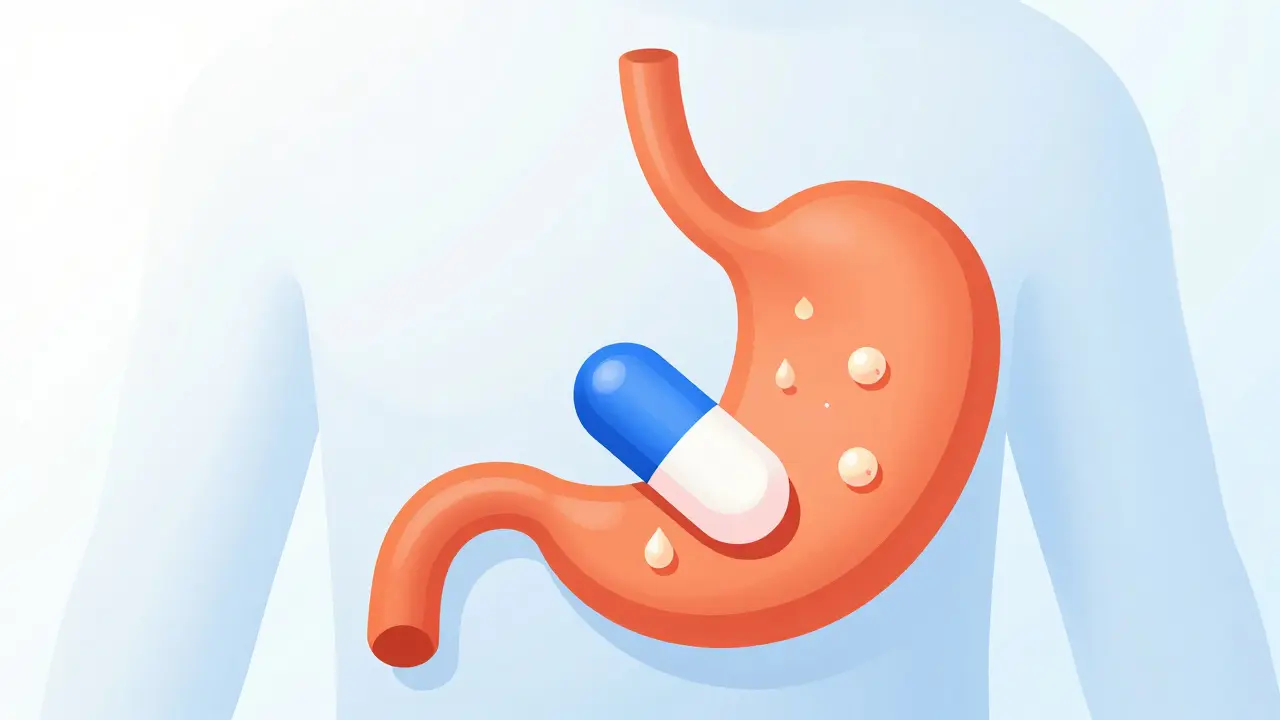
Imagine swallowing a pill every morning for years because your doctor told you it was safe. For millions of people dealing with heartburn or acid reflux, Proton Pump Inhibitors are a class of powerful medications that block stomach acid production by inhibiting the H+/K+ ATPase enzyme system in parietal cells. Known commonly as PPIs, drugs like omeprazole (Prilosec) and esomeprazole (Nexium) have become household names. They work incredibly well at healing erosive esophagitis, with efficacy rates exceeding 90%. But here is the catch: up to 70% of patients take these drugs without a proper clinical need. The question isn't just whether they work-it's whether staying on them forever is worth the hidden costs.
The Hidden Cost of Acid Suppression
When you block stomach acid, you aren't just stopping heartburn. You are changing the chemical environment of your entire digestive tract. Stomach acid is essential for breaking down food and killing harmful bacteria. Without it, things start to slip through the cracks. The FDA has issued seven major safety warnings between 2010 and 2022 regarding potential adverse effects. These aren't minor nuisances; they include serious conditions like bone fractures, kidney damage, and nutrient deficiencies.
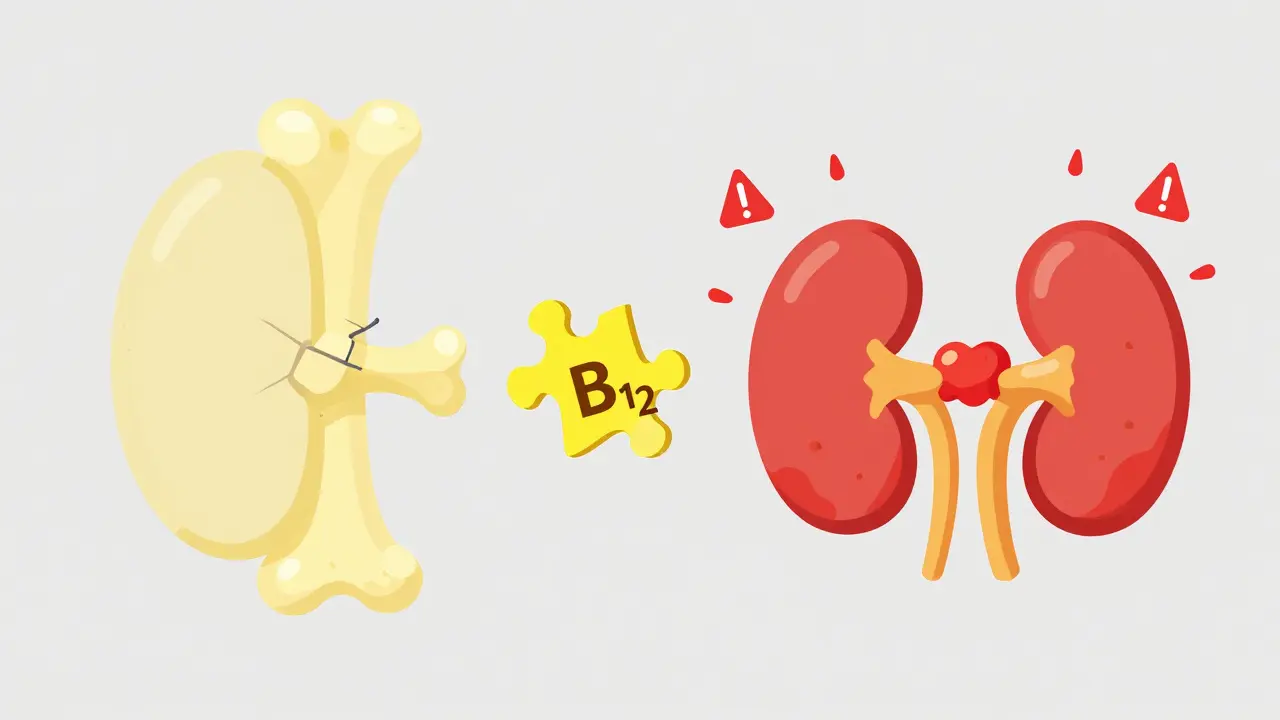
Let’s look at the bones first. A 2017 study published in PMC showed that using PPIs for four years increased the risk of hip fractures by 42% (Hazard Ratio 1.42). If you use them for six to eight years, that risk jumps to 55%. Why? Because acid helps absorb calcium. Less acid means less calcium absorption, which leads to weaker bones over time. The good news? This risk appears reversible. Women who stopped PPIs more than two years prior had fracture risks comparable to non-users. It’s never too late to reverse some damage.
Then there is the issue of nutrients. Your body needs acid to release vitamin B12 from food. According to the Cleveland Clinic, an estimated 10-15% of long-term PPI users develop vitamin B12 deficiency. This risk climbs significantly after two years of continuous use. Symptoms can be subtle-fatigue, numbness, or memory issues-but they worsen if left unchecked. Similarly, magnesium levels can drop dangerously low, a condition called hypomagnesemia. While rare (affecting about 0.5-1% of long-term users), it can cause muscle cramps, weakness, and even dangerous heart arrhythmias. The FDA now requires doctors to check magnesium levels in patients on PPIs for more than a year.
Kidney Health and Infection Risks
Your kidneys filter your blood, and they don’t like being bombarded with certain chemicals. The FDA’s 2016 safety announcement highlighted a link between PPIs and acute interstitial nephritis, a type of kidney inflammation. Studies show a 20-50% increased risk of this condition with PPI use. While most cases resolve when you stop the drug, some progress to chronic kidney disease, which is far harder to treat.
Infections are another concern. Stomach acid acts as a gatekeeper against bad bacteria. When you suppress it, pathogens like Clostridioides difficile (C. diff) can thrive. The FDA notes a 1.7 to 2.0-fold increased risk of C. diff-associated diarrhea, especially in hospitalized patients or those taking antibiotics. This infection causes severe, watery diarrhea and can be life-threatening if not treated quickly. Some studies also suggest a higher risk of pneumonia, though the evidence here is less consistent than with C. diff.
What About Dementia and Heart Disease?
You’ve probably seen headlines linking PPIs to dementia or heart attacks. It’s scary stuff. A 2023 article in Cureus reported a 44% increased dementia risk among regular PPI users. However, Dr. William Ravich, Director of Gastroenterology at Yale Medicine, points out a crucial flaw in these studies. Many weren’t focused on PPIs but rather on other health issues in patients who happened to be taking them. Confounding factors matter. Older adults, for instance, are more likely to take PPIs and more likely to develop dementia. Correlation doesn’t equal causation. Higher-quality research hasn’t consistently confirmed links to cardiovascular events or mortality, but the debate continues. Until we know for sure, caution is wise.
| Risk Factor | Evidence Strength | Key Details |
|---|---|---|
| Bone Fractures | Strong | 42-55% increased risk for hip/wrist fractures with long-term use |
| Vitamin B12 Deficiency | Moderate | Affects 10-15% of long-term users; risk rises after 2 years |
| Hypomagnesemia | Moderate | Rare (0.5-1%) but can cause dangerous heart rhythms |
| C. Difficile Infection | Strong | 1.7-2.0x increased risk, especially in hospitals |
| Kidney Disease | Moderate | 20-50% increased risk of acute interstitial nephritis |
| Dementia | Weak/Controversial | Observational links exist, but causation is unproven |
Why It’s Hard to Quit: Rebound Acid Hypersecretion
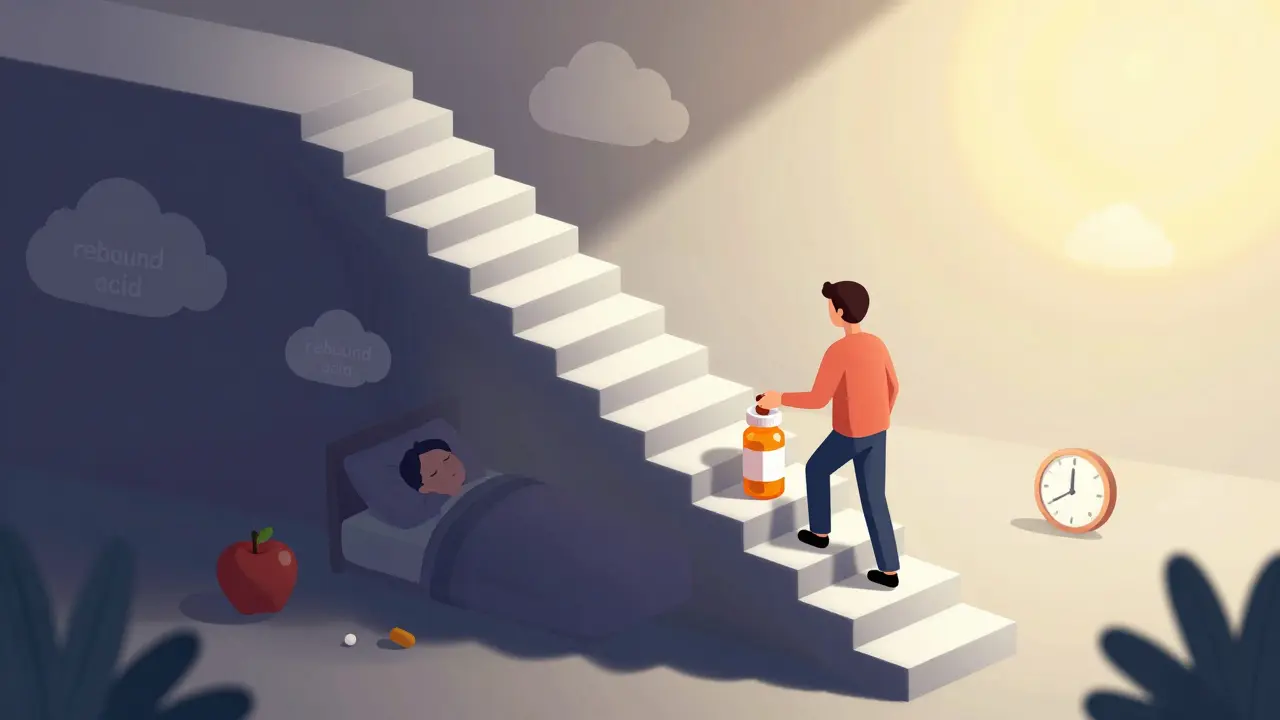
If you decide to stop taking your PPI, you might expect immediate relief from side effects. Instead, you might get worse heartburn. This is called rebound acid hypersecretion, and it affects 40-80% of people who quit abruptly. Your stomach has adapted to producing less acid because the drug blocked the pumps. When you remove the block, your body overcompensates, flooding your stomach with acid for weeks or months.
This phenomenon traps many patients on lifelong therapy. They think their original condition has returned, so they restart the medication. In reality, it’s just withdrawal. To avoid this, the American College of Gastroenterology (ACG) recommends a structured tapering approach. Don’t just stop cold turkey. Reduce your dose by 50% every one to two weeks. Then switch to on-demand use-taking the pill only when symptoms flare up-before quitting completely. This gradual process allows your stomach lining to readjust.
When Should You Actually Stop?
Not everyone needs to quit. If you have severe erosive esophagitis, Barrett’s esophagus, or a history of bleeding ulcers, PPIs might be your best friend. Antacids simply won’t cut it for these conditions. However, if you’re taking them for mild indigestion or occasional heartburn, you might be overdoing it. The FDA mandates that over-the-counter PPIs carry labels limiting use to 14 days no more than once every three months. Yet, 25% of OTC users ignore this advice.
Ask yourself these questions:
- Have I been on this medication for more than eight weeks without a recent doctor review?
- Do I still have the original symptoms, or am I just taking it "just in case"?
- Can lifestyle changes help? Weight loss, avoiding late-night meals, and elevating your head while sleeping can dramatically reduce reflux.
If you’ve been stable for a year, try a "drug holiday." Under medical supervision, attempt to discontinue the drug every six to twelve months. About 30-50% of long-term users successfully quit without symptom recurrence when managed properly. If symptoms return, you might need a lower dose or a different strategy, like switching to an H2 blocker such as famotidine (Pepcid). H2 blockers are weaker but carry fewer long-term risks and don’t cause the same level of rebound acidity.
Alternatives and Future Directions
If PPIs aren’t right for you, what else is there? H2 blockers like famotidine offer a gentler option. They don’t heal erosive esophagitis as well (30-50% lower healing rates), but they’re safer for long-term maintenance. Lifestyle modifications remain the gold standard. Avoiding trigger foods like spicy dishes, caffeine, and alcohol can make a huge difference. Sleeping on your left side may also reduce nighttime reflux by leveraging gravity.
Looking ahead, new medications are emerging. Potassium-competitive acid blockers (P-CABs) like vonoprazan offer similar efficacy to PPIs but with a different mechanism. They might provide faster relief and potentially fewer long-term risks, though safety data beyond a few years is still limited. For now, PPIs remain the first-line therapy for serious acid-related disorders. The goal isn’t to demonize them but to use them wisely.
How long can I safely take proton pump inhibitors?
For most conditions like uncomplicated GERD, PPIs should be used for the shortest duration necessary, typically 4-8 weeks. Long-term use (over a year) requires regular reassessment by a doctor to weigh benefits against risks like bone fractures and nutrient deficiencies. There is no strict "safe" limit for everyone, but periodic attempts to taper off are recommended.
What happens if I stop taking my PPI suddenly?
Stopping abruptly can cause rebound acid hypersecretion, where your stomach produces excess acid for weeks or months. This leads to severe heartburn that feels like your original condition has returned. To avoid this, taper your dose gradually under medical supervision, reducing by 50% every 1-2 weeks before switching to on-demand use.
Are PPIs linked to dementia?
Some observational studies have suggested a link, but higher-quality research has not consistently confirmed this. Experts note that older adults are more likely to take PPIs and more likely to develop dementia, creating a correlation that isn't necessarily causal. Current evidence does not support stopping PPIs solely due to dementia concerns.
Can PPIs damage my kidneys?
Yes, long-term PPI use is associated with a 20-50% increased risk of acute interstitial nephritis, a form of kidney inflammation. While most cases resolve upon stopping the drug, some may progress to chronic kidney disease. Regular monitoring of kidney function is advised for long-term users.
Is it better to take OTC PPIs or prescription ones?
OTC PPIs are limited to 20mg doses and should not be used for more than 14 days every three months. Prescription PPIs allow for higher doses and longer-term management under medical supervision. If you need daily use beyond 8 weeks, consult a doctor to ensure appropriate dosing and monitor for side effects.