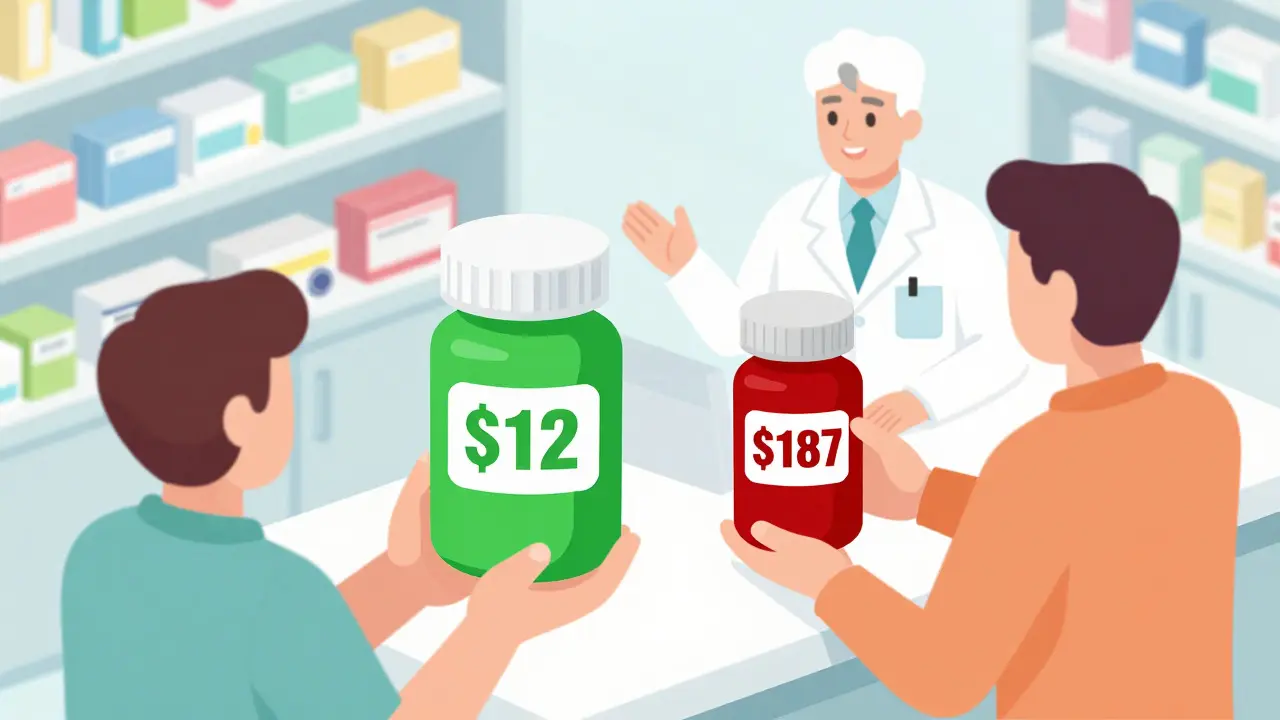
You walk into the pharmacy with a prescription for a blood pressure medication. The pharmacist hands you two options: one costs $12, the other $187. Both treat the same condition. Both are FDA-approved. So why does your insurance company make you pay almost fifteen times more for one than the other? The answer lies in something called preferred generic lists, a system that dictates which drugs get cheap prices and which ones cost a fortune.
This isn't just about saving money on a single pill. It’s a complex strategy used by insurers to manage billions of dollars in healthcare spending. If you don’t understand how these lists work, you could be overpaying every month-or worse, facing delays in getting the treatment you need. Let’s break down exactly why insurers prefer certain products, how they decide what goes on the list, and what this means for your wallet and your health.
What Are Preferred Generic Lists?
A preferred generic list is essentially a VIP club for medications within an insurance formulary. A formulary is the complete list of drugs covered by your plan. But not all covered drugs are treated equally. Insurers divide these drugs into tiers, usually ranging from Tier 1 to Tier 4 or higher.
Tier 1 contains the "preferred" generics. These are the lowest-cost options. Think of them as the budget airlines of the pharmaceutical world-they get you where you need to go, but there are no frills. In most plans, Tier 1 drugs require a flat copay, often between $5 and $15 for a 30-day supply. This tier includes generic versions of brand-name drugs that have lost their patent protection, as well as some newer biosimilars (generic versions of complex biologic drugs).
The logic is simple: if a generic drug works just as well as the brand-name version but costs 80% to 85% less, why should the insurer pay more? According to the FDA, generic drugs must demonstrate bioequivalence, meaning they deliver the same amount of active ingredient into your bloodstream within a similar time frame as the brand name. For the vast majority of patients, the therapeutic effect is identical.
The Role of Pharmacy Benefit Managers (PBMs)
To understand why specific generics end up on the preferred list, you have to look at who builds it. Most large insurance plans don’t negotiate drug prices directly with manufacturers. Instead, they use Pharmacy Benefit Managers (PBMs). Companies like CVS Health’s Caremark, Cigna’s Evernorth, and UnitedHealth’s OptumRx control nearly 78% of the PBM market.
PBMs act as middlemen. They negotiate rebates and discounts with drug manufacturers in exchange for placing those drugs on favorable tiers. When a manufacturer wants their new generic drug to be a "preferred" option, they often offer significant rebates to the PBM. The PBM then passes some of those savings to the insurance plan, which keeps premiums lower for everyone. The rest stays with the PBM as profit.
This creates a powerful incentive structure. PBMs push doctors and patients toward the drugs that generate the highest rebates, not necessarily the cheapest list price. This is why you might see two different generic brands of the same medication, where one is Tier 1 and the other is Tier 2. The Tier 1 drug likely has a better deal behind the scenes with the PBM.
| Tier | Drug Type | Typical Copay/Cost | Examples |
|---|---|---|---|
| Tier 1 | Preferred Generics | $5 - $15 | Generic Lisinopril, Metformin |
| Tier 2 | Non-Preferred Generics / Preferred Brands | $25 - $50 | Certain branded statins, higher-cost generics |
| Tier 3 | Non-Preferred Brand Names | $50 - $100+ | Brand-name antidepressants, specialty generics |
| Tier 4 | Specialty Drugs / Biologics | $100+ or % coinsurance | Infliximab, Humira, cancer therapies |

Why Do Insurers Resist Biosimilars?
While generic pills are widely accepted, a bigger battle is happening with biologics-complex drugs made from living organisms, used to treat conditions like rheumatoid arthritis, Crohn’s disease, and cancer. The generic equivalents are called biosimilars.
Insurers want you to switch to biosimilars because they are significantly cheaper. However, adoption in the U.S. lags far behind Europe. Only about 15% of eligible biologic prescriptions switch to biosimilars in the U.S., compared to 85% in Europe. Why?
One major reason is co-pay assistance. Many brand-name biologic manufacturers offer coupons that reduce patient costs to near zero. Biosimilar manufacturers often lack these programs. So, even if the biosimilar has a lower list price, your out-of-pocket cost might actually be higher without the brand-name coupon. Additionally, some physicians remain hesitant to switch patients due to concerns about stability or slight differences in manufacturing processes, despite FDA approval.
Regulators are stepping in to fix this. Medicare’s 2024 final rule requires Part D plans to place biosimilars in the same tier as their reference biologics starting in 2025. This move is projected to increase biosimilar utilization from 15% to 45%, forcing insurers to align their incentives with actual clinical value rather than just rebate structures.
The Impact on Patients: Savings vs. Access
For many people, preferred generic lists are a lifeline. A study of Medicare Part D plans found that when coinsurance applies, beneficiaries face dramatically higher costs for brand-name drugs ($393 per fill) versus generics ($199 per fill). That’s an average savings of $194 per prescription.
Real-world users report massive differences. On online forums, patients share stories of reducing monthly costs from $187 to $12 after switching to a preferred generic for thyroid medication. For chronic conditions requiring daily medication, these savings add up to thousands of dollars a year.
However, the system isn’t perfect. A common frustration is "step therapy." This is a protocol where insurers require you to try and fail on a preferred generic before they will cover a brand-name drug your doctor prescribed. The American Medical Association reports that 42% of physicians experience treatment delays because of this, particularly in chronic pain management. You’re stuck waiting weeks or months for appeals while dealing with unmanaged symptoms.
Another issue is awareness. Medicare’s 2023 Beneficiary Survey revealed that 58% of enrollees couldn’t identify their plan’s formulary tier structure. This lack of transparency leads to 31% of patients experiencing unexpected out-of-pocket costs when they pick up a medication they assumed was cheap.

How to Navigate the System
You don’t have to accept the first option the pharmacy gives you. Here is how to take control of your medication costs using the preferred generic list:
- Check the Formulary Before Prescribing: Don’t wait until you’re at the counter. Use your insurer’s online tool or app to search for your medication. Look for the tier number. If your doctor prescribes a Tier 3 brand-name drug, ask if there is a Tier 1 generic alternative.
- Ask About "Dispense as Written": In 89% of states, pharmacists can automatically substitute a generic unless the doctor specifies otherwise. If you prefer a specific brand, your doctor needs to write "DAW" on the script. If you want the cheapest option, ensure "substitution allowed" is checked.
- Appeal Denials: If your doctor insists on a non-preferred drug, they can file a prior authorization. Success rates for these appeals are around 68%. The key is documentation. Your doctor needs to prove medical necessity, such as a documented allergy to the generic or failure of previous treatments.
- Review During Open Enrollment: Formularies change every year. A drug that was Tier 1 last year might jump to Tier 3. Spending 45 minutes reviewing your plan’s changes during annual enrollment can save you hundreds of dollars. The Medicare Rights Center estimates potential savings of $417 annually per medication by choosing the right plan.
The Future of Drug Pricing
The landscape is shifting. The Inflation Reduction Act of 2022 introduced a $2,000 annual out-of-pocket cap for Medicare Part D, effective in 2025. This cap is expected to increase generic utilization by 7-12 percentage points, as patients become more sensitive to upfront costs.
We are also seeing the rise of "Value-Based Formularies." UnitedHealthcare launched a pilot in early 2024 that adjusts tier placement based on real-world effectiveness data, not just cost. If a slightly more expensive generic shows better adherence or fewer side effects in real-world data, it might move to Tier 1. This marks a move away from pure cost-cutting toward clinical outcomes.
By 2030, experts predict that tier placement will be determined increasingly by outcomes data rather than rebate deals alone. Until then, understanding the current mechanics of preferred generic lists remains one of the most effective ways to protect your financial health alongside your physical health.
What is the difference between a generic and a biosimilar?
A generic drug is a copy of a small-molecule brand-name drug (like a pill) that has the same chemical composition. A biosimilar is a highly similar version of a biologic drug, which is made from living cells and is more complex. While generics are nearly identical to the brand, biosimilars may have minor differences in inactive ingredients but must show no clinically meaningful differences in safety or efficacy.
Can my doctor override a preferred generic list?
Yes, but it usually requires a process called prior authorization. Your doctor must provide medical justification to the insurance company explaining why the preferred generic is ineffective or unsafe for you. About 68% of these appeals are successful if proper documentation is provided.
Why are some generics more expensive than others?
Even though two generics contain the same active ingredient, their price depends on the rebate agreements between the manufacturer and the Pharmacy Benefit Manager (PBM). A generic with a higher rebate to the PBM is often placed on a lower tier (cheaper for you), while another generic with a smaller rebate might be placed on a higher tier, making it more expensive for the patient despite having a similar list price.
What is step therapy?
Step therapy is an insurance requirement that mandates patients to try lower-cost, preferred medications (usually generics) before the insurer will cover a more expensive or non-preferred drug. It is designed to encourage the use of cost-effective treatments first, but it can delay access to necessary care if the initial drug fails.
How do I find out which tier my medication is on?
You can check your insurance provider’s website or mobile app for their "Formulary" or "Drug List." Search for your medication by name to see its tier level and associated copay. Pharmacists can also tell you the tier status when you drop off your prescription.


