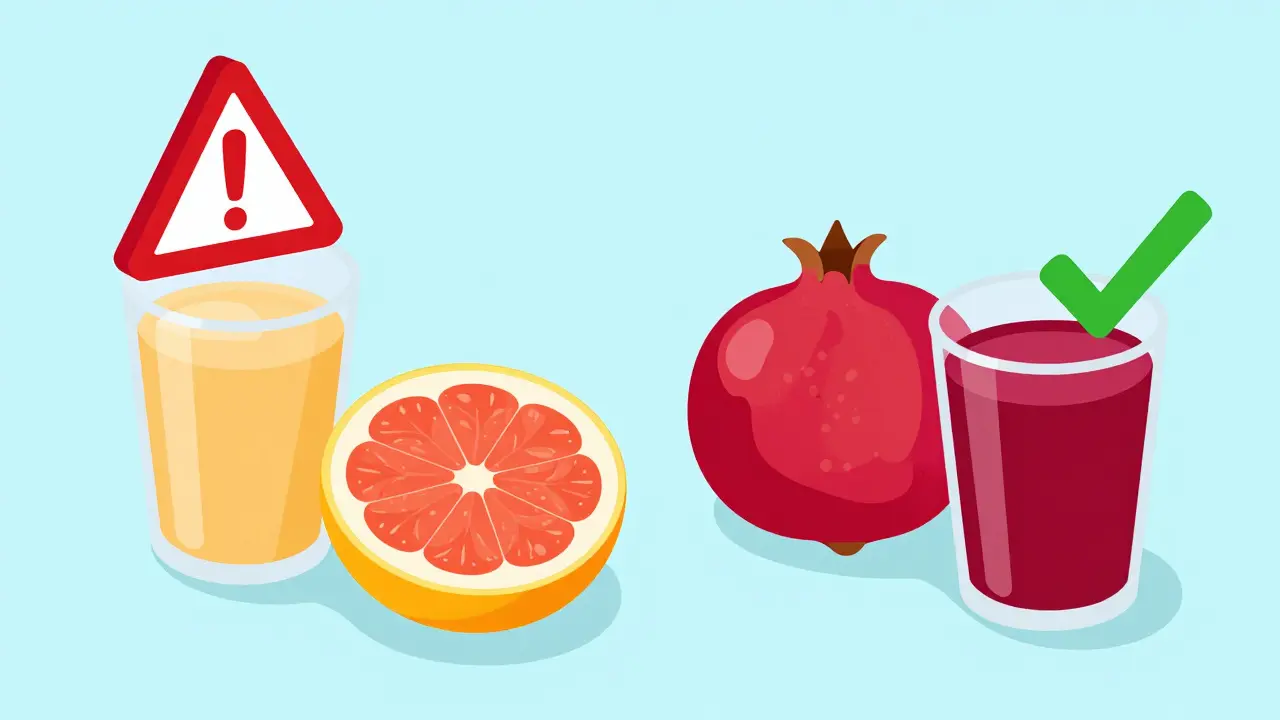
Juice & Medication Interaction Checker
Select the type of fruit product you are consuming to see its clinical risk level and effect on liver enzymes (CYP3A4).
Grapefruit Juice
High RiskPomegranate Juice
Low RiskPomegranate Extract
Moderate RiskSelect an option above
If you've ever been told to avoid grapefruit juice while taking a prescription, you've probably wondered if other "super-fruits" carry the same risk. For a while, the medical community was worried that Pomegranate Juice is a beverage derived from the Punica granatum fruit, rich in antioxidants but suspected of interfering with liver enzymes might be just as dangerous as grapefruit juice. After all, early lab tests suggested they both shut down the same metabolic pathways in the body. But here is the reality: your morning glass of pomegranate juice is far less likely to cause a medical crisis than a glass of grapefruit juice.
The "Lab vs. Real Life" Mystery
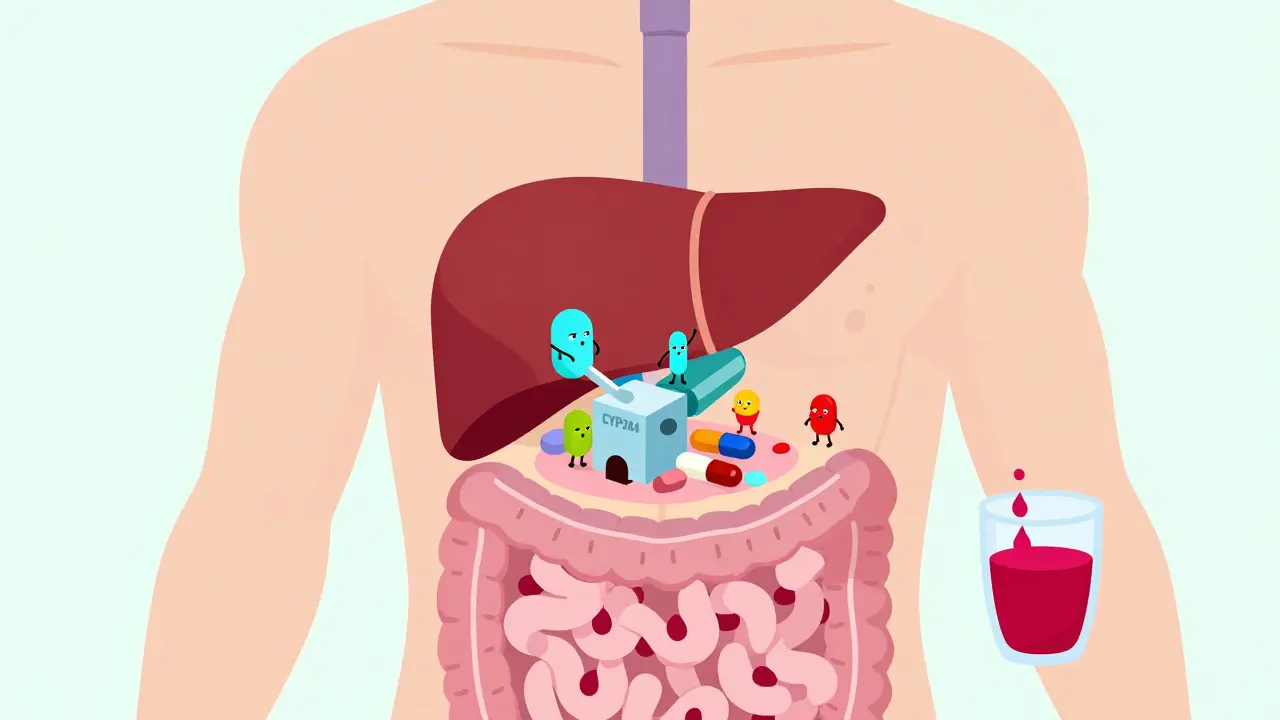
To understand why there was a scare in the first place, we have to look at how drugs leave your body. Most medications are broken down by a group of proteins called Cytochrome P450 is a superfamily of enzymes, primarily in the liver and intestines, responsible for the metabolism of the majority of pharmaceutical drugs . Specifically, two enzymes, CYP3A4 and CYP2C9, do the heavy lifting for about 65% of common medications.
Back in 2005, researchers at Gifu Pharmaceutical University ran tests in a petri dish (in vitro). They found that pomegranate juice almost completely stopped the activity of CYP3A4. On paper, this looked identical to how grapefruit juice works. If an enzyme is "blocked," the medication stays in your bloodstream longer, which can lead to a dangerous overdose even if you're taking the correct dose. This led many doctors to believe we needed strict dietary warnings for pomegranate juice.
However, there is a massive difference between a liver cell in a lab and a human being. When researchers actually gave pomegranate juice to people, the results changed. Unlike the lab tests, human clinical trials showed that the juice didn't actually change how the body processed common drugs. Why? It likely comes down to the concentration. The active compounds in pomegranate juice simply don't reach the intestinal wall in high enough doses to actually block the enzymes in a living person.
Comparing Pomegranate and Grapefruit Effects
It is easy to lump these two together, but from a pharmacological standpoint, they are worlds apart. Grapefruit Juice is a potent inhibitor of the CYP3A4 enzyme, significantly increasing the bioavailability of many drugs is a powerhouse of enzyme inhibition. It can increase the levels of certain blood pressure meds, like felodipine, by over 350%.
Pomegranate juice, on the other hand, is much milder. In studies using midazolam (a drug used to test CYP3A4 activity), pomegranate juice had almost zero effect on how much of the drug entered the bloodstream. While grapefruit juice is listed by the FDA as a strong inhibitor with warnings for nearly 85 different medications, pomegranate juice doesn't have that label. In the world of medical evidence, grapefruit is a "Category A" risk (strong evidence), while pomegranate is more of a "Category B" (moderate evidence against interaction).
| Feature | Grapefruit Juice | Pomegranate Juice |
|---|---|---|
| Effect on CYP3A4 | Strong Inhibition | Negligible in humans |
| FDA Warnings | Mandated for 85+ drugs | None currently required |
| Clinical Impact | High (Can lead to toxicity) | Low to None |
| Evidence Rating | Category A (Strong) | Category B (Moderate against) |
What About Blood Thinners and Warfarin?
One of the biggest concerns for patients is Warfarin is an anticoagulant medication used to prevent blood clots, primarily metabolized by the CYP2C9 enzyme . Because this drug has a "narrow therapeutic index"-meaning a small change in dose can lead to a big change in effect-any interaction is scary. A spike in the International Normalized Ratio (INR) can lead to internal bleeding.
Some people report issues, but the data is messy. There was one case report where a patient's INR jumped after taking pomegranate extract. Notice the word extract. Supplements and concentrated extracts are not the same as the juice you buy at the grocery store. Extracts concentrate the active compounds, which might actually be strong enough to interfere with the CYP2C9 enzyme. However, for those drinking the juice, reports show stable INR levels. This suggests that while the juice is safe, you should be much more careful with pomegranate-based supplements.
Common Pitfalls and Patient Confusion
The biggest problem today isn't the juice itself, but a gap in education. A survey found that nearly 70% of doctors still incorrectly believe pomegranate juice is as risky as grapefruit juice. This leads to patients being told to avoid a healthy fruit for no scientific reason.
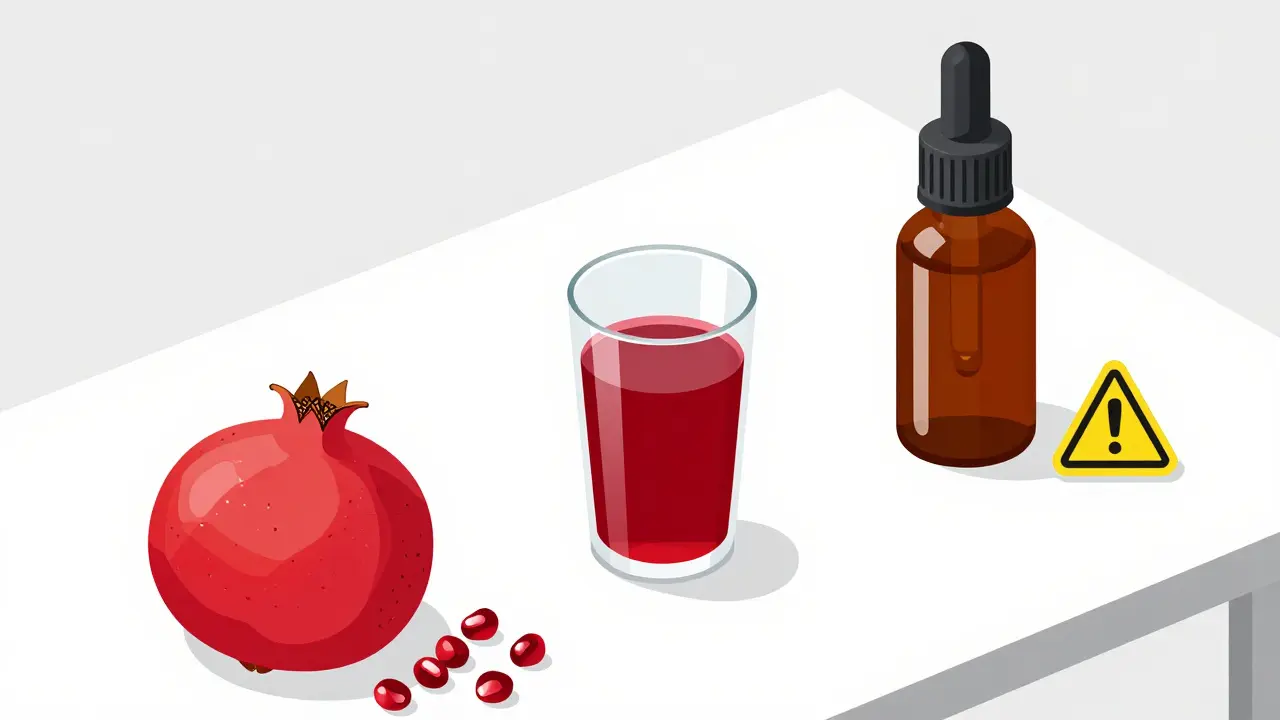
There is also a common mix-up between forms of the fruit. If you are taking a high-risk medication, you need to distinguish between these three:
- Fresh/Store-bought Juice: Generally considered safe and not clinically significant for CYP interactions.
- Concentrated Extracts: Higher risk; these can potentially alter drug levels because they are more potent.
- Whole Fruit: Lowest risk, as the active compounds are bound in fiber and processed differently.
If your pharmacist tells you to avoid pomegranate juice, it might be based on old lab data rather than new human trials. It is always worth asking, "Is this based on human clinical trials or lab studies?" because, as experts like Dr. Stephen Stahl have noted, lab data should only be a guide when human data doesn't exist.
Practical Advice for Daily Life
For most of us, adding a splash of pomegranate juice to a smoothie is perfectly fine. However, if you are taking medications with a very narrow safety margin (like certain anti-seizure meds or high-dose anticoagulants), a cautious approach is still smart. You don't need to panic, but you should monitor how you feel when introducing new concentrated supplements into your routine.
The consensus among pharmacology experts is that the risk of a pharmacokinetic interaction with pomegranate juice is negligible for most people. While the science of the liver is complex, the takeaway is simple: don't let old, outdated lab theories stop you from enjoying your nutrients, but do keep a close eye on concentrated extracts.
Does pomegranate juice increase the potency of my medicine?
In laboratory settings, it appeared to. However, human trials have shown that pomegranate juice does not significantly alter the concentration of most drugs in the bloodstream. Unlike grapefruit juice, it doesn't effectively block the CYP3A4 enzyme in the human gut.
Is pomegranate extract different from pomegranate juice?
Yes. Extracts are concentrated versions of the fruit's active compounds. While the juice is generally considered safe, some case reports suggest that high-concentration extracts may interfere with medications like Warfarin, potentially increasing the risk of bleeding.
Why do some doctors still tell me to avoid it?
Many healthcare providers rely on early in vitro studies from the mid-2000s that showed pomegranate juice inhibiting liver enzymes. They may not be aware of the later human clinical trials that proved these effects don't actually happen in the human body at normal consumption levels.
Which enzymes are involved in these interactions?
The primary enzymes involved are CYP3A4 and CYP2C9. These are part of the Cytochrome P450 system and are responsible for metabolizing a huge portion of clinically used drugs.
Should I worry if I drink pomegranate juice and take statins?
Current clinical evidence suggests that pomegranate juice does not significantly interact with the CYP3A4 pathway used by many statins. However, always check with your pharmacist, as some specific medications have unique profiles.
What to do next
If you are currently on a medication that carries a grapefruit warning, don't assume pomegranate is the same. You can likely enjoy it in moderation. However, if you plan to start a pomegranate extract supplement, treat it like a drug and run it by your doctor first.
For those who want to be 100% sure, keep a simple log of your medication timing and your juice consumption for a week. If you notice any unusual side effects or changes in how your medication feels, that is the time to call your healthcare provider.


