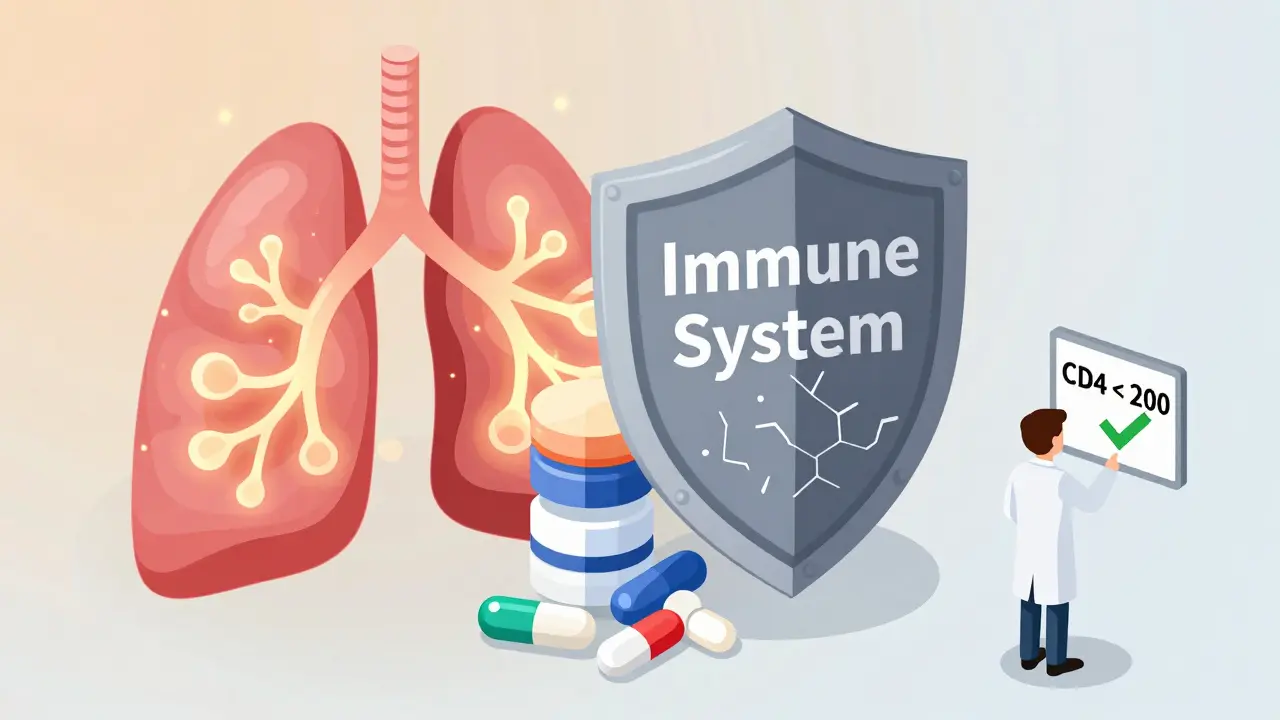
When you're on long-term steroids or other immunosuppressants, your body’s defenses are lowered. That’s by design - to calm an overactive immune system in conditions like lupus, rheumatoid arthritis, or after a transplant. But this same protection can leave you vulnerable to infections most people never even hear about. One of them is Pneumocystis jirovecii pneumonia, or PCP. It’s rare in healthy people. In someone with a weakened immune system, it can be deadly. The good news? It’s preventable. The tricky part? Knowing exactly who needs it - and who doesn’t.
Who’s at real risk for PCP?
PCP isn’t something you catch from a sneeze. It’s caused by a fungus that lives quietly in the lungs of many people without causing harm. When your immune system drops below a certain threshold, that fungus wakes up and starts to multiply. That’s when pneumonia sets in. Symptoms? Dry cough, fever, shortness of breath - often mistaken for a bad cold or flu. But unlike a cold, PCP doesn’t get better on its own. Without treatment, more than half of affected patients die. So who’s at risk? The clearest answer comes from HIV patients: if your CD4 count drops below 200 cells/microL, you get prophylaxis. That’s been standard for decades. But what about people with autoimmune diseases, organ transplants, or those on long-term steroids? That’s where things get messy. The British Columbia Renal Agency says this: if you’re on prednisone at 20 mg or more per day for four weeks or longer, you need prophylaxis. That’s not arbitrary. Studies show the risk starts climbing around that dose. But here’s the twist - cases of PCP have been documented in people on doses as low as 10 mg/day, especially if they’re also taking another immunosuppressant like cyclophosphamide or mycophenolate. So it’s not just about the steroid dose. It’s about the combo. Cyclophosphamide? That’s a red flag. Whether you’re taking it for vasculitis or lupus, if you’re on it, you’re at high risk. Guidelines say prophylaxis should continue for at least three months after stopping it. Why? Because the drug lingers in your system, keeping your immune system suppressed long after the last pill. What about azathioprine or mycophenolate alone? Usually not enough. But if you’re on one of those plus a steroid? Now you’re in the danger zone. A 2023 JAMA Insights article pointed out that many doctors don’t realize this. They see one drug and think, “It’s not enough.” But together, they can be a perfect storm.Who doesn’t need it - and why?
Here’s the uncomfortable truth: not everyone on immunosuppressants needs prophylaxis. And some of the people who get it don’t need it at all. A 2018 study followed 316 patients with rheumatic diseases for over two years. Nearly 40% of them were on high-risk drugs like cyclophosphamide or high-dose steroids - but didn’t get prophylaxis. Zero of them got PCP. Not one. Meanwhile, 2.2% of patients on prophylaxis had serious side effects - rash, low blood counts, liver issues. That’s a real cost. So why give everyone antibiotics if most won’t benefit? Because we don’t have perfect tools to predict who will get sick. But we’re getting closer. Lymphocyte count matters. If your absolute lymphocyte count is below 0.5 x 10⁹/L, your risk jumps. CD4 count? Still useful. Even in non-HIV patients, if your CD4 drops below 200, you’re in the same risk category as someone with advanced HIV. A 2023 EULAR conference update suggested using this as a trigger for prophylaxis in autoimmune disease - a move that could cut unnecessary treatment by 35%. And then there’s duration. A three-week course of prednisone? Probably fine. Six weeks? Now we’re talking. Two months? Definitely consider prophylaxis. The longer you’re suppressed, the more your defenses erode. That’s why timing matters more than you think.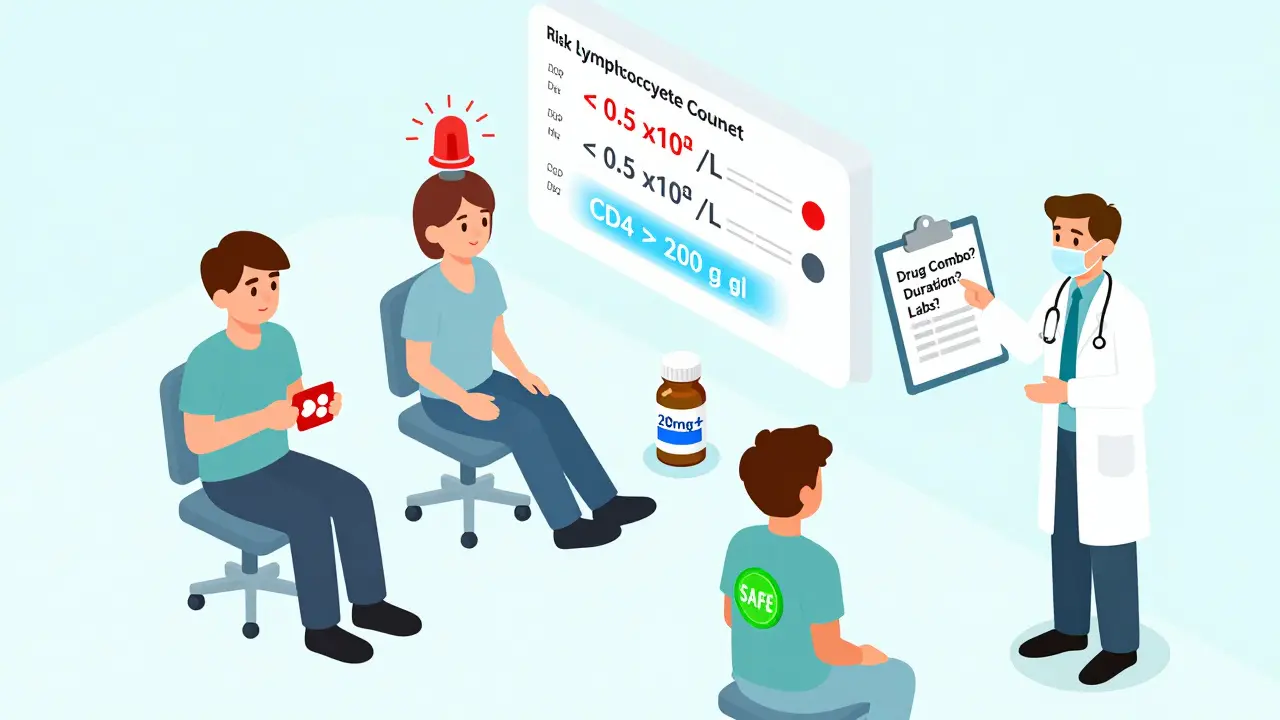
What’s the go-to prevention drug?
Trimethoprim-sulfamethoxazole - also called TMP-SMX or Bactrim - is the gold standard. One double-strength tablet daily. Cheap. Effective. Proven over decades. But here’s the catch: 20-30% of people can’t take it. Allergic reactions? Rash, itching, fever. Liver enzymes spike. Blood counts crash. If you’ve had a bad reaction before, you’re not alone. Many patients stop it because of side effects - even if they’re not life-threatening. Alternatives exist. Dapsone - once daily. It’s cheaper than TMP-SMX and works well, but don’t use it if you’re also on mycophenolate. Both can suppress bone marrow. Double the risk of anemia or low white cells. Atovaquone? An oral suspension. Expensive, but well tolerated. Aerosolized pentamidine? Inhaled once a month. You need a special nebulizer. It’s messy. It can cause coughing and bronchospasm. Not ideal for people with asthma. And no - leucovorin (folic acid) isn’t routinely needed with TMP-SMX anymore. That’s an old habit. Updated guidelines in 2022 removed it. Save the cost. Skip the pill.The hidden problem: inconsistent care
Here’s what’s really going on in clinics: inconsistency. A 2022 study found that doctors with less than five years of experience were over three times more likely to miss prophylaxis than those with over a decade. Why? Because guidelines aren’t simple. They’re layered. And they vary by specialty. Nephrologists? They follow guidelines 78% of the time for kidney patients on immunosuppressants. Rheumatologists? Only 62%. Transplant teams? Almost always. Why the gap? Because there’s no single authority telling everyone what to do. The Infectious Diseases Society of America (IDSA) hasn’t issued clear non-HIV guidelines. So each specialty makes its own rules. Patients don’t know any of this. A Reddit thread from 2023 showed 40% of patients had never heard of PCP before being told they needed an antibiotic. One woman said, “I was told to take Bactrim for a ‘lung infection I might get.’ I thought it was for my kidneys.” Documentation is just as bad. Only 47% of electronic health records include a clear reason why prophylaxis was started - or stopped. That’s not just sloppy. It’s dangerous. If you move clinics or change doctors, that critical detail vanishes.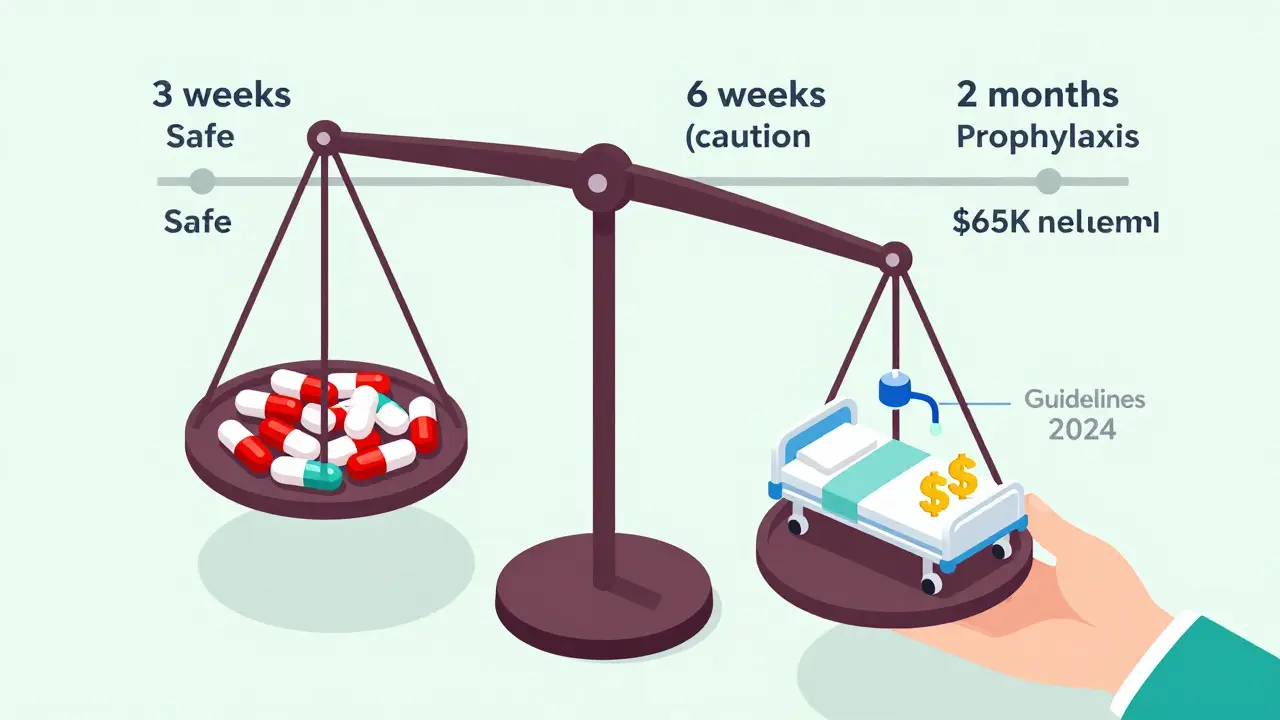
What should you do?
If you’re on long-term immunosuppressants, here’s what to ask your doctor:- Am I on a combination that increases my PCP risk? (Steroid + another drug?)
- What’s my lymphocyte count? My CD4 count? Are they below 200?
- How long have I been on this dose? Is it likely to continue?
- What are my options if I can’t take sulfa drugs?
- Do I need to get blood tests to monitor for side effects?
The future: smarter, not broader
We’re moving away from blanket rules. The next step isn’t giving prophylaxis to everyone on steroids. It’s using data: CD4 count, lymphocyte levels, drug combinations, duration of therapy - to target only those at real risk. New guidelines expected in late 2024 from the American Society of Transplantation will help standardize care for transplant patients. EULAR’s 2023 update already points to using CD4 as a trigger in autoimmune disease. That’s progress. But until then, the best defense is awareness. Know your drugs. Know your numbers. Ask questions. Don’t let silence - or outdated assumptions - put you at risk.Do all patients on steroids need PCP prophylaxis?
No. Only those on high doses - typically prednisone at 20 mg or more per day for four weeks or longer - need it. Lower doses or short courses (under three weeks) usually don’t require prophylaxis. But if you’re on a combination of drugs - like steroids plus cyclophosphamide or mycophenolate - your risk increases even at lower steroid doses. Always check with your doctor based on your full regimen.
Can I stop prophylaxis if my steroid dose is lowered?
Yes, in many cases. If your prednisone dose is tapered below 20 mg/day and you’re not on other high-risk drugs like cyclophosphamide, your doctor may consider stopping prophylaxis. But timing matters. For drugs like cyclophosphamide, you must continue prophylaxis for at least three months after stopping. Always confirm with your provider before discontinuing - never stop on your own.
Is trimethoprim-sulfamethoxazole the only option?
No. If you’re allergic to sulfa drugs, alternatives include dapsone (100 mg daily), atovaquone (1500 mg daily), or aerosolized pentamidine (300 mg monthly). Dapsone is cheaper but can worsen bone marrow suppression if you’re also on mycophenolate. Atovaquone is well tolerated but expensive. Pentamidine requires special equipment and can cause breathing issues. Your doctor will choose based on your health, allergies, and other medications.
Does PCP prophylaxis cause antibiotic resistance?
Not for PCP. The fungus that causes PCP (Pneumocystis jirovecii) hasn’t developed resistance to TMP-SMX, even after decades of use. Some concern exists because TMP-SMX is also used for bacterial infections, and resistance to those bacteria has increased. But studies show no link between PCP prophylaxis and rising resistance in Pneumocystis. The risk of PCP far outweighs this theoretical concern.
Why don’t all doctors prescribe PCP prophylaxis?
Because guidelines aren’t uniform. The Infectious Diseases Society of America has no official non-HIV guidelines. So specialists like rheumatologists, nephrologists, and transplant teams each follow their own protocols. Some rely on CD4 counts, others on steroid dose or lymphocyte levels. Studies show only 62% of high-risk rheumatology patients get prophylaxis - compared to 78% in nephrology. Lack of awareness, fear of side effects, and unclear risk thresholds all contribute to inconsistent care.
Can I get PCP even if I’m on prophylaxis?
It’s extremely rare, but possible. Prophylaxis is highly effective - over 90% protective. Cases occur mostly in patients who aren’t taking it consistently, have severe immune suppression (CD4 < 100), or are on multiple high-risk drugs. Rarely, patients with sulfa allergies may be on less effective alternatives. If you develop new shortness of breath or fever while on prophylaxis, don’t assume it’s just a cold - get checked immediately.


