Medication Photosensitivity Checker
Check Your Medications
Enter a medication name to see if it causes photosensitivity and get sun protection recommendations
Common Photosensitizing Medications
These medications commonly cause photosensitivity:
Results
When you take a medication, you expect it to help you feel better. But some common drugs can make your skin dangerously sensitive to sunlight - even on cloudy days or through windows. This isn’t just a mild sunburn. It’s a real medical reaction called photosensitivity, and it’s far more common than most people realize. If you’re on antibiotics, blood pressure meds, or even over-the-counter painkillers, your skin might be at risk without you even knowing it.
What Exactly Is Drug-Induced Photosensitivity?
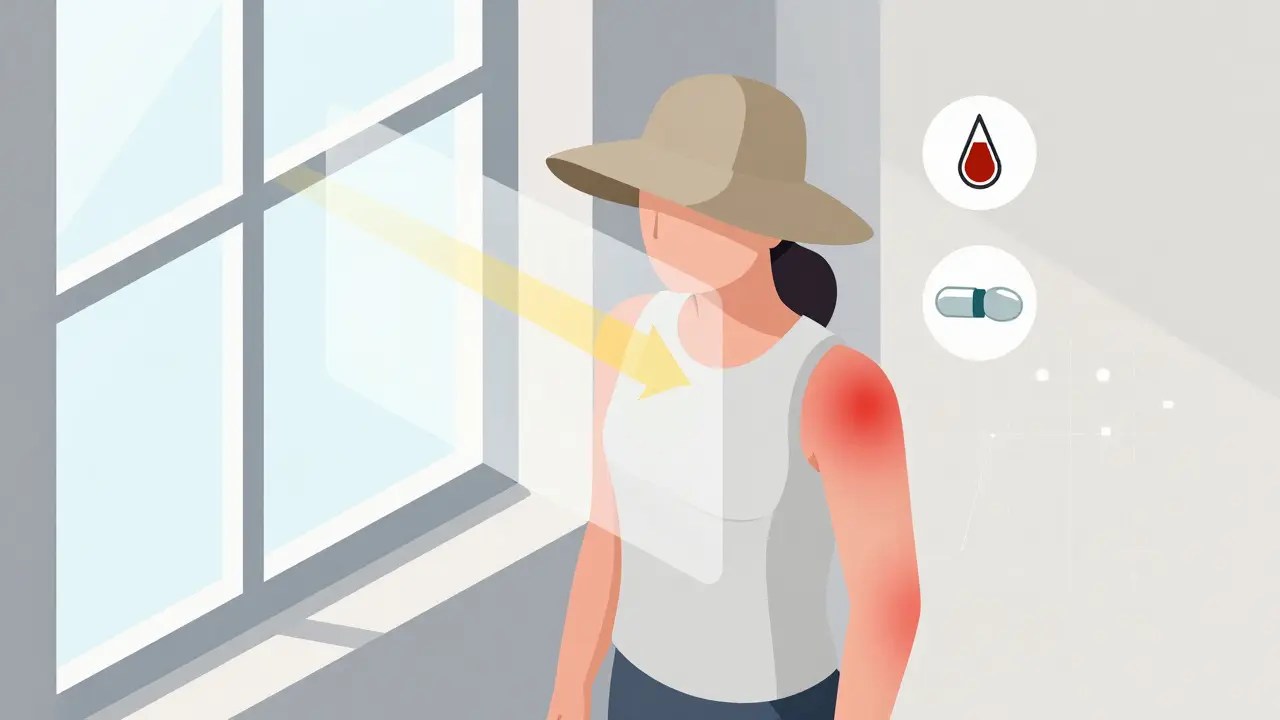
Photosensitivity from medications happens when a drug in your body reacts with ultraviolet (UV) light - mostly UVA rays - and triggers damage to your skin. It’s not an allergy in most cases. In fact, about 95% of reactions are phototoxic, meaning they’re like a severe sunburn that happens faster and worse than normal. The other 5% are photoallergic, where your immune system gets involved and causes a rash that can spread beyond sun-exposed areas.
Phototoxic reactions show up within minutes to a couple of hours after sun exposure. Your skin turns red, swells, burns, and sometimes blisters. It looks just like a bad sunburn, but it happens even with short exposure - like walking to your car or sitting near a window. Photoallergic reactions take longer. You might not notice anything until a day or two later, and then you get an itchy, patchy rash that can appear on skin that never saw direct sunlight.
More than 1,000 medications are known to cause this. Some of the most common include:
- Tetracycline antibiotics (like doxycycline) - up to 20% of users get reactions
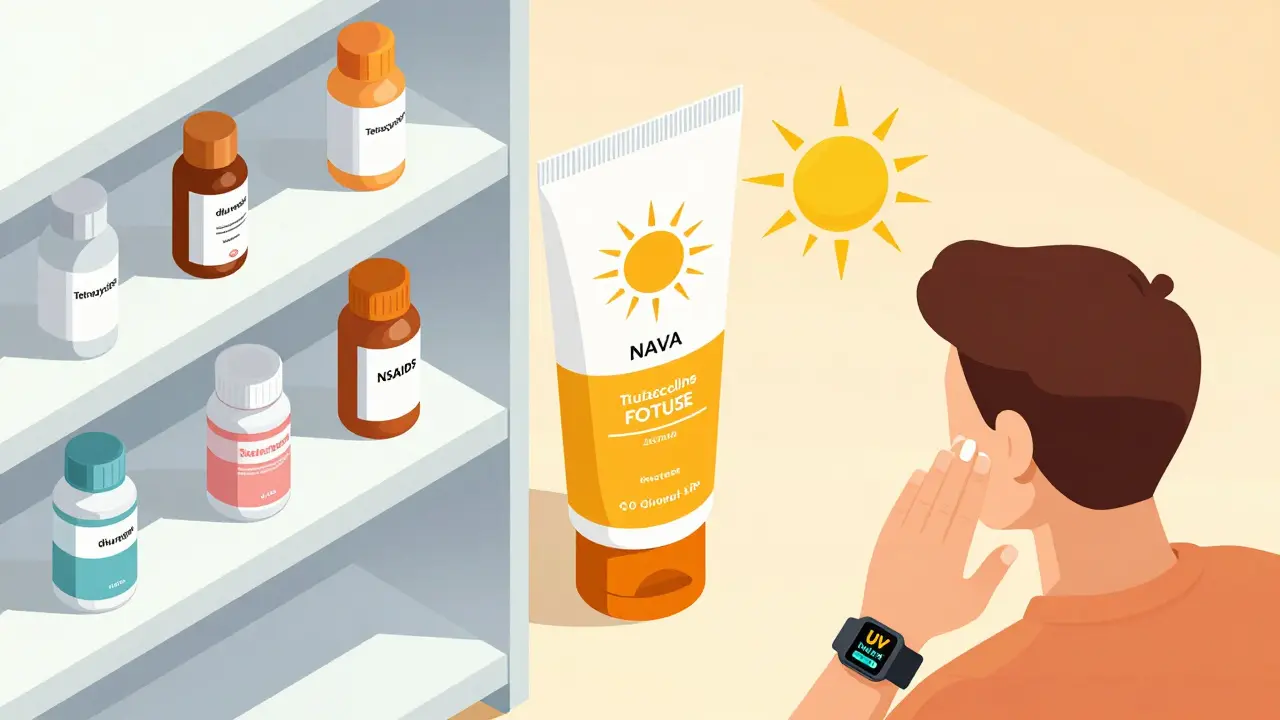
- NSAIDs (like ketoprofen or ibuprofen) - especially topical gels
- Fluoroquinolone antibiotics (like ciprofloxacin)
- Amiodarone (a heart medication) - up to 75% of long-term users develop lasting sensitivity
- Sulfonamides (antibiotics and diuretics)
- Diuretics (like hydrochlorothiazide)
- Certain antidepressants and antipsychotics
Women are more likely to get photoallergic reactions, partly because they use more topical products - creams, lotions, perfumes - that can also act as photosensitizers. But men aren’t immune. If you’re on any of these drugs, you need to treat sun exposure like a medical risk.
Why Regular Sunscreen Isn’t Enough
Most people think SPF 30 sunscreen is enough. It’s not. Standard sunscreens focus on UVB rays - the ones that cause sunburn. But photosensitivity is mostly caused by UVA rays, which go deeper into the skin, trigger oxidative damage, and aren’t well-blocked by many sunscreens.
The FDA says only 35% of SPF 50+ sunscreens actually offer enough UVA protection. That’s why mineral sunscreens with zinc oxide or titanium dioxide are the gold standard. Look for products with at least 15% zinc oxide. These ingredients physically block UVA rays instead of just absorbing them like chemical sunscreens.
Here’s what most people get wrong:
- Applying too little - most people use only 25-50% of the amount needed
- Not reapplying every 2 hours
- Missing spots like ears, neck, tops of feet
- Assuming cloudy days are safe - UVA penetrates clouds
- Thinking clothing gives full protection - a white T-shirt only blocks 3-20% of UV
One study found that patients who got detailed sun safety education from their doctors had 57% fewer severe reactions. That’s not a small difference - it’s life-changing.
What Actually Works: The Real Sun Safety Plan
If you’re on a photosensitizing drug, your sun safety plan needs to be as strict as your medication schedule. Here’s what works, based on dermatology guidelines and patient outcomes:
- Use zinc oxide sunscreen daily - SPF 50+, minimum 15% zinc oxide. Apply 1 ounce (a shot glass full) to your whole body. Reapply every 2 hours, even if you’re not sweating.
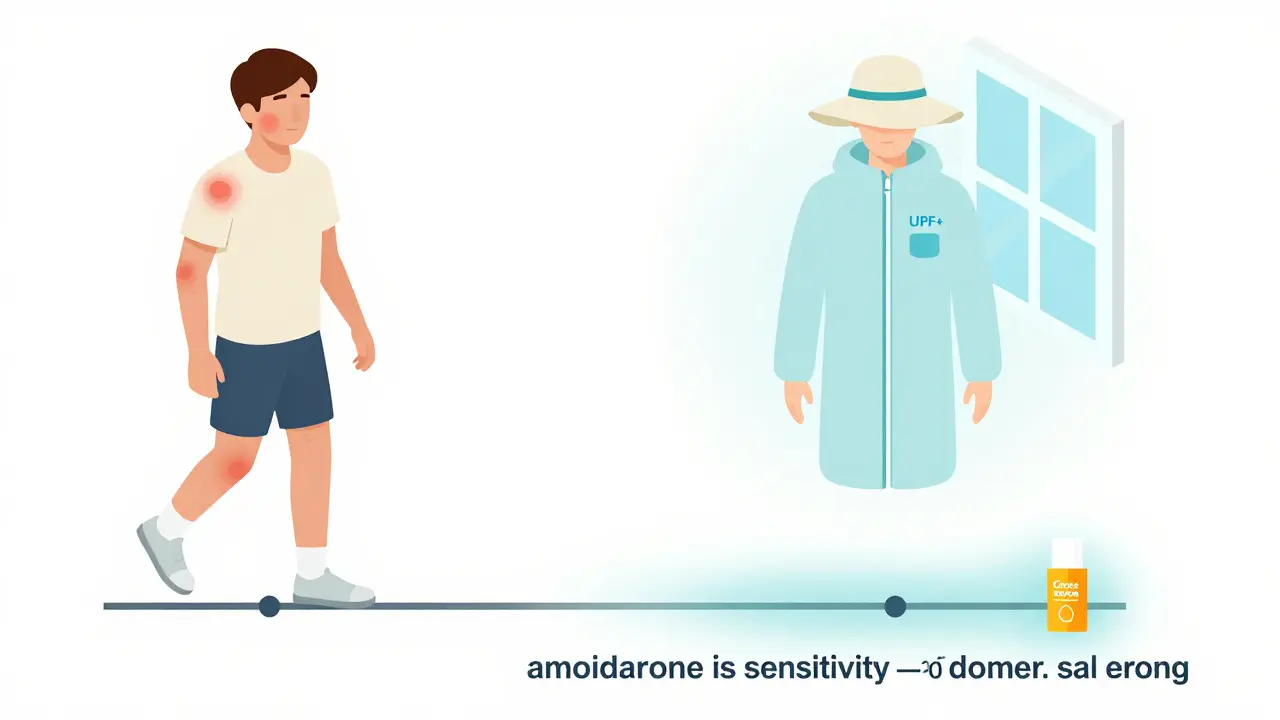
- Wear UPF 50+ clothing - this blocks 98% of UV. Regular clothes? A cotton shirt might only block 5%. Brands like Solbari, Coolibar, and Columbia’s Omni-Shade line are tested and proven. Don’t skip hats with wide brims.
- Check the UV index - if it’s 3 or higher, take extra precautions. Use apps like UVLens or the EPA’s SunWise app. UV levels are rising due to climate change - and they’re higher in the UK than most realize.
- Avoid midday sun - between 10 a.m. and 4 p.m., UV rays are strongest. Plan walks or outdoor time before 9 a.m. or after 5 p.m.
- Watch for window exposure - UVA rays go through glass. Sitting by a window at work or in your car? You’re still getting exposure. Consider UV-blocking window film if you’re on long-term meds like amiodarone.
- Don’t rely on tanning beds - they’re pure UVA. If you’re photosensitive, they’re dangerous. Period.
One patient on Reddit shared that after starting doxycycline for acne, she got blistering burns through her light summer shirt during a 15-minute walk. No one warned her. That’s the problem - most doctors don’t mention it. You have to ask.
Long-Term Risks: It’s Not Just About Sunburn
Photosensitivity isn’t just an annoyance. It increases your risk of skin cancer. The Skin Cancer Foundation says chronic exposure to UV while on photosensitizing drugs can raise your risk of non-melanoma skin cancers by up to 60%. That’s not theoretical - it’s backed by real data.
Some reactions last years. Amiodarone, used for heart rhythm problems, can cause photosensitivity that sticks around for up to 20 years after stopping the drug. That means even if you’ve been off the medication for a decade, your skin might still be vulnerable.
Other long-term effects include:
- Permanent dark spots or uneven skin tone
- Thickened, leathery skin from repeated damage
- Nail separation (photo-onycholysis)
- Blistering that mimics rare diseases like porphyria
And here’s the kicker: 70% of photosensitivity cases are misdiagnosed. Doctors often mistake it for eczema, lupus, or just “bad sunburn.” If you’ve had unexplained rashes after sun exposure while on meds, ask your dermatologist about photopatch testing. It’s not perfect - only 30-40% of cases confirm the cause - but it’s the best tool we have.
What’s New in 2026: Better Tools and Awareness
Things are changing. In 2023, the FDA started requiring warning labels on over 200 high-risk medications. That’s a big step. Companies like 23andMe now offer genetic tests that can tell you if you’re more prone to photosensitivity based on your MC1R gene - the same gene linked to red hair and fair skin.
There’s also new tech on the horizon. A new photoprotective medication called Lumitrex, approved in 2023, reduces UV-induced skin damage by 70% in trials. And researchers are testing “smart” sunscreens that change color when UV levels get dangerous - like a built-in warning system.
Meanwhile, the photoprotective clothing market is growing fast. In 2022, it hit $3.2 billion. More pharmacies now stock UPF clothing. Insurance companies are starting to cover sunscreens for high-risk patients. And Kaiser Permanente’s automated system, which flags photosensitizing drugs in electronic records, cut reactions by 28% in just one year.
The message is clear: this isn’t something you ignore. It’s not just about avoiding the beach. It’s about daily habits - sunscreen, clothing, timing - that protect your skin for life.
What to Do If You’re Already Reacting
If you’ve had a reaction:
- Stop sun exposure immediately
- Apply cool compresses and aloe vera (avoid alcohol-based products)
- Don’t pop blisters - that invites infection
- Call your doctor - they may need to switch your medication
- Keep a log: what drug, when you took it, sun exposure, symptoms
Don’t wait for a second reaction. If you’ve had one, you’re at higher risk for the next. And remember: 68% of people with photosensitivity never got a warning. Don’t assume your provider told you everything. Ask directly: “Is this medication known to cause sun sensitivity?”
Can photosensitivity go away after stopping the medication?
It depends on the drug. For most, like doxycycline or NSAIDs, sensitivity fades within days or weeks after stopping. But for drugs like amiodarone, it can last up to 20 years. Even if you feel fine, your skin may still react to UV light. Always assume you’re still sensitive unless your dermatologist confirms otherwise.
Are natural sunscreens better for photosensitive skin?
Not necessarily. The term "natural" doesn’t mean anything medically. What matters is the active ingredient. Zinc oxide and titanium dioxide - even if synthetically made - are the most effective for blocking UVA. Avoid sunscreens with oxybenzone or avobenzone if you’re photosensitive; they can trigger reactions in some people. Stick to mineral-based formulas with 15%+ zinc oxide.
Can I still go outside if I’m on a photosensitizing drug?
Yes - but you need to be strategic. Avoid direct sun between 10 a.m. and 4 p.m. Wear UPF 50+ clothing and a wide-brimmed hat. Use zinc oxide sunscreen every 2 hours. Check the UV index daily. Many people on these meds live full, active lives - they just don’t take risks. Planning matters more than avoidance.
Why do some people get reactions and others don’t?
It’s a mix of genetics, skin type, dosage, and UV exposure. Fair skin, light eyes, and red hair increase risk. But even dark-skinned people can react. It’s not about being "fair" - it’s about how your body processes the drug and how much UV you absorb. Two people on the same drug can have completely different reactions.
Should I stop my medication if I get a sun reaction?
Never stop a prescribed medication without talking to your doctor. Some drugs - like amiodarone or certain antibiotics - are essential for life-threatening conditions. Instead, ask about alternatives, adjust your sun protection, or get tested. Your doctor can help you weigh risks and find a solution that keeps you safe and healthy.
Next Steps: Protect Yourself Today
If you’re on any medication - even a daily antibiotic or blood pressure pill - check if it’s a photosensitizer. Visit the FDA’s Sun Safety Medication Database or ask your pharmacist. Download a UV index app. Buy one UPF 50+ shirt or hat. Apply zinc oxide sunscreen every morning, even if it’s cloudy. Make it as routine as brushing your teeth.
Photosensitivity isn’t rare. It’s overlooked. And every year, more people are affected. But with simple, smart habits, you can live safely - no matter what’s in your medicine cabinet.


