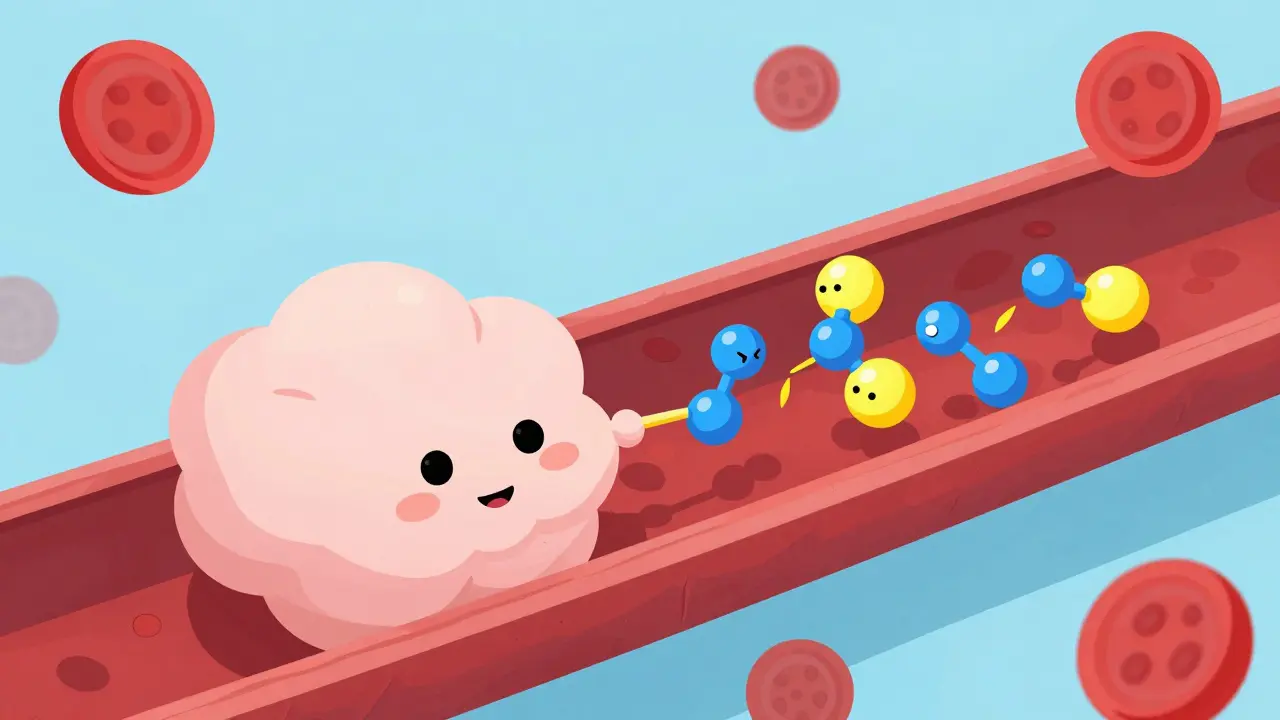
Phenytoin-Warfarin Interaction Simulator
How to use: Move the slider to simulate the progression of time after starting Phenytoin while on a stable dose of Warfarin. Observe how the mechanism and clinical risks shift.
Estimated INR Trend
Baseline State
NeutralPatient is on a stable dose of warfarin with a therapeutic INR.
Adding a new medication to a stable regimen can sometimes feel like a gamble, but when phenytoin is introduced to a patient already taking warfarin, it is a high-stakes scenario. This isn't your typical drug interaction where one drug simply blocks another. Instead, it's a "biphasic" rollercoaster: first, the risk of dangerous bleeding spikes, and then, shortly after, the risk of blood clots increases as the drug's effectiveness plummets. If you aren't looking for these specific shifts, you could easily miss the window to prevent a serious adverse event.
The First Wave: The Protein-Binding Tug-of-War
To understand why the phenytoin and warfarin interaction starts with a spike in bleeding risk, we have to look at how these drugs travel through the blood. Warfarin is incredibly "sticky"; about 99% of it binds to albumin (a protein in your plasma). Only the tiny 1% that remains "free" is actually active and able to thin the blood.
Phenytoin is also highly protein-bound, but it has a much stronger affinity for those albumin binding sites. When phenytoin enters the system, it essentially kicks warfarin off the protein. This displacement happens fast-usually within 24 to 72 hours. Suddenly, the amount of free, active warfarin in the blood increases by 20-30%. For a patient, this manifests as a sudden jump in their INR (International Normalized Ratio), which can lead to spontaneous bruising or internal bleeding if not caught.
This initial phase is temporary. Within 3 to 5 days, the body typically reaches a new equilibrium, and the INR may appear to stabilize. However, this is where many clinicians get tricked into thinking the danger has passed, just as the second, more powerful phase kicks in.
The Second Wave: The Metabolic Accelerator
While the protein displacement is happening, phenytoin is also triggering a deeper change in the liver. It activates the pregnane X receptor (PXR), which tells the liver to produce more enzymes to chew through medications. Specifically, it ramps up CYP2C9 and CYP3A4.
This is a critical problem because CYP2C9 is the primary enzyme responsible for breaking down S-warfarin, the most potent form of the drug. Phenytoin can increase the expression of CYP2C9 by up to 400%. By the time 7 to 14 days have passed, the liver is essentially "burning through" the warfarin far faster than usual. The result? The INR crashes, and the patient loses their anticoagulation protection, leaving them vulnerable to strokes or pulmonary embolisms.
| Timeframe | Primary Mechanism | Effect on INR | Clinical Risk |
|---|---|---|---|
| 24-72 Hours | Protein Displacement | Increase ↑ | Bleeding / Hemorrhage |
| 3-5 Days | Equilibrium Phase | Stabilizing | Transient Stability |
| 7-14 Days | CYP450 Enzyme Induction | Decrease ↓ | Clotting / Thrombosis |
The Genetic Variable and the "Albumin Gap"
Not every patient reacts to this interaction the same way. Genetics play a massive role. People with specific variants of the CYP2C9 or VKORC1 genes may experience much more volatile swings. For "poor metabolizers," the initial spike in INR can be even more dangerous because their bodies already struggle to clear warfarin.
Another danger zone is hypoalbuminemia. If a patient has low serum albumin (below 3.5 g/dL)-common in elderly patients or those with liver disease-there are fewer "parking spots" for the drugs. In these cases, even a small dose of phenytoin can cause a massive relative increase in free warfarin, making the initial bleeding phase far more unpredictable.
Practical Management: How to Navigate the Chaos
Because this interaction is so volatile, you cannot rely on standard dosing schedules. The gold standard for management is aggressive, individualized monitoring. The UCSD Anticoagulation Clinic recommends checking the INR every 2 to 3 days immediately after starting phenytoin. Once the levels stop swinging wildly, you can move to weekly checks.
When the enzyme induction fully takes hold, the dose requirements for warfarin often skyrocket. It is not uncommon for patients to need 2 to 5 times their original dose of warfarin just to maintain a therapeutic INR. The key is to avoid making empirical dose changes based on a guess; instead, adjust the dose based on the actual INR trends observed during the first three weeks.
The danger doesn't end if you stop the medication. If a patient who has been stabilized on both drugs suddenly stops phenytoin, the liver enzymes slowly return to normal over 10 to 14 days. As the "metabolic accelerator" disappears, warfarin levels will climb, often requiring a 25% to 50% reduction in dose to prevent a major bleeding event.
Are There Better Alternatives?
Given the headache of managing this interaction, many doctors are moving away from phenytoin if the patient needs anticoagulation. If the goal is seizure control, drugs like levetiracetam, gabapentin, or pregabalin are much safer choices because they don't mess with the CYP450 enzyme system.
You might wonder why we don't just use DOACs (Direct Oral Anticoagulants) like apixaban or rivaroxaban. While DOACs are easier to manage generally, phenytoin's enzyme induction also lowers the plasma concentrations of many DOACs, making them potentially ineffective. For patients with mechanical heart valves or specific blood disorders, warfarin remains the only viable option, which makes understanding this complex interaction a necessity for survival.
Why does the INR go up and then down?
This is called a biphasic response. First, phenytoin pushes warfarin off albumin proteins, increasing the active drug in the blood (raising INR). Later, phenytoin triggers the liver to produce more enzymes that break warfarin down faster (lowering INR).
How much should the warfarin dose be increased?
While it varies by person, clinical guidelines from institutions like UCSD suggest that once steady-state induction is reached, patients may require 2 to 5 times their original dose to keep the INR in the therapeutic range.
When is the most dangerous time for monitoring?
The first 2 to 3 weeks are the most critical. You need to catch the initial bleeding risk in the first 72 hours and the subsequent loss of anticoagulation effect around day 7 to 14.
Does phenytoin affect the liver permanently?
No, the enzyme induction is reversible. However, it takes time-usually 1 to 2 weeks-for the liver enzymes to return to baseline after phenytoin is discontinued, meaning warfarin doses must be lowered gradually.
Can I use a DOAC instead of warfarin with phenytoin?
It's risky. Phenytoin induces the same enzymes that metabolize many DOACs, which can significantly lower their levels in the blood, potentially leaving the patient unprotected from clots.