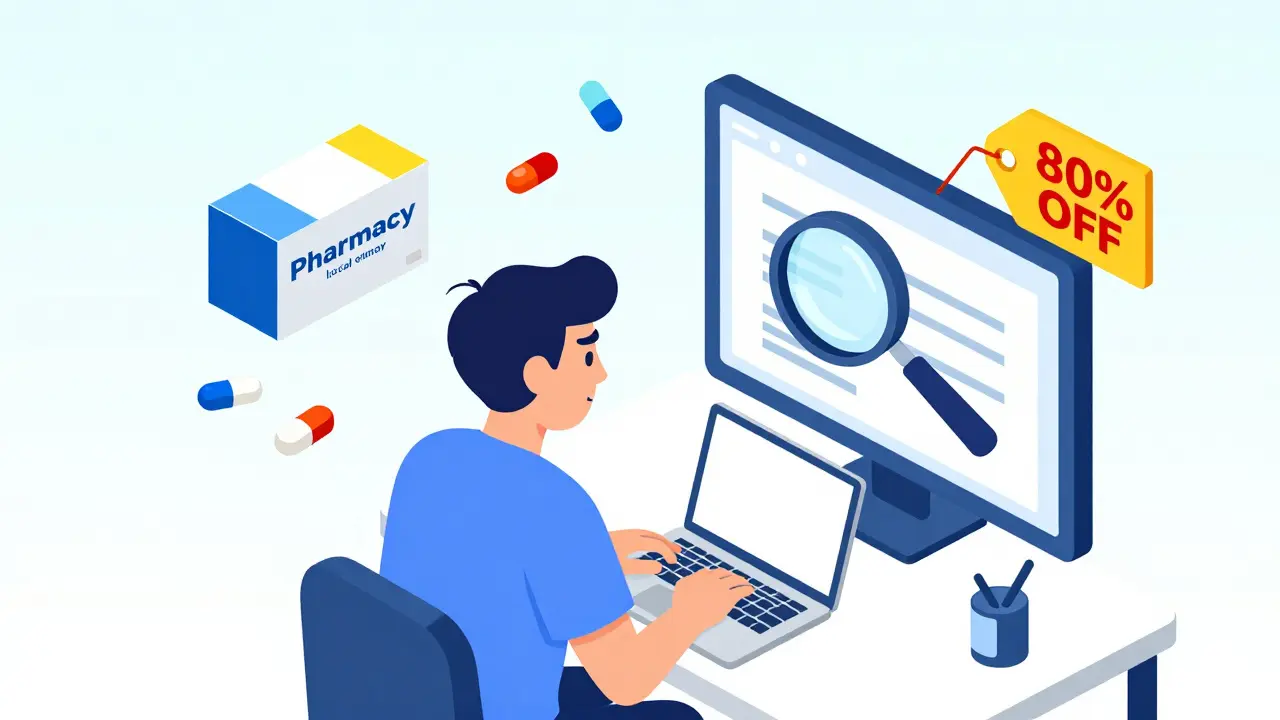
Imagine needing a refill for your blood pressure medication. The local pharmacy is closed, or the price tag makes you wince. A quick search leads you to a website promising 80% off retail prices with no prescription required. It sounds like a miracle, but it might be a trap. In 2025, over 35,000 online pharmacy websites operate globally. Only about 7,000 of them-roughly 20%-are verified as legitimate by the National Association of Boards of Pharmacy (NABP). That means nearly four out of five sites are operating in a regulatory gray area or are outright scams.
The stakes are high. The FDA reported 1,842 adverse events linked to illegitimate online pharmacy purchases in 2024, a 27% jump from the previous year. These aren't just minor side effects; they include dangerous interactions, ineffective treatments, and severe health crises caused by counterfeit generics. Understanding how to navigate this digital landscape is no longer optional-it's a critical part of managing your health safely.
Why We Turn to Online Pharmacies
It’s not hard to see why people flock to these sites. Convenience is king. According to a 2024 JAMA Internal Medicine survey, 87% of users cite time savings as their primary reason for buying meds online. For busy parents, rural residents, or those with mobility issues, skipping the drive to the store is a game-changer. Then there’s the cost. Generic medications on legitimate platforms can cost 30-80% less than what you’d pay at a brick-and-mortar counter. With healthcare costs rising, that savings is tempting.
But here’s the catch: convenience shouldn’t come at the expense of safety. The industry has grown rapidly since Pharmacy.com launched in 1998. Today, the U.S. online pharmacy market is valued at $74 billion, growing at 14.7% annually. While major players like CVS Caremark and Optum Rx dominate the legitimate segment, unverified sites capture 82% of market volume. They lure customers with rock-bottom prices and zero friction, but they often deliver products that are substandard, expired, or completely fake.
The Red Flags of Illegitimate Pharmacies
How do you tell a safe site from a scam? The FDA’s BeSafeRX campaign outlines four critical differentiators. If a website fails any of these checks, walk away.
| Feature | Legitimate (VIPPS-Accredited) | Illegitimate/Unverified |
|---|---|---|
| Prescription Requirement | Always required (100% compliance) | Often sold without one (87% violation rate) |
| Physical Address | U.S. physical address provided (98%) | PO Box only or no address listed |
| Licensed Pharmacist | Available for consultation (100%) | No contact info or fake credentials |
| Pricing Claims | 30-60% below retail | 70-90% off (too good to be true) |
| Medication Authenticity | 99.7% authentic (FDA tested) | 97% contain counterfeit/substandard products |
If a site offers you controlled substances like ADHD medications or anxiety drugs without an in-person evaluation, it’s violating the Ryan Haight Online Pharmacy Consumer Protection Act of 2008. Even with temporary telemedicine flexibilities, legitimate providers must verify patient identity. Dr. Sarah Ahmed from Johns Hopkins warns that substandard generics from illegitimate sources often contain anywhere from 20% to 200% of the labeled active ingredient. That variability can be fatal for conditions requiring precise dosing, like heart disease or diabetes.
What Makes a Generic Drug Safe?
Generic drugs are bioequivalent to their brand-name counterparts, meaning they work the same way in the body. But this equivalence depends on strict manufacturing standards. When you buy from a verified source, you’re getting a product that meets FDA regulations. When you buy from an unverified site, you’re gambling.
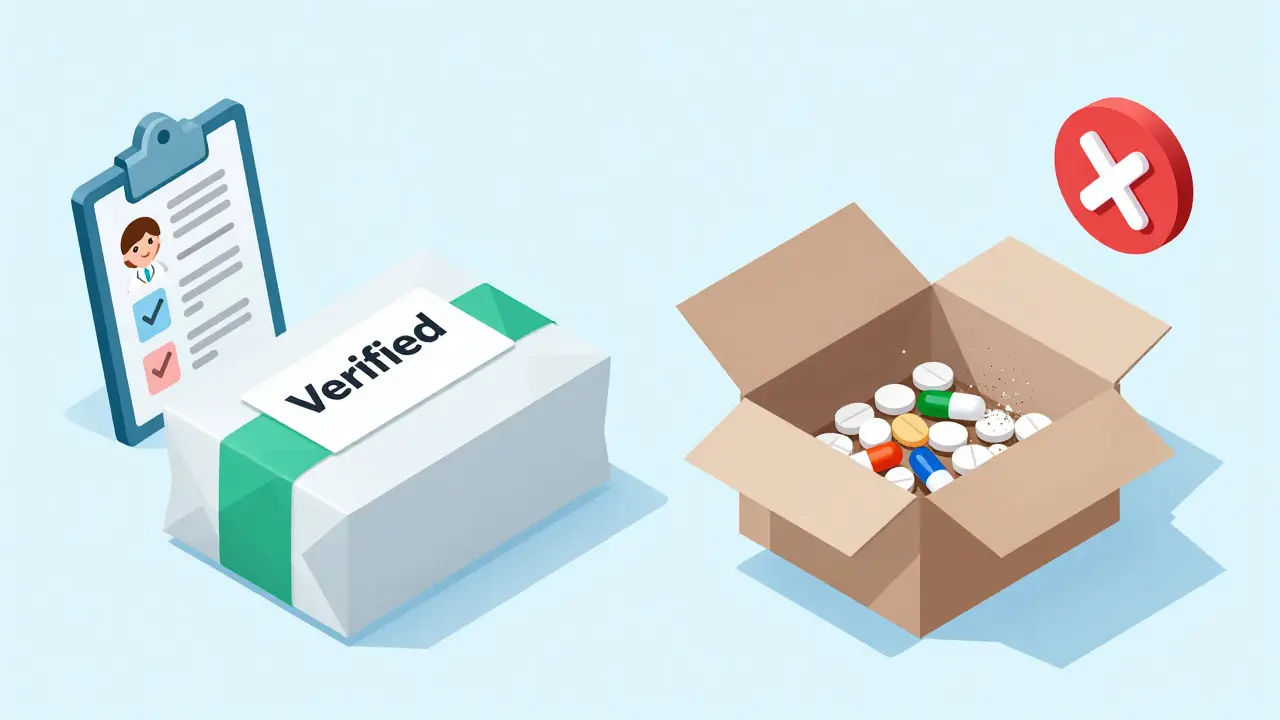
In 2024, USP verification studies found that 97% of products from non-verified sites were counterfeit or substandard. One Reddit user, 'MedSavvy2023', shared a harrowing story in March 2025 about receiving sertraline that lab testing revealed contained only 18% of the active ingredient. Imagine taking a pill thinking you’re treating depression, when you’re actually ingesting mostly filler. This isn’t just about wasted money; it’s about untreated illness and potential toxicity from unknown contaminants.
Temperature control is another hidden risk. The American Pharmacists Association’s 2025 Safety Report highlights that 83% of samples from non-compliant shippers showed degradation after just 72 hours at temperatures above 77°F (25°C). Many illegitimate sites ship via slow, untracked mail services that expose meds to extreme heat or cold, rendering them useless before they even reach your door.
How to Verify an Online Pharmacy in 5 Minutes
You don’t need to be a detective to stay safe. Follow these steps to vet any site before you enter your credit card details:
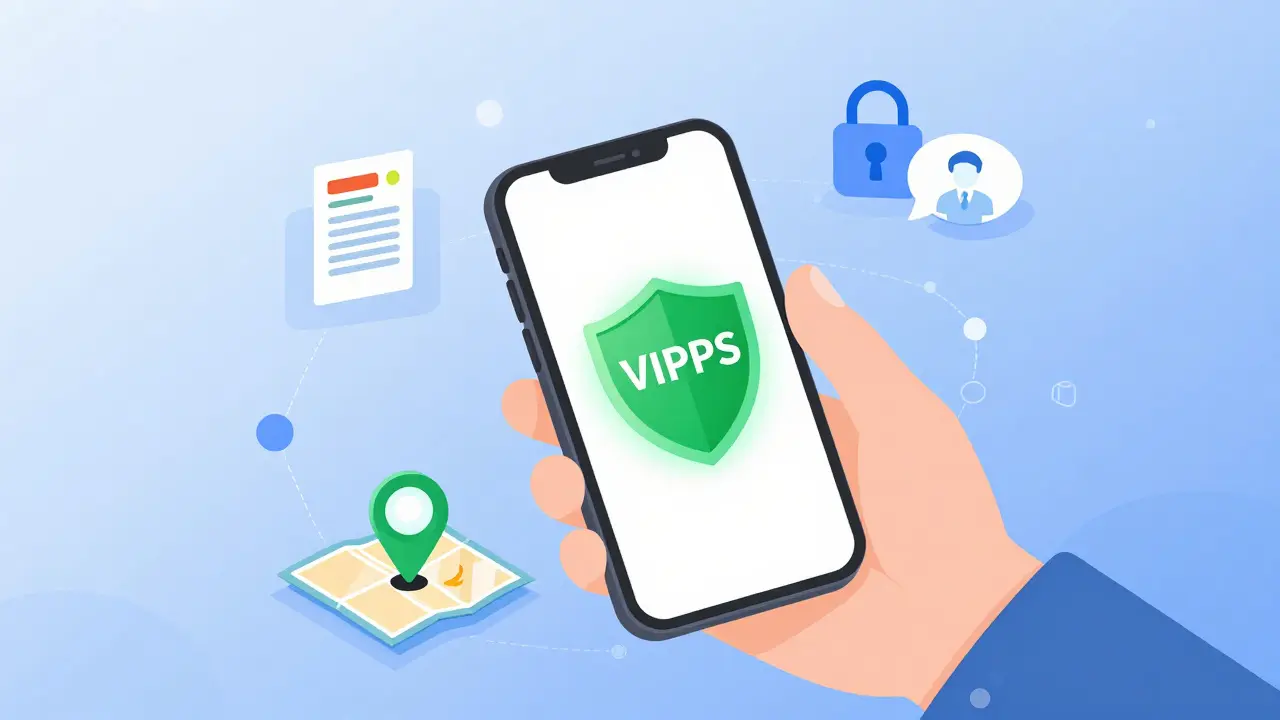
- Check for VIPPS Accreditation: Look for the Verified Internet Pharmacy Practice Sites seal. Click it to ensure it links directly to the NABP website. Fake seals are common, so always verify the URL.
- Demand a Prescription: If a site sells prescription-only drugs without asking for one, it’s illegal and unsafe. Legitimate pharmacies will require a valid prescription from a licensed provider.
- Find a Physical Address: Scroll to the footer. Is there a real street address in the U.S.? Use Google Maps to confirm it’s a working pharmacy, not a warehouse or empty lot.
- Contact a Pharmacist: Can you chat with a licensed pharmacist? Legitimate sites offer 24/7 access for questions. If the only contact is a generic email form, proceed with caution.
- Use Price Comparison Tools: Apps like GoodRx filter for VIPPS-accredited pharmacies and show real-time pricing. They serve 48 million Americans monthly and act as a first line of defense against scams.
Massachusetts recently tightened rules, requiring all nonresident pharmacies serving its patients to obtain state licensure by May 2025. While this applies locally, it signals a national trend toward stricter oversight. If a site claims to bypass these requirements, it’s likely operating illegally.
The Role of Telemedicine and New Regulations
The rise of telehealth has blurred lines between doctors and pharmacies. The DEA’s January 2025 rule requires all telemedicine platforms facilitating prescriptions to register under new categories, including Special Registration for Telemedicine. This aims to prevent diversion while maintaining access. However, loopholes remain. Some platforms partner with unverified pharmacies to fill scripts, creating a chain of liability that leaves patients vulnerable.
DEA Administrator Anne Milgram emphasized that the goal is balancing access with safety. But until enforcement catches up with innovation, consumers must remain vigilant. The FDA plans to deploy AI-powered website screening in 2025, expected to increase warning letters by 40%. This is a step forward, but it doesn’t replace personal due diligence.
Real Stories, Real Risks
Data tells one story; human experiences tell another. On Trustpilot, legitimate online pharmacies average 4.3 stars based on over 127,000 reviews. Non-verified sites average a dismal 1.8 stars. Common complaints include receiving "sugar pills" instead of medication (32% of negative reviews) and ghosted customer service (47%).
Consider 'QuickPharmaRX', cited in an FDA 2025 warning letter. Eighty-nine users reported receiving mislabeled diabetes medications that caused dangerous hypoglycemic events. Another site, 'MediSaveOnline.com', left 117 customers with empty pill bottles after payment. These aren’t isolated incidents; they’re symptoms of a predatory industry targeting desperate buyers.
Conversely, verified platforms like HealthWarehouse.com maintain 4.6/5 ratings with thousands of reviews praising consistent quality and responsive care. The difference lies in accountability. Legitimate pharmacies answer to state boards, the FDA, and their own reputations. Illegitimate ones vanish when things go wrong.
Next Steps for Safer Purchasing
Start by auditing your current habits. Do you use a specific online pharmacy? Run it through the NABP verifier tool today. If you’re paying cash, explore patient assistance programs or discount cards like GoodRx, which negotiate lower rates with legitimate providers. Never buy controlled substances from sites that don’t require a video or in-person consult.
If you suspect you’ve received a counterfeit drug, report it immediately. The FDA’s online reporting system processed nearly 15,000 consumer reports in Q1 2025 alone. Your voice helps shut down bad actors. Keep the packaging and take photos if possible. Contact your doctor to discuss alternative treatment options and monitor for adverse effects.
The future of online pharmacy looks brighter with blockchain tracking and AI screening on the horizon. Gartner predicts 78% of legitimate pharmacies will use blockchain for medication tracking by 2027. Until then, trust but verify. Your health is worth more than a cheap shortcut.
Is it legal to buy generic drugs online?
Yes, it is legal to buy generic drugs online from legitimate, licensed pharmacies. However, it is illegal to purchase prescription medications from unverified sites that do not require a valid prescription. The FDA and NABP regulate these transactions to ensure safety. Always verify the pharmacy’s accreditation before purchasing.
How can I tell if an online pharmacy is fake?
Red flags include selling prescription drugs without a prescription, offering prices that seem too good to be true (e.g., 80-90% off), lacking a physical U.S. address, and having no licensed pharmacist available for consultation. Check for the VIPPS seal and verify it on the NABP website.
Are generic drugs from online pharmacies as effective as brand names?
Generics from legitimate, FDA-approved pharmacies are bioequivalent to brand-name drugs, meaning they have the same active ingredients and effectiveness. However, generics from illegitimate sites may contain incorrect dosages or harmful contaminants, making them unsafe and ineffective.
What should I do if I receive a counterfeit medication?
Stop taking the medication immediately. Contact your healthcare provider for advice and alternative treatment. Report the incident to the FDA via their MedWatch program and the NABP. Preserve the packaging and any remaining pills as evidence for investigation.
Do I need a prescription to buy antibiotics online?
Yes, antibiotics are prescription-only medications in the United States. Any site offering them without a valid prescription is operating illegally and likely selling counterfeit or unsafe products. Always consult a licensed healthcare provider for antibiotic prescriptions.
How does the VIPPS program work?
The Verified Internet Pharmacy Practice Sites (VIPPS) program is run by the NABP. It accredits online pharmacies that meet strict criteria, including state licensure, pharmacist availability, and adherence to privacy laws. You can verify a pharmacy’s status by searching the NABP database or clicking the VIPPS seal on their site.