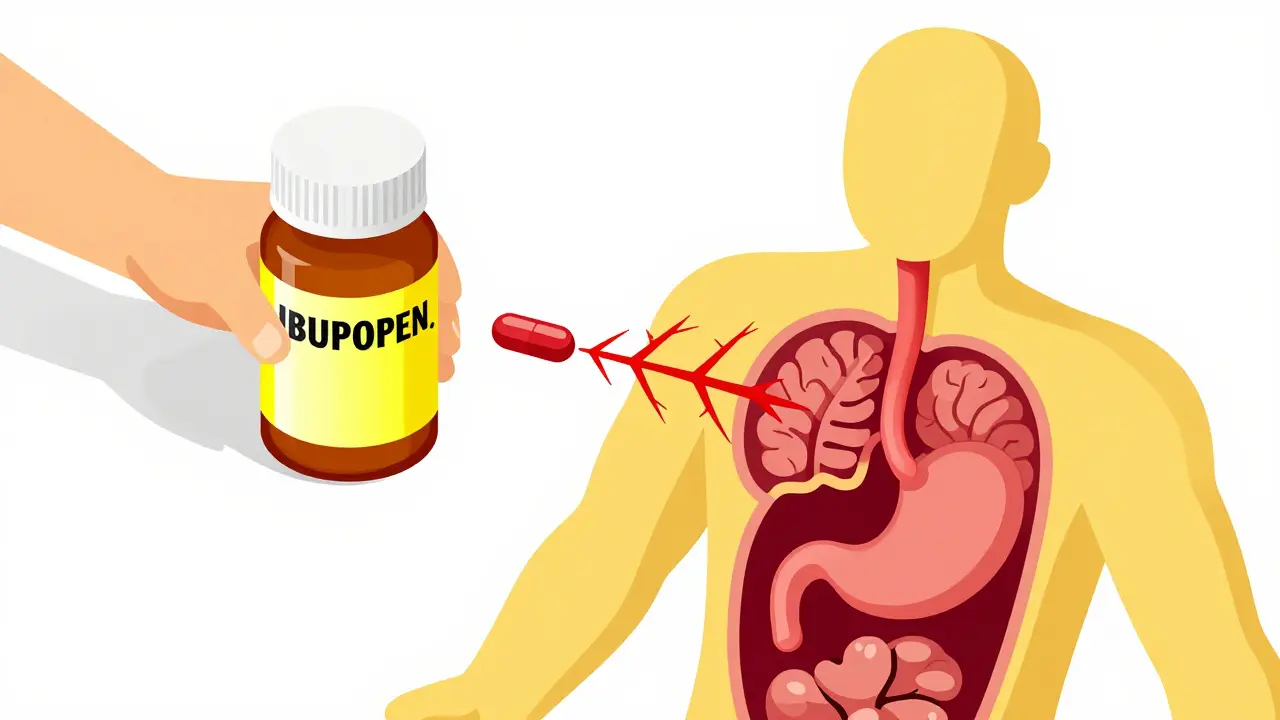
Blood Thinner and NSAID Interaction Checker
Check Your Medication Safety
Select your blood thinner and NSAID to see if this combination is safe. Based on medical guidelines and studies from Circulation and Cleveland Clinic.
Safety Result
Many people take NSAIDs like ibuprofen or naproxen for back pain, arthritis, or headaches without thinking twice. But if you’re on a blood thinner-whether it’s warfarin, apixaban, or rivaroxaban-taking these common painkillers could put you in serious danger. This isn’t a rare side effect. It’s a well-documented, life-threatening interaction that sends tens of thousands to the emergency room every year.
Why NSAIDs and Blood Thinners Don’t Mix
NSAIDs work by blocking enzymes called COX-1 and COX-2. That’s how they reduce pain and swelling. But COX-1 also helps your platelets stick together to form clots when you bleed. When NSAIDs block it, your blood can’t clot as well. Meanwhile, blood thinners like warfarin or DOACs stop other parts of the clotting process. Together, they hit your body’s clotting system from two sides.
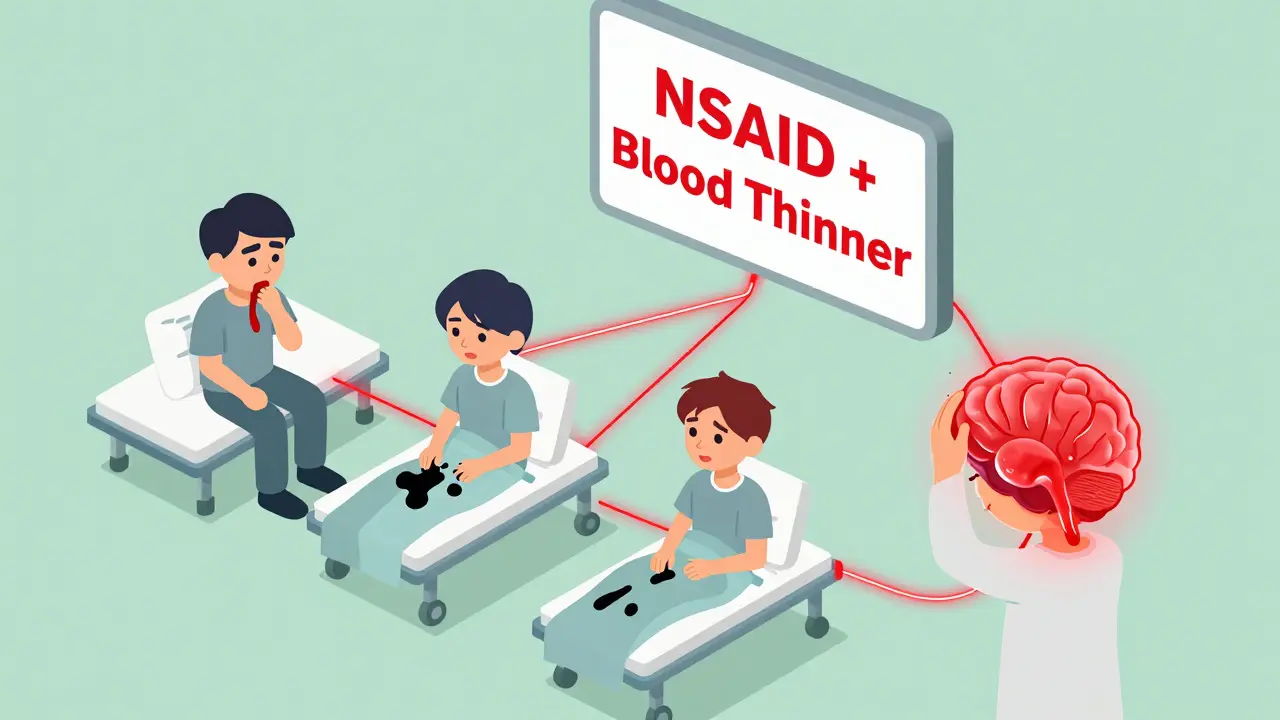
It’s not just a little extra bruising. The risk of major bleeding skyrockets. A 2024 study in Circulation found that people taking NSAIDs with blood thinners had more than double the chance of bleeding compared to those on blood thinners alone. Some NSAIDs, like naproxen, raised the risk by over four times. Diclofenac was even worse. And the bleeding doesn’t just happen in one place-it can occur in your stomach, brain, lungs, or urinary tract.
Where the Bleeding Happens-and How Bad It Gets
The most common and dangerous site for bleeding is the gastrointestinal tract. When NSAIDs damage the stomach lining and blood thinners prevent clotting, ulcers can bleed silently. You might not notice until you’re dizzy, weak, or passing black, tarry stools. Studies show this risk goes up by 2.24 times when NSAIDs are added to anticoagulants.
Brain bleeds are even scarier. The risk of intracranial hemorrhage jumps by more than three times. That’s not a small increase. It’s the difference between a minor headache and a stroke. Even bleeding in the lungs or kidneys becomes more likely. And because older adults-many of whom take blood thinners for atrial fibrillation-are also the ones most likely to need NSAIDs for arthritis, this combo hits the most vulnerable hardest.
One study found that patients on this combo were 2.8 times more likely to develop anemia from chronic blood loss. That means fatigue, shortness of breath, and heart strain-all from something as simple as popping an ibuprofen for a sore knee.
Not All Blood Thinners Are the Same
Warfarin has been around for decades, and it’s known to interact badly with NSAIDs. But even newer blood thinners like apixaban and rivaroxaban aren’t safe. While they don’t require frequent blood tests like warfarin, they still carry a high bleeding risk when paired with NSAIDs.
Here’s how the risks stack up:
| Anticoagulant | Risk Increase (Hazard Ratio) |
|---|---|
| Warfarin | 3.8 |
| Dabigatran | 2.3 |
| Rivaroxaban | 2.1 |
| Apixaban | 1.9 |
| Edoxaban | 2.0 |
Warfarin shows the highest risk, but even the safest DOAC still doubles your bleeding chance with NSAIDs. And if you’re on warfarin, NSAIDs can also push your INR up by 0.8 to 1.2 points-enough to turn a stable dose into a dangerous one overnight.
What About Celecoxib or Other "Safer" NSAIDs?
You might have heard that celecoxib (Celebrex) is safer because it only blocks COX-2. That’s true for your stomach-it causes fewer ulcers. But it still affects platelets enough to raise bleeding risk. Studies show celecoxib still increases bleeding by 1.4 times when taken with anticoagulants. That’s not safe. It’s just slightly less dangerous than naproxen or diclofenac.
And don’t be fooled by "low-dose" or "occasional" use. Even a single 400mg ibuprofen tablet can interfere with clotting for 24 hours. If you’re on a daily blood thinner, that’s enough time for a bleed to start and not stop.
The Only Safe Painkiller: Acetaminophen
If you’re on a blood thinner, acetaminophen (Tylenol) is your best bet for pain relief. Unlike NSAIDs, it doesn’t touch platelets or the stomach lining. Multiple studies confirm it doesn’t increase bleeding risk-even at the maximum daily dose of 4,000mg.
But it’s not perfect. Too much acetaminophen can damage your liver, especially if you drink alcohol, have fatty liver disease, or take other medications that affect the liver. For people with healthy livers, it’s a solid, safe choice. For others, it’s a trade-off. That’s why doctors often recommend non-drug options too.
What Can You Do Instead?
Stopping NSAIDs doesn’t mean you have to live in pain. Many patients find relief through:
- Physical therapy-targeted exercises improve joint function and reduce pain
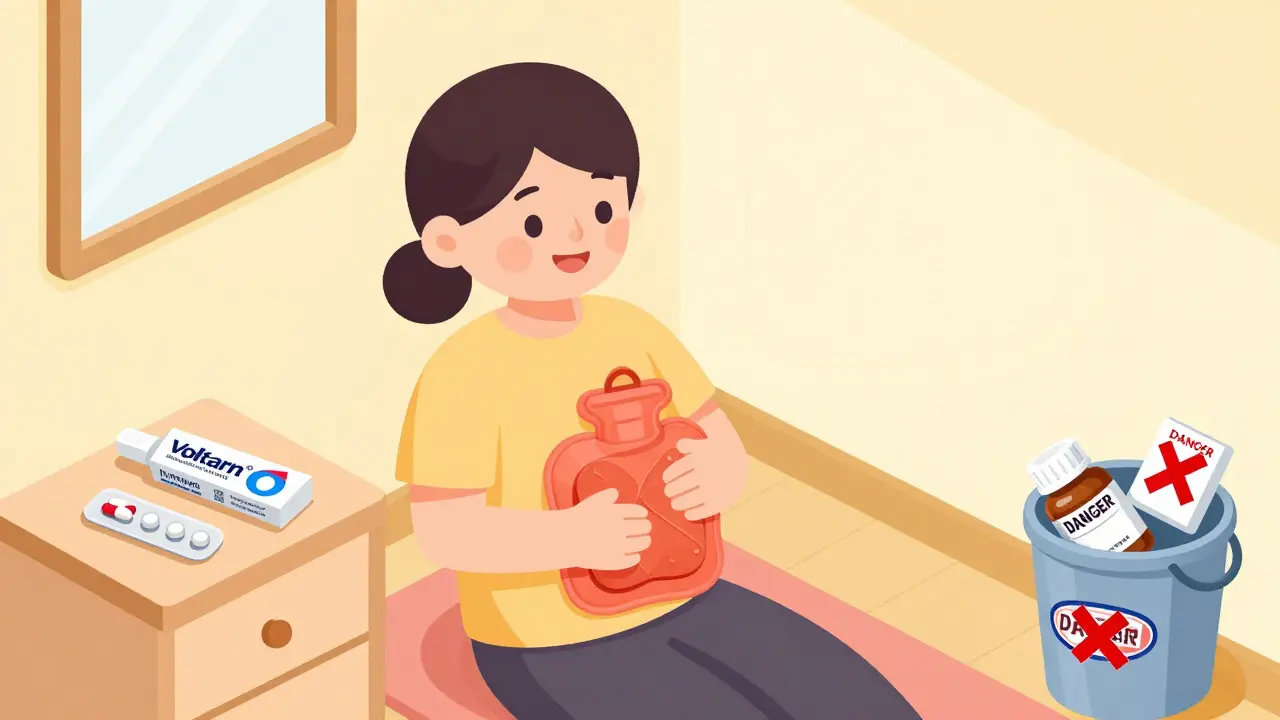
- Heat and cold therapy-simple, free, and effective for arthritis
- Topical pain relievers-gels like diclofenac gel (Voltaren) are absorbed through the skin and carry far less bleeding risk
- Weight management-even losing 5-10 pounds reduces pressure on knees and hips
- Alternative therapies like acupuncture or massage-shown to help chronic pain in multiple studies
A 2023 study from Cleveland Clinic found that 68% of patients on blood thinners who stopped NSAIDs and switched to these methods had good pain control within four weeks. That’s not just hope-it’s proven results.
The Hidden Traps: Cold Medicine, Dentists, and OTC Pills
Most people don’t realize how easy it is to accidentally mix NSAIDs with blood thinners.
- Over-the-counter cold and flu medicines often contain ibuprofen or naproxen. Read the label. Look for "NSAID" or the active ingredient.
- Dentists may prescribe ibuprofen after a tooth extraction. Tell them you’re on a blood thinner-ask for acetaminophen instead.
- Some people take NSAIDs for headaches and don’t think to mention it to their pharmacist or doctor.
On patient forums like Reddit, 62% of users admitted to using NSAIDs with blood thinners. Nearly 40% had bleeding problems. One common story: someone took ibuprofen after a dental cleaning, bled for three days, and ended up in the ER.
What Doctors Should Be Doing
Guidelines from the American Heart Association and the American College of Chest Physicians are clear: avoid NSAIDs in patients on anticoagulants. If absolutely necessary, use the lowest dose for the shortest time-no more than three days-and always add a stomach-protecting drug like pantoprazole.
But in practice, it’s messy. Only 38% of U.S. hospitals have electronic alerts that block prescriptions for this combo. Only 41% of primary care doctors consistently recommend acetaminophen. And 72% of patients get NSAIDs from pharmacies without telling anyone.
Patients often forget the warning. One study found only 29% remembered the risk three months after being told. That’s why clear, repeated communication matters. Pharmacists, nurses, and doctors all need to speak up-every time.
The Bigger Picture: Cost, Care, and Change
This isn’t just a medical issue-it’s a financial one. In the U.S. alone, bleeding from this interaction costs over $1.2 billion a year. That’s 87,000 ER visits and 24,000 hospital stays. Many of these are preventable.
Some hospitals are making progress. Those with antithrombotic stewardship programs have cut inappropriate NSAID use by 37%. New AI tools are being tested to flag risky prescriptions before they’re filled. And by 2025, the American Heart Association is expected to tighten its guidelines even further.
By 2030, experts predict NSAID prescriptions for patients on blood thinners will drop by half. That’s because awareness is growing-and technology is catching up.
What You Should Do Right Now
If you’re on a blood thinner:
- Check every medication you take-prescription, over-the-counter, or herbal. Look for ibuprofen, naproxen, diclofenac, ketoprofen, or aspirin.
- Switch to acetaminophen for pain. Stick to 3,000-4,000mg per day, and never exceed it.
- Talk to your doctor about physical therapy or topical treatments.
- Ask your pharmacist to review all your meds at least once a year.
- If you’ve had unexplained bruising, nosebleeds, dark stools, or weakness, tell your doctor immediately.
Don’t assume it’s "just a little pain." That little pain could cost you your life-or send you to the hospital for a week. You don’t have to suffer. But you do have to be smart.
Can I take ibuprofen if I’m on warfarin?
No. Ibuprofen significantly increases your risk of serious bleeding when taken with warfarin. It can also raise your INR, making your blood thinner than intended. Even occasional use is dangerous. Use acetaminophen instead.
Is naproxen safer than ibuprofen with blood thinners?
No. Naproxen is actually more dangerous than ibuprofen when combined with blood thinners. Studies show it increases bleeding risk by 4.1 times, compared to 1.79 times for ibuprofen. Both should be avoided.
What’s the safest painkiller for someone on a blood thinner?
Acetaminophen (Tylenol) is the safest option at standard doses (up to 4,000mg per day). It doesn’t interfere with blood clotting. But avoid it if you have liver disease or drink alcohol regularly.
Can I use topical NSAIDs like Voltaren gel?
Yes. Topical diclofenac gel (Voltaren) is absorbed through the skin and delivers much less drug into your bloodstream. Studies show it carries a very low bleeding risk compared to oral NSAIDs. It’s a good option for localized joint pain.
What should I do if I accidentally took ibuprofen with my blood thinner?
Stop taking the NSAID immediately. Watch for signs of bleeding: unusual bruising, nosebleeds, dark or bloody stools, vomiting blood, severe headaches, or dizziness. Call your doctor or go to the ER if any of these occur. Even if you feel fine, mention the mistake at your next appointment.
Do all blood thinners have the same risk with NSAIDs?
No, but all carry significant risk. Warfarin has the highest bleeding risk when combined with NSAIDs, followed by dabigatran and rivaroxaban. Even apixaban and edoxaban double your bleeding risk. No oral anticoagulant is safe with NSAIDs.
Can I take aspirin with my blood thinner?
Aspirin is an NSAID and also a blood thinner. Taking it with another anticoagulant is extremely dangerous and increases bleeding risk dramatically. Never combine aspirin with warfarin, apixaban, rivaroxaban, or other blood thinners unless specifically directed by your doctor for a very specific reason-and even then, it’s rarely recommended.
Why do some doctors still prescribe NSAIDs to patients on blood thinners?
Some doctors aren’t fully aware of the latest data, or they assume the patient is taking NSAIDs "occasionally." Others may not have good alternatives available. But current guidelines from the American Heart Association and others clearly say to avoid NSAIDs. If your doctor prescribes one, ask why-and ask for safer options.
Final Thought: Your Pain Isn’t Worth the Risk
Chronic pain is real. Arthritis, back pain, and joint stiffness can ruin your quality of life. But the solution isn’t always a pill. The safest way to manage pain while on a blood thinner isn’t to find a "better" NSAID-it’s to find a different path. Acetaminophen, physical therapy, heat packs, and weight loss work. They’re slower. They take effort. But they don’t put you in the hospital.
Don’t let a quick fix become a life-altering mistake. You’ve made it this far by being careful with your blood thinner. Don’t undo that with a bottle of ibuprofen. Talk to your doctor. Ask your pharmacist. Read the labels. Your life depends on it.


