Metformin Tolerability & Cost Estimator
Based on clinical data regarding GI tolerability and market pricing, this tool helps you weigh the benefits of switching from Immediate-Release (IR) to Extended-Release (XR) Metformin.
Estimated GI Relief
Potential reduction in GI symptoms if switching to XR.
Adherence Boost
+18%Likelihood of sticking with treatment long-term improves with better tolerance.
Annual Cost Diff
$0Additional yearly expense for XR vs IR.
Key Considerations
- • Take with food to buffer gut impact.
- • Start low (500mg) and titrate slowly.
- • Do not crush or split XR tablets.
Enter your details and click "Analyze Switch Benefit" to see personalized insights.
You know the drill. You get diagnosed with type 2 diabetes, and your doctor hands you a prescription for metformin. It’s the gold standard, the first line of defense, and for millions of people, it works like a charm. But then comes the other side of the coin: the stomach issues. The cramping, the sudden urge to run to the bathroom, the nausea that ruins your morning coffee routine. If you’ve ever thought, "Is this pill worth the misery?", you’re not alone. About 20 to 30 percent of patients quit or struggle because their gut just can’t handle it.
This is where the debate between Metformin Immediate-Release (IR) and Metformin Extended-Release (XR) gets interesting. One hits fast and hard; the other trickles in slowly. Does the slow-and-steady approach actually save your intestines from chaos, or is it just marketing hype wrapped in a more expensive price tag? Let’s break down what the science says, what real patients experience, and how you can tweak your dose to keep your stomach happy.
Key Takeaways
- Gut Relief: Switching from IR to XR often reduces gastrointestinal (GI) side effects by roughly 15-30%, particularly diarrhea and abdominal pain.
- The Trade-off: XR formulations are generally 25-35% more expensive than generic IR versions, though prices have dropped recently.
- Adherence Matters: Patients on XR are about 18% more likely to stick with their treatment long-term because they feel better.
- Dosing Strategy: Taking metformin with food and starting low helps regardless of formulation, but XR allows for once-daily dosing which simplifies life.
What’s Actually Happening in Your Gut?
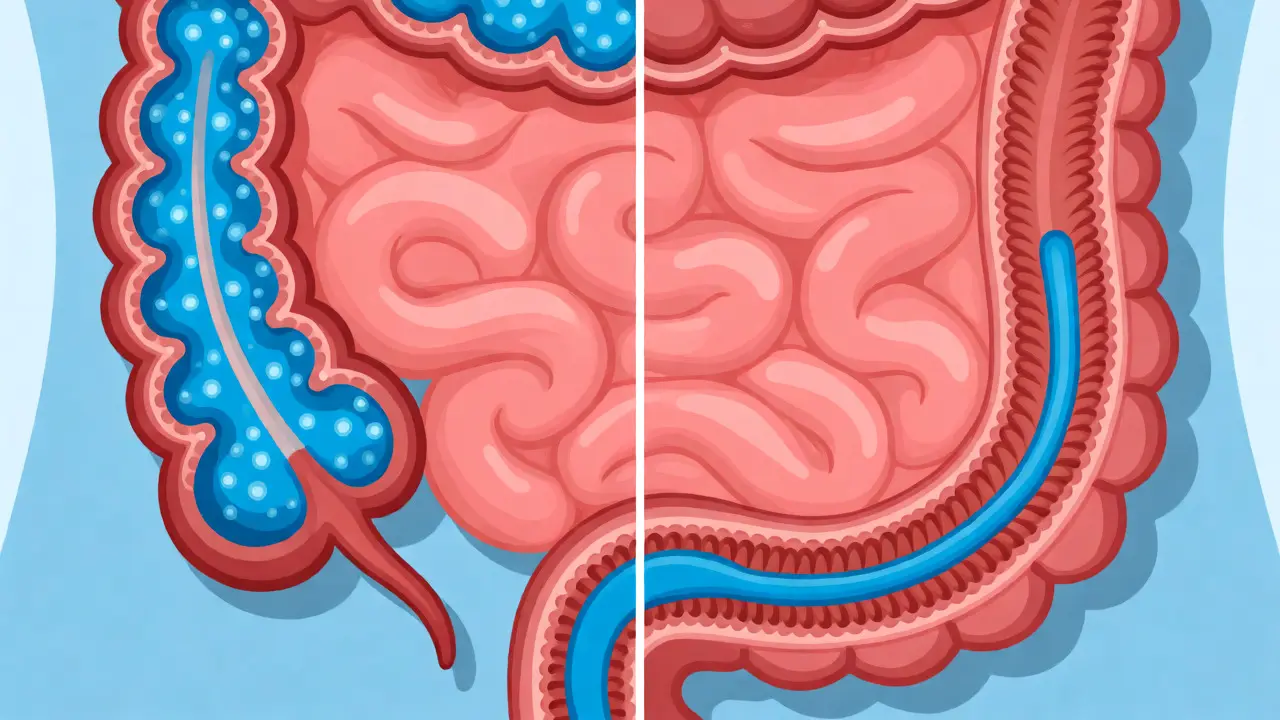
To understand why one version might hurt less than the other, you have to look at how they move through your body. Metformin isn’t absorbed in the stomach; it needs the small intestine. When you take Immediate-Release (IR) metformin, the tablet dissolves quickly. You get a sharp spike in drug concentration in your blood within about 3 hours. That rapid influx can overwhelm the lining of your gut, leading to those familiar cramps and urgent bathroom trips. It’s essentially a flood.
Extended-Release (XR) metformin uses special delivery systems, like the GelShield Diffusion System found in brands like Glucophage XR. Instead of dumping all the medication at once, it releases the drug gradually over 7 to 8 hours. This means lower peak concentrations in your blood and a gentler interaction with your intestinal wall. Think of it as a steady drip rather than a fire hose. According to pharmacokinetic studies, while the total amount of drug absorbed (bioavailability) is similar, the timing changes everything for tolerability.
The Hard Data: Does XR Really Reduce Side Effects?
We don’t have to guess here; there are numbers. A major meta-analysis published in Frontiers in Pharmacology looked at seven randomized controlled trials involving over 2,300 patients. The result? XR formulations showed a 15.3% absolute reduction in overall GI adverse events compared to IR. That sounds modest, but when you’re dealing with daily discomfort, a 15% drop is significant.
Another study by Blonde et al. followed patients who switched from IR to XR. They saw a 32.7% decrease in GI side effects. Specifically, diarrhea incidence dropped from nearly 29% down to 17.5%. However, it’s not a perfect win across the board. Some research, including a 2017 study by Aggarwal et al., noted that while diarrhea decreased, slight increases in nausea were reported with XR. So, if your primary issue is nausea, XR might help, but it’s not a guaranteed cure-all. The consensus among guidelines from the American Diabetes Association (ADA) and the UK’s NICE is clear: if you can’t tolerate IR, switch to XR.
| Feature | Immediate-Release (IR) | Extended-Release (XR) |
|---|---|---|
| Peak Effect Time | ~3 hours after dose | 7-8 hours after dose |
| Dosing Frequency | Usually 2-3 times daily | Once daily (usually with dinner) |
| Common GI Issues | High rates of diarrhea, cramping | Lower rates of diarrhea; possible mild nausea |
| Cost (Generic) | Very low ($8-$15/month) | Moderate ($12-$20+/month) |
| Best For | Patients with no GI sensitivity | Patients struggling with IR side effects |
Patient Voices: What Real People Say
Clinical trials tell us averages, but your life isn’t an average. On platforms like Reddit and TuDiabetes, the pattern is striking. In an analysis of hundreds of comments, nearly 68% of users who switched to XR reported a "noticeable improvement." One user, u/MetforminSurvivor, described going from having GI issues 5-6 days a week to maybe once a month. For them, it was life-changing.
But it’s not universal. About 23% of users said they felt no difference, and a small group (around 8%) actually felt worse, citing new nausea. Why the discrepancy? Individual biology varies wildly. Some people have slower gastric emptying, which interacts differently with the gel matrix of XR tablets. Others find that splitting the IR dose into smaller chunks throughout the day works just as well as switching formulations. If you’re considering a switch, talk to your doctor, but know that patient reports strongly favor XR for reducing the dreaded "metformin tummy."
How to Minimize Stomach Trouble (Regardless of Form)
Before you demand a switch to XR, try these proven strategies. They work for both types and can save you money and hassle.
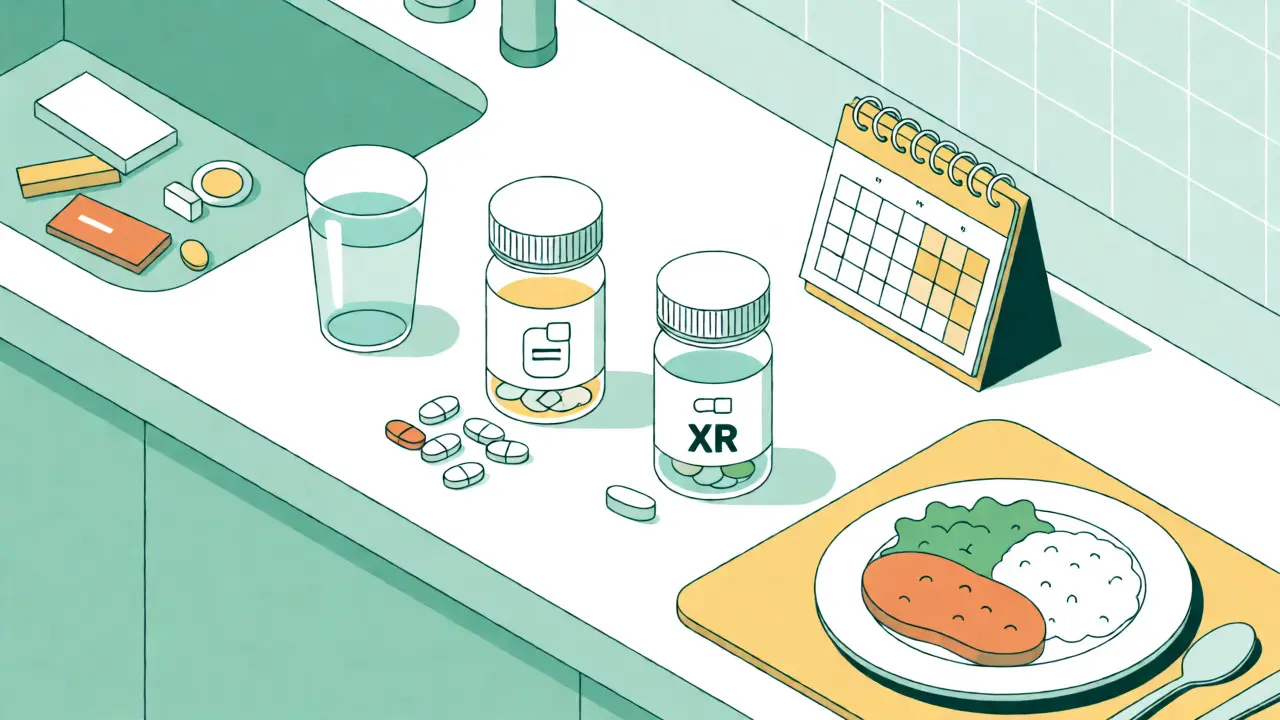
- Take It With Food: Never take metformin on an empty stomach. Eating buffers the drug’s impact on your gut lining. For XR, taking it with your evening meal is standard practice.
- Start Low, Go Slow: Doctors sometimes rush titration. Starting at 500 mg once daily and increasing by 500 mg weekly gives your gut time to adapt. Studies show this gradual approach cuts initial side effects by up to 42%.
- Split the Dose (For IR): If you’re on IR, taking 500 mg twice a day instead of 1000 mg once can smooth out the peaks and valleys in your system.
- Stay Hydrated: Diarrhea dehydrates you, which worsens fatigue and headaches. Drink plenty of water, especially in the first few weeks.
If you’ve tried these steps and still suffer, that’s when the case for Metformin Extended-Release becomes strongest. The convenience of once-daily dosing also helps adherence. Data shows patients on XR are 18% more likely to stay on their medication long-term. Sticking with your meds matters because consistent control prevents complications like nerve damage and kidney strain.

Cost and Accessibility Considerations
Let’s be real about money. Generic IR metformin is dirt cheap-often under $10 a month without insurance. Generic XR has become more affordable since patent expirations, but it usually costs 25-35% more. In the US, XR now accounts for nearly 60% of prescriptions, showing that many doctors and patients think the extra cost is worth the comfort.
In the UK, NICE guidelines specifically recommend XR for those intolerant to IR, so access via the NHS is straightforward if you document your side effects. Always check your formulary list with your pharmacist. Sometimes, brand-name XR (like Glucophage XR) is pricey, but generic equivalents offer the same benefit at a fraction of the cost.
Frequently Asked Questions
Why does metformin cause diarrhea?
Metformin alters how your gut bacteria process glucose and increases serotonin production in the intestines, which speeds up bowel movements. This is most intense when high concentrations of the drug hit the gut all at once, which is why immediate-release forms often trigger diarrhea more frequently than extended-release versions.
Can I crush or split extended-release metformin tablets?
Generally, no. Crushing or chewing extended-release tablets destroys the special coating that controls the release rate. This causes the entire dose to dump into your system at once, potentially causing severe GI distress and negating the benefit of the XR formulation. Swallow the tablet whole unless your specific brand instructions say otherwise.
Does extended-release metformin work as well as immediate-release?
Yes. Clinical studies confirm that both formulations provide comparable glycemic control (blood sugar lowering). The main difference lies in how the drug is delivered and tolerated, not in its effectiveness at managing type 2 diabetes.
How long does it take for metformin side effects to go away?
For most people, GI side effects diminish significantly within two weeks as the body adjusts. If symptoms persist beyond four weeks despite taking the medication with food and using a gradual titration schedule, discuss switching to an extended-release formulation with your healthcare provider.
Is B12 deficiency related to metformin use?
Yes, long-term metformin use can interfere with Vitamin B12 absorption in the gut. This isn't directly caused by the IR vs. XR difference, but it's a common concern. Regular monitoring of B12 levels is recommended for anyone on long-term metformin therapy, regardless of formulation.


