
When you're breastfeeding and need to take medication, the biggest question isn't just whether it's safe-it's whether you need to stop nursing. Too many mothers stop breastfeeding because they're told a medication is risky, when in reality, the risk is minimal or nonexistent. The truth? Most medications are perfectly safe while breastfeeding. You don't have to choose between your health and your baby's nutrition.
Most Medications Pass Into Breast Milk-But That Doesn't Mean They're Harmful
It's a common myth that if a drug gets into breast milk, it must be dangerous. But here's the reality: almost all medications transfer into milk to some degree. The key isn't whether it's present-it's how much, and what it does to your baby.
The gold standard for measuring this is the Relative Infant Dose (RID). This number tells you what percentage of the mother's dose ends up in the baby's system through milk. If the RID is under 10%, the medication is generally considered safe. Most common drugs have RIDs far below that.
For example, acetaminophen (Tylenol) has an RID of just 0.04-0.23%. That means if you take 650 mg, your baby gets less than 1.5 mg in a full day's milk. For comparison, a newborn can safely take 10-15 mg of acetaminophen directly as a fever reducer. So the amount in breast milk is negligible.
Pain Relief: What You Can Take Without Worry
If you're dealing with postpartum pain, headaches, or muscle soreness, you have two clear, evidence-backed choices: acetaminophen and ibuprofen.
- Acetaminophen: Works quickly, clears from your system in hours, and transfers minimally. No documented side effects in infants. First-line recommendation from the AAFP and Mayo Clinic.
- Ibuprofen: Also transfers in tiny amounts (RID 0.38-1.85%). It’s safe even for newborns, and studies show no impact on milk supply. It’s often preferred over acetaminophen for inflammation-related pain.
Both are available over the counter and can be taken regularly without stopping breastfeeding. You can even take them right after nursing to minimize exposure further.
What about naproxen (Aleve)? It’s okay for occasional use, but not for long-term pain. Its long half-life (12-17 hours) means it builds up in your system and milk. There are rare reports of infant bleeding and vomiting. Avoid daily use.
Opioids? They’re tricky. Codeine is a no-go. The FDA issued a black box warning in 2010 after infants died from morphine overdose because their mothers metabolized codeine too quickly. Morphine and hydromorphone are safer if used sparingly and for less than 48 hours. Always use the lowest dose possible and watch your baby for unusual sleepiness or trouble feeding.
Antibiotics: Safe Choices for Infections
Whether it’s a breast infection, UTI, or sinusitis, antibiotics are often necessary. The good news? Most are safe.
- Penicillins (like amoxicillin): RID 0.3-1.5%. No side effects reported in infants. First choice for most infections.
- Cephalosporins (like cephalexin): Also low transfer, no known risks.
- Vancomycin: Doesn’t absorb well in the gut, so even if it gets into milk, the baby barely absorbs it. Safe.
Macrolides like azithromycin are preferred over erythromycin. Erythromycin has a tiny risk of causing infant pyloric stenosis (a rare condition that causes vomiting), while azithromycin has an RID of just 0.05-0.1%.
Fluoroquinolones like ciprofloxacin? They’re safe. Animal studies raised concerns about cartilage damage, but no human infants have been harmed by breast milk exposure. The CDC and AAFP say they’re acceptable for short-term use.
Doxycycline? It’s safe for up to 21 days. The fear of tooth staining is theoretical-no cases have been documented in breastfed babies. Avoid long courses, but don’t refuse it if you need it.
Antidepressants and Anxiety Meds: You Don’t Have to Suffer
Postpartum depression and anxiety are real. Stopping breastfeeding to take medication shouldn’t be the only option.
- Sertraline (Zoloft): The most studied SSRI for breastfeeding. RID 1.7-7%. Infant blood levels are often undetectable. No adverse effects in over 1,000 cases. First-line recommendation.
- Paroxetine (Paxil): Also low transfer (RID 1.2-10%). Safe, though slightly more likely to cause infant fussiness than sertraline.
- Fluoxetine (Prozac): Avoid if possible. Its half-life is 4-6 days. It builds up in milk and has been linked to irritability and poor feeding in about 2% of infants.
For anxiety, avoid long-acting benzodiazepines like clonazepam. Its half-life is 30-40 hours, so it lingers. Instead, use lorazepam (Ativan)-shorter half-life (10-20 hours), RID under 1%, and no documented infant sedation in clinical studies.
Antipsychotics like quetiapine and risperidone? Both have low transfer. Long-term studies show normal infant development when mothers take them at standard doses.
Allergy and Cold Medicines: Don’t Let Symptoms Win
Seasonal allergies or a stuffy nose don’t mean you need to quit nursing.
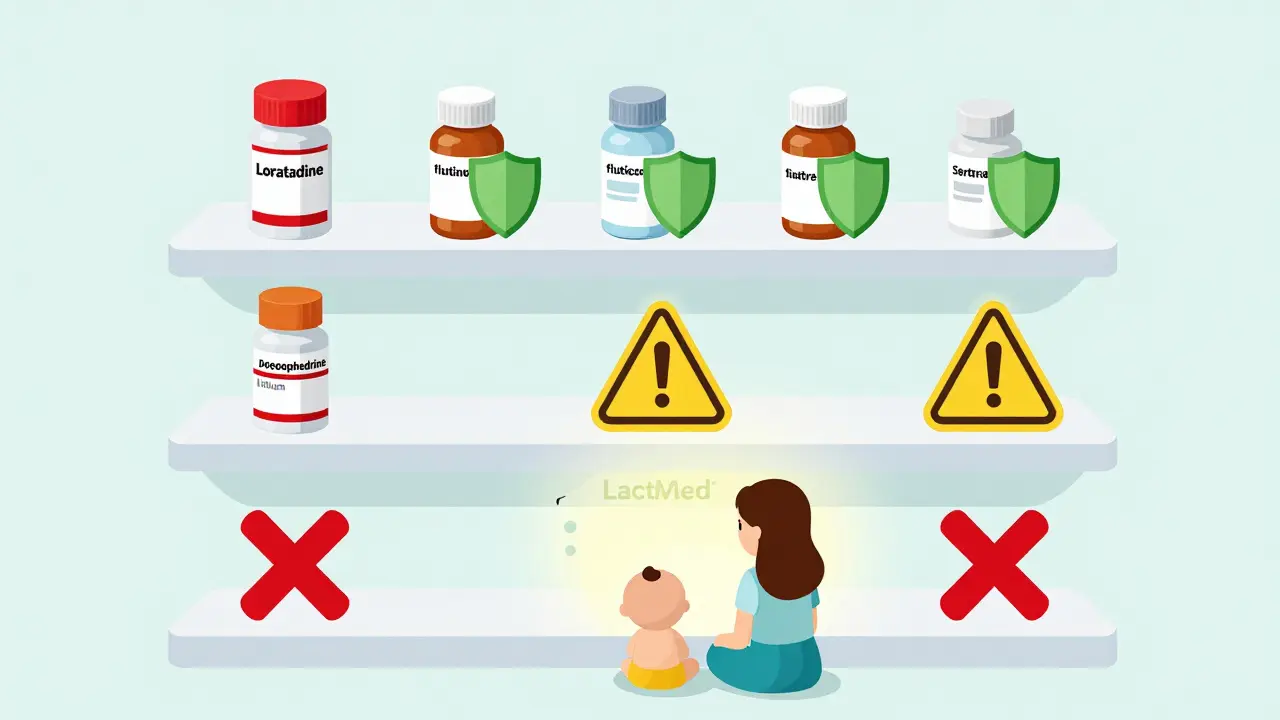
- Nasal sprays (fluticasone, budesonide): These barely enter your bloodstream. Less than 1% absorption. Infant exposure is near zero. First-line choice.
- Loratadine (Claritin): RID 0.05-0.25%. No drowsiness in infants. Safe for daily use.
- Cetirizine (Zyrtec): RID 0.1-0.5%. Slight sedation risk, but minimal. Better than first-gen options.
- Fexofenadine (Allegra): No sedation, no documented side effects. Excellent choice.
Stay away from diphenhydramine (Benadryl). It crosses into milk at higher levels (RID 1-2%) and can make babies sleepy or fussy. One study found 5% of infants had noticeable drowsiness.
And never use pseudoephedrine (Sudafed) regularly. It cuts milk supply by 24% on average. Some women lose nearly half their supply. If you need congestion relief, try saline sprays or a humidifier instead.
What You Should Avoid Completely
Some medications have no safe threshold. These are rare, but critical to know:
- Radioactive iodine (I-131): Used for thyroid cancer or hyperthyroidism. It concentrates in breast milk and can damage the baby’s thyroid. Breastfeeding must stop for 3-6 weeks after treatment.
- Chemotherapy drugs: Most are not safe. Temporary weaning is usually required. Talk to your oncologist about timing and alternatives.
- Lithium: It passes into milk at 30-50% of maternal levels. Infants can develop toxicity with symptoms like muscle weakness, poor feeding, or tremors. Requires weekly blood monitoring. Only used if no alternatives exist and under strict supervision.
How to Make Smart Decisions: Use Trusted Resources
Don’t guess. Don’t rely on outdated advice. Use these evidence-backed tools:
- LactMed: A free database from the U.S. National Library of Medicine. It gives you RID values, milk-plasma ratios, and infant effects for over 1,000 drugs. Updated quarterly.
- InfantRisk Center: Run by Dr. Christina Chambers. Offers real-time advice and fact sheets. They handle over 15,000 inquiries a year.
- MothersToBaby: A U.S.-based service that provides personalized risk assessments. Their data comes from tracking over 1,200 breastfeeding mothers taking medications.
- The Breastfeeding Network (UK): Offers free, evidence-based drug factsheets updated quarterly. Used by midwives and GPs across the UK.
Dr. Thomas Hale’s Lactation Risk Categories (L1-L5) are also widely used. L1 means “safest”-includes acetaminophen, ibuprofen, sertraline, and loratadine. L5 means “contraindicated”-radioactive iodine, chemotherapy, and lithium without monitoring.
What to Do If You’re Unsure
If your doctor says “don’t breastfeed” because of a medication, ask: “What’s the RID? Is there evidence it’s unsafe?” Many providers still rely on outdated guidelines.
Here’s a simple rule of thumb: If a drug is safe for a newborn to take directly, it’s usually safe through breast milk. But always verify with LactMed or a lactation specialist.
And remember: the risks of stopping breastfeeding often outweigh the risks of most medications. Stopping can lead to engorgement, mastitis, emotional distress, and long-term health consequences for your baby. You’re not choosing between your health and your baby’s-you’re choosing how to protect both.
Final Takeaway
Most medications are safe during breastfeeding. You don’t need to stop. You need accurate information. Acetaminophen, ibuprofen, sertraline, loratadine, amoxicillin, and nasal steroids are all well-studied and safe. Avoid codeine, pseudoephedrine, and long-term lithium without monitoring. Use LactMed. Talk to a lactation consultant. And don’t let fear make the decision for you.


