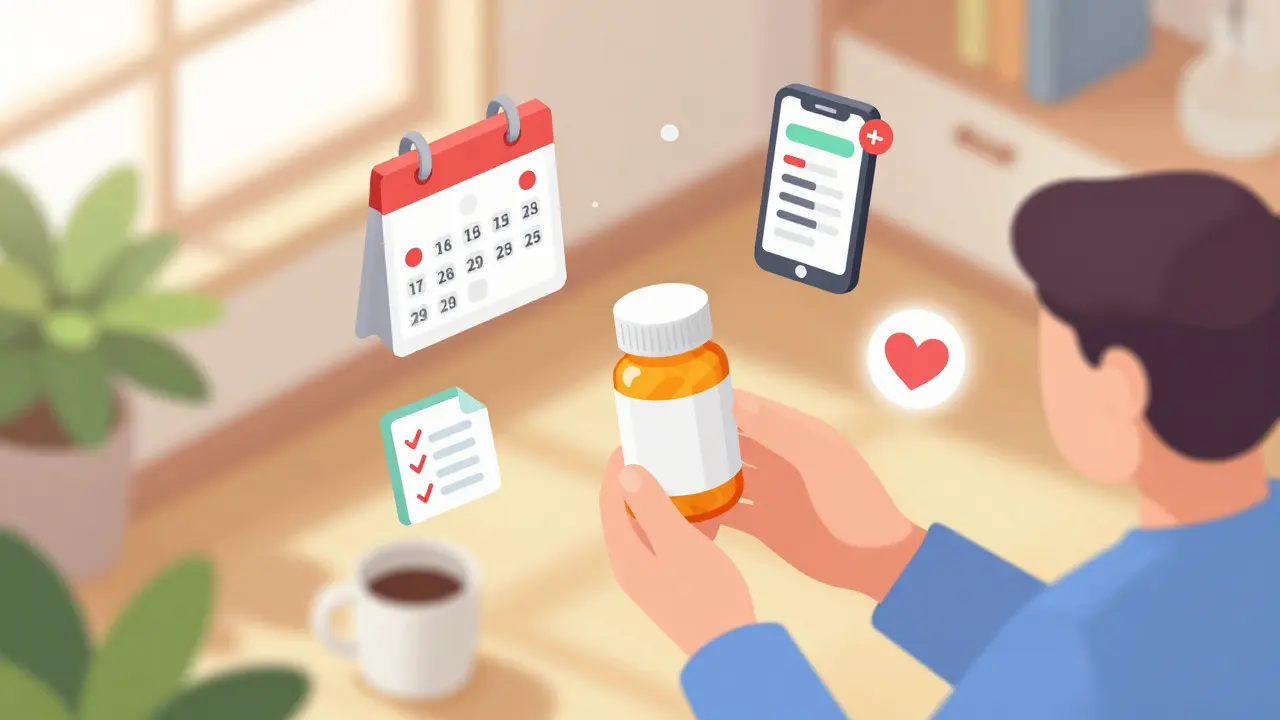
More than half of people with chronic conditions like high blood pressure, diabetes, or cholesterol don’t take their meds as prescribed. It’s not because they’re careless - it’s often because they forget, get overwhelmed, or don’t realize how much it matters. The truth is, if you’re not taking your medication properly, it might as well not be working. That’s where measuring your medication adherence comes in. Not to judge you, but to help you stay healthy.
Why Adherence Matters More Than You Think
Skipping a pill here and there might seem harmless. But over time, it adds up. The World Health Organization calls adherence ‘the degree to which your behavior matches what your doctor recommended.’ That’s not a suggestion - it’s the foundation of effective treatment. When you miss doses, your condition can worsen. For someone with diabetes, that means higher blood sugar, more nerve damage, and higher risk of amputation. For someone on blood pressure meds, it could mean a stroke.
The cost isn’t just health-related. In the U.S., non-adherence leads to $100-$300 billion in avoidable hospital stays every year. Even in the UK, where healthcare is free at the point of use, missed meds mean more GP visits, more emergency calls, and more strain on the system. And it’s not just about money - it’s about your quality of life.
How Do You Even Measure Adherence?
There’s no single perfect way to measure whether you’re taking your meds correctly. But there are practical, real-world methods you can use - even without fancy tech. Here’s what works:
- Pill counts: Your pharmacist or doctor counts how many pills are left in your bottle. Simple, but only tells you what’s left - not whether you actually swallowed them.
- Prescription refill records: This looks at how often you refill your prescriptions. The industry standard is the Proportion of Days Covered (PDC). If you have a 30-day supply of blood pressure pills and you refill it every 28 days, your PDC is high. If you wait 60 days, you’re missing about half your doses. PDC above 80% is considered good for chronic meds.
- Self-report questionnaires: The Medication Adherence Report Scale (MARS-5) asks five simple questions like, ‘How often do you forget to take your medicine?’ You rate each from ‘very often’ to ‘never.’ It’s quick, free, and surprisingly accurate - if you’re honest.
- Electronic monitoring: Some pill bottles have tiny chips that log when you open them. These are the most accurate - but they’re expensive and not practical for most people.
- Diary or app tracking: Writing down each dose in a notebook or using a free app like Medisafe or MyTherapy gives you real-time feedback. It’s not perfect, but it builds awareness.
Here’s the catch: people often say they’re taking their meds when they’re not. Studies show self-reports miss up to 60% of non-adherence. That’s why combining methods works best.
Your Practical Medication Adherence Checklist
This isn’t about perfection. It’s about progress. Use this checklist weekly to spot patterns and fix gaps before they hurt you.
- Check your pill bottle: Are you running out too early? Too late? If you finish your 30-day supply in 20 days, you might be taking double doses. If it’s still half-full after 4 weeks, you’re skipping.
- Review your refill dates: Write down when your last prescription was filled and when the next one’s due. Count the days between fills. If it’s longer than the prescription length, you’ve had a gap.
- Ask yourself the MARS-5 questions:
- How often do you forget to take your medicine?
- How often do you stop taking it because you feel better?
- How often do you skip doses because you feel worse?
- How often do you take less than prescribed because of side effects?
- How often do you take more than prescribed because you think it will help more?
Score yourself: 1 = very often, 2 = often, 3 = sometimes, 4 = rarely, 5 = never. Add up your scores. 20-25? You’re doing well. Below 15? You need a plan.
- Look at your calendar: Did you miss doses on days you traveled? Had a busy workweek? Felt depressed? Patterns matter. Write down the triggers.
- Check your side effects: Are you skipping meds because of nausea, dizziness, or fatigue? Talk to your doctor - there might be a different pill or a way to manage the side effect.
- Use reminders: Set alarms on your phone. Link taking your pill to a daily habit - like brushing your teeth or eating breakfast. If you can’t remember, you won’t take it.
- Keep a simple log: Use a sticky note, a notebook, or a free app. Mark each day you take your meds. No fancy tech needed. Just consistency.
What to Do When You’re Falling Behind
If your checklist shows you’re missing doses, don’t panic. Here’s what to do next:
- Call your pharmacist: They can tell you if you’ve had gaps in refills. Many offer free adherence counseling.
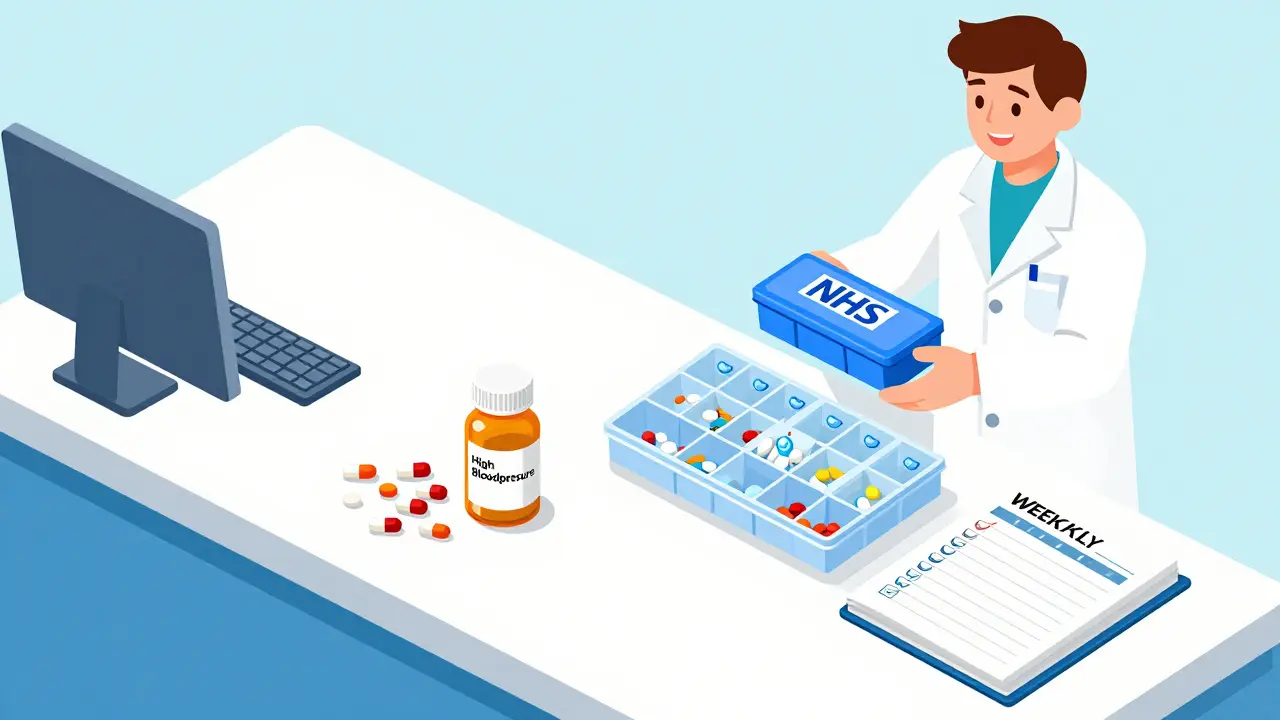
- Ask for a pill organizer: Weekly or monthly boxes with compartments for morning, afternoon, night. Free or low-cost through many NHS programs or pharmacies.
- Request a longer prescription: If you’re refilling every month, ask for a 90-day supply. Fewer trips, fewer chances to forget.
- Use a medication app: Apps like Medisafe send alerts, track doses, and even notify a family member if you miss a pill.
- Be honest with your doctor: Say, ‘I’ve been having trouble keeping up with my meds.’ No shame. Doctors see this every day. They want to help - not punish you.
One study found that using a simple, non-judgmental conversation style called ‘BATHE’ - asking about Background, Affect, Trouble, Handling, and Empathy - made patients 47% more likely to admit they weren’t taking their meds. Honesty is the first step to fixing it.
What’s New in Adherence Tracking (2025)
Technology is catching up. In 2025, smart pill bottles with cellular chips (like AdhereTech) are starting to appear in UK pilot programs. They send alerts to your phone - and your doctor - if you miss a dose. AI tools are also being tested: Flatiron Health’s algorithm can predict who’s likely to stop taking meds with 87% accuracy, just by looking at EHR data.
But here’s the reality: tech doesn’t replace human connection. The most effective adherence programs still combine simple tools - like pill boxes and reminders - with regular check-ins from a pharmacist or nurse. The NHS is rolling out more community-based adherence support in 2025, especially for older adults and those on multiple meds.
And if you’re on Medicare Part D or similar plans, know this: your plan gets paid more if you stay on your meds. They may even send you free reminders or offer cash incentives.
Final Thought: It’s Not About Being Perfect
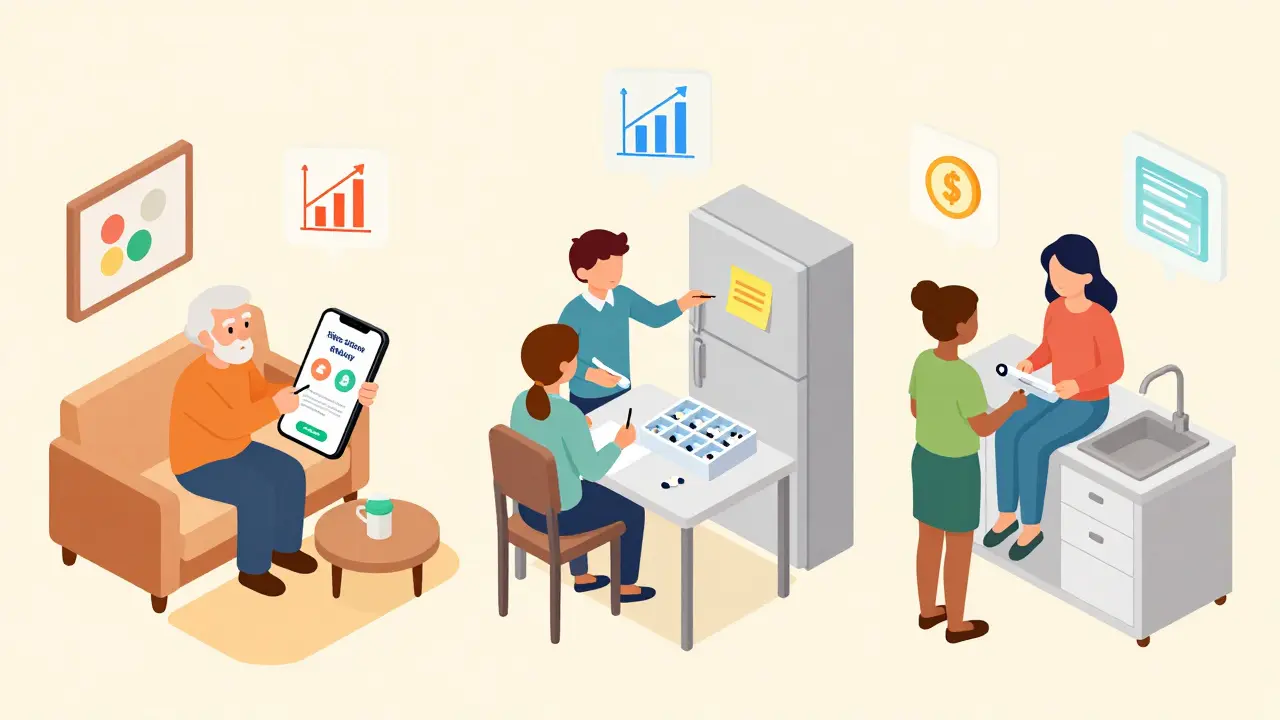
You don’t need to take every pill perfectly to be successful. You just need to notice when you’re slipping - and act. Adherence isn’t about guilt. It’s about control. When you track your meds, you’re not just following a rule. You’re taking charge of your body, your future, and your peace of mind.
Start small. Pick one medication. Use the checklist for one week. See what’s working. What’s not. Then talk to someone - your pharmacist, your GP, even a friend. You’re not alone in this. And you don’t have to fix it all at once.
What is the gold standard for measuring medication adherence?
There is no single gold standard. Experts agree that no one method catches every missed dose. The Pharmacy Quality Alliance recommends Proportion of Days Covered (PDC) as the best method for chronic conditions like hypertension or diabetes, because it accounts for overlapping refills and caps adherence at 100%. But even PDC can’t tell if you swallowed the pill - just that you picked it up.
Is taking 80% of my pills enough?
For most chronic medications - like those for blood pressure, cholesterol, or diabetes - yes. Studies show that staying at or above 80% adherence (PDC) significantly reduces hospitalizations and complications. Below that, benefits drop sharply. But for some drugs, like antibiotics or short-term treatments, 80% isn’t enough - you need to take every single dose as directed.
Can I trust my memory to know if I’m taking my meds?
No, not reliably. People tend to overestimate how well they take their meds. One study found that self-reports missed over half of actual missed doses. Electronic monitors showed 58% of patients were non-adherent - but only 32% admitted it in surveys. Use a checklist or app instead of relying on memory.
Why do I keep forgetting my pills even when I set alarms?
Alarms help, but they don’t fix the root cause. You might be forgetting because the routine feels meaningless, you’re overwhelmed by multiple meds, or you’re experiencing side effects. Try linking your pill to a habit you already do - like brushing your teeth. Or simplify: ask your doctor if you can switch to once-daily meds or combination pills. Sometimes, the problem isn’t memory - it’s complexity.
Does it matter if I take my meds at different times each day?
For some meds, yes. Blood pressure pills, for example, work best when taken at the same time each day - especially if they’re designed to lower nighttime pressure. But for others, like statins or many diabetes drugs, timing is less critical than consistency. The key is to take them every day. If you’re off by a few hours, it’s usually fine. If you’re skipping days, that’s the real issue.
Can I get free help with medication adherence in the UK?
Yes. Many pharmacies offer free adherence reviews, pill boxes, and counseling. The NHS also supports community pharmacy schemes that help patients on long-term meds. Ask your pharmacist about the ‘Medicines Use Review’ (MUR) or ‘New Medicine Service’ (NMS) - both are free and confidential. You can also ask your GP for a referral to a clinical pharmacist who specializes in adherence.
What if I can’t afford my meds?
Cost is one of the biggest reasons people skip doses. In the UK, if you’re on a low income or have a long-term condition, you may qualify for free prescriptions. Ask your GP for an exemption certificate. You can also ask your pharmacist about generic versions - they’re often 80% cheaper and just as effective. Never stop taking meds because of cost. Talk to someone - there are always options.
Next Steps: Start Today
Don’t wait for your next appointment. Grab your pill bottle. Look at the label. Check your last refill date. Ask yourself: Did I take every dose this week? If not, why? Write it down. Then call your pharmacist. Or text a friend. Or just tell yourself: ‘I’m not failing - I’m learning.’
Medication adherence isn’t about being perfect. It’s about showing up - for yourself, every day.


