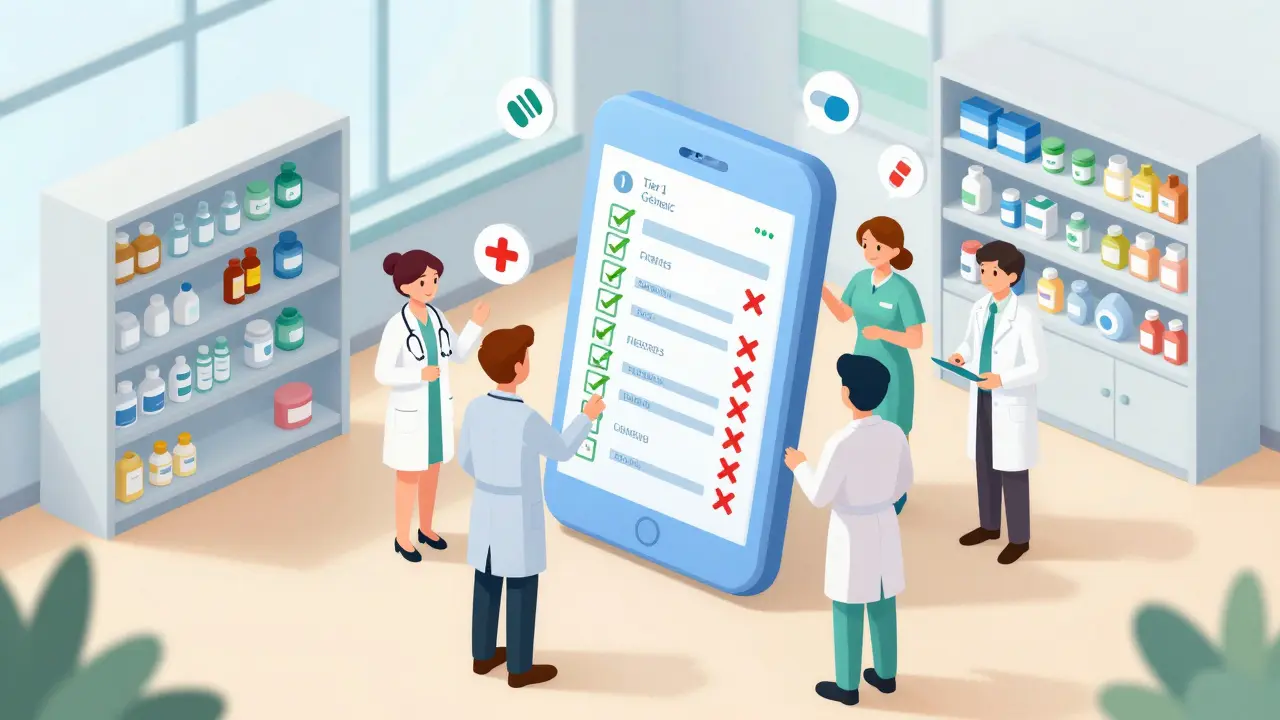
When a patient in a nursing home is switched from one blood thinner to another - say, from Xarelto to apixaban - without their doctor explicitly ordering it, that’s not a mistake. It’s therapeutic substitution, and it’s guided by something called an institutional formulary. These aren’t just lists of approved drugs. They’re legally mandated systems that determine which medications can be swapped in hospitals and clinics, often without direct input from the prescribing physician. In Florida, this process is so tightly regulated that facilities must form a committee, monitor outcomes every three months, and keep all policies available for state inspectors. But how does this actually work on the ground? And why do some pharmacists say it saves lives, while others call it a bureaucratic nightmare?
What Exactly Is an Institutional Formulary?
An institutional formulary is a living list of medications that a hospital, nursing home, or clinic has approved for routine use. Unlike insurance formularies - which decide what drugs a patient’s plan will pay for - institutional formularies control what drugs can be given inside the facility itself. The key difference? They allow therapeutic substitution: swapping a prescribed drug for another that’s chemically different but expected to work the same way. For example, if a doctor prescribes the brand-name drug Lipitor for high cholesterol, but the facility’s formulary lists generic atorvastatin as the preferred option, the pharmacist can legally swap them without calling the doctor - as long as the patient isn’t allergic and the substitution is documented. This isn’t just about saving money. It’s about standardizing care. Formularies are built by expert panels of pharmacists, doctors, and nurses who review clinical data, side effect profiles, and cost outcomes. The goal isn’t to cut corners - it’s to cut unnecessary risk. According to the American Journal of Health-System Pharmacy, well-run formularies can reduce adverse drug events by 15% to 30%. That’s not a small number. In a 200-bed nursing home, that could mean avoiding 30 to 60 dangerous reactions every year.How Are These Formularies Created and Managed?
It’s not up to the pharmacy director to decide alone. In states like Florida, the law requires a formal committee to oversee everything. This committee must include:- The facility’s medical director
- The director of nursing services
- A certified consultant pharmacist
Therapeutic Substitution: Benefit or Burden?
The biggest debate around institutional formularies centers on therapeutic substitution. On one hand, it’s a smart way to improve safety and lower costs. In long-term care, where patients take 10 or more medications daily, consistency matters. A 2024 survey of Florida nursing homes found that after implementing the state’s strict formulary rules, staff caught seven previously undetected drug interactions in the first year alone. But there’s a flip side. When patients move between facilities - say, from a nursing home to a hospital - their drug list can change unpredictably. One Reddit user described a patient who was switched from Xarelto to apixaban in a nursing home, then switched back to Xarelto upon hospital discharge. The patient’s family was confused. The primary care doctor didn’t know about the change. The pharmacy didn’t update the records in time. It wasn’t a fatal error - but it was a close call. Doctors are split. A 2023 American Medical Association survey showed that 62% support formularies for improving safety, but 78% say the paperwork to get non-formulary drugs approved is too slow. One oncologist in Miami told me, “I had to fight for three weeks to get a targeted therapy approved because it wasn’t on the formulary. The patient’s tumor kept growing. That’s not evidence-based medicine - that’s red tape.” Patients, meanwhile, rarely know they’ve been switched. AARP’s Policy Institute found that most residents in long-term care facilities aren’t told when their medication changes. No consent forms. No explanations. That’s a legal gray area - and a growing ethical concern.
How Do Formularies Compare to Insurance Formularies?
It’s easy to confuse institutional formularies with insurance formularies, but they’re completely different systems. Insurance formularies - like those used by Medicare Part D or private insurers - determine what drugs are covered and how much the patient pays out of pocket. They’re mostly about cost control and negotiating discounts with drug makers. If your plan doesn’t cover a drug, you pay full price or switch to something else. Institutional formularies are about what drugs can be administered inside the facility. They’re not about what’s billed to insurance. A hospital can give you a non-formulary drug if it’s medically necessary - but they’ll have to justify it. And if the drug isn’t on the formulary, it often means the pharmacy doesn’t stock it, or the committee decided it doesn’t offer enough benefit over cheaper alternatives. Also, insurance formularies can change monthly. Institutional formularies change quarterly - and only after committee review and documentation. That slower pace helps prevent chaos, but it can also delay access to new treatments.Implementation Challenges and Real-World Fixes
Getting a formulary up and running isn’t easy. In Florida, 68% of facilities reported major problems integrating formulary rules into their electronic health record (EHR) systems. Imagine a nurse trying to give a patient a medication, but the computer blocks it because it’s not on the formulary - but the doctor didn’t get the alert about the change. That’s when errors happen. The fix? Custom alerts in the EHR. One hospital in Tampa worked with its EHR vendor to build a pop-up that says: “This medication was substituted from [original drug] to [new drug] per formulary policy. Confirm with prescriber if patient has history of [specific side effect].” That simple addition cut confusion by 40% in six months. Training is another hurdle. Nursing staff, who administer most of the drugs, need the most support. The average learning curve is 4 to 8 weeks. Facilities that skip training end up with staff who either ignore the rules or overuse exceptions. And don’t forget the paperwork. Each facility spends 20 to 30 hours per quarter just documenting decisions, monitoring outcomes, and preparing for audits. That’s why many now use the American Society of Health-System Pharmacists’ guidelines - which are updated every year - as a template. Over 85% of hospital pharmacy directors say these tools are essential.
The Future: AI, Genomics, and State Laws
Institutional formularies aren’t staying static. The biggest shift coming is automation. By 2026, Gartner predicts 80% of healthcare systems will use AI to adjust formularies in real time based on patient outcomes. If a drug is linked to more falls in elderly patients, the system could automatically downgrade it - no committee meeting needed. Even more advanced: pharmacogenomics. Some hospitals are already testing whether a patient’s DNA affects how they metabolize a drug. If a person has a gene variant that makes them respond poorly to clopidogrel, the formulary could automatically suggest ticagrelor instead - even if it’s more expensive. Deloitte found that 72% of healthcare executives plan to use this kind of data within five years. Legally, Florida’s Statute 400.143 is becoming a model. As of 2024, 32 states have similar rules for nursing homes. The Centers for Medicare & Medicaid Services (CMS) just announced that starting in Q3 2025, nursing home quality ratings will include formulary compliance. That means facilities with poor substitution tracking could lose funding. Meanwhile, the FDA is running a pilot program to standardize what counts as “therapeutically equivalent.” Right now, two drugs might be considered interchangeable by a hospital but not by the FDA - causing confusion. A national standard could make substitutions safer and more predictable.Bottom Line: It’s Not Perfect, But It Works
Institutional formularies aren’t magic. They’re not always fair. They can slow down care. They can confuse patients. But when done right, they prevent harm. In a world where medication errors are the third leading cause of death in the U.S., having a system that forces teams to review every drug change - and track what happens after - is a huge step forward. The key isn’t to eliminate formularies. It’s to improve them. Better EHR alerts. More patient communication. Faster updates when new evidence comes out. And above all - remembering that behind every substitution is a person who deserves to know what’s being given to them, and why.What is the difference between a hospital formulary and an insurance formulary?
A hospital formulary controls which drugs can be given inside the facility and allows therapeutic substitutions without a new prescription. An insurance formulary determines which drugs your health plan will pay for and how much you pay out of pocket. Hospital formularies are about clinical use; insurance formularies are about coverage and cost-sharing.
Can a pharmacist substitute my medication without my doctor’s permission?
Yes - but only if the drug is on the facility’s formulary and the substitution is therapeutic (meaning the alternative is expected to work the same way). The pharmacist must document the change and ensure it’s safe for your specific condition. However, if you’re allergic, have had bad reactions before, or your doctor specifically wrote “do not substitute,” the pharmacist must follow those instructions.
Why do some drugs get removed from institutional formularies?
Drugs are removed if they’re found to be less effective, more expensive than better alternatives, or linked to higher rates of side effects or hospital readmissions. For example, if a new generic version of a drug proves just as safe and costs 70% less, the formulary committee will typically replace the old drug. They don’t remove drugs just to save money - they remove them when evidence shows a better option exists.
Are patients informed when their medication is substituted?
Not always - and that’s a major concern. In nursing homes and long-term care, many patients aren’t told about substitutions. While it’s legal under state rules, experts and patient advocates argue this violates informed consent. Some hospitals now include substitution notices in discharge summaries or use plain-language handouts, but it’s not universal.
How often are institutional formularies updated?
By law, in states like Florida, formularies must be reviewed quarterly. But updates can happen more often - especially if new safety alerts come out from the FDA or new clinical studies are published. Most facilities update their formulary at least twice a year, and some use AI systems to make real-time adjustments based on patient outcomes.
What happens if a doctor wants a drug that’s not on the formulary?
The doctor can request an exception. This usually requires filling out a form explaining why the preferred drug won’t work - for example, if the patient had an allergic reaction, or the drug is known to interact with another medication they’re taking. The pharmacy and formulary committee then review the request. If approved, the drug is dispensed. If denied, the doctor can appeal or try a different alternative.


