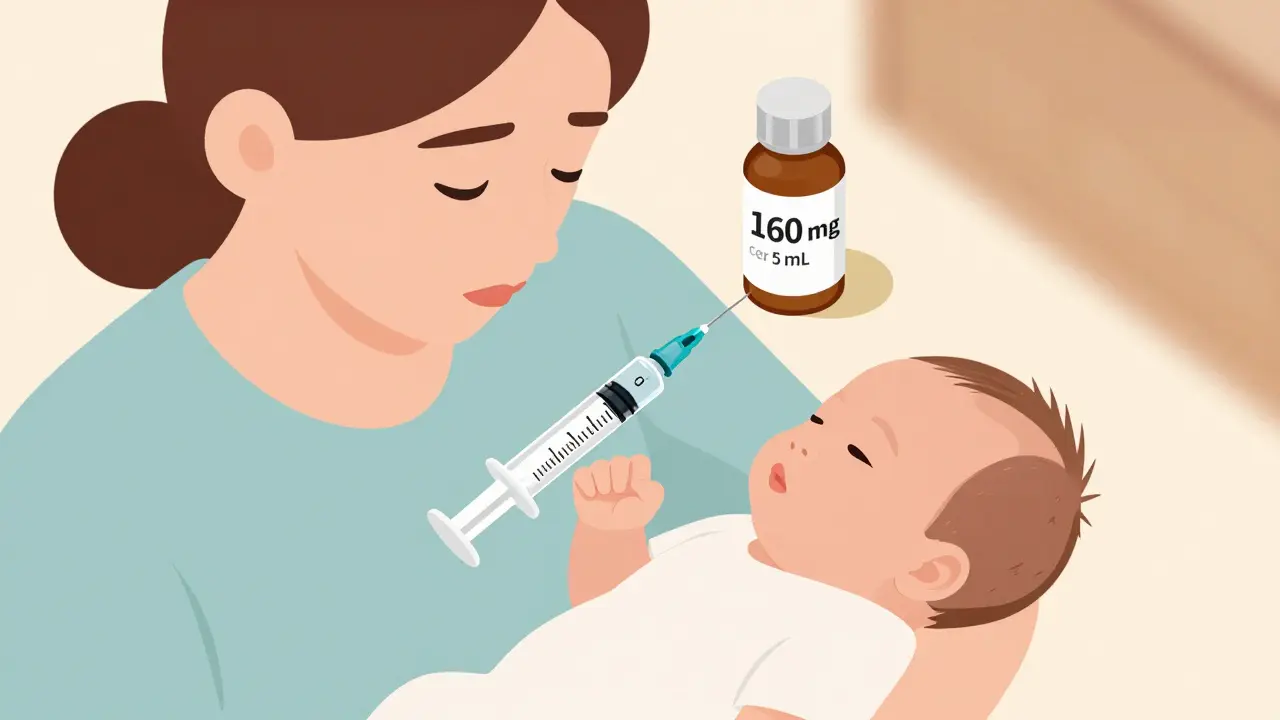
Every year, tens of thousands of infants end up in emergency rooms because of medication mistakes - not because they were given too much, but because their caregivers didn’t know how much was too much. It’s not a question of care. It’s a question of clarity. When you’re holding your newborn, tired and overwhelmed, and the doctor says, "Give 2.5 mL," you need to know exactly what that means. And you need to know it without second-guessing.
Why Infant Medication Errors Are So Common
The numbers don’t lie. In 2022, over 11,000 infants under 1 year old were treated in U.S. emergency rooms for medication-related issues. Most of those cases came from simple mistakes: using the wrong measuring tool, confusing infant and children’s formulas, or guessing a dose because the label was too small to read. The biggest danger? Concentration confusion. You might think "acetaminophen is acetaminophen," but that’s not true. Ten years ago, infant acetaminophen came in a concentrated form: 80 mg per 1 mL. Children’s acetaminophen was 160 mg per 5 mL - which sounds like the same thing, but it’s not. If you used the dropper meant for infants on the children’s bottle, you gave your baby five times the intended dose. That mistake led to 50% of all liquid medication overdoses in infants at the time. In 2011, the FDA stepped in. They made it law: all infant acetaminophen must now be labeled as 160 mg per 5 mL. No more 80 mg/mL drops. That change alone cut poison control calls for acetaminophen overdoses by over 40%. But here’s the catch: many parents still don’t know this. And some older bottles, especially those passed down from grandparents, still have the old concentration on them.What You Need to Know About Drops vs. Milliliters
Infant medications come in two main forms: drops and oral liquids. Drops are usually given with a small dropper, and oral liquids come in bottles with a measuring syringe or cup. But here’s what nobody tells you: not all drops are the same. A standard drop from a dropper is about 0.05 mL - meaning 20 drops equal 1 mL. But droppers vary. A 2020 study found that 73% of parents gave the wrong dose because their dropper didn’t match the label. One parent might think "5 drops" means 0.25 mL, but if their dropper produces larger drops, they’ve given 0.4 mL - an 80% overdose. That’s why the American Academy of Pediatrics says: never use a dropper unless it’s attached to the bottle. If the medicine comes in a bottle with a dropper, use that one. If it comes in a bottle with a syringe, use the syringe. Never swap tools. Even if they look the same. And forget about teaspoons. Kitchen spoons are not measuring tools. A 2021 survey of 1,500 parents found that 43% still used spoons to give liquid medicine. Over half of those parents gave doses that were off by more than 20%. That’s not a small mistake. That’s dangerous.The Right Way to Measure: Oral Syringes Are Your Best Friend
If you give your baby liquid medicine, the single most important tool you need is an oral syringe - not a cup, not a dropper, not a spoon. Look for one with 0.1 mL markings. These are the gold standard for babies under 6 months. Why? Because a typical dose for a 10-pound infant might be 2.3 mL. With a 0.1 mL syringe, you can measure that exactly. With a medicine cup that only shows 1 mL, 2 mL, 3 mL - you’re guessing. And guessing kills. A 2019 study showed that parents using 0.1 mL syringes made 67% fewer dosing errors than those using cups. Another study in 2020 found syringes were 89% accurate. Cups? Only 62%. That’s not a preference. That’s a safety gap. And here’s the trick: always draw up the medicine in the syringe, then give it directly into your baby’s mouth - not into a bottle or cup. Hold your baby upright, gently insert the syringe tip between the cheek and gum, and slowly push the plunger. Don’t squirt it. Let it drip. This avoids choking and ensures they swallow it all.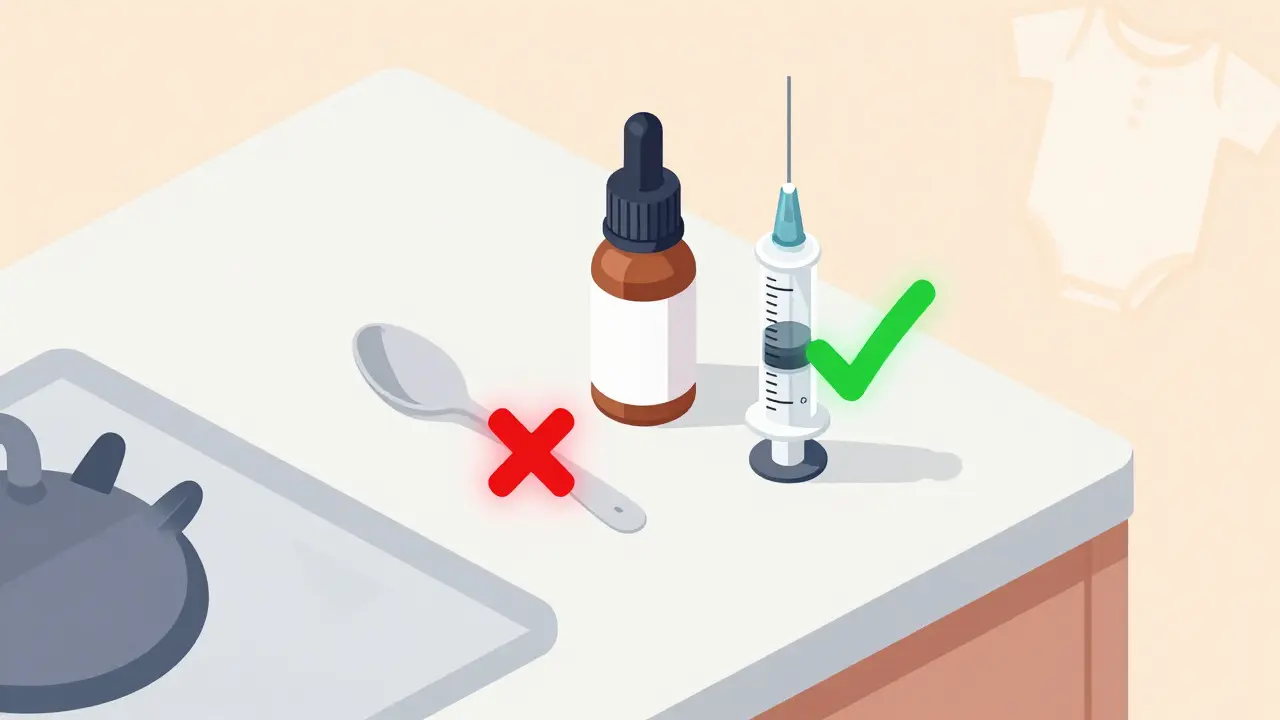
How to Calculate the Right Dose - No Calculator Needed
Dosing for infants isn’t based on age. It’s based on weight. And weight is measured in kilograms - not pounds. So if your baby weighs 8 pounds, that’s about 3.6 kg. For acetaminophen (Tylenol), the safe dose is 10-15 mg per kg of body weight, every 4 to 6 hours. So for a 3.6 kg baby:- Minimum dose: 3.6 × 10 = 36 mg
- Maximum dose: 3.6 × 15 = 54 mg
- 160 mg per 5 mL = 32 mg per mL
- So for every 10 mg, you give 0.3 mL
The Hidden Dangers: Multi-Symptom Medicines and Grandparents
Don’t give your baby cold or cough medicine. Not even "natural" ones. The FDA has warned since 2008 that these products are unsafe for children under 2. In 2021, they reinforced it: no OTC cough and cold meds for kids under 6. Why? Because they often contain multiple drugs - acetaminophen, antihistamines, decongestants. You might think you’re helping with a runny nose, but you’re giving your baby extra acetaminophen on top of the fever medicine. That’s how overdoses happen. And grandparents? They’re not the problem. They’re the victims of outdated information. A 2023 study found that caregivers over 65 made 3.2 times more dosing errors than younger parents. Why? Because they remember when infant Tylenol was 80 mg/mL. They remember when "a teaspoon" was fine. They might not have reading glasses. Or they might have a bottle from 2010. If a grandparent is helping, sit down with them. Show them the bottle. Point to the concentration. Let them see the syringe. Say: "This is what we use now. The old way isn’t safe anymore."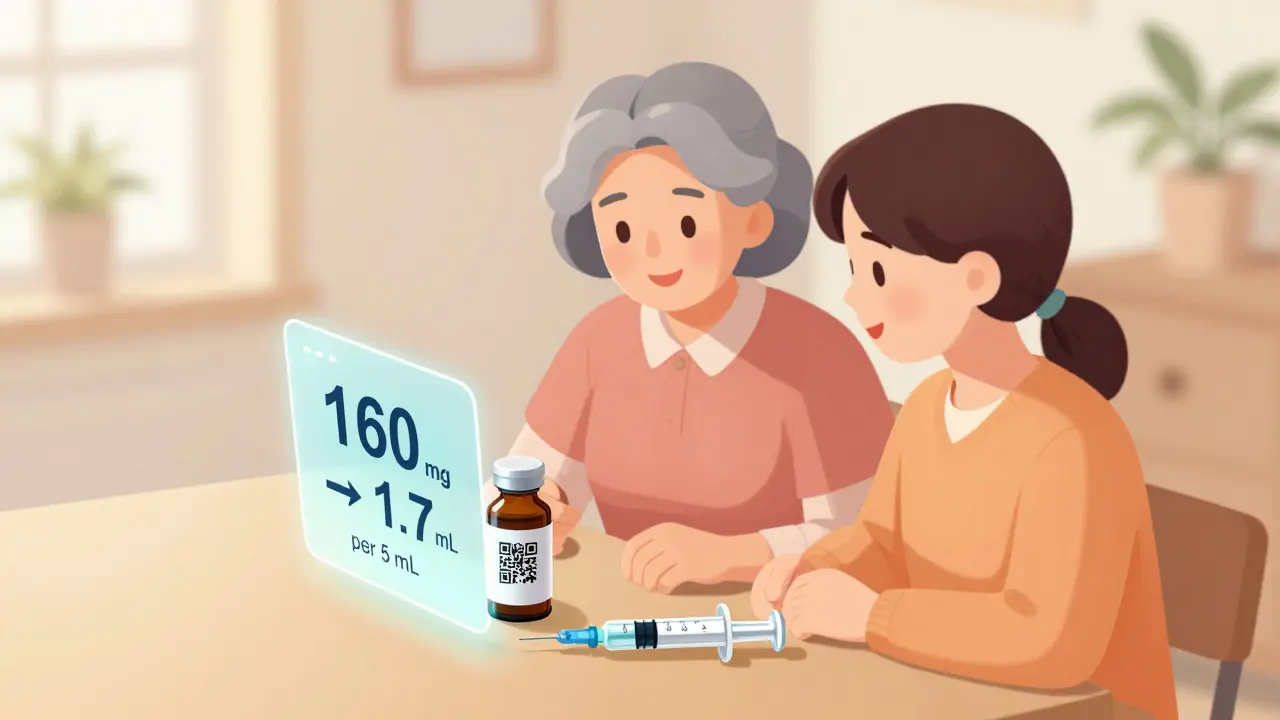
Five Steps to Avoid a Medication Mistake
The CDC and AAP agree: if you follow these five steps every time, you’ll cut your risk of error by over 80%.- Know your baby’s weight in kilograms. Convert pounds: divide by 2.2. A 12-pound baby is 5.5 kg.
- Calculate the dose. Use 10-15 mg/kg for acetaminophen. Use 5-10 mg/kg for ibuprofen (if over 6 months).
- Check the label. Look for "160 mg per 5 mL" - that’s the standard. If it says something else, call your pharmacist.
- Use only an oral syringe. No cups. No droppers unless attached. No spoons. Period.
- Double-check with someone else. Have your partner, a friend, or a nurse look at the dose before you give it.
What’s New in Infant Medication Safety
The future is here. In January 2023, the FDA approved the first "smart" oral syringe - the MediSafe SmartSyringe. It connects to your phone, scans the medicine bottle barcode, and tells you exactly how much to give. In trials, it was 98.7% accurate. The CDC’s 2023 National Action Plan wants to cut infant dosing errors in half by 2026. That means more color-coded labels (blue for infants, green for toddlers), QR codes on bottles that link to dosing videos, and apps that verify your calculation in real time. But right now, you don’t need tech. You need clarity. You need a syringe. You need to know the concentration. And you need to stop guessing.What to Do If You Made a Mistake
If you gave too much - even if your baby seems fine - call the Poison Control Center immediately: 1-800-222-1222. Don’t wait. Don’t Google it. Don’t assume they’ll be fine. Poison Control handled over 14,000 infant medication calls in 2022. They prevented emergency room visits in 99% of cases by giving real-time advice. They’re there to help - not to judge. And if you’re ever unsure? Ask. Your pediatrician. Your pharmacist. Your nurse. There’s no shame in asking. There’s only danger in not asking.Can I use a kitchen teaspoon to give my baby medicine?
No. Kitchen teaspoons vary widely in size - anywhere from 3 mL to 7 mL. The standard teaspoon used for medicine is exactly 5 mL, but your kitchen spoon is not calibrated. Using it can lead to overdoses of 20% or more. Always use an oral syringe with mL markings.
Is infant Tylenol different from children’s Tylenol?
Yes. Infant Tylenol is 160 mg per 5 mL. Children’s Tylenol used to be 160 mg per 10 mL, but since 2011, both are now the same concentration. However, some older bottles or generic brands may still have different labels. Always check the label: "160 mg per 5 mL" is the standard. Never assume.
How do I know if I gave too much acetaminophen?
Signs of acetaminophen overdose include nausea, vomiting, loss of appetite, and sweating. But symptoms may not appear for 12-24 hours. By then, liver damage may already be starting. If you suspect an overdose - even if your baby seems fine - call Poison Control immediately at 1-800-222-1222. Don’t wait.
Can I give ibuprofen to a baby under 6 months?
No. Ibuprofen (Advil, Motrin) is not approved for babies under 6 months. Acetaminophen is the only over-the-counter pain reliever recommended for infants under 6 months. Always check with your pediatrician before giving any medicine to a baby under 6 months.
What should I do if my baby spits out the medicine?
If your baby spits out most of the dose, wait 30 minutes and give the same amount again. If they only spit out a little, don’t give more - you don’t know how much they swallowed. If you’re unsure, call your pediatrician. Never give a second dose just because you think they didn’t get it.


