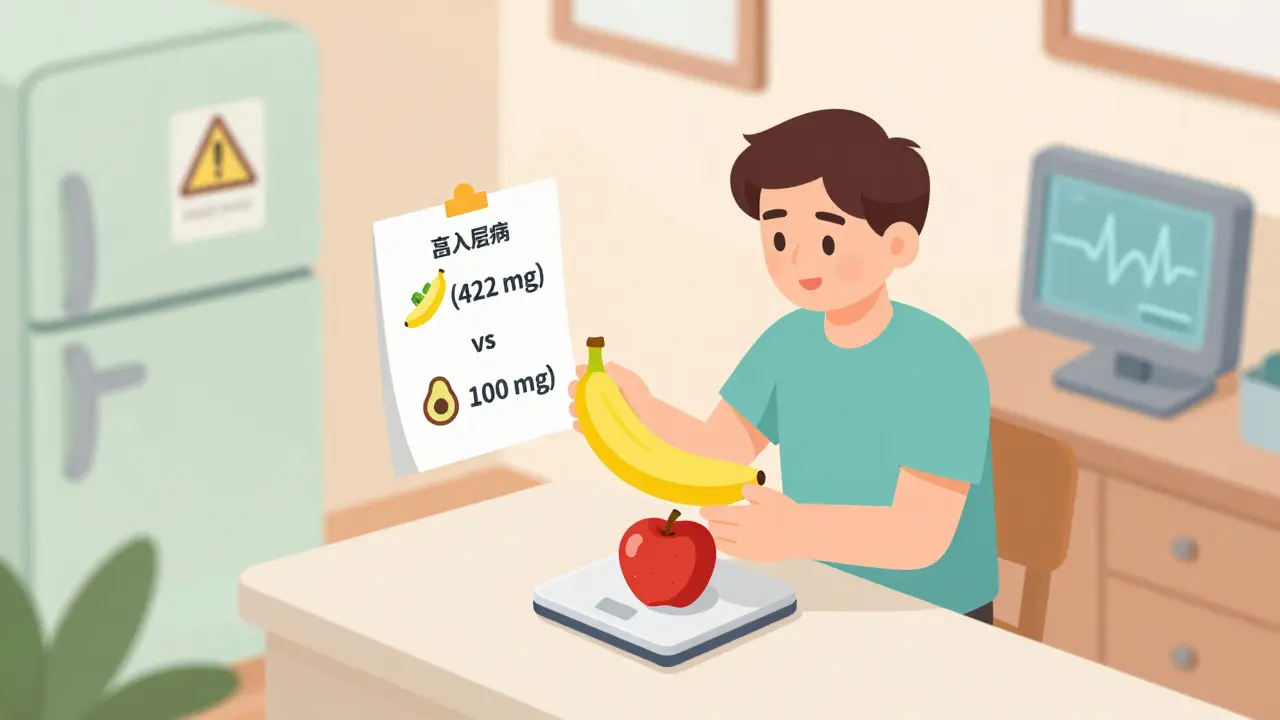
When your kidneys aren't working well, even something as simple as a banana can become dangerous. For people with chronic kidney disease (CKD), high potassium levels - called hyperkalemia - are a silent, life-threatening risk. About half of those with advanced CKD will experience it at some point. And while it often has no symptoms until it’s too late, the consequences can be sudden: irregular heartbeat, muscle weakness, even cardiac arrest. The good news? We now have better tools than ever to manage it - if you know how.
What Is Hyperkalemia and Why Does It Happen in CKD?
Hyperkalemia means your blood potassium level is above 5.0 mmol/L. Normal is 3.5 to 5.0. But for someone with CKD, the kidneys can’t flush out extra potassium like they should. That’s the core problem. Even if you eat normally, potassium builds up. And it’s not just about diet. Medications like ACE inhibitors, ARBs, and mineralocorticoid receptor antagonists - drugs that protect your heart and kidneys - also reduce potassium excretion. So you’re caught between protecting your organs and avoiding a dangerous spike in potassium.Doctors now aim to keep potassium between 4.0 and 4.5 mmol/L in non-dialysis CKD patients. That’s tighter than the old normal range. Why? Because even levels above 5.0 mmol/L increase the risk of heart rhythm problems and death. Studies show that every 0.5 mmol/L rise above 5.0 increases mortality risk by 18%. That’s why monitoring isn’t optional - it’s essential.
Dietary Limits: How Much Potassium Is Too Much?
Diet plays a huge role, but it’s not one-size-fits-all. If you’re in early CKD (stages 1-3a), you don’t need to eliminate potassium-rich foods. Just be smart. A "prudent but not restrictive" approach means avoiding large portions of high-potassium items, not banning them entirely.But if you’re in stage 3b or worse - especially if you’re not on dialysis - you need to cut back hard. The guideline is 2,000 to 3,000 mg per day. That’s about half of what most healthy adults eat. Here’s what that looks like in real food:
- One medium banana: 422 mg
- One orange: 181 mg
- One baked potato: 926 mg
- Half a cup of cooked spinach: 420 mg
- One cup of milk: 366 mg
- One avocado: 975 mg
So yes - that avocado smoothie? That baked potato with dinner? Those are high-risk choices. You need alternatives. Swap potatoes for cauliflower rice. Choose apples instead of oranges. Use herbs instead of salt substitutes (which often contain potassium chloride). And always check labels - many processed foods, especially low-sodium ones, are loaded with potassium additives.
But here’s the catch: only about 37% of patients stick to these limits long-term. Why? Because food is tied to culture, comfort, and social life. Cutting out potatoes, tomatoes, and bananas doesn’t just change your diet - it changes your identity. That’s why dietitians now spend 45 to 60 minutes on the first visit, teaching portion control, cooking methods (like leaching potatoes to reduce potassium), and how to find safe alternatives without feeling deprived.
Emergency Treatment: What Happens When Potassium Spikes?
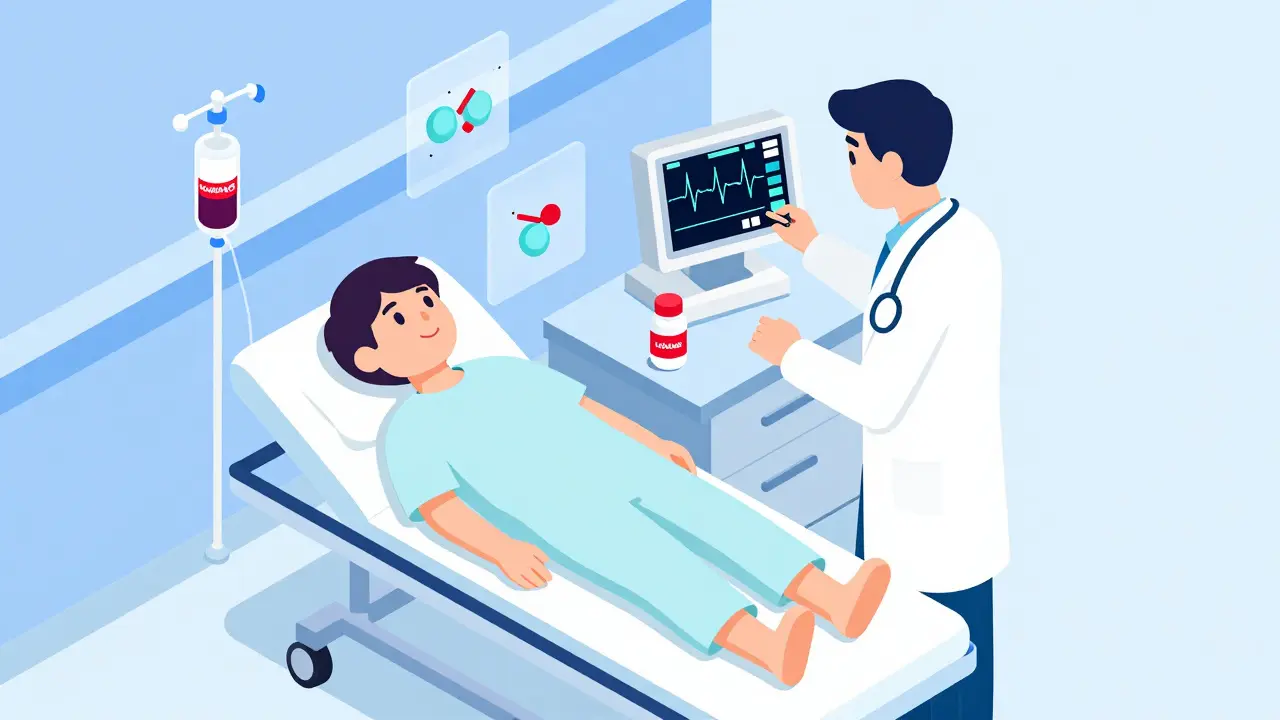
When potassium hits 5.5 mmol/L or higher - especially if you’re dizzy, weak, or have chest palpitations - you need immediate action. And it’s not just about lowering potassium. It’s about protecting your heart right now.Here’s what happens in the ER:
- Calcium gluconate - given IV over 2-5 minutes. This doesn’t lower potassium. It protects your heart muscle from the electrical chaos caused by high potassium. You’ll feel better within minutes, but it only lasts an hour. It’s your first line of defense if your ECG shows peaked T-waves or widened QRS complexes.
- Insulin and glucose - 10 units of regular insulin with 50 mL of 50% dextrose. This shifts potassium from your blood into your cells. It starts working in 15 minutes, lowers levels by 0.5-1.5 mmol/L, and lasts 4-6 hours. But there’s a catch: 10-15% of patients get dangerously low blood sugar. That’s why glucose is always given with it.
- Sodium bicarbonate - used only if you’re also acidotic (HCO3 < 22 mmol/L). It helps shift potassium into cells, but it’s not effective alone. It’s a supporting player, not a star.
These are temporary fixes. They buy time. But they don’t remove potassium from your body. That’s where the next step comes in.
Chronic Management: The New Generation of Potassium Binders
For long-term control, you need something that pulls potassium out of your gut before it enters your blood. That’s where potassium binders come in.Old-school binders like sodium polystyrene sulfonate (SPS) - often called Kayexalate - are being phased out. Why? They’re slow, messy, and dangerous. They can cause colon necrosis (tissue death) in up to 1% of users. Plus, each gram adds 11 mmol of sodium - terrible for people with heart failure or high blood pressure.
Today, two newer drugs dominate:
- Sodium zirconium cyclosilicate (SZC, brand name Lokelma) - starts working in under an hour. It’s the go-to for acute spikes. But it pulls in sodium - about 1.2 grams per day - which can cause swelling in heart failure patients (12.3% get edema).
- Patiromer (brand name Veltassa) - takes 4-8 hours to work, but it’s sodium-neutral. Better for heart failure patients. But it can cause low magnesium (18.7% of users) and constipation (14.2%). And it’s chalky - 22% of patients quit because they hate the taste.
Both drugs let you keep your heart-protecting medications. Without them, 47% of patients have to lower or stop their RAASi drugs. And that’s dangerous: stopping those drugs increases heart attack risk by 28% and kidney failure risk by 34%. With binders, 80% of patients can stay on full doses.
Cost is a real barrier. SPS costs about £47 a month. Patiromer? £286. SZC? Even more. Many UK clinics report that cost limits access - especially in community settings. Academic hospitals use newer binders 82% of the time. Community clinics? Only 48%.
Monitoring and Follow-Up: The Key to Avoiding Crises
You can’t manage what you don’t measure. That’s why regular blood tests are non-negotiable.After starting or increasing a RAASi drug, your potassium must be checked within 1-2 weeks. Then every 3-6 months if stable. But if you feel weak, your heart races, or you’re on a new medication - test immediately. Don’t wait.
ECG changes are your body’s alarm system:
- Peaked T-waves = potassium above 5.5 mmol/L
- Widened QRS complex = above 6.5 mmol/L
- Flat P-waves, sine wave pattern = approaching cardiac arrest
Many clinics now use electronic alerts. If your potassium hits 5.0 mmol/L, the system automatically flags your file, sends a note to your dietitian, and schedules a pharmacist review within 72 hours. This cuts emergency visits by more than half.
Adherence matters too. You need to take your binder every day, at the right time. Patiromer must be taken 3 hours before or after other meds - it can block absorption of thyroid pills, antibiotics, and even heart drugs. Miss a dose? Your potassium climbs. Take it wrong? Your other meds don’t work.
The Bigger Picture: Why This Matters Beyond the Lab
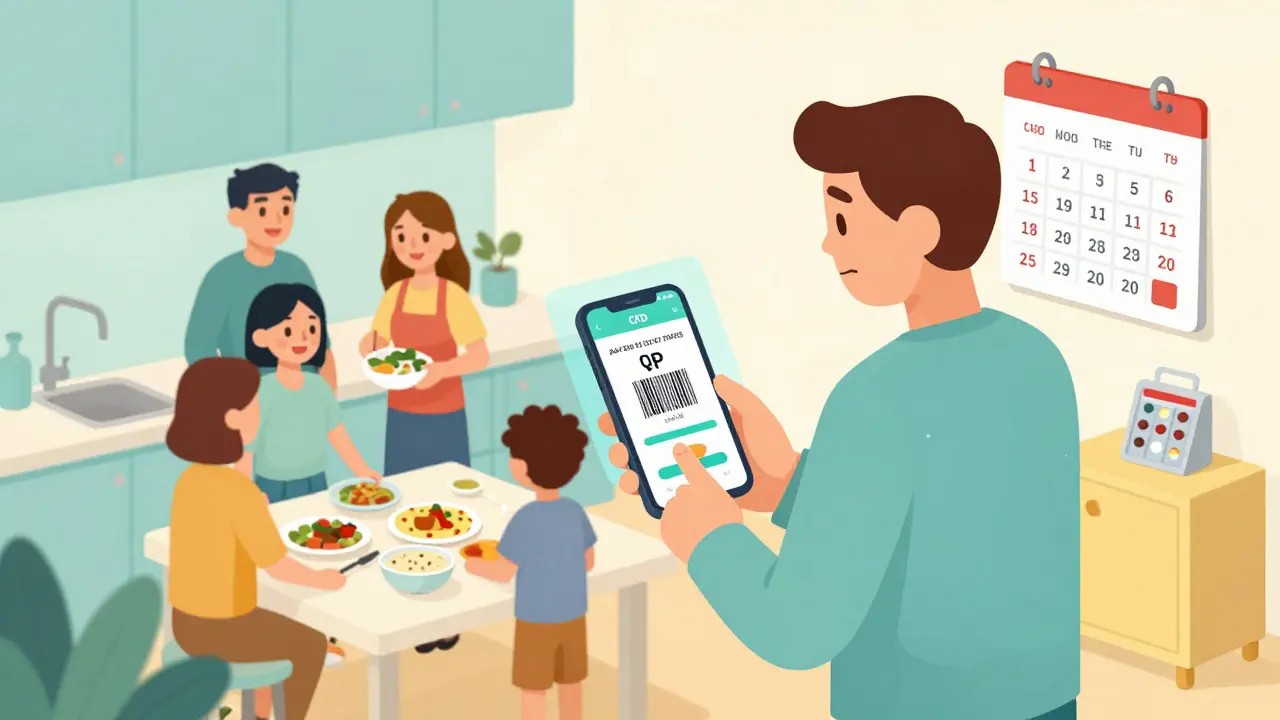
Hyperkalemia isn’t just a lab value. It’s a life disruptor. One patient told me, "I used to cook for my grandchildren. Now I can’t even have a baked potato. I feel like I’m living in a prison of food rules." That’s real. A 2023 survey found 45% of CKD patients feel socially isolated because of their diet.But the tide is turning. New tools - digital apps that scan food barcodes and calculate potassium content - are helping. Pilot studies show a 32% improvement in dietary adherence with these tools. That’s huge.
And the future? We’re moving toward personalized plans. Some trials are testing urinary potassium levels to tailor diet advice. Others are testing new binders that work without sodium or magnesium side effects. By 2027, experts predict 75% of CKD patients on heart-protecting drugs will also be on a potassium binder. That’s not a dream - it’s becoming standard.
You don’t have to choose between living longer and living well. With the right plan - diet, monitoring, and modern binders - you can do both. The goal isn’t perfection. It’s control. And control is possible.
Can I eat bananas if I have CKD?
If you’re in early CKD (stages 1-3a), you can have small portions - half a banana occasionally. But if you’re in stage 3b or worse and not on dialysis, you should avoid them. One banana has over 400 mg of potassium. That’s nearly 20% of your daily limit. Better choices include apples, berries, grapes, or cabbage.
What’s the fastest way to lower potassium in an emergency?
The fastest way is intravenous calcium gluconate to protect the heart, followed by insulin and glucose to move potassium into cells. But the quickest binder that actually removes potassium from your body is sodium zirconium cyclosilicate (Lokelma), which starts working in under an hour. It’s now the first-choice binder for acute cases.
Can I stop my blood pressure meds if my potassium is high?
No - not without talking to your doctor. Stopping RAAS inhibitors like ACE or ARB drugs increases your risk of heart attack by 28% and kidney failure by 34%. Instead of stopping, use a potassium binder like patiromer or SZC. These let you keep your protective meds while controlling potassium.
Do potassium binders have side effects?
Yes. Sodium zirconium cyclosilicate (Lokelma) can cause swelling due to sodium retention, especially in heart failure patients. Patiromer (Veltassa) often causes low magnesium and constipation. Both require careful timing with other medications. SPS (Kayexalate) is outdated because it can cause serious bowel damage. Always discuss side effects with your pharmacist.
How often should I get my potassium checked?
Check within 1-2 weeks after starting or increasing any kidney-protecting medication (like ACE inhibitors). If stable, check every 3-6 months. But if you feel weak, your heart races, or you’re sick, get tested immediately. Don’t wait for your next appointment.
Are there apps to help track potassium in food?
Yes. Several smartphone apps now scan food barcodes and show potassium content in real time. Pilot studies show they improve dietary adherence by 32%. They’re especially helpful for people who cook at home or eat out often. Ask your renal dietitian for recommendations - they often have access to validated tools.
Next Steps: What You Should Do Now
- If you have CKD and take blood pressure or heart meds, ask your doctor for a recent potassium blood test.
- Request a referral to a renal dietitian - they’re trained to help you eat safely without feeling deprived.
- If your potassium is above 5.0, ask if a potassium binder is right for you - and which one fits your health profile.
- Use a food tracking app to monitor your potassium intake for a week. You might be surprised.
- Never stop your RAASi meds on your own. Talk to your care team first.
Hyperkalemia isn’t a death sentence. It’s a manageable condition - if you know the rules, use the tools, and work with your team. You’re not alone. Thousands of people are doing this every day. And with the right plan, you can too.


