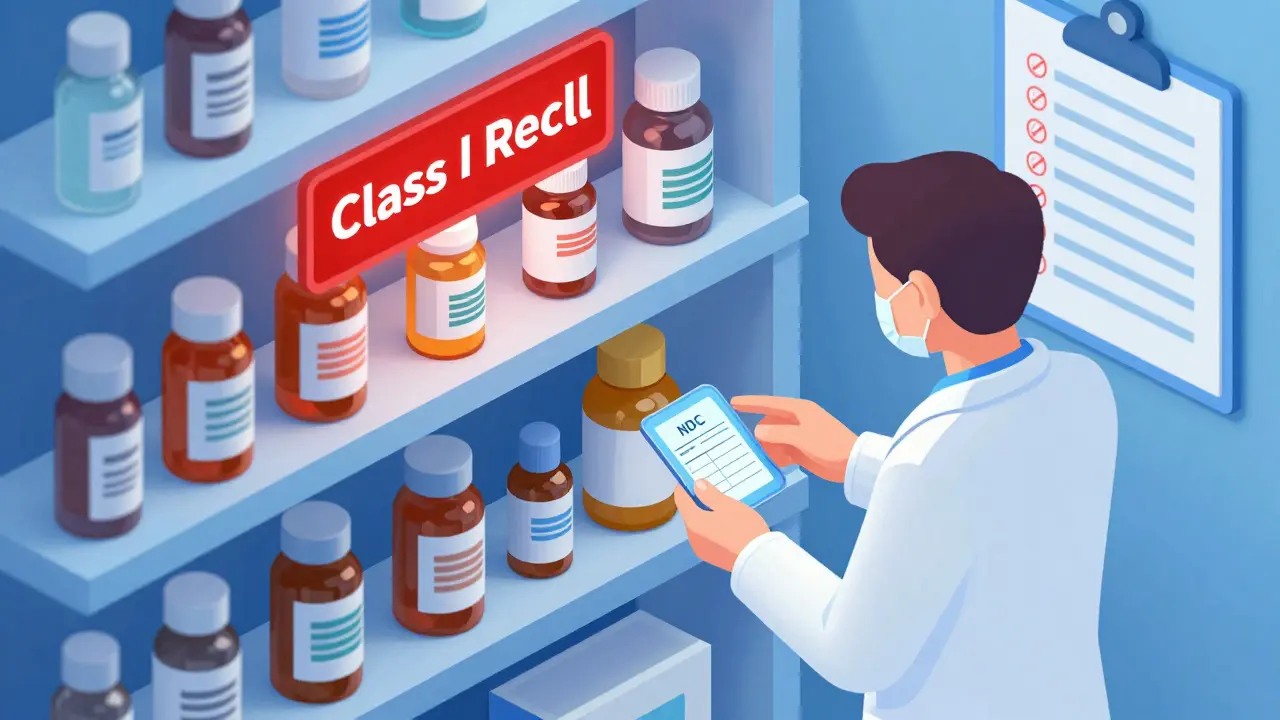
When a drug recall happens, time isn’t just money-it’s lives. A single misfiled pill in a hospital drawer or a missed lot number in a community pharmacy can lead to serious harm. The FDA issued over 7,100 drug recalls in 2022, and nearly half of them involved products that were already in use. If you’re responsible for medication safety-whether you work in a hospital, clinic, or retail pharmacy-you need to know exactly how to verify recall notices and identify affected lots. This isn’t optional. It’s a legal and ethical requirement.
Understand the Recall Classes
Not all recalls are the same. The FDA classifies them into three levels based on how dangerous the product is:- Class I: Highest risk. These are drugs that could cause serious injury or death. Think contaminated antibiotics, mislabeled insulin, or pills with toxic ingredients.
- Class II: Moderate risk. These might cause temporary health problems or pose a low chance of serious harm. Examples include incorrect dosage strength or missing labeling.
- Class III: Lowest risk. These are unlikely to cause harm but violate FDA labeling or manufacturing rules. Think minor packaging errors.
Don’t Rely on One Source
Many people think they’ll get recall notices from the manufacturer or the FDA website. That’s a dangerous assumption. In 2022, the FDA’s audit of 150 hospitals found that 68% failed to properly verify lot numbers-not because they didn’t get the notice, but because they only checked one channel. Recall alerts come from multiple places:- FDA’s MedWatch portal (free, but you must check daily)
- Manufacturer direct emails or faxes
- Pharmacy distributor alerts (like McKesson, Cardinal Health)
- State pharmacy board notifications (California, for example, requires hospitals to respond within 24 hours)
- Third-party services like First Databank or Grayson’s RecallTrac
Know What to Look For: NDC, Lot, Expiry, and Pack Size
Verifying a recall isn’t about the drug name. It’s about the exact match of four identifiers:- National Drug Code (NDC): A unique 10- or 11-digit number on every prescription bottle. Example: 00078-0252-01
- Lot number: A combination of letters and numbers printed on the box or blister pack. Often looks like A23B45 or 20241115
- Expiration date: Sometimes recalls only affect specific expiration batches
- Pack size: A 100-count bottle might be recalled, but the 30-count version isn’t
Use a Step-by-Step Verification Process
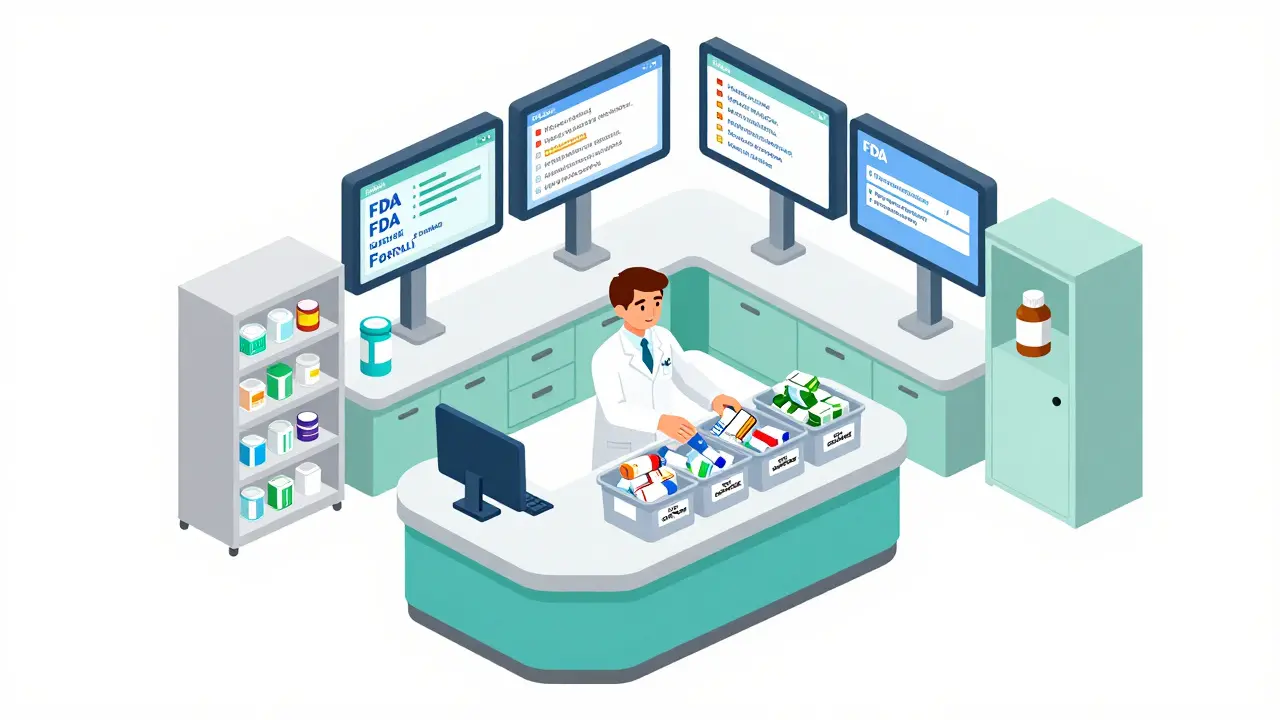
Follow this seven-step protocol, based on California State Board of Pharmacy guidelines and adopted by top-performing hospitals:- Receive and log the notice: Record the date, time, source, and recall class. Use a digital log, not a sticky note.
- Check your inventory: Cross-reference every NDC, lot, expiry, and pack size in your system against the recall notice. Don’t skip unopened emergency kits-68% of missed recalls were found in these.
- Isolate affected products: Move them to a secure quarantine area immediately. Label them clearly: “RECALLED - DO NOT DISPENSE.”
- Identify affected patients: For Class I recalls, trace who received the medication. Use your pharmacy system to pull dispensing records from the past 30 days.
- Replace with safe alternatives: Contact prescribers and patients to switch medications. Document every replacement.
- Return or destroy: Follow the manufacturer’s return instructions. Keep proof of return-shipping labels, signed receipts, destruction certificates.
- Document everything: Date, time, who did what, which lots were removed, how many patients were contacted. This isn’t paperwork-it’s your legal defense.
Automated Systems vs. Manual Checks
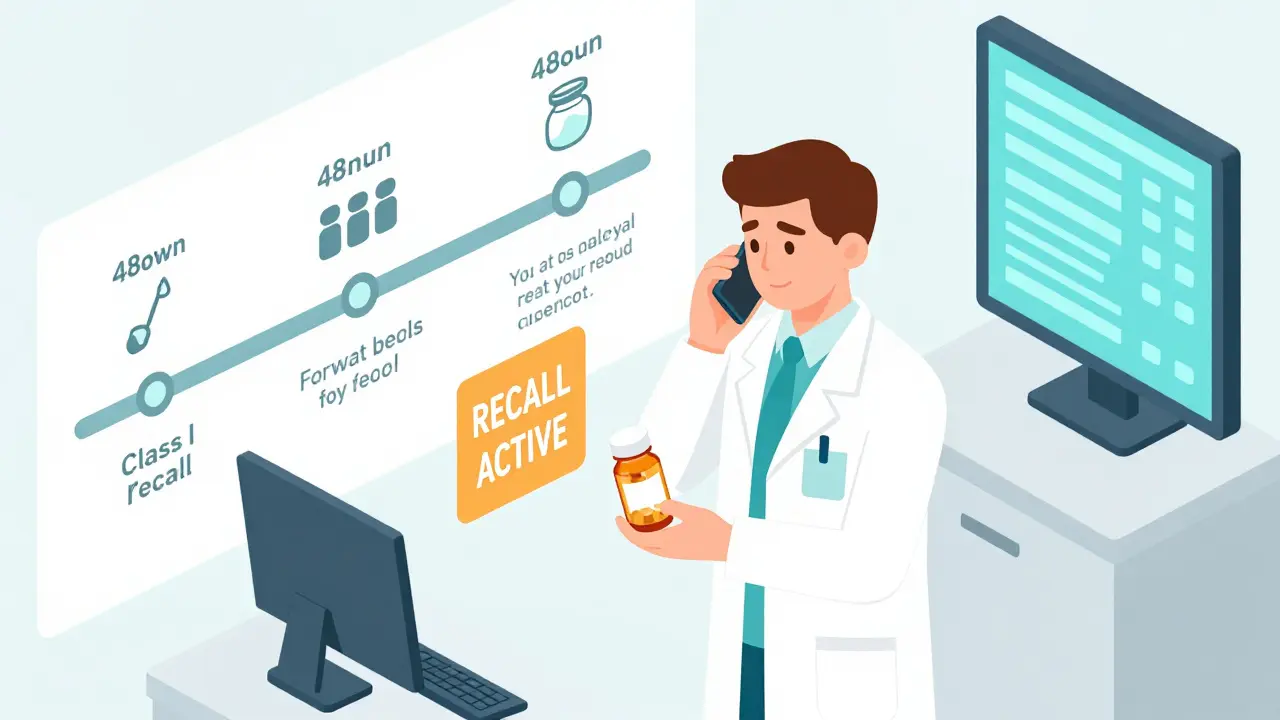
Manual verification is slow and error-prone. The ASHP 2022 study found it takes an average of 4.7 hours per recall with an 18.3% error rate. That means nearly one in five times, you’re either missing a bad batch or pulling good ones. Automated systems-like TruMed’s AccuSite or Navitus’ Recall Management Platform-cut that time to 1.2 hours with only a 2.1% error rate. They work by syncing with your pharmacy management system and automatically flagging any product that matches a recall’s NDC and lot number. When a pharmacist scans a bottle, the system pops up a warning: “RECALL ACTIVE - DO NOT DISPENSE.” But automation isn’t for everyone. In rural clinics with outdated IT systems, these tools can be too complex or expensive. Grayson’s RecallTrac, for example, requires at least 50 users to be cost-effective. First Databank works with 98% of major pharmacy systems but costs $4,800 a year. If you can’t afford automation, create a simple spreadsheet with all your inventory’s NDCs and lot numbers. Update it weekly. Print it. Keep it next to your phone. When a recall comes in, manually cross-check. It’s not glamorous, but it’s better than guessing.Common Pitfalls and How to Avoid Them
Even experienced teams make the same mistakes:- False positives: 63% of pharmacists report systems flagging products that aren’t actually recalled. Always verify the FDA’s official notice before acting.
- Misfiled inventory: Dr. Jane Axelrad of the FDA says 23% of recalled drugs are found in the wrong storage area. Check every shelf, drawer, and storage room-even the janitor’s closet.
- After-hours recalls: 68% of recalls happen outside business hours. Have a rotating on-call team trained to respond.
- Over-relying on manufacturers: ISMP found 37% of recalls are never announced by the manufacturer. Check FDA and state sources independently.
Documentation Is Your Shield
The Joint Commission requires you to document every step of a recall. If you’re audited and can’t prove you acted, you lose your license. Your documentation must include:- Date and time the recall notice was received
- Exact NDC, lot number, and expiry date of affected products
- Quantity removed from each location
- Names of staff who performed the verification
- Proof that affected patients were contacted
- Return or destruction receipts
What’s Next? The Future of Recall Verification
The FDA is pushing for real-time electronic verification by 2027 under the Drug Supply Chain Security Act. By 2026, most hospitals will use AI-powered systems that predict which lots are at risk before a recall is even announced. Pfizer and Walgreens are already testing blockchain systems that track every pill from factory to patient. But you don’t need to wait for the future. Right now, you can start with the basics: use multiple sources, verify all four identifiers, follow the seven-step process, document everything, and train your team. That’s how you keep patients safe-and your facility out of legal trouble.Frequently Asked Questions
How do I know if a recall notice is real?
Always cross-check the notice with the FDA’s official website or your state pharmacy board. Never trust a notice sent only by email or fax. Look for the official FDA recall number (like “FDA-2024-R-1234”) and verify it on fda.gov/recalls. If the notice doesn’t include the NDC and lot numbers, it’s likely fake or incomplete.
What if I find a recalled drug in a patient’s home?
If the drug was dispensed by your pharmacy, you’re responsible for notifying the patient. Call them immediately. If they can’t return it, instruct them to take it to a local drug take-back location or dispose of it safely (mix with coffee grounds or cat litter, seal in a bag, throw in trash). Document the conversation and the disposal method. Never assume they’ll throw it away on their own.
Do I need to verify recalls for over-the-counter (OTC) drugs?
Yes. While OTC recalls are less frequent, they still happen. In 2023, a popular children’s cough syrup was recalled due to bacterial contamination. The same verification rules apply: check NDC, lot, expiry, and pack size. Even if you don’t sell it, if your facility has it in stock, you must act.
Can I just wait for the manufacturer to tell me what to do?
No. Manufacturer notifications are often delayed or incomplete. ISMP found that 37% of recalls aren’t announced by manufacturers at all. You must actively monitor FDA alerts, state boards, and distributor notices. Waiting for instructions is how errors happen.
What’s the most common mistake in recall verification?
Failing to check unopened emergency kits and backup supplies. These are often stored in locked rooms or off-site warehouses and forgotten. In 41% of FDA audit deficiencies, recalled drugs were found exactly there. Always include every storage location in your inventory check.
How often should staff be trained on recall procedures?
At least once a year, as required by the Joint Commission. But best practices suggest quarterly drills. Run a mock recall every three months. Pick a random product, issue a fake notice, and see how fast your team responds. This builds muscle memory and exposes gaps before a real emergency hits.


