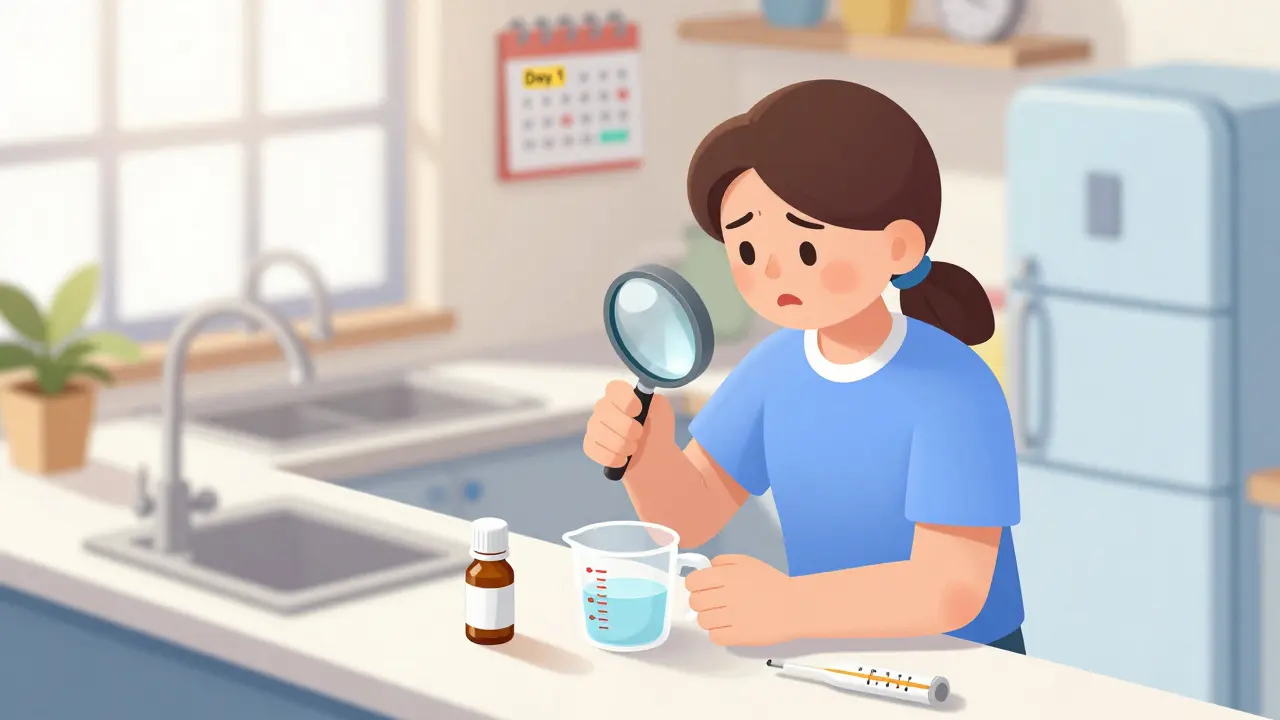
Your child is sick, the doctor has prescribed a liquid antibiotic, and you’re holding a bottle of powder that needs mixing. It feels straightforward enough until you read the label. One part says "refrigerate," another mentions "room temperature," and your memory tells you something about throwing it away after ten days. Confusion here isn’t just annoying; it’s dangerous. Improper storage is responsible for roughly 15% of treatment failures in pediatric antibiotic therapy, according to a 2022 CDC study. If the medicine loses its potency before the course ends, the infection can bounce back, stronger and harder to treat.
Getting this right doesn't require a pharmacy degree, but it does require paying attention to three specific things: where you put the bottle, how long you keep it, and whether you actually need to refrigerate it at all. Let’s clear up the confusion so your child gets the full benefit of their prescription.
The Golden Rule: Check the Label First
Before you even think about opening the fridge or grabbing a spoon, look at the sticker on the bottle. The pharmacy label is your single most important source of truth. While general guidelines exist, the pharmacist who dispensed the medication knows exactly which formulation was used and what stability data applies to that specific brand.
Most labels will have one of two instructions:
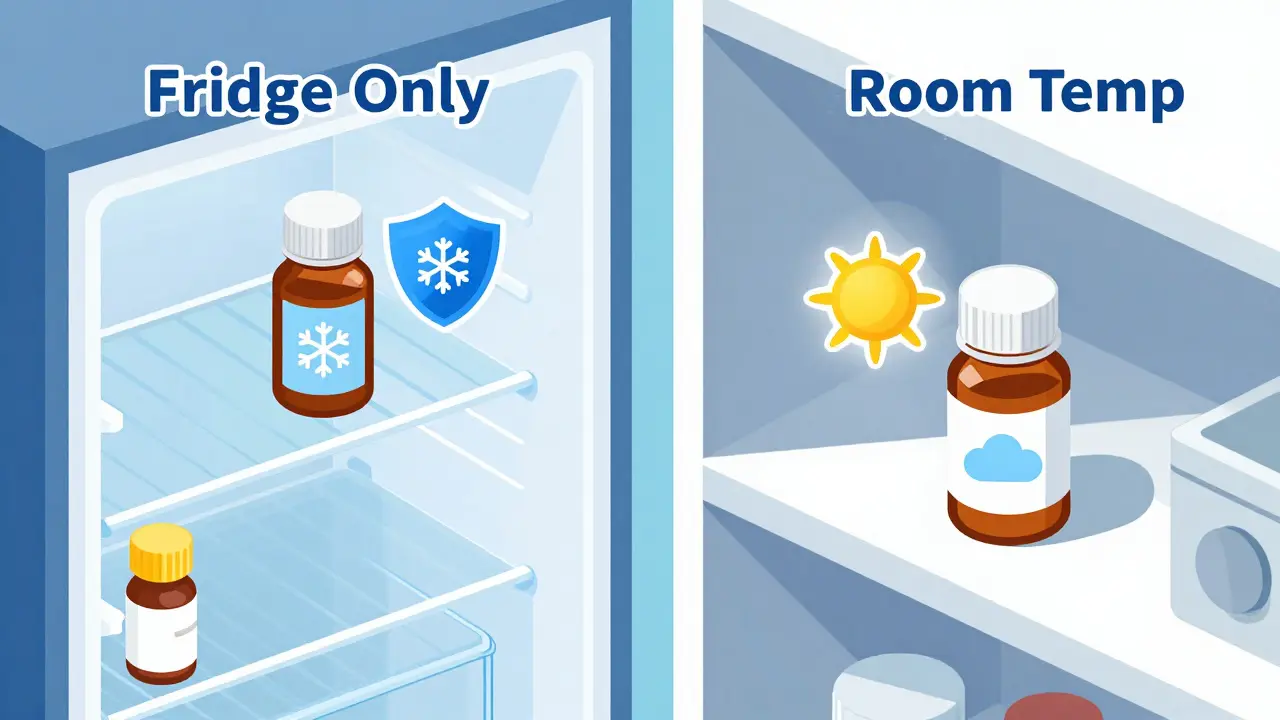
- "Refrigerate": This means the medicine must be kept cold (between 2°C and 8°C) to stay effective.
- "Store at Room Temperature": This means keeping it between 20°C and 25°C (68°F-77°F). Do not guess what "room temperature" means in your home. If your house is hot-above 27°C (80°F)-you might need to find a cooler spot, like a basement or an interior closet, rather than a kitchen counter near the stove.
If the label is unclear, call the pharmacy. Don’t rely on memory from a previous illness. Different antibiotics have different chemical structures, and what worked for last year’s ear infection might ruin this month’s chest infection if stored incorrectly.
Refrigerator vs. Counter: Which Antibiotics Need Cold?
This is where most parents make mistakes. Not all liquid antibiotics need the fridge. In fact, putting some medicines in the refrigerator can actually make them worse by changing their texture or taste, leading to a child refusing to take them.
| Antibiotic Name | Storage Location | Discard After (Days) | Key Notes |
|---|---|---|---|
| Amoxicillin | Fridge OR Room Temp | 14 | Flexible storage. Refrigeration may improve taste. |
| Amoxicillin/Clavulanate (Augmentin) | Fridge Only | 10 | Clavulanate degrades quickly at room temp. Strictly refrigerate. |
| Azithromycin (Zithromax) | Room Temp Only | 10 | Do NOT refrigerate. It thickens and becomes hard to swallow. |
| Cefdinir | Room Temp Only | 10-14 | Check specific brand label. Generally stable at room temp. |
| Clarithromycin | Room Temp Only | 10-14 | Refrigeration can cause precipitation (solid bits). |
Notice the difference with Amoxicillin? It’s the most commonly prescribed pediatric antibiotic, making up nearly a third of all prescriptions. It’s forgiving; you can store it in the fridge or on the counter, and it stays good for 14 days either way. However, Amoxicillin/Clavulanate (often known as Augmentin) is much stricter. The clavulanate component breaks down rapidly if not kept cold. Research shows it loses significant potency after just five days at room temperature. If you have this one, the fridge is non-negotiable.
On the flip side, never put Azithromycin in the fridge. Studies show it thickens significantly when cold, making it unpleasant and difficult for children to drink. Keeping it at room temperature ensures it stays fluid and palatable.
The Discard Date: Why You Must Throw It Away
Once you mix the powder with water, the clock starts ticking. This process is called reconstitution. Before mixing, the powder is stable for years. Once mixed, bacteria can grow, and the active ingredients begin to degrade.
Here is the hard rule: Throw the medicine away when the course is finished, or on the discard date, whichever comes first.
Many parents save leftover antibiotics "just in case" the child gets sick again. This is a major safety risk. According to Dr. Jessica Smith, a pediatric pharmacist at Children's Hospital of Philadelphia, continuing to use antibiotics beyond the designated discard timeframe accounts for 27% of observed treatment failures. Using degraded medicine means your child isn't getting enough drug to kill the bacteria, which can lead to antibiotic resistance. That infection won't just go away; it could come back requiring stronger, more invasive treatments.
To avoid forgetting this date, write it on the bottle immediately after mixing. Use a permanent marker. If your pharmacy didn't provide a sticker with the exact date, calculate it yourself based on the table above (usually 10 or 14 days from the day you mixed it) and call the pharmacist to confirm.
Safety First: Keep It Up and Away
Storing the medicine correctly isn't just about chemistry; it's about physics and psychology. Liquid antibiotics often taste sweet or fruity because they are flavored to encourage kids to take them. To a toddler, that bottle looks like juice.
The American Association of Poison Control Centers reports that around 60,000 U.S. children under 5 are treated annually for accidental medication poisoning. Most of these incidents happen at home, involving medications stored within reach.
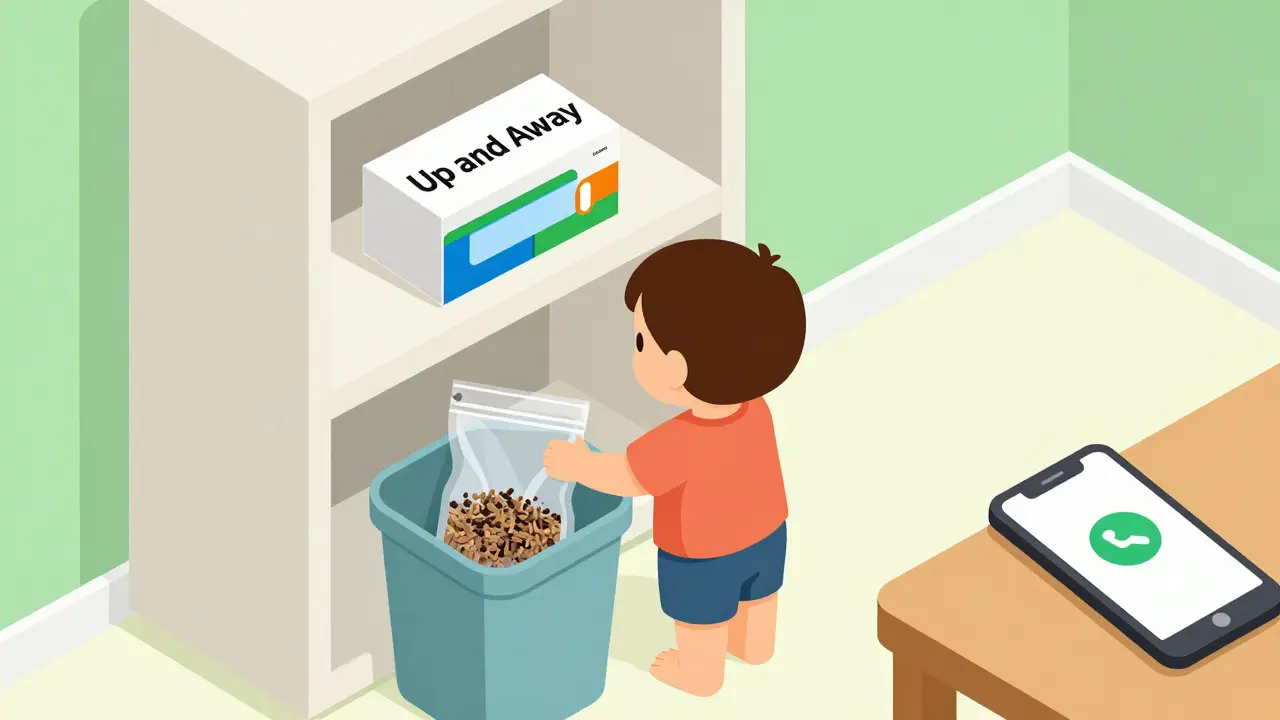
Follow the "Up and Away" rule:
- Up: Store the bottle on a high shelf, out of sight and reach. If you keep it in the fridge, don't leave it on the door where a curious child can open it. Put it on the top shelf, behind other items.
- Away: Never store medicine in the bathroom. Bathrooms are humid and warm, especially after showers. Humidity causes powders to clump and liquids to degrade faster. The kitchen cabinet near the stove is also bad due to heat fluctuations. An interior bedroom closet or a dedicated medicine box in a cool, dry place is ideal.
If you must store it in the refrigerator, consider using a small, opaque container inside the fridge to hide it from view, then place that container on the top shelf. Visibility increases temptation.
Signs Your Medicine Has Gone Bad
Even if you’ve followed all the rules, sometimes things go wrong. Maybe the power went out during a storm, or the car ride home was too long in summer heat. How do you know if the medicine is still safe?
Look for these visual cues:
- Discoloration: If the liquid has changed color (e.g., turning brown or pink instead of white or yellow), discard it.
- Sedimentation: Some antibiotics naturally settle. Shake well. But if there are chunks that don't dissolve after vigorous shaking, it has precipitated and should be thrown out.
- Foul Odor or Taste: If it smells sour or tastes significantly different than before, it may have spoiled.
If you suspect the medicine has been compromised, do not give it to your child. Contact your pharmacist. They can advise you on whether you need a new prescription. It is better to pay for a replacement dose than to deal with a resistant infection later.
Practical Tips for Busy Parents
We know parenting is chaotic. Here are some realistic strategies to ensure proper storage without adding stress:
- Use a Mini-Fridge: If you frequently buy refrigerated meds, a small dedicated mini-fridge for medications can help maintain consistent temperatures, especially if your main fridge is opened often or has unreliable cooling.
- Set Phone Reminders: Set a reminder for the "Discard Date" one day before it expires. This prompts you to throw it out and prevents accidental reuse.
- Ask for Single-Dose Packets: For some antibiotics, pharmacists can compound or source single-dose packets. These don't require reconstitution and eliminate storage concerns entirely, though they may cost slightly more.
- Travel Smart: If you're traveling, use an insulated bag with ice packs for refrigerated meds. Avoid direct contact between the ice pack and the bottle to prevent freezing, which can damage the medication structure.
Frequently Asked Questions
Can I freeze antibiotic suspensions to extend their life?
No, never freeze liquid antibiotics. Freezing changes the chemical structure of the medication, causing it to separate and lose effectiveness. It can also crack the bottle. Always follow the label instructions for refrigeration or room temperature storage.
What happens if I accidentally leave a refrigerated antibiotic out overnight?
If it was only out for a short period (less than 2-4 hours) in a cool room, it is likely still safe. However, if it was left out in a hot environment or for more than 24 hours, contact your pharmacist. For sensitive drugs like Amoxicillin/Clavulanate, err on the side of caution and get a replacement, as the clavulanate component degrades quickly.
Why does my child refuse to take the cold medicine?
Cold temperatures can thicken certain suspensions, particularly Azithromycin, making them less palatable. If your label allows room temperature storage, try letting the bottle sit out for 30 minutes before dosing to bring it to a neutral temperature. This often improves taste and texture.
Can I use leftover antibiotics from a previous illness?
Absolutely not. Leftover antibiotics are likely degraded and ineffective. Furthermore, the current illness may be caused by a different bacteria that requires a different type of antibiotic. Using old meds contributes to antibiotic resistance and delays proper treatment.
How should I dispose of unused antibiotic suspensions?
Do not flush them down the toilet unless the label specifically instructs you to do so. Instead, mix the unused medication with an unappealing substance like cat litter, coffee grounds, or dirt in a sealed plastic bag. Place this bag in your household trash. Remove or scratch out personal information from the label before discarding.