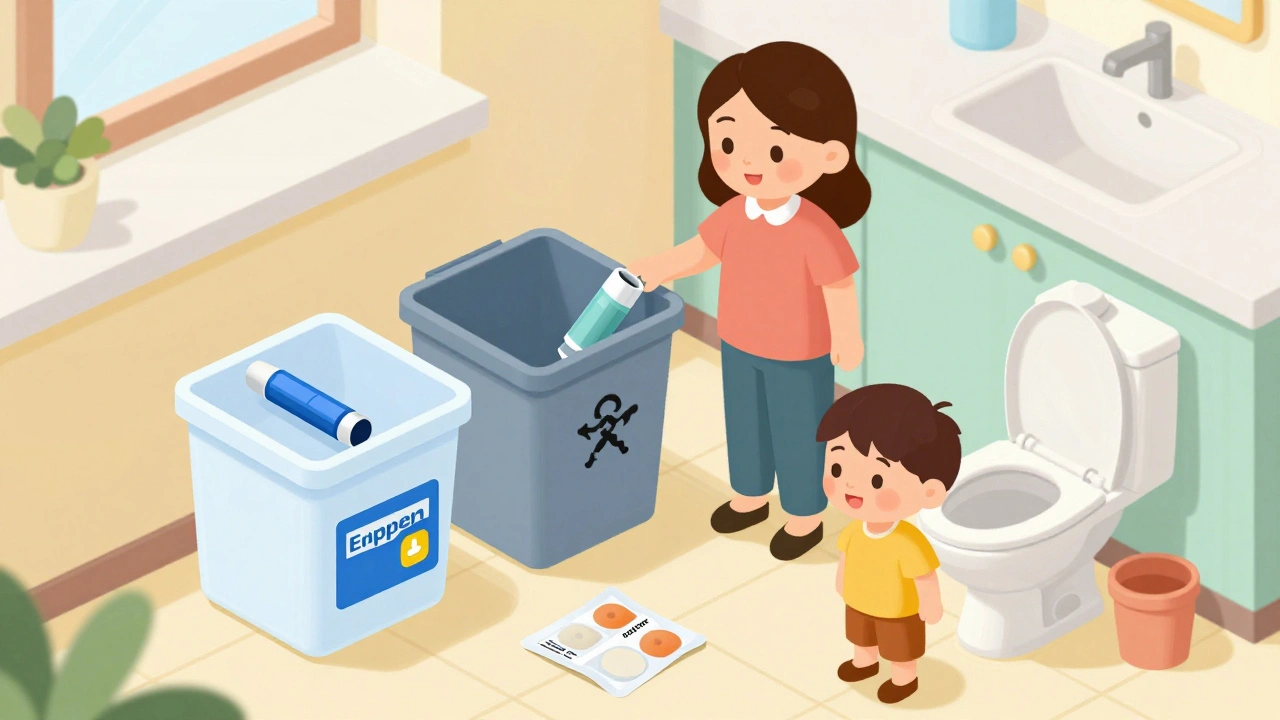
Expired EpiPens, inhalers, and medicated patches aren’t just old medicine-they’re potential hazards. If you toss them in the trash without care, you could be putting kids, pets, sanitation workers, or the environment at risk. The FDA reports that 12% of accidental poisonings in children involve improperly discarded medications. That’s not a small number. It’s a preventable crisis. And it starts with knowing exactly how to get rid of these items safely.
Why You Can’t Just Throw Them Away
EpiPens contain a sharp needle and life-saving epinephrine. Inhalers are pressurized cans with propellants that can explode if crushed or burned. Patches like fentanyl or nicotine stick to your skin with leftover medicine-even after you’ve used them. Throw any of these in the regular trash, and someone could accidentally stick themselves, inhale fumes, or get a dangerous dose from a discarded patch. Worse, these chemicals can leach into soil and water. The USGS found pharmaceuticals in 80% of tested waterways. That’s not science fiction. That’s reality.How to Dispose of Expired EpiPens
An EpiPen isn’t trash. It’s a medical sharp. That means it needs the same handling as a used syringe. Never try to remove the needle. Don’t cut it open. Don’t try to empty the medicine yourself. You could get injected or exposed to the drug. The safest way? Take it back. Bring your expired or used EpiPen to the place where you got it: your doctor’s office, clinic, or hospital. Most allergists and primary care providers keep sharps containers for exactly this reason. One Reddit user wrote, “My allergist’s office has a sharps bin- they took mine no questions asked.” That’s the gold standard. If your provider doesn’t take them, look for a DEA-authorized drug take-back location. These are often pharmacies, police stations, or hospitals. Use the DEA’s online locator tool to find the nearest one. You can also check with your local pharmacy-some, like CVS or Walgreens, have drop boxes for sharps, but not all do. Call ahead. If you absolutely must store it at home before disposal, put it in a hard plastic container. A clean laundry detergent bottle works. Tape the lid shut. Write clearly on the side: “SHARPS,” “BIOHAZARD,” “DO NOT RECYCLE.” Keep it out of reach of children and pets. Never use glass jars-they break. State rules vary. In California, you must use a certified sharps collection program or mail-back service. In Texas, you can throw it in the trash if it’s in a sealed, labeled container. Always check your state’s rules.What to Do with Expired Inhalers
Inhalers are tricky. They’re not sharps, but they’re not regular trash either. The canister is pressurized. If it’s punctured, crushed, or thrown into a dumpster that gets compacted, it can explode. Even worse, the propellant-often a greenhouse gas-escapes into the air. Around 300 million inhalers are thrown away each year in the U.S. alone. The best option? Return it. Some pharmacies, including Walgreens and CVS, accept inhalers at select locations. But don’t assume your local store does. A 2022 survey found only 47% of Walgreens pharmacies took them. Call first. Ask: “Do you accept used or expired inhalers for disposal?” If no pharmacy takes them, contact your city or county waste management department. Some cities, like New York City, have special drop-off sites for aerosols and hazardous waste. These are usually at recycling centers or hazardous waste collection events. Don’t wait for a big event-some places offer permanent drop-off. Never burn an inhaler. Never put it in recycling. Never puncture it. If you’re stuck and can’t find a drop-off, the FDA says you can throw it in the trash-but only after removing the mouthpiece (if possible) and keeping it away from heat or fire. Still, this is the last resort. Take-back is always better.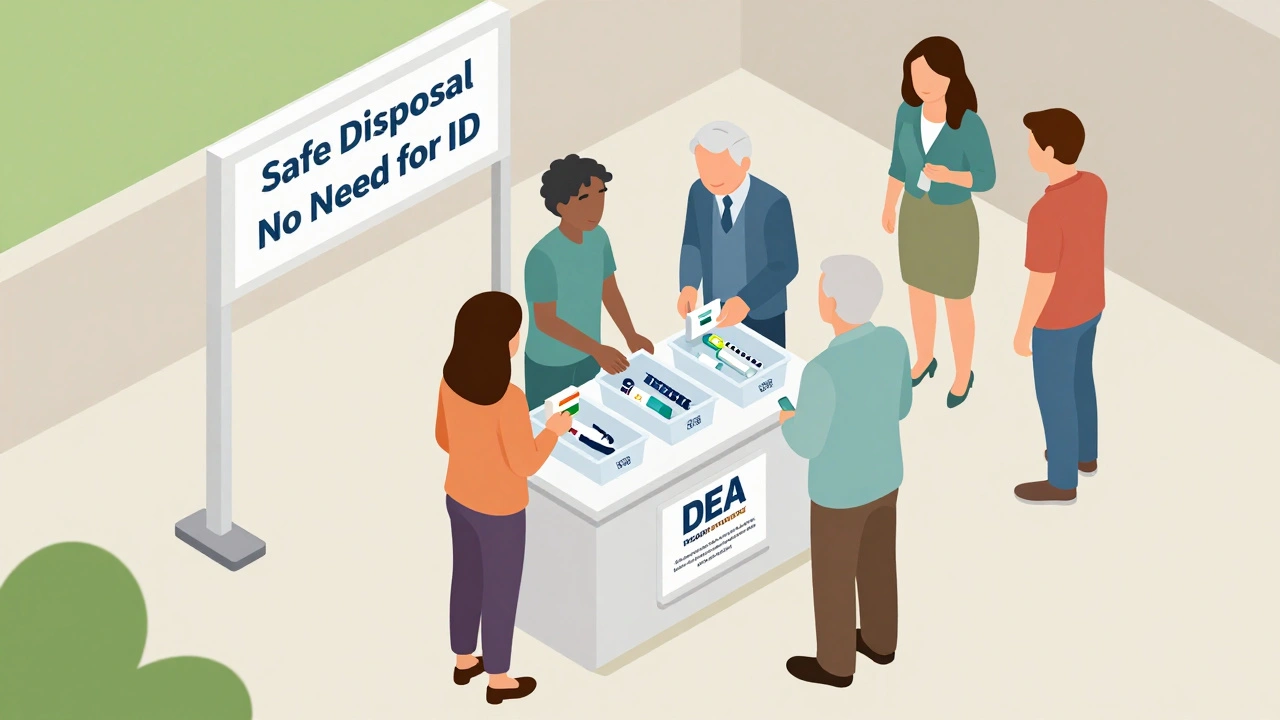
Disposing of Medicated Patches
Patches are the most dangerous if handled wrong. Even after use, they still hold up to 80% of their original medicine. A single fentanyl patch can kill a child if licked or stuck to the skin. That’s why the FDA has a “flush list”-medications you should flush down the toilet immediately to prevent accidental exposure. Fentanyl patches are on that list. So are certain opioids. If your patch is on the flush list, fold it in half so the sticky sides stick together. Then flush it. Yes, flush it. The FDA says this is the safest way to prevent misuse. Don’t wait. Don’t store it. Flush it right away. If your patch isn’t on the flush list (like a nicotine or hormone patch), fold it in half with the sticky sides together. Put it in a sealed bag or container. Mix it with something unappetizing-used coffee grounds, kitty litter, or dirt. Then throw it in the trash. This makes it less tempting for curious kids or pets. Some pharmacies sell DisposeRx® packets. These turn pills and liquids into a gel when you add water. But they don’t work well for patches. The adhesive doesn’t dissolve. So stick with folding and flushing (if on the list) or folding and mixing (if not).Use Take-Back Programs When You Can
The DEA runs National Prescription Drug Take Back Days twice a year-in April and October. In October 2022, they collected nearly a million pounds of unwanted medications across 5,800 locations. That’s a lot of safety. These events are your best chance to drop off anything you’re unsure about: EpiPens, inhalers, patches, leftover pills. You don’t need to be a patient. You don’t need ID. Just bring the items in a bag. Law enforcement staff are there to take them. If you can’t wait for the next event, find a permanent take-back site. The DEA’s website lists over 14,000 authorized collectors nationwide. But here’s the catch: rural areas are underserved. A 2022 study showed only 37% of rural counties have permanent drop-off points, compared to 89% in cities. If you live in a rural area, your best bet is your local hospital or pharmacy. Call them. Ask. Don’t assume they don’t help.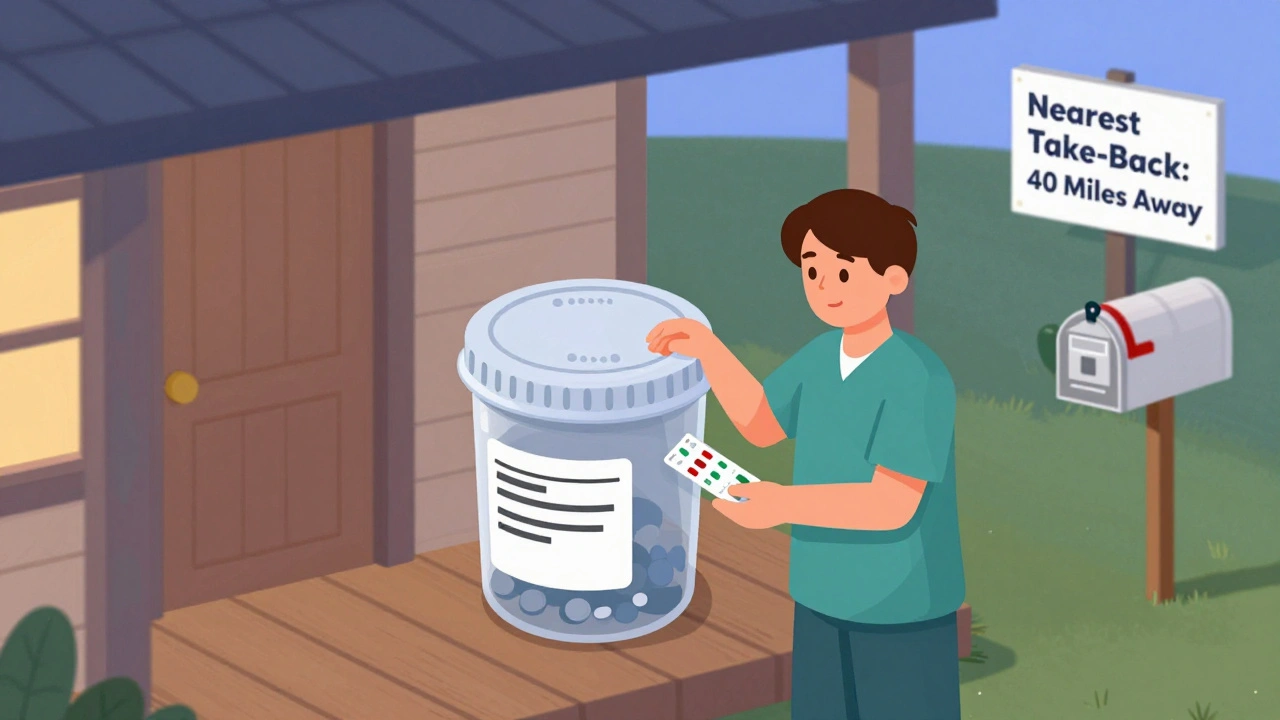
What Not to Do
Here’s a quick list of what to avoid:- Don’t flush patches unless they’re on the FDA’s flush list (fentanyl, some opioids).
- Don’t put EpiPens in recycling bins. They’re not plastic-they’re medical sharps.
- Don’t throw inhalers in the fire or incinerator. They can explode.
- Don’t try to dismantle an EpiPen or inhaler. You could get hurt or release the drug.
- Don’t assume your local pharmacy takes everything. Always call first.
Prevent Future Problems
The easiest way to avoid this mess? Don’t let your meds expire in the first place. Check your EpiPen, inhaler, and patch expiration dates every month. Mark the date on your calendar. Set a phone reminder. Most EpiPens last 12-18 months. Inhalers often last a year. Patches vary. When you get a refill, ask your pharmacist: “Do you take back expired ones?” Many do. Some even give you a free sharps container when you pick up a new EpiPen. If you’re worried about cost, know this: the cost of a new EpiPen is high, but the cost of an accident is higher. Don’t keep expired ones “just in case.” Use them if you need them. If you don’t, get rid of them safely.What’s Changing in 2025
New rules are coming. California’s SB 212, which started in January 2024, requires drug makers to pay for disposal programs. That means more drop-off bins, more mail-back kits, and better labeling on packaging. Some companies, like Mylan (EpiPen’s maker), are now adding QR codes to boxes that link directly to disposal instructions. The EPA is also updating rules for pharmaceutical waste under the Resource Conservation and Recovery Act. Expect more transparency, more accountability, and more options for patients. For now, the system isn’t perfect. But it’s better than it was five years ago. And you have more power than you think. By using take-back programs, asking questions, and refusing to toss dangerous items in the trash, you’re helping protect your family, your community, and the planet.Can I throw an expired EpiPen in the regular trash?
Only if you live in a state that allows it (like Texas), and only if you place it in a sealed, puncture-proof container labeled "SHARPS" and "DO NOT RECYCLE." Even then, it’s not ideal. The safest option is always to return it to a healthcare provider or DEA take-back location.
Do pharmacies take back inhalers?
Some do, but not all. About half of Walgreens and CVS locations accept inhalers for disposal. Always call ahead. Ask specifically if they take used or expired inhalers. If they don’t, contact your local hazardous waste facility or city recycling center.
Should I flush fentanyl patches?
Yes. The FDA includes fentanyl patches on its flush list because they contain enough medication to be deadly if accidentally touched or ingested. Fold the patch in half with the sticky sides together and flush it down the toilet immediately after use or when expired.
What if I can’t find a take-back location near me?
If you’re in a rural area or far from a drop-off site, store the items safely in a sealed, labeled container until you can get to one. For patches not on the flush list, fold them, mix them with coffee grounds or kitty litter, and put them in the trash. For EpiPens, use a hard plastic container labeled "SHARPS." Never leave them unsecured.
Can I recycle the plastic casing of an inhaler?
No. Even if the canister is empty, the plastic casing may contain residual chemicals or propellant. The entire inhaler must be treated as hazardous waste. Remove the mouthpiece if possible, but do not recycle any part of it. Take the whole unit to a hazardous waste drop-off.


