
Giving a child medicine might seem straightforward, but a small mistake in reading a label can lead to a big problem. In fact, the CDC reports that medication errors cause around 70,000 emergency room visits every year for children under 12. Whether it's a midnight fever or a lingering cough, the stress of a sick child makes it easy to misread a decimal point or confuse a teaspoon with a tablespoon. The goal is simple: give enough medicine to help them feel better, but not so much that it becomes toxic.
Quick Guide to Safe Pediatric Dosing
- Weight is King: Always use your child's weight as the primary guide over their age for the most accurate dose.
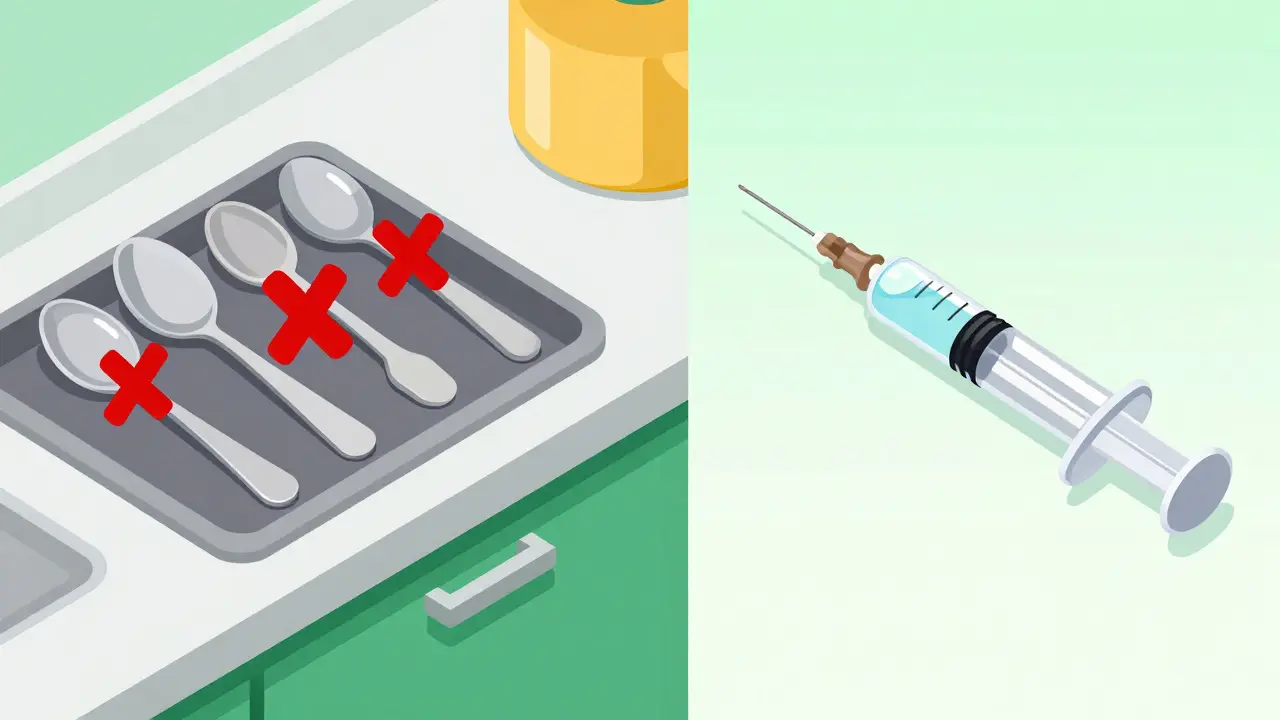
- Ditch the Kitchen Spoons: Only use the oral syringe or measuring cup that comes with the medicine.
- Check the Concentration: Ensure the "mg/mL" on the bottle matches the dosing chart you are using.
- Under 2 Years: Always call your pediatrician before giving any medication to a child under 2.
- Verify Five Times: Check the patient name, drug name, dose, route, and expiration date before every use.
Understanding the Drug Facts Label
Most over-the-counter medicines use a standardized Drug Facts label. This layout is designed to keep the most important safety info in the same place every time. When you pick up a bottle, look for these specific sections:
- Active Ingredient: This tells you what is actually treating the symptom and its concentration. For example, you might see Acetaminophen listed as 160 mg per 5 mL. This means every 5 milliliters of liquid contains 160 milligrams of the drug.
- Directions: This is where the age and weight charts live. It tells you exactly how much to give and how often.
- Warnings: This section highlights who shouldn't take the medicine and what signs of overdose look like.
- Inactive Ingredients: Important if your child has specific allergies to dyes or flavorings.
For prescription meds, you'll see a different label from the pharmacy. This includes the generic and brand names, the specific strength, and the prescriber's info. A common trap here is the concentration. A 2020 study found that 43% of parents misinterpret concentration info, especially when switching between a highly concentrated infant drop and a standard children's liquid. Always double-check that the concentration on the bottle matches what the doctor ordered.
Why Weight Trumps Age
You've probably noticed that labels often give two options: one based on how old your child is and one based on how much they weigh. If you have a choice, weight-based dosing is the gold standard. Why? Because children don't all grow at the same rate. A 4-year-old who weighs 15 kg needs a very different dose than a 4-year-old who weighs 22 kg, yet an age-based chart would tell you to give them the exact same amount.
According to research by Dr. Ian M. Paul, using weight can reduce dosing errors by nearly 38%. This is especially critical for medications like Ibuprofen and Acetaminophen, where too little medicine won't work, and too much can be dangerous. The FDA has noted that weight-based dosing reduces the risk of underdosing by about 29% and overdosing by 23%.
| Feature | Age-Based Dosing | Weight-Based Dosing |
|---|---|---|
| Accuracy | General estimate based on averages | High accuracy based on body mass |
| Risk | Higher risk for children outside growth curves | Lowest risk of toxicity or underdosing |
| Requirement | Only requires the child's birthday | Requires a current, accurate weight |
| Recommendation | Secondary measure (fallback) | Primary gold standard |

The Math: Converting Pounds to Kilograms
Most medical labels and doctors use the metric system (kilograms), but many of us use pounds at home. To get the right dose, you need to be comfortable with a simple conversion. Since 1 kilogram equals 2.2 pounds, you just divide your child's weight in pounds by 2.2.
For example, if your child weighs 22 pounds, the math is 22 ÷ 2.2 = 10 kg. Knowing this number is vital because many dosing tables list "mg per kg." If the label says to give 15 mg per kg and your child is 10 kg, they need 150 mg of the drug. From there, you look at the concentration (like 160 mg/5 mL) to figure out the actual liquid volume (mL) to draw into the syringe.
Measuring Tools and Common Traps
One of the biggest dangers in pediatric medicine is the tool used for measuring. Using a household kitchen spoon is a recipe for disaster. The FDA found that nearly 68% of medication errors happen when parents use these spoons instead of proper medical devices. A kitchen "teaspoon" can vary wildly in size, and confusing a teaspoon (5 mL) with a tablespoon (15 mL) can result in a 300% overdose.
The best tool is an oral syringe with markings in 0.1 mL increments for babies or 0.5 mL for older kids. To get the most accurate read, hold the syringe at eye level. Don't look down at it or up at it; look straight on at the bottom of the liquid curve (the meniscus). This simple habit can eliminate measurement errors of up to 22%.
You should also familiarize yourself with a few common medical abbreviations you might see on prescription labels:
- mL: Milliliter (the volume of liquid)
- mg: Milligram (the amount of drug)
- BID: Twice daily
- TID: Three times daily
- PRN: As needed
Step-by-Step Administration Checklist
To keep your child safe, follow this routine every single time you administer medication. It only takes a few extra seconds but can prevent a trip to the ER.
- Confirm Current Weight: Use a digital scale if possible. If you haven't weighed your child in a few months, do it now before dosing.
- Verify the Drug: Check that the name on the bottle matches what the doctor prescribed or what the symptoms require.
- Calculate the Dose: Use the weight-based chart on the label. If the child is under 2, stop here and call the doctor.
- Check the Concentration: Ensure you aren't using a concentrated "infant drop" dose for a "children's liquid" product.
- Measure Precisely: Use the provided syringe at eye level.
- Log the Dose: Write down the time and amount given to avoid accidental double-dosing, especially if another caregiver is helping.
Dealing with Confusion and Mistakes
Even the most careful parents get confused. You might find a conflict where the age chart says one thing but the weight chart says another. In these cases, the weight is almost always the correct path, but the safest move is to call your pharmacist. Pharmacists are trained to do these calculations and can even mark your syringe with a line for your child's specific dose.
If you suspect you've given too much medicine, don't wait for symptoms to appear. Contact a poison control center or your pediatrician immediately. This is especially urgent with acetaminophen, which is the most common drug involved in pediatric overdoses. Because the liver processes this drug, an overdose can cause serious damage before you even notice your child is sick.
What should I do if the age and weight charts give different doses?
You should prioritize the weight-based dose, as it is more accurate for your child's specific metabolism. However, if the difference is significant, call your pediatrician or pharmacist to confirm the correct amount before administering the medication.
Can I use a kitchen spoon if I lose the measuring syringe?
No. Kitchen spoons are not standardized and can lead to severe underdosing or overdosing. If you lose the syringe, go to a pharmacy and ask for a replacement oral syringe specifically designed for pediatric liquid medication.
Why is weight-based dosing better than age-based dosing?
Children's bodies process medication based on their mass rather than their age. A child who is heavier for their age requires a larger dose to be effective, while a smaller child may be at risk of toxicity if given a standard age-based dose.
What is the difference between a teaspoon and a tablespoon in mL?
One teaspoon (tsp) is equal to 5 mL, while one tablespoon (tbsp) is equal to 15 mL. Giving a tablespoon instead of a teaspoon results in three times the intended dose, which can be dangerous for a child.
Why do children under 2 need a doctor's consultation for all meds?
Infants under 2 have immature liver and kidney functions, which means their bodies don't break down and clear medications as efficiently as older children. A doctor needs to ensure the dose is safe for their specific developmental stage.
What does "160 mg/5 mL" actually mean?
This is the concentration of the medicine. It means that for every 5 milliliters of liquid you draw into the syringe, your child is receiving 160 milligrams of the active drug.


