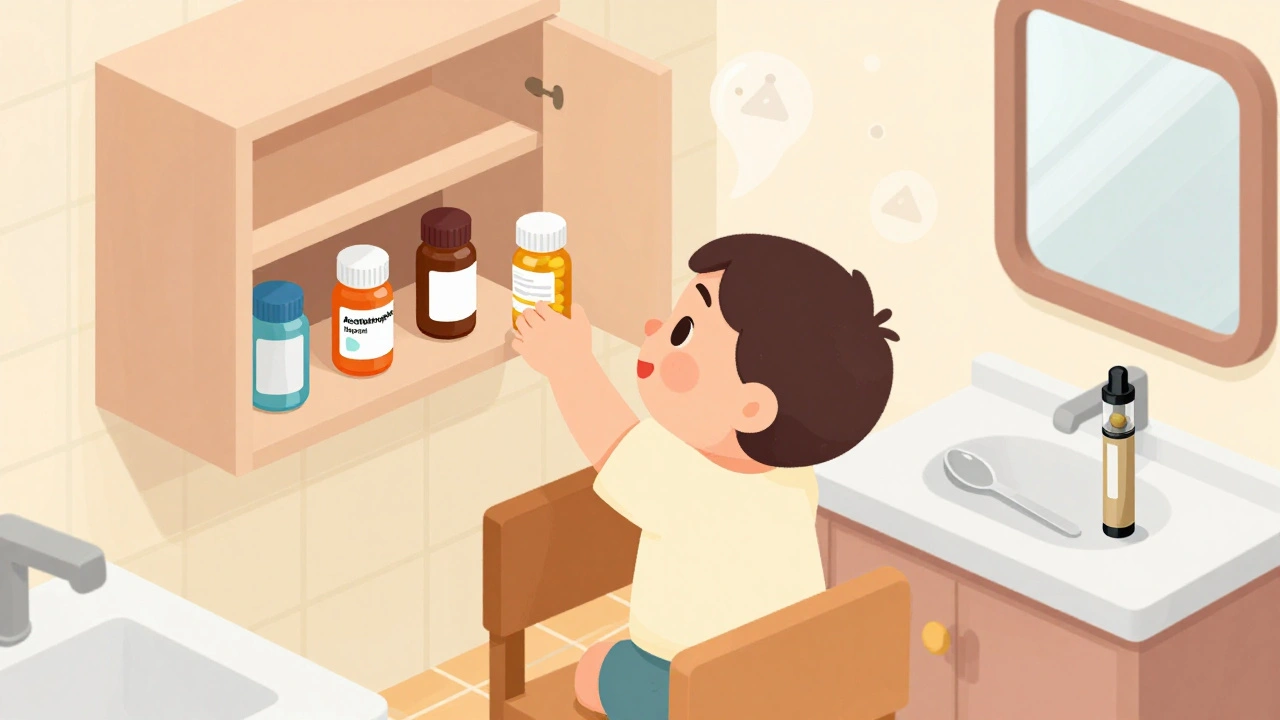
Every year, more than 90 percent of accidental medication poisonings in children happen right at home - often while a parent or caregiver is nearby. It’s not about neglect. It’s about oversight. A pill left on a nightstand, a bottle in a purse, a teaspoon used to measure liquid medicine - these aren’t mistakes made by careless people. They’re traps anyone can fall into when they don’t know what to look for.
Most Common Medications That Poison Toddlers
The biggest dangers aren’t prescription drugs. They’re the ones you keep in the bathroom cabinet or kitchen drawer: acetaminophen (Tylenol), ibuprofen (Motrin, Advil), and aspirin. These are everyday remedies, so we don’t treat them like hazards. But a single overdose of acetaminophen can cause liver failure in a toddler. Ibuprofen can lead to kidney damage. And aspirin? It’s linked to Reye’s syndrome, a rare but deadly condition in children.
Then there’s liquid nicotine from e-cigarettes. One teaspoon - just 0.5 mL - can kill a toddler. It looks like water. It smells sweet. And if it’s left on a counter while you refill your vape, your child might sip it thinking it’s juice. This isn’t hypothetical. Poison Control centers report dozens of cases every month.
Where Kids Find Medication (And How to Lock It Down)
Most parents think, “I keep it up high.” But high isn’t enough. Toddlers as young as 18 months can climb onto chairs, pull themselves up on couches, and use the toilet as a stepping stone. A 2022 study from Nationwide Children’s Hospital found that 78 percent of poisoning incidents involved medicines stored below 4 feet - the average reach of a toddler.
Here’s what actually works:
- Store all medications - even vitamins - in locked cabinets with automatic safety latches. These locks engage when the door closes. Don’t rely on simple childproof caps.
- Mount cabinets at least 54 inches off the floor. That’s beyond the reach of most children under 3.
- Use magnetic locks or key-locked cabinets. Simple push-button latches can be figured out by persistent kids.
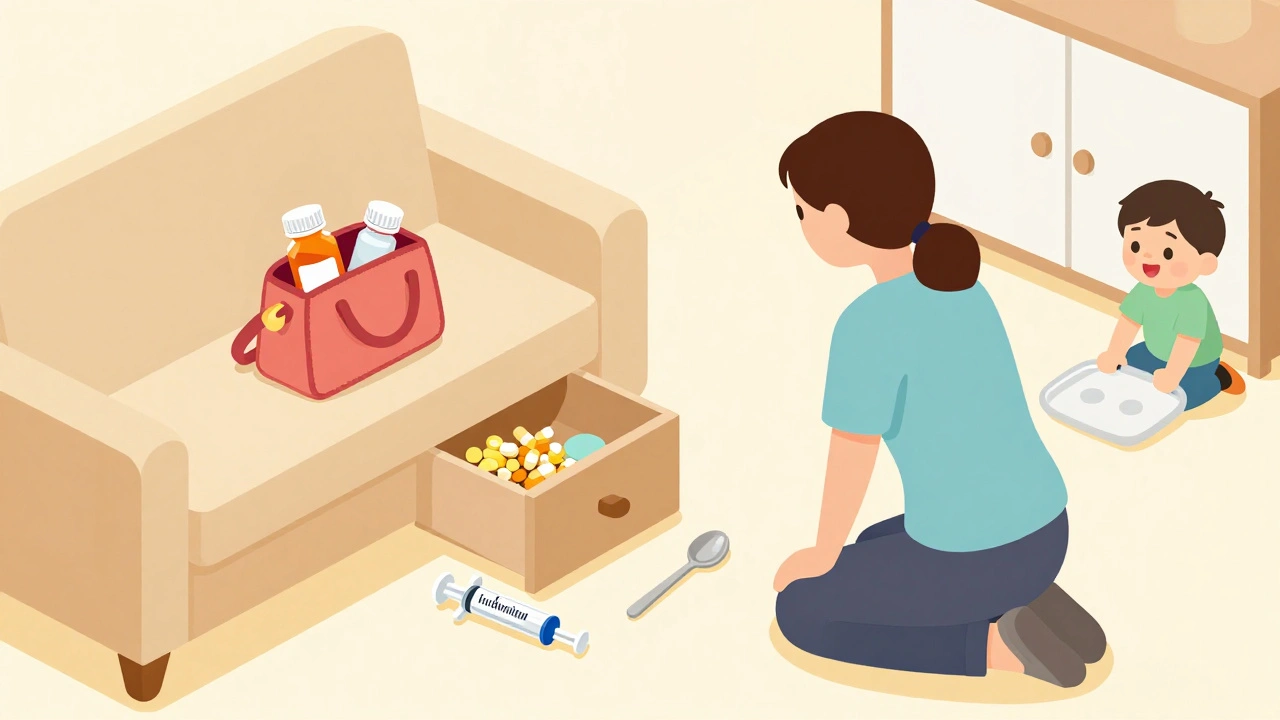
- Never store medicine in purses, coat pockets, or bedside tables. Visitors bring pills. Grandparents leave bottles. And kids know where those are.
And here’s a simple trick: Get on your hands and knees. Look around your home from your child’s eye level. What do you see? A pill bottle on the counter? A medicine bottle in a drawer that doesn’t latch? That’s your next target.
Why Child-Resistant Containers Aren’t Enough
You’ve heard it before: “It’s in a child-resistant bottle.” But here’s the truth - those caps aren’t childproof. They’re child-resistant. That means a determined 2-year-old can open them. Studies show that over half of toddlers can open standard child-resistant caps within minutes.
And here’s the bigger problem: people transfer pills. They pour Tylenol into a yogurt tub. They dump ibuprofen into a spice jar. Nationwide Children’s Hospital reports that 25 percent of poisoning cases involve medications moved out of their original containers. Why? Because it’s convenient. But convenience kills. Original packaging has warnings, dosing instructions, and expiration dates. Once you move it, you lose all of that.
The Candy Trap: Why You Should Never Call Medicine “Candy”
“Here, take your medicine - it’s like candy.”
It sounds harmless. It’s what many parents say to get a child to swallow a bitter liquid. But the American Academy of Pediatrics found that this phrase increases the chance a child will self-administer medicine by 3.2 times.
Children don’t understand the difference between “medicine that tastes bad” and “candy that tastes good.” They learn by repetition. If you say it’s candy, they’ll treat it like candy. And if they find a bottle on the counter, they’ll assume it’s a treat.
Instead, say: “This is medicine. It helps you feel better, but you can’t take it unless Mommy or Daddy gives it to you.” Keep it simple. Keep it clear.
Measuring Medicine: Why Kitchen Spoons Are Dangerous
“I just used a teaspoon.”
That’s the most common excuse after a dosing error. But a kitchen teaspoon isn’t a teaspoon. It can hold anywhere from 3 to 7 milliliters. The standard dose for a toddler? 5 mL. That’s a 40 percent overdose if you use a big spoon.
Always use the measuring tool that comes with the medicine - a syringe, a cup with exact milliliter markings, or a dosing spoon labeled in mL. Never guess. Never eyeball. And never use a kitchen spoon, no matter how small it looks.
Pharmacies often give these tools away for free. Ask for one every time you pick up liquid medicine.
When Accidents Happen - And They Might
Even with all the right steps, accidents happen. That’s why every home with young children needs a clear emergency plan.
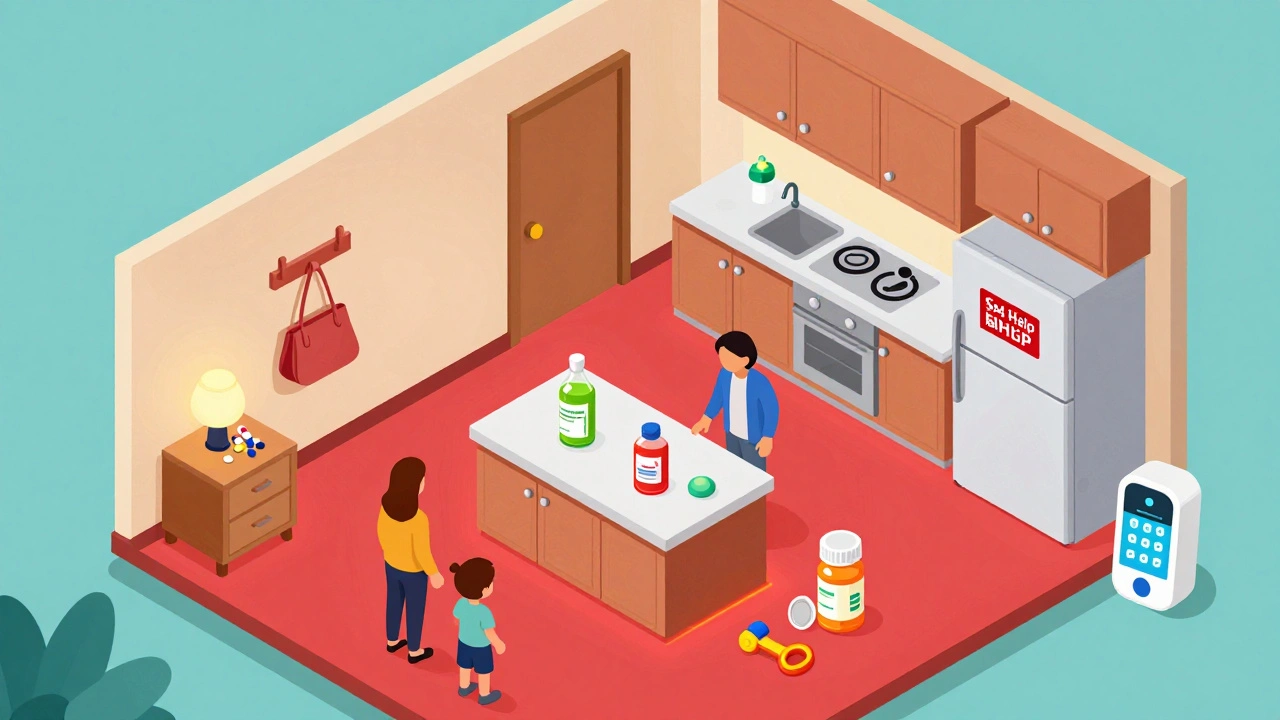
- Post the Poison Help number - 1-800-222-1222 - on the fridge, next to the phone, on the bathroom mirror. Make it visible. Don’t just save it in your phone.
- Save the webPOISONCONTROL online tool in your browser bookmarks. It gives instant, step-by-step guidance based on what was ingested.
- Call immediately. Don’t wait for symptoms. Poison Control says that calling within 5 minutes of exposure improves outcomes by 89 percent.
- Keep CPR and Heimlich maneuver training current. Twelve percent of severe poisoning cases require immediate action before EMS arrives.
And if your child is unconscious, having trouble breathing, or having seizures - call 999 right away. Don’t wait for Poison Control.
High-Risk Times and Situations
Most people assume poisonings happen at night. But Poison Control’s 2023 data shows that 58 percent of incidents occur between 12 PM and 6 PM. That’s when parents are cooking, cleaning, or distracted by chores. It’s when a child is left alone for a few minutes while you answer the door or take a phone call.
Also, households with visiting grandparents have a 35 percent higher risk of exposure. Grandparents often carry medications in their bags or leave pills on nightstands. Make it a habit to ask visitors: “Do you have any medicines? Let me put them in a safe spot.”
Rural families face a 22 percent higher risk of severe poisoning. Why? Longer ambulance response times. That makes prevention even more critical. If you live outside a city, you need to be extra careful - because help might take longer to arrive.
What Works: Real Solutions That Reduce Risk
Some communities are seeing real results:
- Pharmacies in Bristol and other UK towns now offer free medication lock boxes to families with toddlers under 3. Households using them saw a 41 percent drop in accidental access.
- The “Up and Away” campaign, active since 2015, has cut pediatric medication poisonings by 19 percent in towns that run it.
- Smart pill dispensers with app alerts are being tested. In pilot programs, they reduced unsupervised access by 63 percent.
You don’t need tech to stay safe. But you do need consistency. Lock it. Label it. Never leave it unattended. And never assume someone else is watching.
Final Checklist: Your Daily Safety Routine
Here’s what to do every single day:
- Put all medicine - including supplements and vitamins - in a locked cabinet immediately after use.
- Never leave medicine on counters, nightstands, or in bags.
- Use only the measuring tool that came with the bottle. Never use a kitchen spoon.
- Never call medicine “candy.”
- Check your home from a child’s perspective - get on your knees and look around.
- Make sure Poison Help (1-800-222-1222) is posted in every room.
- Ask visitors to store their medications safely.
Accidental poisoning isn’t inevitable. It’s preventable. It doesn’t take a lot of money. It doesn’t take special training. It just takes attention - and the willingness to change habits that feel harmless but are deadly.


