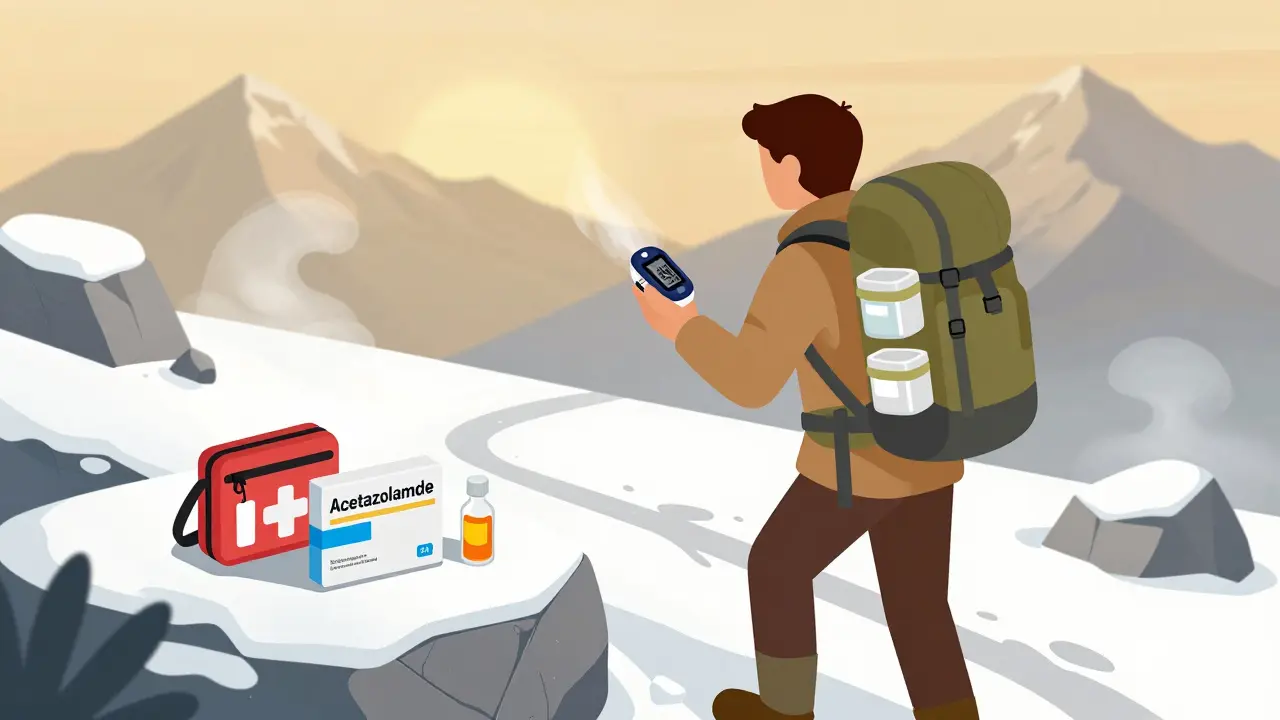
When you’re heading on a pilgrimage or trek to places like Mount Kailash, Everest Base Camp, or the Himalayan pilgrim trails, your body faces challenges most of us never experience. Thin air, freezing temperatures, and long days on foot can turn a spiritual journey into a medical emergency-if you’re not prepared. Medication needs aren’t just about bringing extra pills. They’re about understanding what you’ll face, how your body will react, and what to do when help is hours or even days away.
Know the Risks Before You Go
Altitude sickness isn’t rare. It’s common. Around 25% to 85% of people who climb above 8,000 feet (2,438 meters) will experience symptoms like headaches, nausea, dizziness, or shortness of breath. At 17,500 feet-like at Everest Base Camp-nearly half of all trekkers get sick. And it’s not just about discomfort. Left untreated, it can turn into High Altitude Pulmonary Edema (HAPE), where fluid floods the lungs, or High Altitude Cerebral Edema (HACE), where the brain swells. Both can be fatal.Many pilgrims assume they’ll be fine because they’re healthy. But health doesn’t protect you from altitude. Even elite athletes get sick. The real danger? People don’t know the signs until it’s too late. And in remote areas, the nearest clinic might be a full day’s walk away. Some health camps along these routes don’t even carry life-saving drugs like acetazolamide or dexamethasone.
Essential Medications to Carry
You need more than your daily pills. Here’s what you should pack, based on real-world guidelines from the Wilderness Medical Society and CDC:- Acetazolamide (Diamox): Used to prevent altitude sickness. Take 125 mg twice daily, starting one day before ascent and continuing for 2-3 days after reaching high altitude. Side effects? More frequent urination and tingling fingers. That’s normal. It means the drug is working.
- Dexamethasone: A steroid used to treat HACE. Keep a small supply (4 mg tablets). The standard dose is 8 mg at the first sign of confusion, loss of balance, or severe headache, followed by 4 mg every 6 hours. This isn’t for prevention-it’s for emergencies.
- Nifedipine (extended-release): Used for HAPE. Take 20 mg every 12 hours if symptoms like coughing up frothy fluid, extreme breathlessness, or blue lips appear. It relaxes blood vessels in the lungs.
- Antibiotics: Azithromycin (500 mg daily for 3 days) for traveler’s diarrhea. About 60% of Everest trekkers get sick from contaminated water. Don’t wait to feel terrible-start it early.
- Anti-inflammatories: Ibuprofen (400 mg) helps with headaches and reduces inflammation. It’s safer than aspirin at altitude.
- Antihistamines: Diphenhydramine (25-50 mg) for allergic reactions or sleep aid. Useful if you’re too anxious to rest.
- Topicals: Antibiotic ointment, hydrocortisone cream, and blister pads. You’ll walk for hours. Blisters are inevitable.
If you take daily medications-for diabetes, high blood pressure, asthma, or depression-you need to plan ahead. Insulin can lose 25% of its strength in 24 hours if it gets colder than 32°F (0°C). Glucometers give wrong readings below freezing. Keep them warm. Use insulated pouches or carry them inside your jacket.
How to Store Medications Right
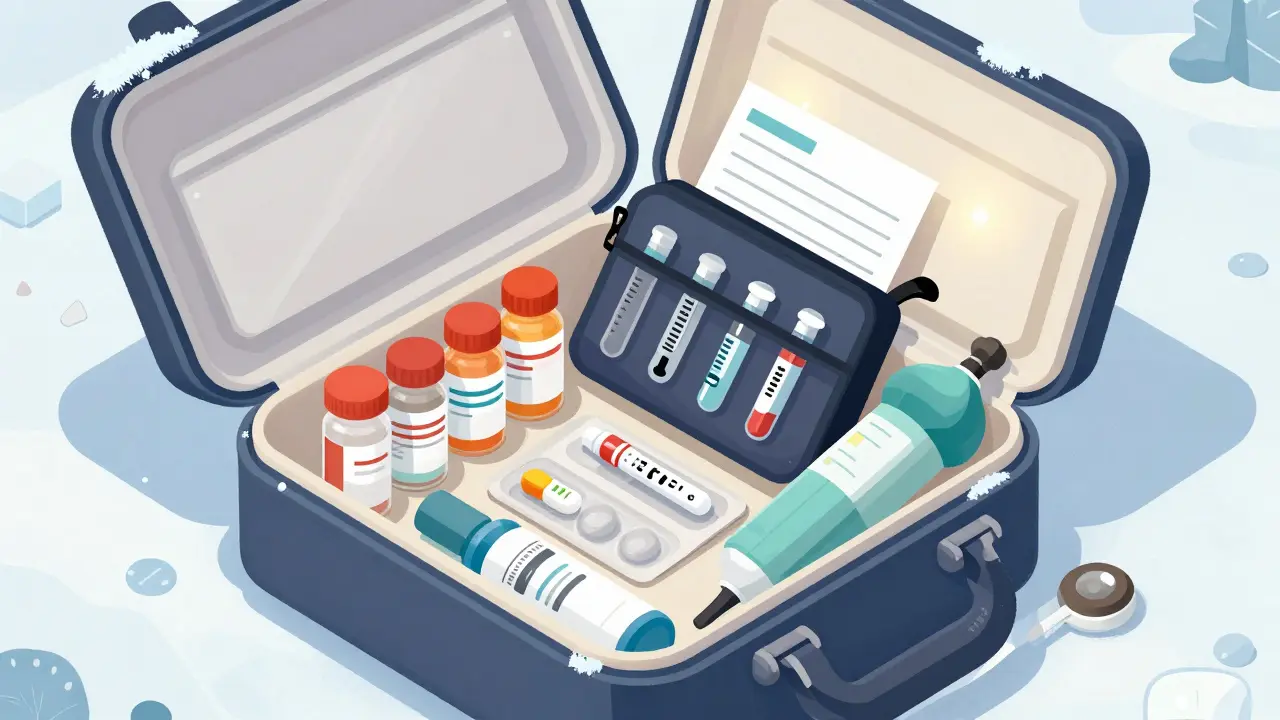
You can have the best meds in the world, but if they’re ruined, they’re useless. Cold, heat, moisture-they all destroy pills and liquids.- Keep everything in original bottles with pharmacy labels. No loose pills. Security checkpoints and local authorities ask for proof.
- Use waterproof, insulated containers. Some are designed for travel-look for ones that maintain 59-77°F (15-25°C). Don’t rely on your backpack alone.
- For insulin, use a cooling pack or keep it in a pocket next to your skin. At night, tuck it into your sleeping bag.
- Carry a doctor’s note explaining why you need each medication, especially if it’s a controlled substance. Some countries require permits. The U.S. DEA and International Narcotics Control Board may need to be contacted ahead of time.
- Bring at least 20% more than you think you’ll need. Delays happen. Weather cancels flights. You might be stuck longer than planned.
Pre-Trip Medical Checkup Is Non-Negotiable
Don’t skip this. The CDC says it’s your best chance to avoid disaster. A travel medicine specialist will check for hidden risks: heart conditions, lung problems, or even sleep apnea that could make altitude sickness worse. About 83% of serious altitude-related emergencies are preventable with a simple checkup.Get tested at least 4-6 weeks before you leave. Tell your doctor you’re going above 10,000 feet. Ask:
- Is my current medication safe at altitude?
- Do I need a prescription for acetazolamide or dexamethasone?
- Should I get a pulse oximeter? (They’re cheap and help track oxygen levels.)
- Do I need a hyperbaric bag? (Also called a Gamow bag-it simulates lower altitude. Rare, but lifesaving if descent isn’t possible.)
One Reddit user, u/HimalayanTrekker, shared how their insulin failed at 14,000 feet because they didn’t store it right. They got evacuated. Cost: $4,200. That could’ve been avoided with a 30-minute doctor’s visit.
What to Do If Someone Gets Sick
If you or someone in your group starts showing symptoms-headache, vomiting, confusion, coughing, trouble breathing-don’t wait. Act fast.- Stop ascending. Keep going, and it gets worse.
- Descend immediately. Even 1,000 feet down can save a life.
- Give oxygen if you have it. Portable oxygen canisters are lightweight and available for trekking.
- Use dexamethasone for HACE. One dose can buy time until you descend.
- Use nifedipine for HAPE. It opens up the lungs.
- Do not let someone sleep. Sleep can mask worsening symptoms. Keep them awake and moving gently.
Many groups now carry a shared emergency kit with these drugs. Ask your trekking agency if they provide one. If not, bring your own.
Common Mistakes (And How to Avoid Them)
Based on surveys of over 1,250 trekkers in 2022:- Running out of meds (47% of issues): Pack extra. Always.
- Medications damaged by cold (29%): Insulate them. Keep them warm.
- Not knowing how to use emergency drugs: Practice with your doctor. Know the dose. Know the signs.
- Assuming local pharmacies will have what you need: In 2013, 89% of health camps along pilgrimage routes had NO acetazolamide, dexamethasone, or nifedipine. Don’t count on them.
Also, avoid alcohol, sleeping pills, and heavy meals. They make altitude sickness worse. Drink 4-5 liters of water a day. Dehydration is a silent killer at altitude.
The Future of Pilgrimage Medicine
This isn’t just about individual preparation. Governments and trekking organizations are waking up. Nepal’s 2021 Altitude Sickness Prevention Campaign gave out 15,000 free medication kits to trekkers. Hospitalizations dropped 22%. More clinics are now stocked with life-saving drugs.By 2027, nearly all trekking companies will require a pre-trip medical consultation-up from 68% today. Insurance companies are pushing for it. Liability is too high. And it’s about time.
For now, the responsibility falls on you. You’re not just carrying a backpack. You’re carrying your health. And the health of everyone around you.
Do I need a prescription for acetazolamide or dexamethasone?
Yes. Both are prescription medications in most countries, including the UK and US. You need to see a doctor who understands altitude medicine. Don’t try to buy them online without a prescription-it’s risky and often illegal. Your doctor can write the prescription and advise on dosage based on your health history.
Can I take acetazolamide if I have a sulfa allergy?
Acetazolamide is a sulfa drug. If you have a confirmed sulfa allergy, you should avoid it. Talk to your doctor about alternatives like dexamethasone for prevention, or focus on slow ascent and hydration. About 3-6% of people have sulfa allergies, so this isn’t rare.
What if I’m diabetic and need insulin on a trek?
Insulin degrades quickly in cold. Store it in an insulated pouch next to your body, not in your backpack. Bring double the amount you think you’ll need. Test your glucometer before you leave-some give inaccurate readings below freezing. Always carry a backup supply and know how to adjust your dose if you’re eating less or moving more than usual.
Is it safe to take ibuprofen for altitude headaches?
Yes. Ibuprofen is safe and effective for altitude-related headaches. It’s often preferred over aspirin because it doesn’t increase bleeding risk at high altitude. Take 400 mg every 6-8 hours as needed. But don’t rely on painkillers to mask symptoms so you can keep climbing. That’s dangerous.
Should I carry a portable oxygen canister?
Yes, if you’re going above 14,000 feet. Portable oxygen canisters are lightweight, easy to use, and can buy critical time if someone starts struggling. They don’t replace descent, but they can stabilize a person until they can get lower. Many trekking agencies now offer them for rent or sale.
What should I do if I run out of my regular medication on the trail?
You shouldn’t. Pack at least 20% extra. But if you do run out, contact your trekking group leader or local guide. Some agencies have emergency medical contacts. In Nepal, the Himalayan Rescue Association has stations with limited supplies. In remote areas, you may need to descend immediately. Never try to substitute with someone else’s medication.


