
You’ve been prescribed a medication. Your insurance says you can’t use the brand name, so you have to pick a generic. But when you look at the options, there are three or four different versions available from different manufacturers. They all look slightly different-one is blue, one is white; one has 'Teva' stamped on it, another has 'Mylan.' You might wonder: does it actually matter which one I take? Are they truly identical?
The short answer is yes, for most drugs, they are clinically interchangeable. However, the long answer involves some nuance that affects your safety and effectiveness, especially if you take medications for heart conditions, thyroid issues, or seizures. Choosing the right generic isn't just about price; it's about understanding how your body processes the drug.
Understanding Bioequivalence: It’s Not Just About Ingredients
To decide between generics, you first need to understand what makes them legal and safe. The U.S. Food and Drug Administration (FDA) requires every generic drug to be bioequivalent to the brand-name original it copies. This means the generic must deliver the active ingredient into your bloodstream at roughly the same rate and extent as the brand.
Many people misinterpret this rule. You might hear that generics can vary by up to 20% in strength. That is incorrect. The FDA uses a statistical range called the 90% confidence interval. For a generic to pass, its performance metrics-specifically the Area Under the Curve (AUC) and maximum concentration (Cmax)-must fall within 80-125% of the brand name’s profile. Crucially, the *mean* difference is usually tiny. Studies show the average difference is often around 3.5%, with 80% of approved generics falling within a 5% range of the brand.
This statistical window allows for minor variations in inactive ingredients (like fillers, dyes, or binders) while ensuring the therapeutic effect remains consistent. So, when you see multiple generics, they are all required to meet this strict standard. But meeting the standard doesn't always mean they perform identically in every single patient, particularly those with sensitive health conditions.
The FDA Orange Book: Your Decision Tool
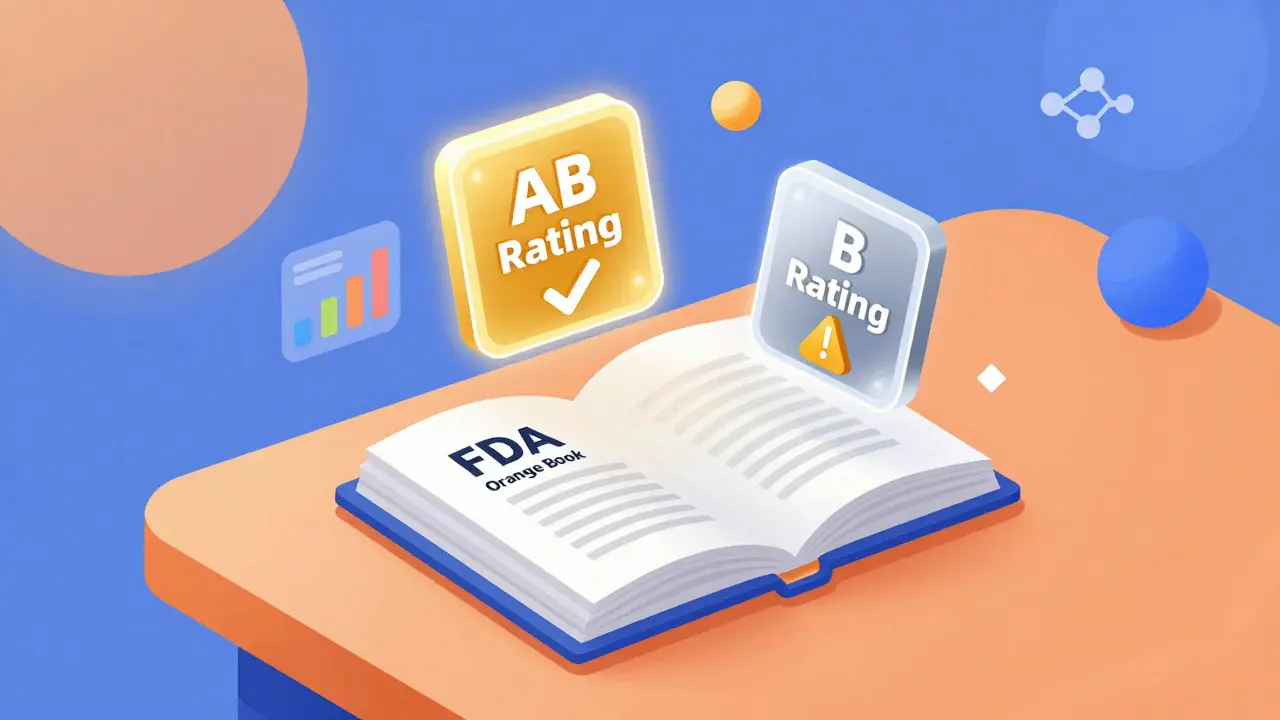
If you want to dig deeper than the label, your best resource is the FDA Orange Book, officially known as the Approved Drug Products with Therapeutic Equivalence Evaluations. This database assigns codes to every generic drug based on how well it compares to the brand name.
Here is how you should read these codes:
- AB Rating: These generics are considered therapeutically equivalent to the brand-name drug. They have demonstrated full bioequivalence. If you see an AB rating, you can generally switch between this generic and the brand name without worrying about clinical differences.
- B Rating: These drugs meet FDA safety requirements but may have documented differences in bioequivalence compared to the brand. They are not necessarily unsafe, but they might not be perfect substitutes for everyone, especially if you are switching from a brand-name product you’ve been taking for years.
When deciding between multiple generics, prioritize those with an AB rating. If two generics both have an AB rating, they are both excellent choices. If one has a B rating, it might be better suited for someone starting the medication for the first time rather than someone trying to replace a stable brand-name regimen.
| Rating Code | Meaning | Best For |
|---|---|---|
| AB | Therapeutically equivalent to brand | Switching from brand, maintaining stability |
| B | Meets requirements but has bioequivalence notes | New patients, cost-saving initial therapy |
When Manufacturer Matters: Narrow Therapeutic Index Drugs
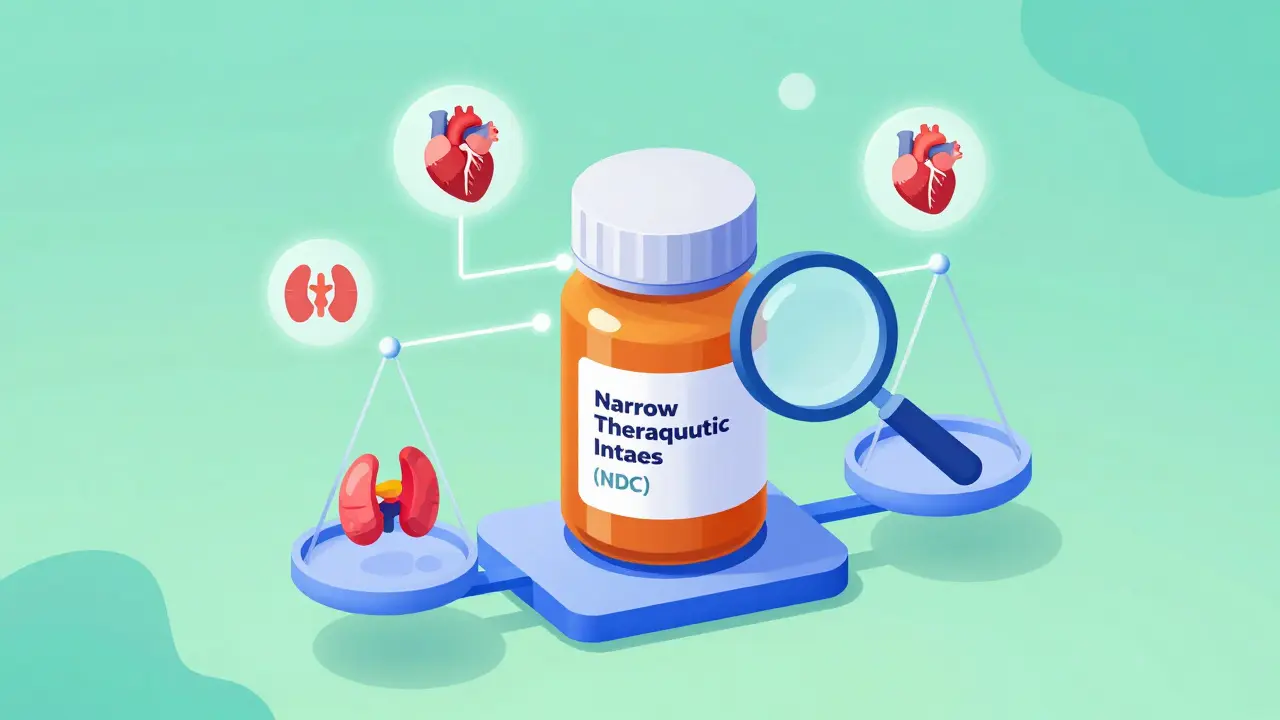
For most common medications like antibiotics or pain relievers, switching between generic manufacturers rarely causes issues. However, there is a specific group of drugs where consistency is critical: those with a Narrow Therapeutic Index (NTI).
NTI drugs have a very small margin between a helpful dose and a harmful one. A slight change in how much drug reaches your blood can lead to side effects or treatment failure. Common examples include:
- Levothyroxine: Used for hypothyroidism.
- Digoxin: Used for heart failure and arrhythmias.
- Warfarin: A blood thinner.
- Certain anti-seizure medications: Like phenytoin.
Research, including studies published in Circulation: Cardiovascular Quality and Outcomes, has shown that switching between different manufacturers of NTI drugs can sometimes lead to higher rates of adverse events, particularly in the first month after the switch. The Endocrine Society explicitly recommends that patients stabilized on a specific manufacturer’s levothyroxine should stay with that manufacturer whenever possible.
If you take an NTI drug, do not let your pharmacist automatically swap your prescription for a cheaper generic from a different company without consulting your doctor. Ask to receive the same National Drug Code (NDC) each time. Consistency is more important than saving a few dollars here.
Practical Steps for Choosing Your Generic
So, how do you actually make the decision when standing at the pharmacy counter or ordering online? Follow this logical flow:
- Check the Rating: Ask your pharmacist if the available generics have an AB rating. If yes, proceed.
- Assess Your Condition: Are you on a narrow therapeutic index drug? If yes, insist on staying with the current manufacturer if you are already stable. If you are new to the drug, any AB-rated generic is fine.
- Consider Inactive Ingredients: Some people have allergies to dyes or gluten found in fillers. Check the package insert or ask the pharmacist about inactive ingredients if you have known sensitivities.
- Stick to One Manufacturer: Once you find a generic that works well for you, try to stick with it. Frequent switching between different generic brands can introduce unnecessary variability in your blood levels.
Pharmacists play a huge role here. Under state laws in most of the U.S., pharmacists can substitute generics unless the doctor writes "dispense as written." However, many states require the pharmacist to notify the prescriber if they change the manufacturer. Use this system. Tell your pharmacist, "I prefer to stay on the same manufacturer," and they will note it in your profile.
Cost vs. Consistency: Finding the Balance
Generic drugs save the healthcare system billions of dollars annually because competition drives prices down. With an average of five manufacturers per drug, prices can vary significantly. Sometimes, one generic costs $4 and another costs $12 for the exact same active ingredient.
Is the extra cost worth it? For most drugs, no. An AB-rated generic costing $4 is clinically just as effective as one costing $12. However, if you are an NTI patient, the peace of mind and physiological stability provided by sticking to a reputable, consistent manufacturer may justify a slightly higher copay. Talk to your insurance provider about prior authorizations if you need a specific brand or manufacturer for medical reasons.
Frequently Asked Questions
Are all generic drugs exactly the same as the brand name?
They contain the same active ingredient in the same dosage and strength. However, they may differ in color, shape, flavor, and inactive ingredients. Clinically, they are required to be bioequivalent, meaning they work the same way in the body for the vast majority of patients.
What does an AB rating mean on a generic drug?
An AB rating from the FDA indicates that the generic drug is therapeutically equivalent to the brand-name reference listed drug. It has passed rigorous bioequivalence testing and is considered a safe substitute for the brand name.
Should I worry about switching between different generic manufacturers?
For most medications, switching manufacturers is safe. However, for drugs with a narrow therapeutic index (like levothyroxine or warfarin), switching can cause fluctuations in blood levels. It is best to maintain consistency with one manufacturer for these specific drugs.
Can I ask my pharmacist to give me a specific generic brand?
Yes. While pharmacists often choose the lowest-cost option to help you save money, you can request a specific manufacturer. If you have had good results with one generic, tell your pharmacist to keep using that National Drug Code (NDC) for your refills.
Why do some generics cost more than others?
Prices vary due to market competition, manufacturing costs, and pharmacy benefit manager contracts. Sometimes, a newer generic entrant may charge more initially, while older, established generics compete on price. The cost difference does not usually reflect a difference in quality for AB-rated drugs.