Drug Interaction Checker
Medication List
Check for Interactions
Important Information
This tool provides general information about potential drug interactions. It is not a substitute for professional medical advice.
WARNING:
Always consult with your healthcare provider or pharmacist before making changes to your medications.
Online tools can't account for your specific health conditions, lab results, or genetic factors.
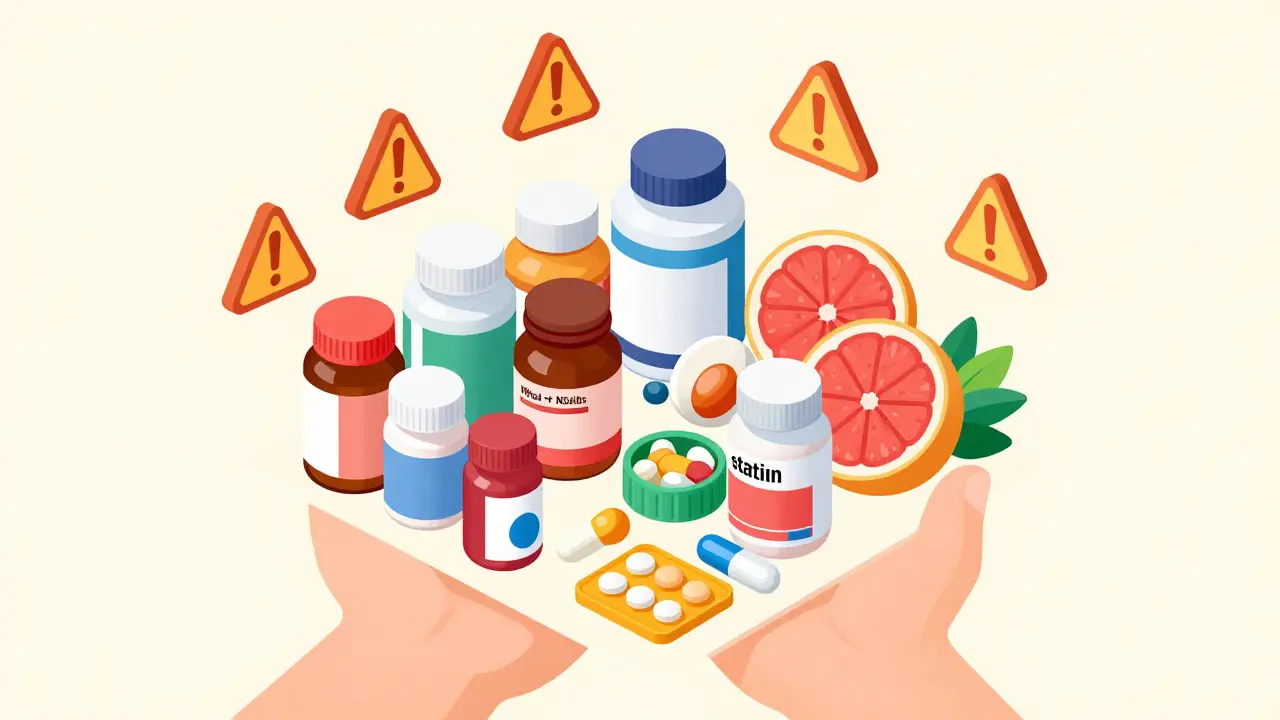
Every year, thousands of people end up in the hospital-not because their condition got worse, but because a new medication they started clashed with something they were already taking. It could be a blood pressure pill mixing badly with an over-the-counter painkiller. Or a cholesterol drug reacting with grapefruit juice. Or an antidepressant combined with a herbal supplement no one thought to mention. These aren’t rare mistakes. They’re preventable ones. And the fix starts long before you swallow that first pill.
Know Exactly What You’re Taking
Before you even think about a new prescription, you need a complete, up-to-date list of everything you’re using. Not just the big-name drugs your doctor wrote. Everything. Prescription medications, over-the-counter pills like ibuprofen or antacids, vitamins, minerals, herbal supplements, and even natural remedies like turmeric or echinacea. Many people forget the supplements. But they’re just as likely to cause trouble.Write down the name, dosage, and how often you take each one. Don’t rely on memory. A 2022 survey found that 68% of patients don’t tell all their doctors about every medication they use. That’s dangerous. If you’re on seven different meds from five different doctors, odds are someone’s missing part of the picture.
Pro tip: Bring your actual pill bottles to your next appointment. Not a list. The bottles. It’s the only way to catch mix-ups-like when you’re taking 10 mg but the label says 20 mg, or when your cousin gave you a bottle of fish oil labeled as ‘omega-3’ but it’s actually 1,200 mg per capsule. A 2018 study showed this simple habit cuts medication errors by 37%.
Ask the Right Questions Before You Take Anything New
Don’t assume your doctor or pharmacist knows your full history. Even if they have your record, systems don’t always talk to each other. Ask these four questions out loud before you leave the office:- Can I take this with my other medications?
- Should I avoid certain foods, drinks, or alcohol?
- What are the warning signs I should watch for if something’s going wrong?
- How will this drug affect my body, especially with what I’m already taking?
These aren’t just polite questions-they’re lifesavers. Take the case of simvastatin and amiodarone. Combining them can raise your risk of rhabdomyolysis-a condition that breaks down muscle tissue and can lead to kidney failure-by 15 times. If you’re on one, and your doctor prescribes the other, you need to know before you start.
Use Free Online Tools, But Don’t Trust Them Fully
There are excellent, free tools you can use at home. Drugs.com Drug Interactions Checker is one of the most trusted. It checks over 24,000 prescription drugs, 7,000 supplements, and 4,000 foods. It’s updated daily and used by more than a million people every month. A 2021 study found it caught 92.4% of clinically significant interactions-better than WebMD and close to the gold standard used by HIV specialists.But here’s the catch: online tools don’t know your kidneys are weak, your liver is sluggish, or your genes make you metabolize drugs slower than average. That’s why the FDA warns: no online checker replaces professional advice.
Use them as a first alert. If the tool flags something, take it to your pharmacist. They can check your full history, your current lab results, and your real-world habits. A 2022 study showed that even with computerized alerts in 92% of U.S. pharmacies, pharmacists still filled 8.3% of prescriptions with known dangerous interactions-mostly when patients used multiple pharmacies.
Know the High-Risk Combinations
Some interactions are so common and so dangerous, they’re textbook red flags. Here are the top seven combinations linked to over 60% of serious hospitalizations due to drug clashes:- Warfarin + NSAIDs (like ibuprofen or naproxen)
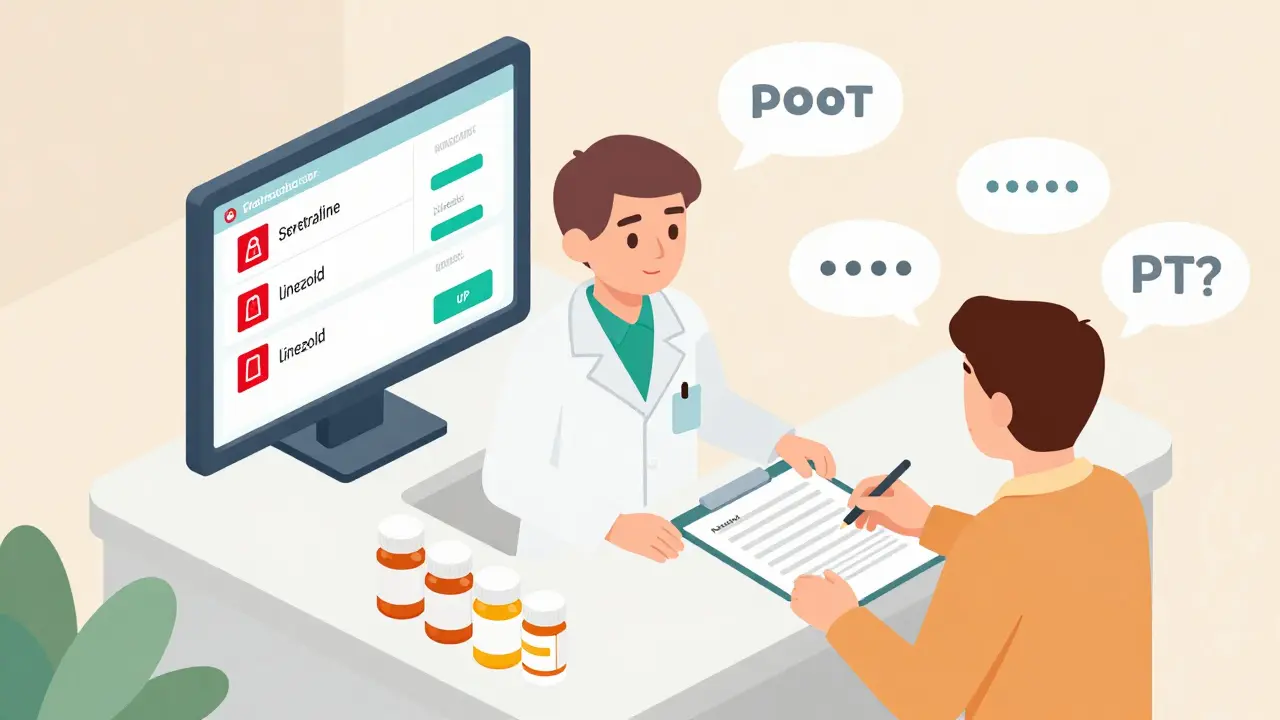
- SSRIs (like sertraline) + MAO inhibitors (like linezolid)
- Digoxin + clarithromycin (an antibiotic)
- Statins (like simvastatin) + fibrates (like fenofibrate)
- Calcium channel blockers + protease inhibitors (used for HIV)
- Sildenafil (Viagra) + nitrates (like nitroglycerin)
- Theophylline + fluvoxamine (an antidepressant)
If you’re on any of these, double-check with your pharmacist before adding anything new-even something as simple as a cold medicine. One patient in a Reddit thread shared how Drugs.com flagged a dangerous interaction between sertraline and linezolid that her doctor had missed. She didn’t take the new antibiotic-and likely avoided a life-threatening serotonin syndrome.
Stick to One Pharmacy
This might sound simple, but it’s one of the most effective ways to avoid interactions. Using one pharmacy means your full medication history is in one place. The pharmacist can see everything you’re taking-prescriptions, OTC meds, supplements-and flag problems before you even leave the counter.A 2021 study of 22,000 Medicare patients found that those who used just one pharmacy had 31% fewer serious drug interactions. Yet only 38% of Americans do this. Why? Cost. People switch pharmacies to save a few dollars on a prescription. But that’s a false saving. A single bad interaction can cost tens of thousands in hospital bills.
Ask your pharmacist if they offer a free medication review. Most do. Use it. Every six months. Even if nothing’s changed.
Watch for the Signs Something’s Wrong
You’re not just checking before you start-you’re watching after you do. Pay attention to:- Unusual fatigue or muscle pain (could be statin interaction)
- Confusion, dizziness, or rapid heartbeat (could be blood pressure or heart drug clash)
- Nausea, vomiting, or dark urine (signs of liver or kidney stress)
- Unexplained bruising or bleeding (warfarin or NSAID issue)
- Severe anxiety, sweating, tremors (possible serotonin syndrome)
If you feel off after starting a new drug-even if it’s just a little-call your doctor or pharmacist. Don’t wait. Don’t assume it’s ‘just side effects.’ Side effects are expected. Dangerous interactions are not.
Technology Is Helping, But You’re Still the Last Line of Defense
Hospitals and pharmacies are getting smarter. New AI systems can now predict your personal risk of drug interactions with 89% accuracy by analyzing your EHR, lab results, and genetics. The NIH showed that adding CYP450 gene data improved prediction by 37% for common drugs.But none of that matters if you don’t speak up. A 2023 survey found 71% of patients don’t read their medication labels. 58% don’t tell their doctor about supplements. That’s the gap technology can’t fill.
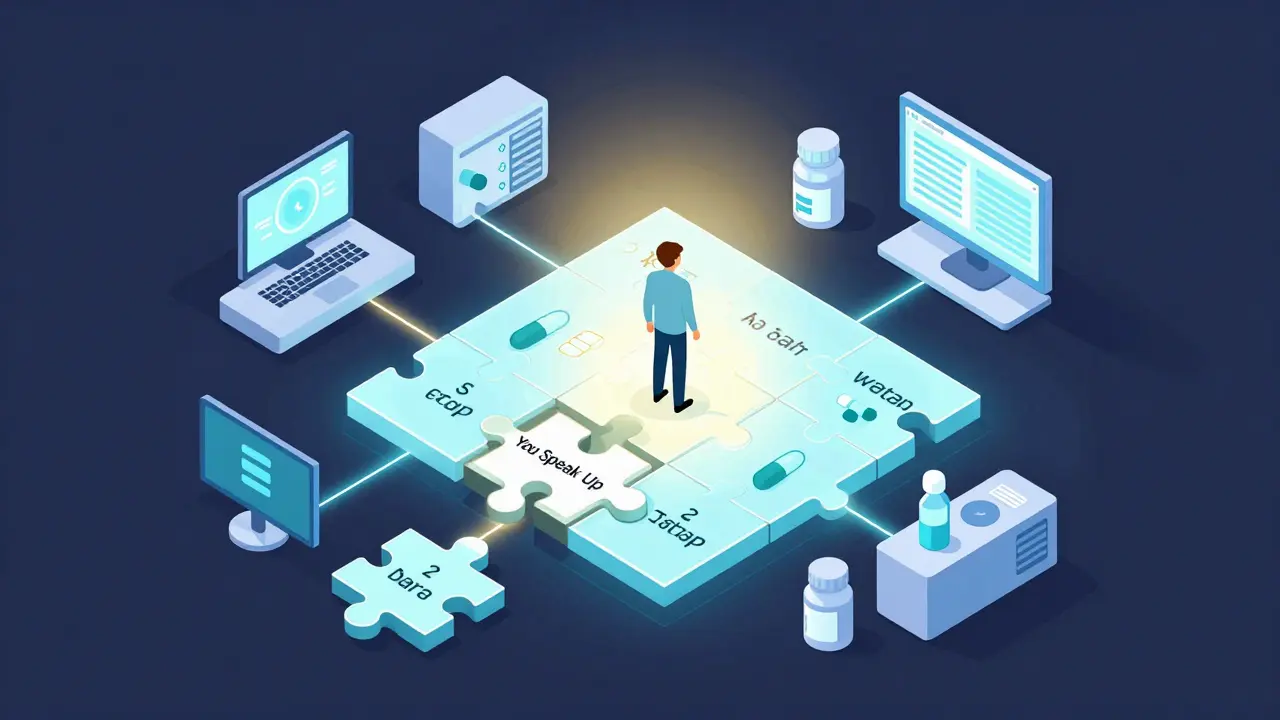
Drug interactions aren’t about bad doctors or broken systems. They’re about information gaps. And you’re the only person who holds all the pieces of your own health puzzle.
Make This Your Routine
Here’s what to do every time you’re prescribed something new:- Update your medication list-add the new drug, note the dose and frequency.
- Run it through Drugs.com or another trusted checker.
- Bring your list and bottles to your pharmacist.
- Ask the four key questions out loud.
- Write down what to watch for.
- Use one pharmacy for everything.
- Review your list every six months.
It takes 15 minutes. But it could save your life.


