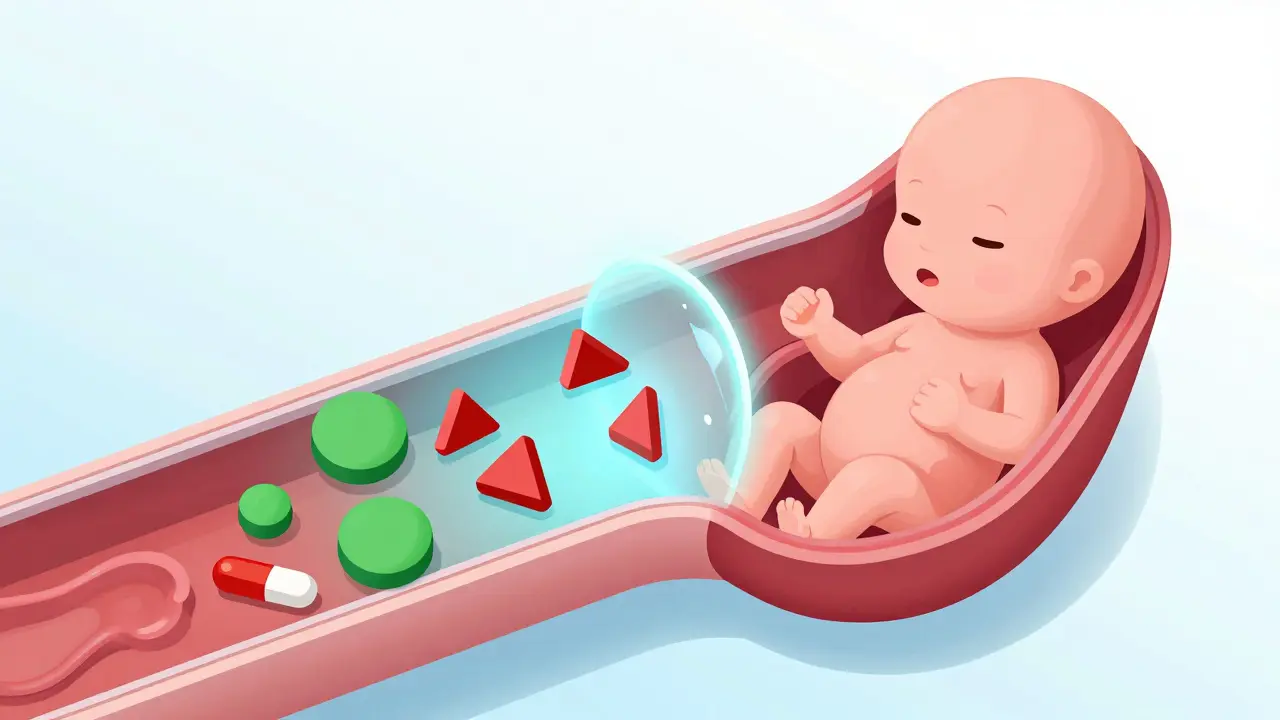
Many people imagine the placenta as a foolproof shield, a solid wall that keeps the developing baby safe from everything the mother consumes. In reality, the placenta is more like a selective filter. While it does a great job of pumping in nutrients and oxygen, it is surprisingly leaky when it comes to certain chemicals and medications. This means that if you take a pill, a sip of alcohol, or a prescribed medication, there is a high probability that some of those molecules will reach the fetus.
Understanding how this happens isn't just for doctors-it's crucial for anyone navigating pregnancy. The risk isn't just about whether a drug "crosses" the barrier, but placental drug transfer rates, the timing of the exposure, and how the baby's developing organs react to the chemical. From the tragedy of thalidomide in the 1950s to modern "placenta-on-a-chip" research, we've learned that the fetal environment is far more dynamic and vulnerable than we once thought.
How Drugs Actually Get Through
Drugs don't just "drift" across; they use specific pathways depending on their chemical makeup. Think of it like a security checkpoint: some guests have a VIP pass and walk right in, while others get stuck at the gate.
- Passive Diffusion: This is the most common route. Small, fat-soluble (lipophilic) molecules slide right through the membranes. For example, ethanol (alcohol) and nicotine are tiny and grease-loving, meaning they reach the baby's blood almost as fast as they reach the mother's.
- Active Transport: Here, the placenta uses energy to move substances. Some transporters act like "pumps" that pull drugs in, while others, called efflux transporters, act like bouncers that kick drugs back out into the mother's blood to protect the baby.
- Facilitated Diffusion: This uses a "helper" protein to let certain molecules through more easily than they would on their own.
- Receptor-Mediated Endocytosis: This is used for very large molecules, like certain antibodies (IgG), which the placenta actively grabs and pulls inside.
One of the most important "bouncers" in the placenta is P-glycoprotein (P-gp), a protein that actively pumps many medications back toward the mother. Research using human placenta models shows that when P-gp is inhibited, the amount of certain HIV-protease inhibitors reaching the fetus can jump by over two-fold. This shows that the placenta is actively trying to defend the fetus, though it isn't always successful.
The "Rule of Thumb" for Drug Transfer
If you're wondering why some medications are considered "safe" and others are "dangerous," it usually comes down to the physics of the molecule. There are a few key factors that determine if a drug will make it across:
| Attribute | Likelihood of Transfer | Why? |
|---|---|---|
| Molecular Weight < 500 Da | High | Small molecules slip through gaps more easily. |
| High Lipid Solubility (Log P > 2) | High | "Greasy" molecules dissolve through cell membranes. |
| High Protein Binding | Low | Only "free" (unbound) drug molecules can cross. |
| Strong Ionization (Charged) | Low | Charged particles struggle to penetrate fatty membranes. |
To put this in perspective, consider Insulin. Because it is a large protein (over 5,000 Da), it barely crosses at all-usually less than 0.1% reaches the baby. On the flip side, Valproic Acid, used for epilepsy, is small and crosses readily, which is why it is linked to a higher rate of congenital malformations (around 10-11%) compared to the general population.
Timing is Everything: Trimesters and Risk
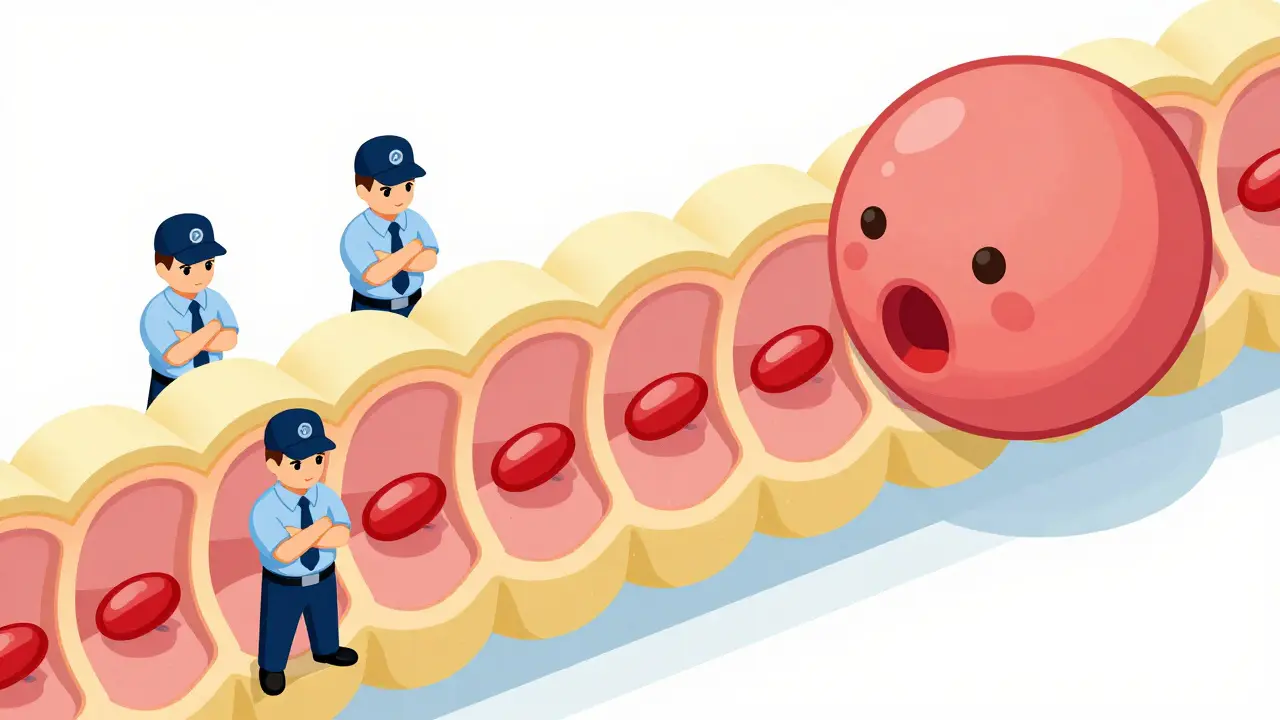
The placenta isn't a static wall; it changes as the pregnancy progresses. A common mistake is assuming that a drug is equally risky at week 6 as it is at week 36. In reality, the first trimester is often the most precarious.
During the first few weeks, the placenta is still forming. It lacks the fully developed "tight junctions" and the robust set of efflux pumps (like P-gp) that it will have later. This means the first-trimester placenta is often 2-3 times more permeable to small molecules than a full-term placenta. This coincides with the period of organogenesis-when the baby's heart, brain, and limbs are forming. A drug that causes a birth defect (a Teratogen) is most dangerous during this window because it interferes with the very blueprints of the body.
By the third trimester, the placenta is more efficient at filtering, but the fetus is now more sensitive to drugs that affect brain development or metabolic functions. For instance, SSRIs (antidepressants) like sertraline cross the placenta quite effectively. While they might not cause structural birth defects, they can lead to "neonatal adaptation syndrome," where 30% of exposed infants show jitteriness or irritability after birth as they clear the drug from their system.
The Real-World Impact of Common Medications
It's helpful to see how these biological rules apply to common drug classes. No single medication is without risk, but the degree of transfer varies wildly.
Opioids and Pain Management: Medications like methadone are particularly concerning because they achieve fetal concentrations of 65-75% of the maternal level. This high level of exposure is a primary driver of neonatal abstinence syndrome, where the baby is born physically dependent on the drug.
Antiepileptics: Phenobarbital is almost equimolar, meaning the concentration in the baby's blood is nearly identical to the mother's. This creates a high-stakes environment where managing the mother's seizures is a balancing act against fetal exposure.
HIV Medications: This is where we see the "bouncer" effect in action. Zidovudine uses specific transporters to get across, reaching 95% of maternal levels. However, Lopinavir is actively pumped out by the placenta, reaching only about 60% of the maternal concentration. This is why doctors choose different HIV regimens for pregnant women.

Modern Science: From Mice to Chips
How do we actually know this? We can't exactly take blood samples from a human fetus every hour. For a long time, scientists relied on animal models, but we've discovered a big problem: murine (mouse) placentas are 3-4 times more permeable than human ones. Relying on mice can lead to dangerous overestimations or underestimations of risk.
Today, researchers are using Placenta-on-a-chip technology. These are microengineered systems that mimic the human placental wall. They've allowed scientists to prove that certain drugs, like glyburide, are kept out of the fetal side by BCRP-mediated transport. We're also seeing the rise of non-invasive imaging using radioactivity to watch drugs move into the fetal liver in real-time.
Looking ahead, the goal is targeted fetal therapy. Imagine a nanodrug that can cross the placenta to treat a genetic disorder in the fetus without affecting the mother. While promising, it's a risky road; nanoparticles can accumulate in the placental tissue, potentially blocking the very nutrients the baby needs to survive.
Does the placenta block all harmful chemicals?
No. The placenta is a selective filter, not a solid wall. While it blocks some large molecules (like insulin) and pumps out certain drugs using P-glycoprotein, many substances-especially small, fat-soluble ones like alcohol and nicotine-pass through easily.
Why is the first trimester considered higher risk?
Two reasons: first, the placenta hasn't fully developed its protective efflux pumps and tight junctions, making it more permeable. Second, this is the period of organogenesis, where the fetus's basic structures are forming, making it highly susceptible to teratogens.
What determines if a medication will reach the baby?
The main factors are molecular weight (smaller is more likely to cross), lipid solubility (fat-soluble molecules cross easier), protein binding (only unbound drugs cross), and the presence of active transport pumps in the placenta.
What is neonatal abstinence syndrome?
It is a group of withdrawal symptoms that occur in newborns who were exposed to certain medications, such as opioids (e.g., methadone), while in the womb. Because these drugs cross the placenta effectively, the baby becomes physically dependent and experiences withdrawal after birth.
Can doctors prevent a drug from crossing the placenta?
Generally, no. Once a drug is in the mother's system, its movement across the placenta is governed by chemistry and biology. However, doctors can choose medications with known low transfer rates or use therapeutic drug monitoring to keep maternal levels as low as safely possible.
Next Steps for Parents and Patients
If you are pregnant or planning to be, the best approach is proactive transparency. Don't stop a critical medication (like an antidepressant or blood pressure pill) without talking to your doctor, as the risk of the untreated condition can often be higher than the risk of the drug.
For those on chronic medication: Ask your provider for the "cord-to-maternal ratio" of your drug. This tells you what percentage of the drug typically reaches the baby. If the ratio is near 1.0, you'll want closer monitoring of fetal growth.
For those starting new meds: Always check if the drug is listed as a teratogen, especially in the first 12 weeks. If you're unsure, search for the medication in a reputable pregnancy safety database rather than relying on generic forum advice.


