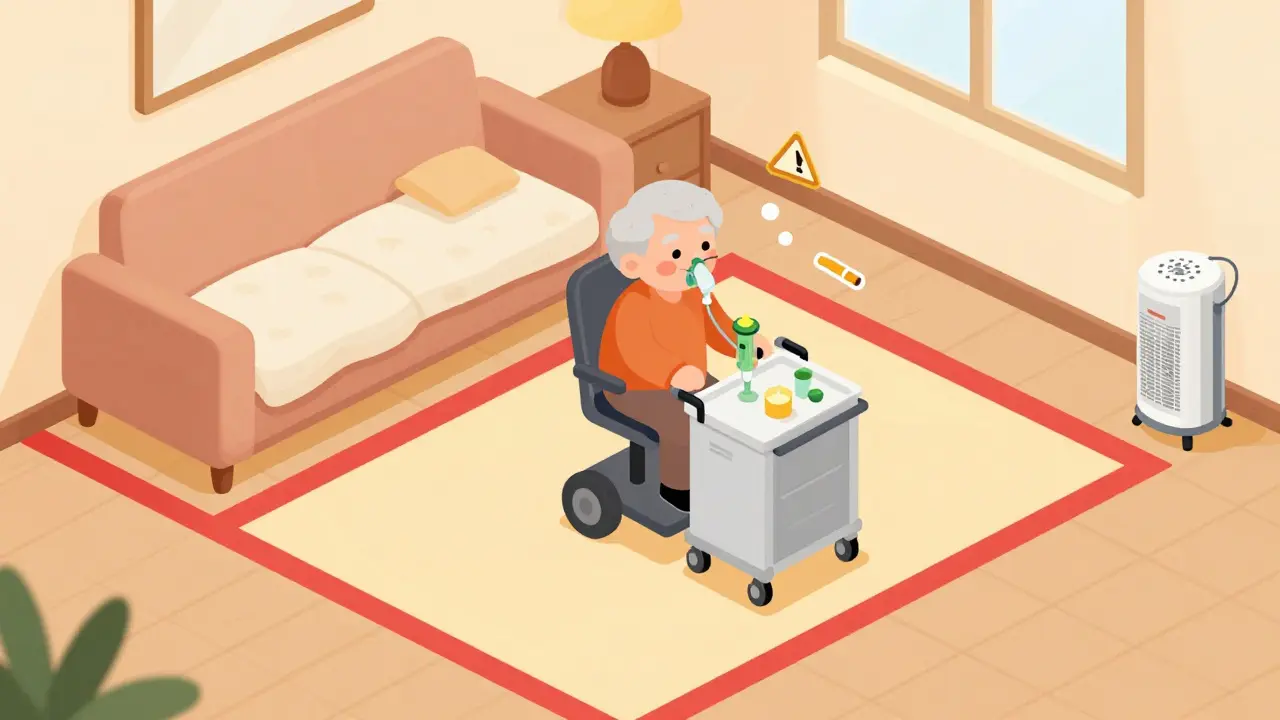
Home oxygen therapy isn't just a machine you plug in-it's a lifeline. For people with COPD, pulmonary fibrosis, or other chronic lung conditions, getting enough oxygen at home can mean the difference between staying active and being stuck on the couch. But here's the hard truth: oxygen therapy saves lives, but it can also start fires. And those fires don't happen because oxygen burns-they happen because oxygen makes everything else burn faster. Like a match near gasoline. Like a spark near dry paper. In an oxygen-rich room, even a tiny spark can turn into a flash fire in less than a second.
Why Oxygen Is Dangerous at Home
Oxygen isn't flammable. But it doesn't need to be. It turns your living room into a tinderbox. Normal air is 21% oxygen. When you're on therapy, you're breathing in air that's 87-96% oxygen. That’s not just more oxygen-it’s a whole different environment. A cigarette that might smolder in normal air? In oxygen-enriched air, it ignites instantly. A hair dryer that overheats? It can spark and catch fire in under two seconds. Even static electricity from synthetic blankets can ignite. You won’t feel the spark. You won’t hear it. But you’ll feel the burn.According to the National Fire Protection Association, U.S. fire departments respond to nearly 2,500 home fires each year linked to oxygen equipment. Fifteen people die. Over a hundred are injured. Property damage hits $12.8 million annually. Most of these fires are preventable. And they almost always happen because someone didn’t know the rules-or ignored them.
Three Types of Oxygen Systems-and Their Risks
Not all oxygen systems are the same. Each has its own dangers.- Oxygen concentrators: These plug into the wall and pull oxygen from the air. They’re quiet, reliable, and don’t store oxygen under pressure. But they need electricity. If the power goes out and you don’t have a backup battery, you’re out of oxygen. Medicare requires concentrators to have at least a 30-minute battery backup. Always test it monthly.
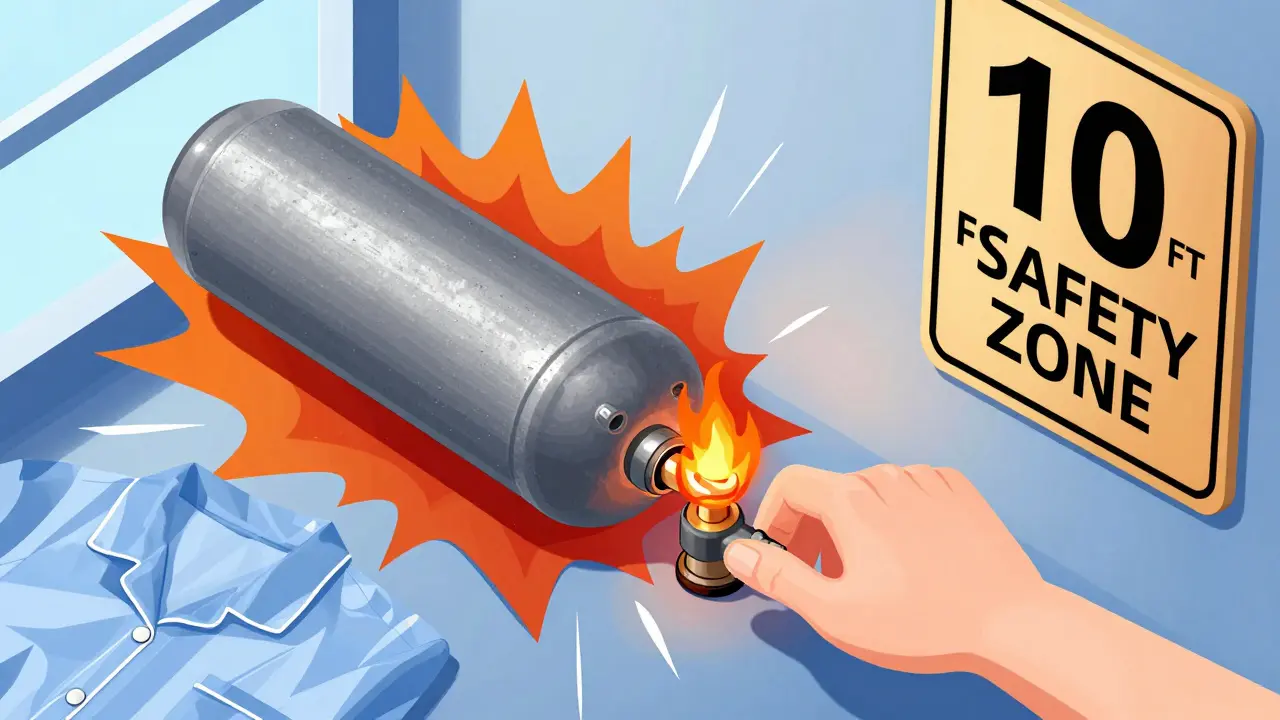
- Compressed gas cylinders: These are metal tanks-aluminum or steel-filled with pressurized oxygen. They’re portable, but they’re also bombs waiting to go off. If the valve breaks loose, the tank can rocket through the air at 150 mph. And if it’s near heat? It can explode. Never leave a cylinder in a hot car. Never store it near a radiator or heater.
- Liquid oxygen systems: These store oxygen as a super-cold liquid (-297°F). They’re great for mobility-you can carry a portable unit for hours. But if it spills? You get a severe cold burn. And if it evaporates and fills a room? That’s pure oxygen. One drop on a carpet can turn it into a fire hazard. These systems require special tanks and trained handlers.
Here’s the data: 68% of oxygen-related fires involve compressed gas cylinders. 22% involve liquid systems. Only 10% involve concentrators. That doesn’t mean concentrators are safe. It means the bigger risks come from tanks and liquids. But all of them need the same rules.
The 10-Foot Rule: Fire Safety That Actually Works
You’ve probably heard the 5-foot rule. Don’t smoke within 5 feet of your oxygen. That’s outdated. The American Thoracic Society’s 2021 fire simulations showed that flames can jump farther than anyone thought. Their recommendation? 10 feet. And it’s not just for smoking.- No candles. No incense. No open flames.
- No space heaters within 10 feet.
- No electric razors, hair dryers, or curling irons closer than 10 feet.
- No oil-based lotions or aerosol sprays near the equipment. One user on a COPD forum described how hairspray ignited in 0.8 seconds after spraying near tubing.
- No electrical cords running under rugs or near heat sources.
The FDA says 41% of oxygen fires involve electrical appliances within 3 feet. That’s not a coincidence. It’s a pattern. A hair dryer left on the bedside table? A space heater in the corner? A phone charger plugged in next to the concentrator? All are ticking time bombs.
Bedding, Clothing, and Static Electricity
You might not think about your sheets. But you should.Static electricity from polyester, nylon, or acrylic bedding can generate sparks at just 1,000 volts. You can’t feel a spark until it’s 3,500 volts. That means you could be sleeping on a blanket that’s silently sparking-right next to your oxygen tubing. Johns Hopkins researchers confirmed this in 2023. Their solution? 100% cotton bedding and clothing. No synthetics. No fleece. No synthetic pajamas.
Same goes for your socks. Cotton socks. Not wool blends. Not nylon. Even a static shock from pulling off a sweater can ignite oxygen. If you’re unsure, touch a metal doorknob before getting into bed. That discharges static. Do it every time.
Activity Guidance: Staying Mobile Without Risk
You don’t have to quit life because you’re on oxygen. But you do have to be smarter.- Walking around the house: Use a wheeled cart for your concentrator. Most users who do this say it cuts tripping hazards in half. Secure the tubing with Velcro straps to your clothing-not pinned to your shirt, not dangling. A 2023 survey found 62% of experienced users use Velcro.
- Going outside: If you use a portable oxygen tank or concentrator, check the battery. Cold weather drains batteries faster. Keep a spare. Never leave your tank in a cold car overnight. Condensation can freeze the valve.
- Showering: Oxygen concentrators must stay dry. Keep them at least 6 feet from the shower. Use a long tube if needed. Never use oxygen near steam-moisture can damage the machine.
- Traveling: If you’re flying, contact your airline 48 hours ahead. FAA allows FAA-approved portable oxygen concentrators on planes. Cylinders and liquid oxygen are not allowed. Always carry extra batteries-double what you think you’ll need.
What to Do If You See a Fire
If you smell smoke or see flames:- Turn off the oxygen at the source-immediately.
- Get out. Don’t try to put out the fire. Don’t grab your phone. Don’t look for your keys. Get out.
- Call 911 from outside.
Do not use water on an oxygen fire. It won’t help. Oxygen doesn’t go out with water. It goes out when you cut off the supply. And if you’re on oxygen, your body is saturated with it. A fire on your clothes? It will burn faster than normal. Your priority is escape.
Training and Maintenance: Don’t Skip This
Medicare requires providers to give you at least 3-5 hours of safety training. But a 2022 COPD Foundation survey found 67% of users got little or no training. That’s unacceptable.Ask for:
- A printed safety checklist with your name on it.
- A demonstration of how to turn off the oxygen at the valve.
- A tour of your home with your provider pointing out hazards: space heaters, candles, outlets, rugs, electrical cords.
- A copy of CMS Form 483-the official safety instructions.
Equipment maintenance matters too:
- Clean the concentrator’s air filter every 2-4 weeks. Clogged filters reduce oxygen purity.
- Have the machine professionally serviced every 6 months.
- Check tubing for cracks, kinks, or stiffness. Replace if it feels brittle.
- Never use oil or grease on oxygen equipment. It can ignite.

Smart Tech Is Changing the Game
Newer concentrators are smarter. The Philips Respironics SimplyGo Mini+ has AI that detects flames up to 18 inches away-and shuts off oxygen in under 0.1 seconds. That’s not science fiction. It’s FDA-approved and available now. In 2025, CMS is expected to require all new oxygen equipment to have automatic shutoff within half a second of flame detection.These devices aren’t magic. But they’re a big step. If you’re upgrading your equipment, ask for one with flame detection. It’s worth the extra cost.
Real People, Real Stories
On Reddit’s r/oxygentherapy, users share what works:- One man in Ohio uses a ceiling-mounted tubing system. He says it cut his falls by 70%.
- A woman in Florida switched to cotton sheets after her synthetic blanket sparked. She says she sleeps better now-no more anxiety.
- A couple in Texas bought an “Oxygen Safety Kit” from the American Lung Association. It included flame-resistant blankets and 10-foot zone markers. They say it reduced their stress by 83%.
These aren’t outliers. They’re people who learned the hard way-and changed their habits.
What to Do Next
If you’re on home oxygen:- Walk through your home. Look for anything that could spark or get hot. Move it.
- Switch to cotton sheets and clothing.
- Test your concentrator’s battery backup. Do it now.
- Call your oxygen supplier. Ask for a safety refresher. If they don’t offer one, ask for the American Lung Association’s free safety guide.
- Teach someone in your house how to turn off the oxygen in an emergency.
Home oxygen therapy gives you back your life. But it doesn’t forgive mistakes. One careless moment can change everything. The rules aren’t complicated. They’re simple. And they’re life-or-death.
Can I smoke if I’m on home oxygen therapy?
No. Smoking while on oxygen therapy is extremely dangerous and can cause instant, fatal fires. Oxygen makes flames burn faster and hotter. Even a single cigarette near oxygen equipment can ignite a fire in under a second. The American Association for Respiratory Care reports that 92% of oxygen-related deaths involve smoking within 5 feet of equipment. If you smoke, quit. If you can’t quit, never smoke near your oxygen equipment. There is no safe level of smoking while on oxygen.
Can I use an electric blanket with oxygen therapy?
No. Electric blankets generate heat and can create sparks, especially if they’re old or damaged. Even if they’re turned off, the wiring can still pose a risk. The COPD Foundation found that 42% of users didn’t know electric blankets were a fire hazard. Use a cotton bedspread or a heated mattress pad designed for medical use instead. Always keep the blanket at least 10 feet away from your oxygen equipment.
How often should I clean my oxygen concentrator filter?
Clean the air filter every 2 to 4 weeks, depending on dust levels in your home. A dirty filter reduces oxygen purity and forces the machine to work harder, which can shorten its lifespan. Most concentrators have a visible filter you can remove and rinse with water. Let it dry completely before putting it back. If you live in a dusty area or have pets, clean it weekly. Always follow your device’s manual.
Is it safe to use oxygen near a window?
Yes, as long as you avoid heat sources and direct sunlight. Never place your oxygen concentrator or tank in direct sunlight-it can overheat and damage the equipment. Avoid placing tanks near windows where they could be exposed to high temperatures from the sun. Also, ensure no open flames (like candles or lighters) are near the window. Oxygen can accumulate near open windows and create hidden fire risks.
What should I do if my oxygen concentrator stops working?
First, check if the machine is plugged in and the power outlet is working. Try a different outlet. If it’s battery-powered, check the battery level. If the machine still doesn’t work, turn off the oxygen flow and switch to your backup system-whether it’s a portable tank or a spare concentrator. Call your oxygen supplier immediately. Never try to fix it yourself. If you’re without oxygen for more than 15 minutes and feel dizzy or short of breath, call 911.
Can I use petroleum jelly on my lips while on oxygen?
No. Petroleum jelly (like Vaseline) is oil-based and can ignite when exposed to high oxygen concentrations. Instead, use water-based lubricants or oxygen-safe lip balms labeled as non-petroleum. Many oxygen suppliers provide free oxygen-safe lip balms. If your lips are dry, drink more water or use a humidifier with your concentrator.
Final Thoughts
Home oxygen therapy isn’t a luxury. It’s medical care. And like any medical care, it demands respect. The machines, the tanks, the tubes-they’re not just equipment. They’re part of your body now. Treat them like you’d treat a pacemaker or insulin pump. With care. With caution. With constant attention.You can still go to the kitchen. Still sit outside. Still hug your grandkids. But you can’t be careless. The rules are simple: no flames, no heat, no synthetics, no shortcuts. Follow them, and you’ll live longer. Follow them, and you’ll live better.


