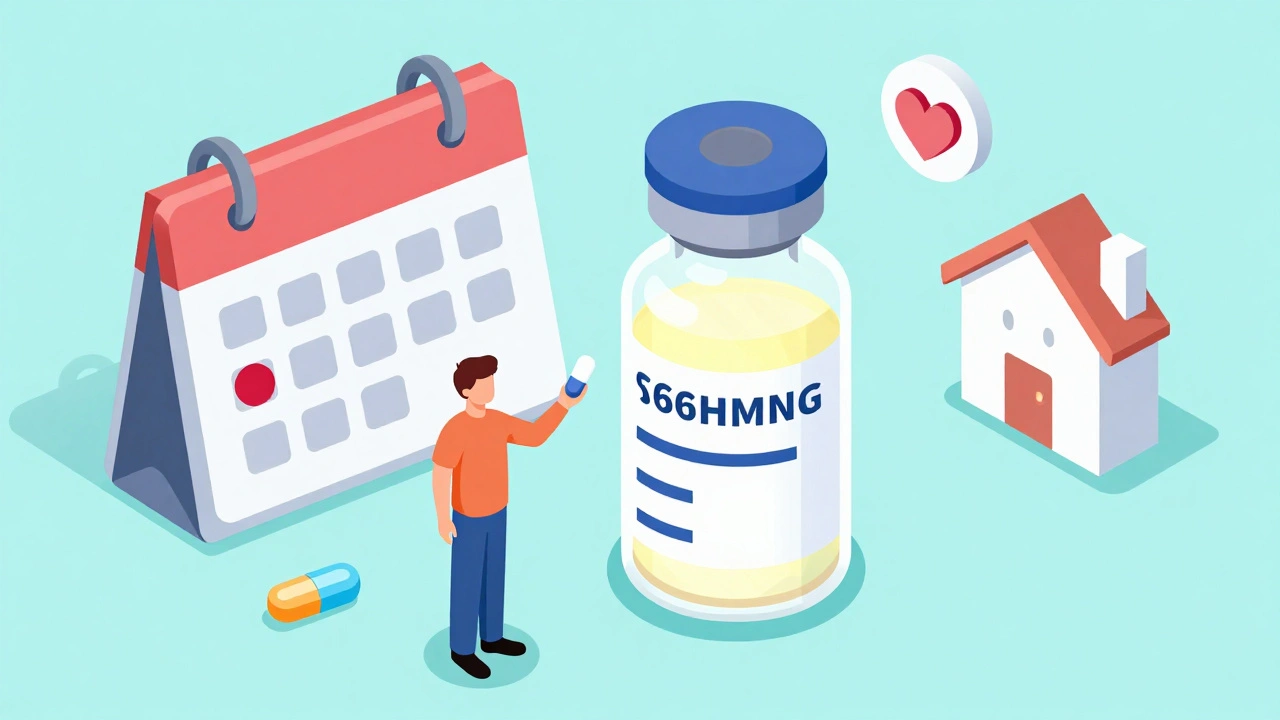
When HIV was first identified in the 1980s, a diagnosis often meant a death sentence. People lived with fear, stigma, and the certainty that their time was limited. Today, that reality has changed - not because of a miracle cure, but because of science that moved faster than almost anyone expected. HIV is no longer a death sentence. It’s a manageable condition. And for many, it’s become something you only think about twice a year.
How HIV Treatment Changed Everything
Before 1996, HIV treatment meant taking a handful of pills every day, with brutal side effects and little guarantee they’d work. Then came combination antiretroviral therapy (ART) - a mix of drugs that stopped the virus from multiplying. Suddenly, viral loads dropped. Immune systems recovered. People went back to work, had children, lived full lives. Today’s standard is even better. Modern ART regimens are single pills, taken once a day, with fewer side effects than a common painkiller. Drugs like Biktarvy (bictegravir/emtricitabine/tenofovir alafenamide) combine three powerful medications into one tiny tablet - just 459 milligrams, smaller than a pencil eraser. It’s so effective that over 95% of people who take it consistently achieve undetectable viral loads. And when your viral load is undetectable, you can’t transmit HIV. That’s not theory. It’s proven fact, backed by decades of research.The Game-Changer: Long-Acting Injections
The biggest leap forward didn’t come from a new pill. It came from a shot. In 2022, lenacapavir (brand name Sunlenca) became the first capsid inhibitor approved for HIV treatment. Unlike older drugs that target viral enzymes, it blocks the virus’s outer shell - the capsid - preventing it from unpacking and copying itself inside cells. The breakthrough? One injection lasts six months. By January 2025, the FDA gave Breakthrough Therapy Designation to a new combo: lenacapavir plus two broadly neutralizing antibodies, teropavimab and zinlirvimab - known as the LTZ regimen. In trials, this combination kept the virus suppressed in 98.7% of patients at 48 weeks. That’s higher than daily pills. And you only need two injections a year. This isn’t just convenient. It’s life-changing. People who spent years stressing over missed pills, hiding medication, or feeling defined by their diagnosis now have freedom. One Reddit user, u/HIVWarrior2020, wrote: “After 12 years of daily pills, the twice-yearly injection has eliminated my treatment-related anxiety completely.”PrEP Just Got Easier Too
Prevention got a major upgrade in June 2025, when lenacapavir was approved for use as PrEP under the name Yeztugo. Before this, the only long-acting PrEP option was cabotegravir (Apretude), an injection every two months. That meant six visits a year. Yeztugo cuts that to two. The World Health Organization called it “the next best thing to an HIV vaccine.” Why? Because when used correctly, it reduces infection risk by over 99%. For people at high risk - men who have sex with men, transgender women, sex workers, and others - this is a powerful tool. And unlike daily pills, there’s no need to remember a routine. Just two shots a year.
What About Side Effects and Access?
No treatment is perfect. The most common issue with long-acting injections is mild to moderate pain or swelling at the injection site. About 28% of users report it, but 94% say it’s worth it compared to daily pills. Most reactions fade in 2-3 days and are easily managed with ice or over-the-counter pain relievers. The bigger problem? Access. In the U.S., only 43% of clinics could offer Sunlenca as of mid-2025 because it requires storage at -20°C. That’s not feasible in rural clinics or low-income countries. Yeztugo’s newer formulation is more stable, helping, but supply chains still lag. In sub-Saharan Africa, where 70% of global HIV cases live, less than 2% of people have access to long-acting therapies. The WHO’s July 2025 guidelines specifically push for community health workers to deliver these injections - not just doctors. That’s critical. If you need a specialist to give you a shot, you’re stuck. If a nurse or trained volunteer can do it, scale becomes possible.Cost: The Biggest Barrier
The list price for Biktarvy is $69,000 a year in the U.S. Yeztugo is $45,000. Those numbers are unsustainable - and unjust. Here’s the truth: the actual cost to produce these drugs is tiny. A report from the European AIDS Treatment Group in October 2025 estimated that generic versions could be made for as little as $25 per patient per year. That’s one-thousandth of the current price. The problem isn’t science. It’s profit. Gilead Sciences, which makes lenacapavir, earned $13.2 billion from HIV drugs in 2024. ViiV Healthcare (owned by GSK) made $4.7 billion. Meanwhile, UNAIDS reports 1.3 million new HIV infections in 2024 - far above the global target of 370,000. Dr. Mark Harrington of the Treatment Action Group put it bluntly: “Without urgent action on pricing, these breakthroughs will remain out of reach for the majority of people who need them.”Quality of Life: The Real Win
The most important number isn’t viral load. It’s satisfaction. The Positive Peers app surveyed over 150,000 people with HIV in 2025. Of those on long-acting treatments, 92% rated their satisfaction as 8 out of 10 or higher. For those on daily pills? Only 76%. Why? Because treatment isn’t just about survival. It’s about dignity. It’s about not having to explain your meds to coworkers. Not hiding your pills in your lunchbox. Not feeling like your identity is tied to a daily ritual. One woman in Bristol told her doctor: “I used to check my pillbox every morning like it was a religious duty. Now I go to the clinic once in the spring and once in the fall. I feel like I’m living again.”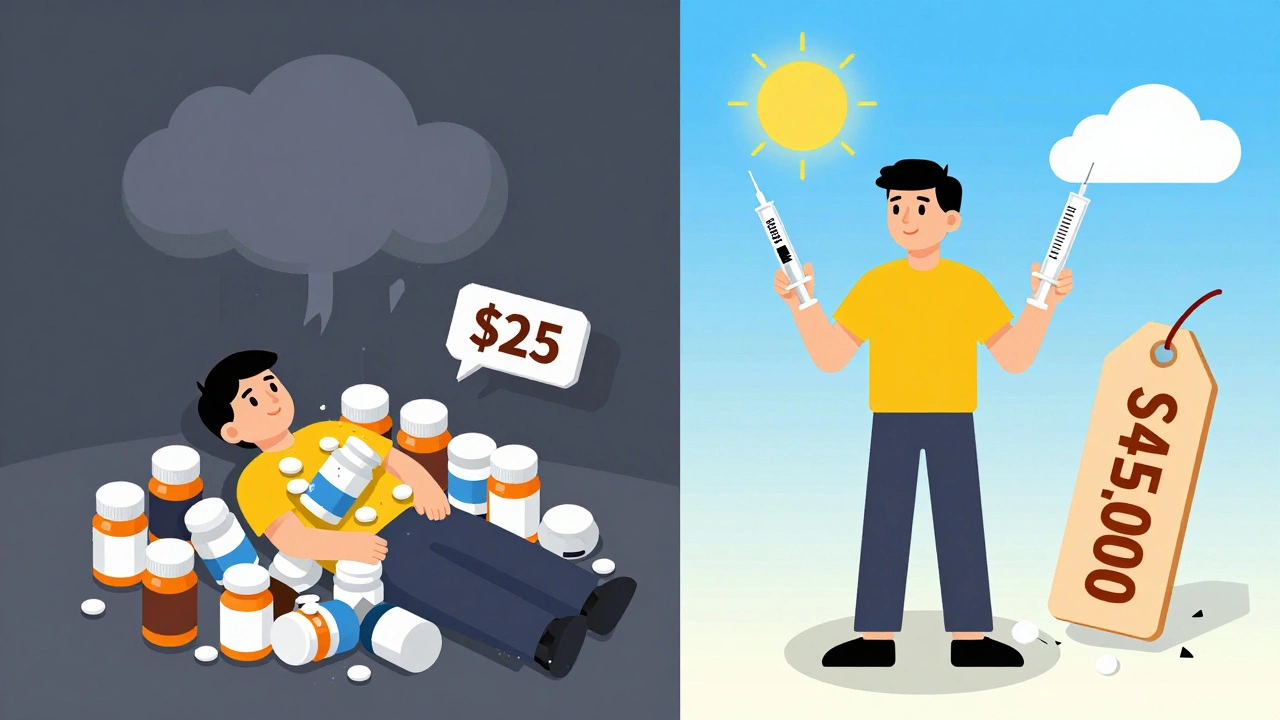
What’s Next?
By 2030, experts predict 75% of people with HIV in high-income countries will be on long-acting regimens. In lower-income countries, that number could hit 40% - if pricing reforms happen. Gilead’s LTZ regimen is expected to gain full FDA approval in early 2026. ViiV Healthcare is testing its own long-acting drugs, but none match the twice-yearly dosing. Merck’s doravirine/islatravir offers a once-daily two-drug option, but it’s still daily - not a leap. There’s also early research into a potential cure. In a 2025 trial, three out of 25 participants maintained undetectable HIV after stopping all treatment. It’s not widespread, but it’s proof that eradication might one day be possible.What Should You Do?
If you’re living with HIV and on daily pills, talk to your provider about switching. You don’t need to be perfect at taking pills to qualify. In fact, if you’ve ever missed a dose, you’re a perfect candidate. If you’re HIV-negative and at risk, ask about Yeztugo. It’s not just for gay men. It’s for anyone who needs reliable, low-effort protection. If you’re a clinician, learn the protocols. Gilead reports that 87% of providers became confident after just three supervised injections. If you’re an advocate, demand fair pricing. The science is here. The tools exist. What’s missing is justice.Final Thought
HIV treatment has come from fear to freedom. From daily pills to two shots a year. From stigma to dignity. The virus didn’t disappear. But the power it held over people’s lives? That’s gone. The next chapter isn’t about surviving HIV. It’s about living without it defining you.Can HIV be cured with modern treatments?
No, modern treatments don’t cure HIV - but they control it so effectively that people live full, healthy lives with no risk of transmission. A few experimental cases show temporary remission after stopping treatment, but these are rare and not yet reproducible. The goal today is long-term suppression, not eradication.
How often do you need injections for long-acting HIV treatment?
The new LTZ regimen (lenacapavir with two antibodies) requires just two injections per year - once every six months. For those on lenacapavir alone (Sunlenca), it’s also two shots a year. Older long-acting options like cabotegravir (Apretude) require injections every two months, or six times a year.
Is long-acting HIV treatment safe?
Yes. Clinical trials show it’s as safe or safer than daily pills. The most common side effect is mild pain or swelling at the injection site, lasting 2-3 days. Serious reactions are rare. Viral suppression rates are higher than with oral therapy, meaning less risk of drug resistance and treatment failure.
Can I switch from daily pills to long-acting injections?
Yes - and many people do. The switch usually involves a 4-week overlap where you take your daily pills while starting the first injection. This ensures your viral load stays suppressed during the transition. Your provider will monitor your health and adjust as needed.
Are long-acting HIV treatments available worldwide?
Not yet. In the U.S. and parts of Europe, they’re becoming more common. But in sub-Saharan Africa and other low-income regions, access is extremely limited due to cost, cold storage needs, and lack of trained staff. The WHO is pushing for community health workers to deliver these injections to improve access.
How much do long-acting HIV treatments cost?
In the U.S., list prices are high: Sunlenca and Yeztugo cost around $45,000 annually. Biktarvy is about $69,000. But the actual manufacturing cost is estimated at just $25 per patient per year. Generic versions could make these treatments affordable globally - if pricing policies change.
Can I get HIV from the injection?
No. The injections contain only antiviral drugs or antibodies - no live virus. There’s zero risk of infection from the injection itself. All medications are sterile and rigorously tested.
Do long-acting treatments work for everyone?
Most people respond well, but not all. Your provider will test for drug resistance before switching. If you’ve had prior treatment failure or resistance to certain drug classes, you may not be eligible. But for the majority - especially those who struggle with daily pills - these treatments are ideal.
What’s the difference between HIV and AIDS?
HIV is the virus that attacks the immune system. AIDS is the final stage of untreated HIV infection, when the immune system is severely damaged and opportunistic infections or cancers develop. With modern treatment, most people with HIV never develop AIDS.
Can I stop using condoms if I’m on long-acting treatment?
If you’re living with HIV and on treatment with an undetectable viral load, you cannot transmit HIV - even without condoms. But condoms still protect against other STIs like syphilis, gonorrhea, and hepatitis. For HIV-negative people on PrEP, condoms add extra protection. It’s a personal choice, but not medically necessary for HIV prevention alone.


