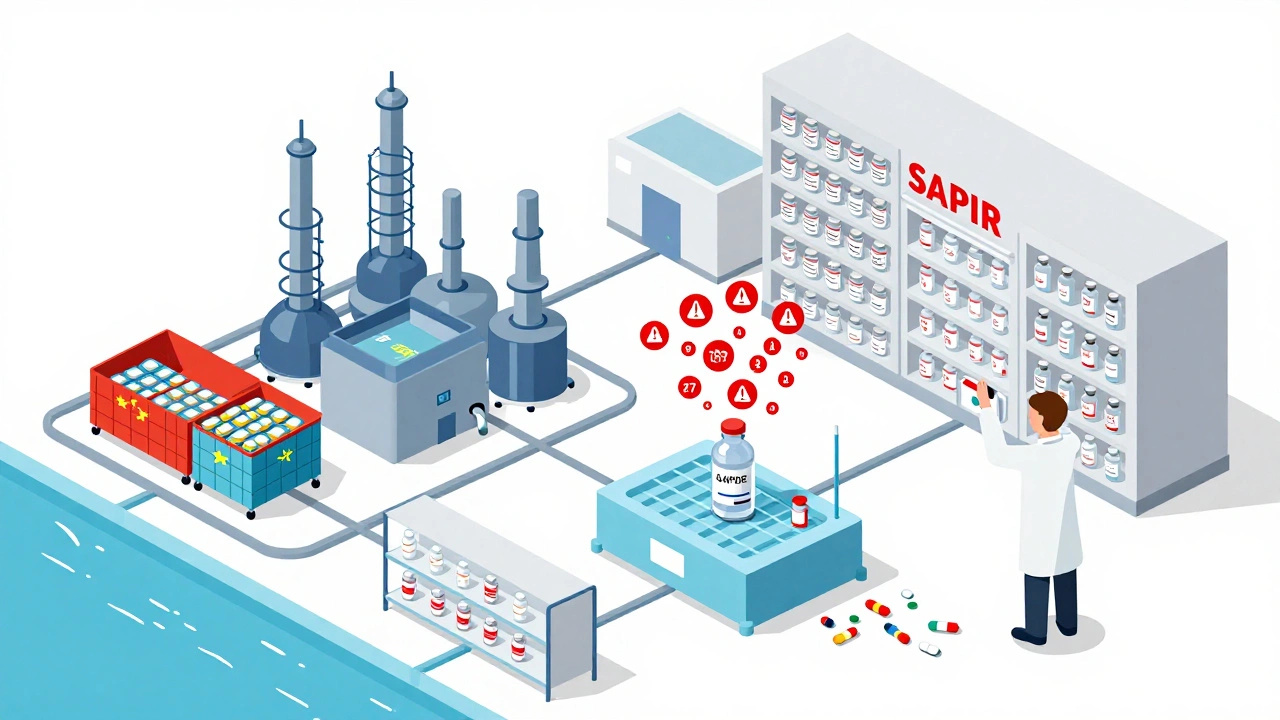
As of late 2025, the U.S. is facing one of its worst drug shortage crises in history. Over 277 medications remain in short supply, from life-saving antibiotics to chemotherapy drugs. Hospitals are scrambling. Pharmacists are spending hours each week tracking down alternatives. Patients are skipping doses or delaying treatment. And behind it all? A federal response that’s growing more fragmented by the month.
The Scale of the Crisis
It’s not just a few drugs missing from shelves. It’s systemic. In 2024, the U.S. recorded 323 active drug shortages-the highest number ever documented. By September 2025, that number had dipped slightly to 277, but the types of drugs affected tell a more troubling story. Oncology drugs make up 31% of all shortages, even though they’re only 4% of the federal government’s targeted list for emergency stockpiling. Sterile injectables-like saline, insulin, and anesthetics-are the most vulnerable, accounting for 73% of all shortages. Why? Because they’re cheap to make, hard to profit from, and concentrated in just five manufacturing plants nationwide.
The FDA’s own database tracks over 1,200 past and current shortages. But the real problem isn’t just the number-it’s the predictability. Manufacturers are legally required to report potential shortages six months in advance. Yet compliance is below 60%. Small companies, which make up most of the supply chain, report at only 18% rates. That means hospitals often find out a drug is running out the same day they need it.
The Strategic Active Pharmaceutical Ingredients Reserve (SAPIR)
In August 2025, President Trump signed Executive Order 14178, expanding the Strategic Active Pharmaceutical Ingredients Reserve-SAPIR. This program doesn’t stockpile finished pills or injections. It stocks the raw chemicals-active pharmaceutical ingredients (APIs)-that go into them. The idea? APIs are cheaper, last longer (up to five years), and are easier to ship than finished drugs. The government now aims to hold reserves of APIs for 26 critical medications, including antibiotics, cancer drugs, and emergency anesthetics.
On paper, it makes sense. China supplies about 80% of the world’s APIs. Relying on a single country for life-saving chemicals is risky. Stockpiling raw materials gives the U.S. a buffer. But here’s the catch: the 26 drugs on the list cover less than 5% of all shortage incidents. The FDA’s data shows that 98% of shortages involve drugs outside this list. So while SAPIR might prevent a few high-profile crises, it won’t stop the majority.
What’s Missing: Prevention Over Reaction
The federal government is treating drug shortages like fire alarms-something to react to after they go off. But experts say the real fix is preventing them before they start. Dr. Luciana Borio, former FDA Acting Chief Scientist, called the current strategy “reactive rather than preventative.”
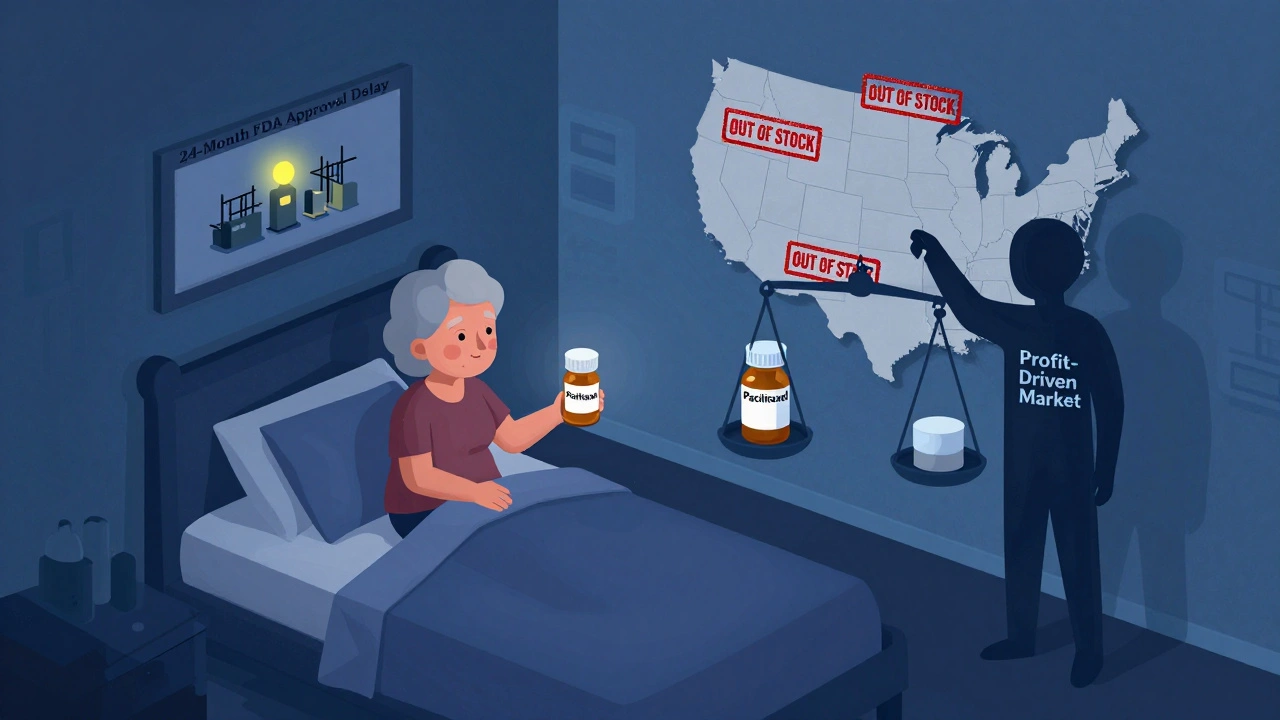
Why? Because the root causes aren’t being addressed. The U.S. doesn’t pay enough for essential, low-margin drugs. A vial of generic doxycycline costs $1.50. A vial of a new cancer drug costs $10,000. Manufacturers will always choose the profitable ones. Even when the government offers subsidies, companies won’t invest in backup production lines if they can’t make money from them.
Meanwhile, the FDA approved 56 new manufacturing facilities in 2024-but 42% of them were overseas. Ireland and Singapore are now producing more U.S.-needed drugs than U.S. factories. And it takes 28 to 36 months to get FDA approval for a new domestic facility. In the EU, it takes 18 to 24 months. That delay alone keeps American production behind.
Policy Conflicts and Funding Cuts
There’s a glaring contradiction in federal policy. On one hand, the administration is spending billions on SAPIR and pushing for domestic manufacturing. On the other, it’s cutting the very programs that could make those efforts stick.
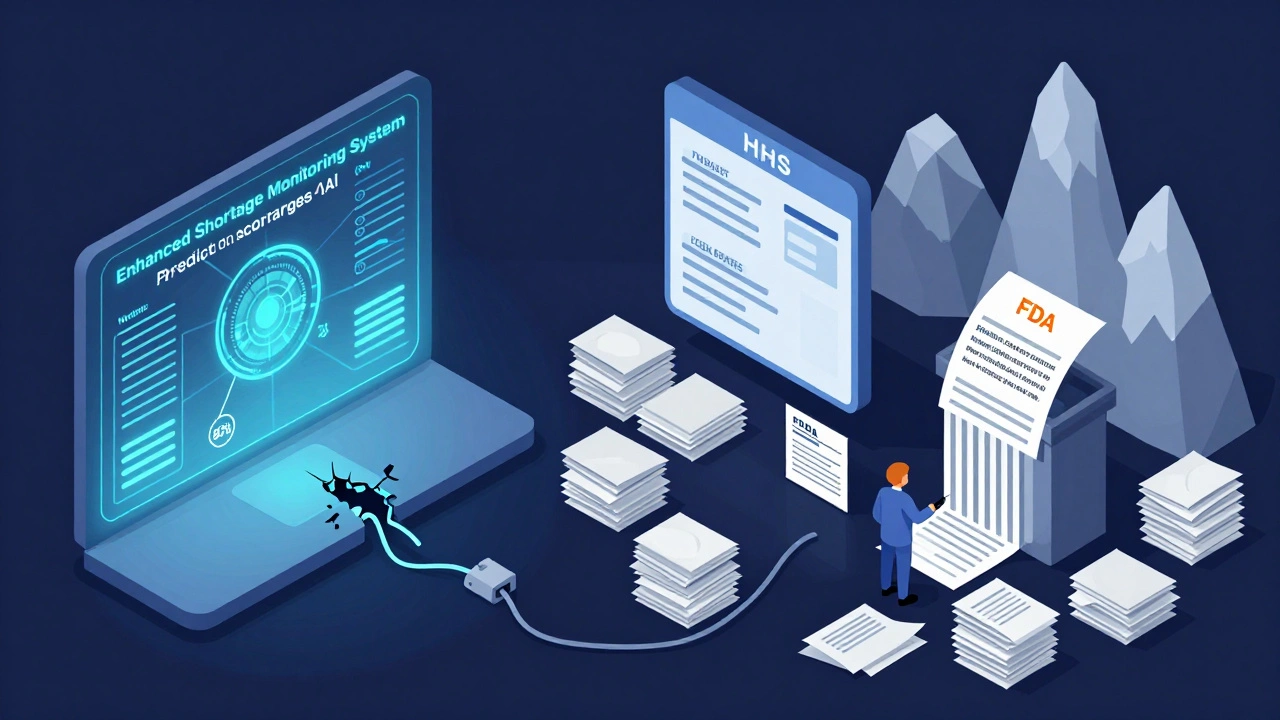
The 2026 HHS budget slashes $1.2 billion from FEMA’s emergency response and $850 million from state public health grants. Funding for BARDA-the agency that helped develop next-gen manufacturing tech-dropped 22% from 2024. Meanwhile, the administration rolled back Biden-era rules that forced drugmakers to disclose supply chain risks. Transparency was seen as a burden. Now, no one knows where APIs come from until it’s too late.
Compare this to the EU. They require member states to maintain mandatory stockpiles. They run a centralized shortage monitoring system. Between 2022 and 2024, their drug shortages dropped by 37%. The U.S. has no such system. The FDA’s shortage database is public, but it’s not linked to hospital inventory systems. Most hospitals still track shortages on spreadsheets.
Real-World Impact: Hospitals and Patients
The human cost is real. Hospitals now spend an average of $1.2 million a year just managing drug shortages. That’s not for buying drugs-it’s for staff time, emergency orders, and clinical monitoring.
Pharmacists are working 10+ hours a week just finding substitutes. One Reddit user described having to compound cisplatin-a cancer drug-from raw powder because the pre-made version was gone. Another said they used five different manufacturers for the same drug in a single week. That’s not just inconvenient-it’s dangerous. Medication errors rose 42% in hospitals during peak shortage periods, according to the American Society of Health-System Pharmacists.
Patients are skipping doses. A September 2025 survey found 29% of Americans skipped medication due to unavailability-not because they couldn’t afford it, but because it simply wasn’t there. Cancer patients were hit hardest: 68% reported treatment delays or substitutions. One woman in Ohio had to delay her chemotherapy for three weeks because her hospital ran out of paclitaxel. She didn’t get her full dose. Her oncologist told her it was “the best they could do.”
The New Tools-And Why They’re Falling Short
The FDA launched its Enhanced Shortage Monitoring System in November 2025. It uses AI to predict shortages 90 days in advance by analyzing shipping data, factory output, and hospital purchase patterns. It’s 82% accurate. That’s impressive. But it’s useless if no one acts on it.
Only 28 of 50 states have set up the supply chain mapping tools required by the HHS 2025-2028 Action Plan. Rural hospitals say it takes six months just to get the software working. And even when they do, the system doesn’t talk to their pharmacy inventory software. It’s a dashboard with no controls.
The government also launched a new pilot program to fast-track second-source manufacturers. Fourteen companies have applied to make backup versions of shortage-prone drugs. If approved, they could add redundancy for eight critical medications by mid-2026. That’s the most promising step in years. But it’s still a drop in the bucket. The market needs hundreds of backup suppliers, not a handful.
Why the System Keeps Failing
The truth? The U.S. government doesn’t treat drug shortages like a public health emergency. It treats them like a supply chain glitch.
There’s no national stockpile of finished drugs. No mandatory reporting for all manufacturers. No financial incentive to produce low-profit but essential medicines. The FDA can’t force companies to make more. Congress won’t fund the infrastructure. And the market rewards profit over preparedness.
Even the best-intentioned policies-like H.R.5316, the Drug Shortage Act-fall short. The Congressional Budget Office estimates it would reduce shortages by only 15-20% at a cost of $740 million over five years. That’s less than 0.1% of total U.S. drug spending. For context, the U.S. spends over $1.3 trillion on prescription drugs annually.
The Government Accountability Office found that HHS has implemented only 35% of its own recommended shortage prevention steps. The FDA issued just 17 warning letters for failure to report shortages between 2020 and 2024. The EU issued 142 under similar rules.
There’s a pattern here: good ideas, poor execution, and no accountability.
What Could Work
There are proven fixes. They just aren’t being used.
- Make reporting mandatory for all manufacturers-not just big ones. The Early Notification Pilot Program cut shortage durations by 28%. But it’s voluntary.
- Pay for essential drugs fairly. If a drug is critical, the government should guarantee a minimum price. Medicare could pay more for generics that are hard to make.
- Require backup manufacturing. Any company making a critical drug should be required to have a second facility, either domestic or allied.
- Speed up approvals. Cut FDA review times for second-source manufacturers from 24 months to 12.
- Create a national shortage response network. Right now, there’s no central command. Hospitals are on their own.
These aren’t radical ideas. They’re what other countries do. The U.S. has the technology, the resources, and the data. What it lacks is the political will to treat drug shortages like the life-or-death crisis they are.
Why are drug shortages getting worse in the U.S.?
Drug shortages are worsening because the U.S. relies on a fragile, profit-driven supply chain. Most essential drugs are made overseas, especially in China, and produced in just a few factories. Manufacturers avoid making low-margin drugs because they’re not profitable. The government doesn’t pay enough for them, doesn’t require backup production, and doesn’t enforce reporting rules. As a result, when one factory shuts down or a shipment is delayed, hospitals have no alternatives.
What is the Strategic Active Pharmaceutical Ingredients Reserve (SAPIR)?
SAPIR is a federal stockpile of raw chemical ingredients-active pharmaceutical ingredients (APIs)-needed to make 26 critical medications like antibiotics, anesthetics, and cancer drugs. Launched in 2020 and expanded in August 2025, it aims to reduce dependence on foreign suppliers by storing cheaper, longer-lasting raw materials instead of finished drugs. However, it only covers a small fraction of all shortage-prone medications.
Are drug shortages only a problem in the U.S.?
No. But the U.S. has the worst shortage rates among developed nations. The European Union reduced shortages by 37% between 2022 and 2024 by requiring member states to maintain mandatory stockpiles and using a centralized monitoring system. The U.S. lacks both a national strategy and consistent enforcement, leading to more frequent and longer-lasting shortages.
How do drug shortages affect patients?
Patients often face treatment delays, substituted medications, or skipped doses. A 2025 survey found 29% of Americans skipped medication due to unavailability. Cancer patients are especially affected-68% reported treatment changes. Hospitals report more medication errors, longer wait times, and increased clinical monitoring when substitutes are used. Some patients have had to delay chemotherapy or surgery because their required drug wasn’t available.
What’s being done to fix the problem?
The FDA launched an AI-powered shortage prediction system, and Congress is considering bills to improve reporting and incentivize backup manufacturing. The government is also expanding the SAPIR stockpile. But these efforts are fragmented, underfunded, and focused on reacting to shortages rather than preventing them. Only 35% of federal recommendations have been implemented, and funding for key programs has been cut.
Can the U.S. ever solve drug shortages?
Yes-but only if the government treats drug supply as a public health priority, not a market issue. That means paying fairly for essential drugs, requiring backup manufacturing, speeding up approvals, enforcing reporting rules, and building a national response network. Without fixing the economic incentives that drive manufacturers away from low-profit but critical medications, no amount of stockpiling or AI will stop the next crisis.
The next time you hear about a drug shortage, don’t assume it’s just bad luck. It’s policy failure. And until the federal government stops treating medicine like a commodity and starts treating it like a right, these shortages will keep coming.


