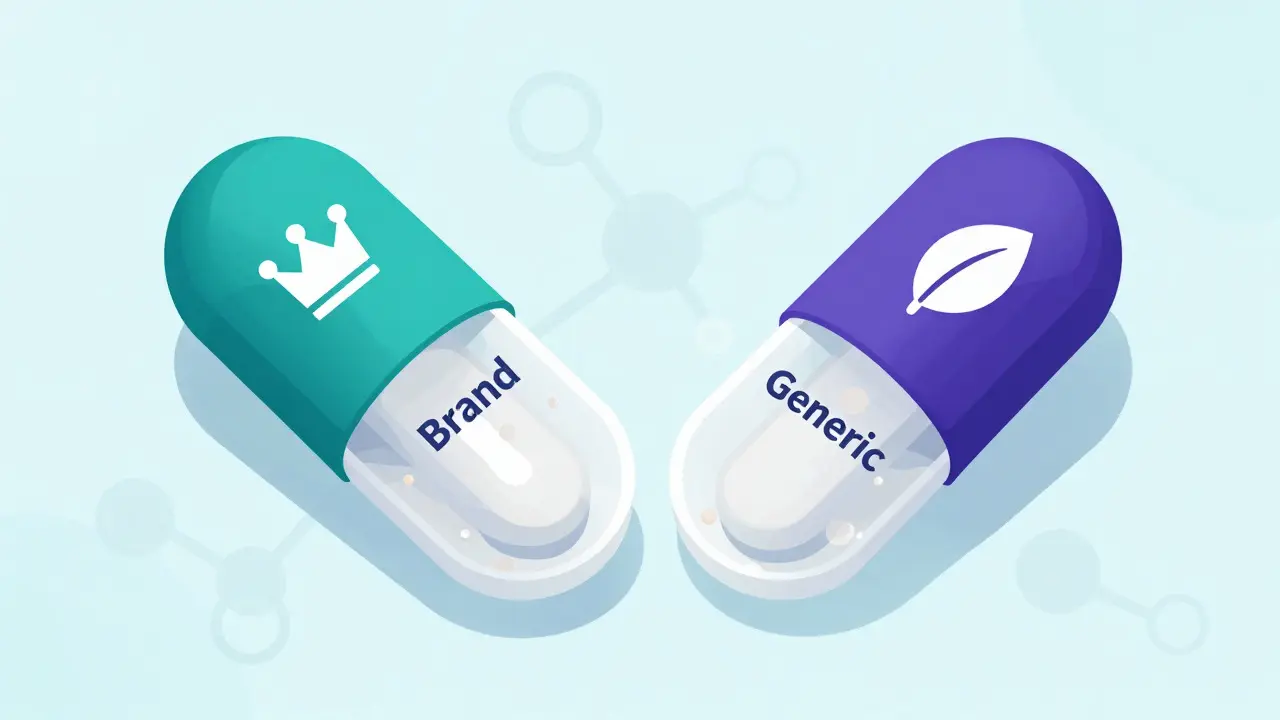
You are likely paying significantly more for your prescription than you need to. In the United States, the gap between what you pay for a brand-name pill and its generic equivalent isn't just a discount; it's a chasm. While most people assume brand drugs are "better" because they cost more, the data tells a different story. For the vast majority of medications, the active ingredient is identical, yet the price tag can differ by up to 85%.
Understanding this pricing dynamic is no longer optional if you want to manage your healthcare budget effectively. Whether you are an individual managing out-of-pocket costs or a business owner handling employee benefits, knowing how the pharmaceutical pricing landscape works in 2026 can save you thousands. This guide breaks down the real numbers, the regulatory standards, and the strategic shifts happening in the market right now.
The Core Difference: Bioequivalence vs. Branding
At its heart, a generic drug is a pharmaceutical product containing the same active ingredients as a brand-name drug, manufactured to identical standards of dosage form, strength, and route of administration. It is not a copycat with lower quality; it is a legal requirement that it performs identically in your body.
The U.S. Food and Drug Administration (FDA) enforces this through a process called bioequivalence. To get approved, a generic manufacturer must prove that their drug delivers the same amount of active ingredient into the bloodstream at the same speed as the original brand-name version. The acceptable range for these pharmacokinetic parameters is strictly set between 80% and 125% of the brand-name product’s performance. If a generic fails this test, it doesn’t hit the shelves.
So why does the brand name exist? It exists because of patent protection and marketing. Once a company invents a new molecule, they hold a patent that prevents others from making it for roughly 20 years. During this time, they recoup research and development costs through high pricing. Once that patent expires, other companies can enter the market with generics, triggering a price war that benefits consumers.
The Numbers: How Much Are You Actually Saving?
The financial impact of choosing generics over brands is massive on both a personal and national scale. According to the Association for Accessible Medicines (AAM), generic and biosimilar medicines comprised 90% of all prescriptions filled in the U.S. in 2024. Despite this dominance in volume, they accounted for only 12% of total prescription spending.
Let’s look at the raw data from the AAM’s 2025 report:
- Total Generic Spending: $98 billion for 3.9 billion prescriptions.
- Total Brand Spending: $700 billion for just 435 million prescriptions.
This means the average cost per generic prescription was roughly $25, while the average cost per brand-name prescription was nearly $1,600. That is a staggering difference. On a per-pill basis, generics typically cost 79% to 85% less than their brand counterparts. For a patient taking a daily medication for a chronic condition like hypertension or diabetes, switching to a generic when available can turn a monthly bill of $300 into one under $50.
Why Do Brand Prices Drop After Generics Launch?
A common misconception is that brand-name drugs stay expensive forever until they disappear. In reality, the entry of a single generic competitor triggers a predictable cascade of price reductions. The Assistant Secretary for Planning and Evaluation (ASPE) at the Department of Health and Human Services analyzed this phenomenon extensively in 2017, revealing clear patterns based on market competition.
| Number of Generic Competitors | Typical Price Relative to Pre-Generic Entry | Estimated Savings |
|---|---|---|
| 1 | ~90% | 10% |
| 3 - 4 | 60% - 70% | 30% - 40% |
| 5+ | < 50% | > 50% |
The most dramatic drops happen in the first three years after a generic enters the market. As more manufacturers join, the price continues to fall. This competitive pressure forces the original brand manufacturer to act. They often preemptively cut their own list prices to maintain market share before the generic takes over completely.
A recent example illustrates this shift. Bayer reduced the WAC (Wholesale Acquisition Cost) list price of Nexavar by 50% in 2025, following the launch of the first generic version in 2022. Similarly, Merck has been gradually decreasing prices for Januvia and Janumet XR, potentially anticipating further cuts mandated by the Inflation Reduction Act. These moves show that the era of static, high brand pricing is ending.
List Price vs. Net Price: The Hidden Reality
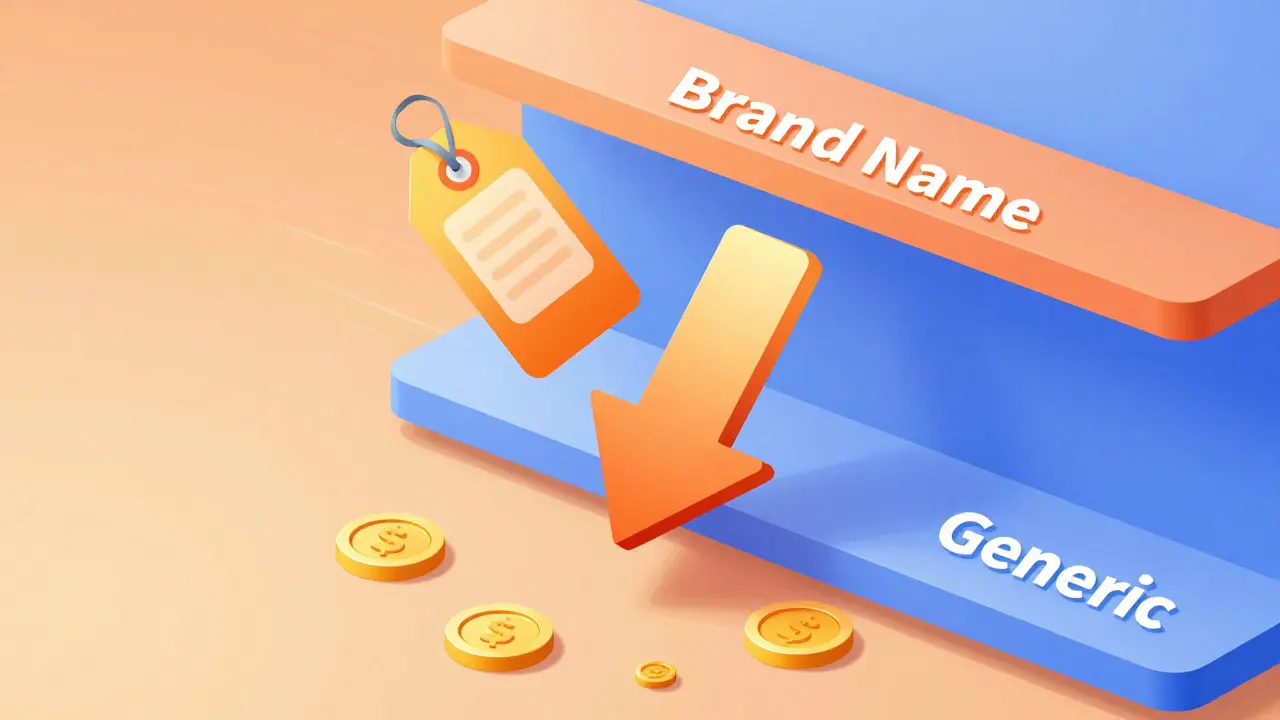
When you see a sticker price online or hear about "skyrocketing drug costs," you are usually looking at the list price (WAC). However, what actually changes hands between pharmacies, insurers, and manufacturers is the net price. There is a growing "gross-to-net gap" where manufacturers offer deep discounts and rebates to large pharmacy benefit managers (PBMs) and insurance plans.
Data from DrugChannels revealed that through the first three quarters of 2024, nominal net prices for brand-name drugs increased by only 0.1%. This resulted in a historically small gross-to-net gap of -2.2%. In simpler terms, while list prices might tick up slightly, the actual money being paid is staying relatively flat due to intense negotiation and discounting.
For consumers, this means that the "sticker shock" of a brand-name drug is often mitigated by insurance coverage, but it also highlights the complexity of the system. If you are uninsured or paying cash, you are exposed to the full weight of these dynamics. This is where understanding the specific pricing model of your pharmacy becomes crucial.
Consumer Perception vs. Clinical Reality
Despite the clinical evidence supporting generics, trust remains a hurdle. A January 2025 survey by Tebra found that while 84% of Americans believe generic medications are just as effective as their brand-name counterparts, 62% still trust the brand name more. Consequently, 60% of patients explicitly stated they would prefer to buy the brand-name medication if cost were not a factor.
This psychological barrier leads to unnecessary spending. Many patients ask their doctors to prescribe the brand name specifically to avoid the "unknown" generic, even when the therapeutic outcome is identical. The American Medical Association (AMA) and the FDA both stand behind the equivalence of generics, stating they meet identical quality, strength, purity, and stability standards.
If you are hesitant, consider asking your pharmacist about the specific inactive ingredients (fillers, dyes) in the generic versus the brand. For most people, these differences do not affect efficacy. However, if you have a known sensitivity to a specific dye or filler used in the brand-name version, the generic might contain a different one. This is a rare edge case, not the norm.
Strategic Tips for Maximizing Savings in 2026
Navigating the current market requires a proactive approach. Here is how you can apply this knowledge to your own prescriptions:
- Check for Generic Availability Immediately: Before filling any new prescription, ask your doctor, "Is there a generic version available?" If the answer is yes, ask them to write the script for the generic unless there is a specific medical reason to stick with the brand.
- Monitor Patent Expirations: If you are currently on a brand-name drug that is expensive, check when its patent expires. Use resources like the FDA’s Orange Book or sites like GoodRx to track upcoming generic launches. Often, waiting a few months for the generic to hit the market can save hundreds of dollars per month.
- Understand Your Insurance Tiering: Most insurance plans use tiered formularies. Generic drugs are almost always in Tier 1 (lowest copay), while brand-name drugs are in Tier 2 or higher. Switching to a generic can drop your copay from $50 to $5 instantly.
- Leverage Cash-Price Discounts: If you are uninsured, compare cash prices. Many independent pharmacies offer significant discounts on generics compared to big-box chains. Always ask, "What is the cash price?"
- Watch for Manufacturer Coupons: Sometimes, brand manufacturers offer coupons that make the brand cheaper than the generic for a short period. However, these deals are temporary. Once the coupon expires, the price jumps back up. Use them strategically, but don't let them lock you into a brand long-term.
Additionally, keep an eye on the Medicare Part D redesign taking effect in 2025, which caps out-of-pocket costs at $2,000 annually. While this helps those on Medicare, it may alter utilization patterns for younger populations as well, driving more demand for cost-effective generic options across the board.
Frequently Asked Questions
Are generic drugs really the same as brand-name drugs?
Yes, for the active ingredient, they are identical. The FDA requires generics to demonstrate bioequivalence, meaning they deliver the same amount of active ingredient in the same timeframe. The only differences lie in inactive ingredients like fillers, colors, and flavors, which rarely affect therapeutic outcomes.
Why are some generic drugs more expensive than others?
Pricing depends on competition. If only one company makes a generic, the price will be higher. If five or more companies compete, the price drops significantly. Additionally, the complexity of manufacturing certain drugs (like injectables or biologics) can keep costs higher than simple oral tablets.
Does the FDA approve generics faster than brand-name drugs?
Yes, generics go through an Abbreviated New Drug Application (ANDA) pathway. Because they don't need to repeat the costly human clinical trials done for the brand-name drug, the approval process is faster and less expensive, allowing manufacturers to pass those savings on to consumers.
Should I switch to a generic if I've been on a brand-name drug for years?
Generally, yes. Since the bioavailability is equivalent, your body should respond the same way. However, if you notice any change in side effects or efficacy after switching, talk to your doctor. It could be a placebo effect or a reaction to a different inactive ingredient, but it is worth monitoring.
How does the Inflation Reduction Act affect drug prices?
The IRA allows Medicare to negotiate prices for certain high-cost brand-name drugs starting in 2026. This puts downward pressure on brand prices, which can indirectly help consumers by making the gap between brand and generic costs narrower, though generics remain the primary driver of overall savings.