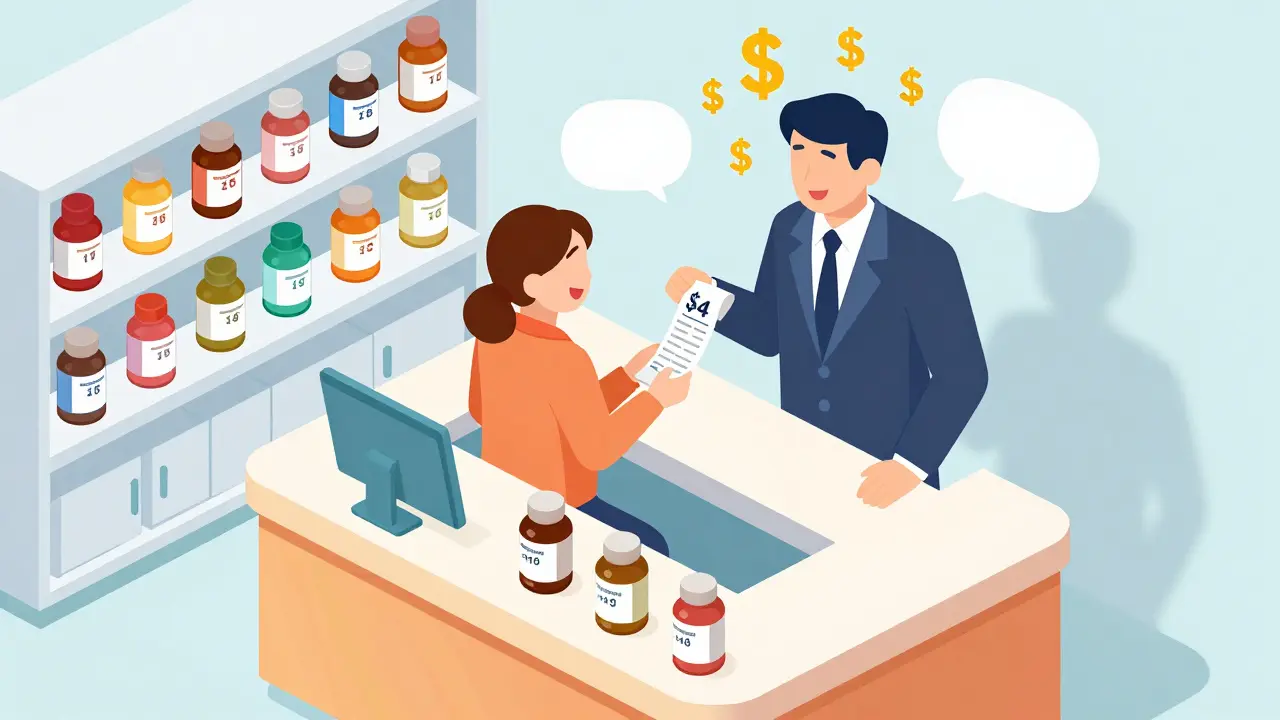
When you walk into a pharmacy to pick up your monthly prescription, you might assume the price is fixed-set by the manufacturer, the insurer, or the doctor. But what if that price isn’t what it seems? In the U.S., a quiet battle is happening behind the scenes: generic drug price wars. These aren’t flashy sales or holiday discounts. They’re the result of multiple companies fighting to sell the same medicine at the lowest possible price. And when it works, you save hundreds-sometimes thousands-of dollars a year.
How Generic Drug Price Wars Actually Work
Once a brand-name drug’s patent expires, any company can make a copy. These copies are called generics. They have the same active ingredients, the same strength, the same way they work in your body. The only difference? They cost a fraction of the price. The system was designed this way. The 1984 Hatch-Waxman Act created a fast-track approval process for generics so they could enter the market without repeating expensive clinical trials. The goal? Let competition drive prices down. And it does-dramatically. Here’s what happens when more companies join the race:- With just two generic makers: prices drop about 44-54% compared to the brand.
- With four generic makers: prices fall 73-79%.
- With six or more: prices drop over 95%.
Why You Might Still Be Paying Too Much
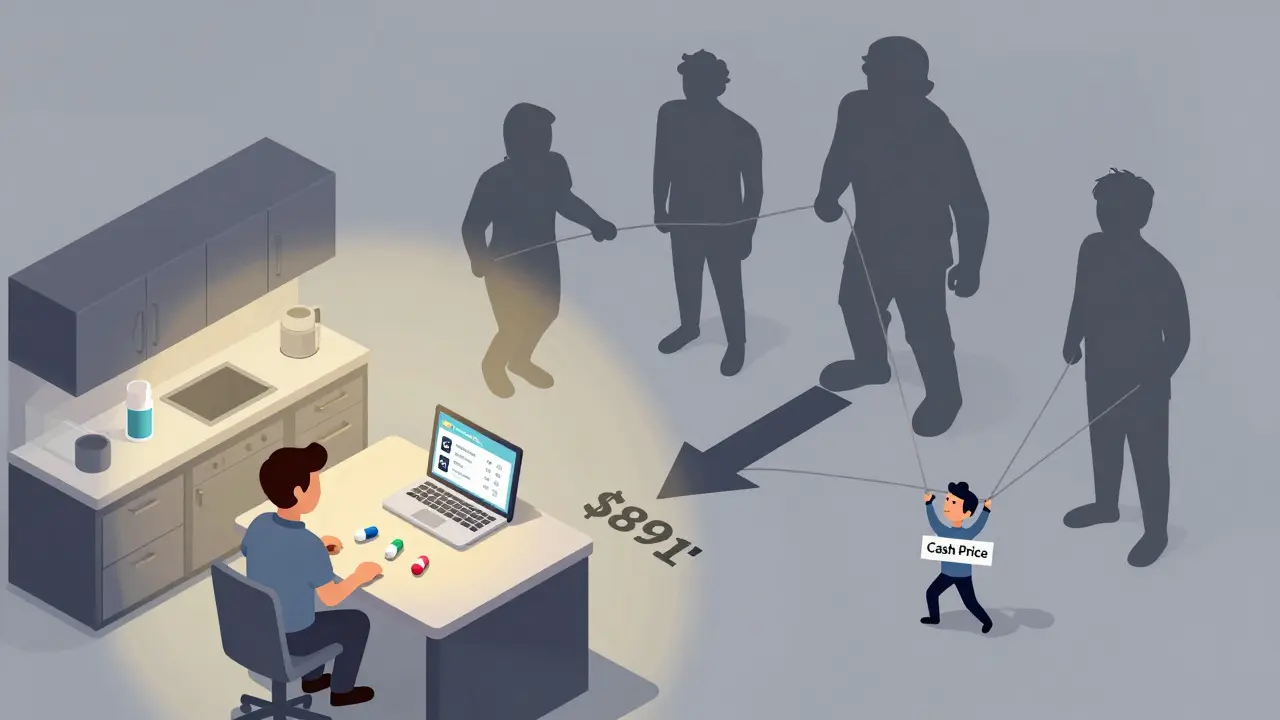
You’d think that with prices this low, everyone would be paying pennies. But many people still pay $50, $100, even $300 for generics they could get for $5. Why? The problem isn’t the manufacturers. It’s the middlemen. Pharmacy Benefit Managers (PBMs) control how drugs are priced and paid for behind the scenes. They negotiate deals with drug makers and pharmacies, but they don’t always pass savings along. Instead, they use practices like:- Spread pricing: Charging your insurer $50 for a drug that costs the pharmacy $10, keeping the $40 difference.
- Copay clawbacks: Charging you a $10 copay, then taking back $5 when the pharmacy gets reimbursed.
- Formulary bias: Pushing more expensive brand-name drugs over cheaper generics because they get higher rebates.
Who’s Winning and Who’s Losing
The biggest winners? Big pharmacy chains and PBMs. The Commonwealth Fund found that pharmacies make an average 42.7% profit margin on generics-compared to just 3.5% on brand-name drugs. That’s because generics are cheap to buy, and many people don’t shop around. The losers? Patients who don’t know their options. A 2023 Consumer Reports survey showed 42% of people didn’t know they could ask for the cash price. Many didn’t realize their pharmacist was legally forbidden from telling them how much cheaper it could be-until the 2018 Know the Lowest Price Act banned those “gag clauses.” Even worse, some markets have too little competition. If only one or two companies make a generic, prices stay high. In 2024, the American Economic Association found that 30% of generic shortages happened in markets with four or more manufacturers-because prices fell so low, companies stopped making the drug. No one makes it. No one can buy it. That’s not competition. That’s collapse.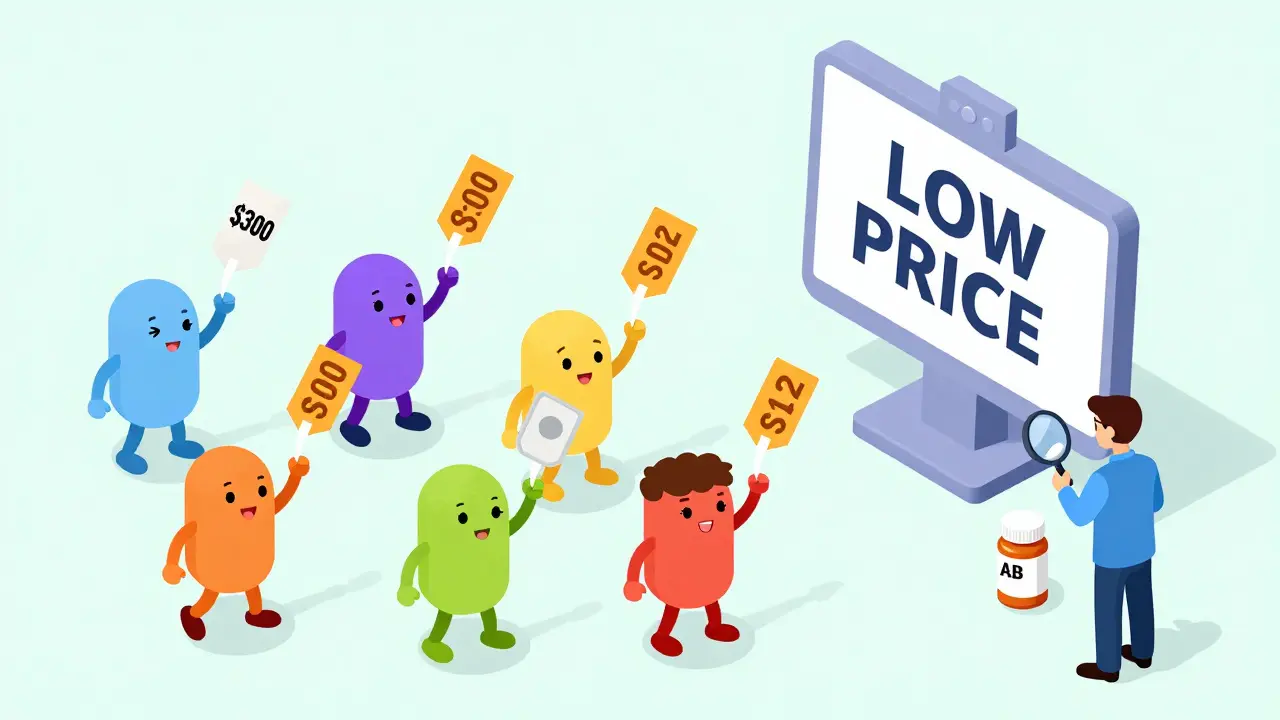
Real People, Real Savings (and Real Confusion)
On Reddit, users shared stories that show the wild gap between theory and reality:- One person paid $0 for metformin at Walmart’s $4 program.
- Another paid $300 for an EpiPen-even though a generic version existed and was approved.
- Someone else found their apixaban (a blood thinner) price jumped from $12 to $89 in a single month after a competitor left the market.
How to Actually Save Money on Your Prescriptions
You can’t fix the system. But you can beat it. Here’s how to make sure you’re getting the real savings:- Always ask for the cash price. Don’t assume your insurance is the cheapest option. In nearly a third of cases, paying cash is cheaper.
- Compare prices across pharmacies. The same generic pill can cost $5 at Costco and $50 at CVS. Use GoodRx or SingleCare to check prices nearby.
- Use discount programs. Walmart, Target, and Kroger offer $4 or $10 lists for common generics. These aren’t insurance deals-they’re direct prices.
- Check the AB rating. Not all generics are equal. Look for “AB” on the label. That means it’s bioequivalent to the brand. Avoid “BX” rated drugs-they’re not proven to work the same way.
- Ask your pharmacist about alternatives. If your drug is expensive, ask: “Is there a cheaper generic?” or “Is there another drug in the same class that’s cheaper?”
- Buy for 90 days. Many pharmacies offer discounts for 90-day supplies. That’s three months of metformin for $15 instead of $5 a month.
The Bigger Picture: Why This Matters
The U.S. spends 23% of its total pharmaceutical dollars on generics-but those generics make up 90% of all prescriptions filled. That’s the power of competition. If we fixed the middleman problem, the Congressional Budget Office estimates Medicare alone could save $15 billion a year. New laws are trying to fix this. The 2023 Pharmacy Benefit Manager Transparency Act aims to ban spread pricing. The Inflation Reduction Act lets Medicare negotiate some drug prices. The FDA approved over 1,000 generics in 2023-up from 748 the year before. More competition is coming. But until those changes fully take effect, the power is still in your hands. You don’t need to wait for Congress to act. You just need to ask the right questions.What’s Next for Generic Drugs?
The future of generic pricing depends on two things: more manufacturers and less secrecy. Right now, five companies-Teva, Viatris, Sandoz, Amneal, and Aurobindo-control over 60% of the U.S. generic market. That’s not competition. That’s an oligopoly. When a few players control the market, they can quietly raise prices without fear of losing customers. The Federal Trade Commission is watching. In October 2023, they called for banning spread pricing and requiring PBMs to pass savings directly to patients. If that happens, you’ll finally see the full benefit of price wars. Until then, don’t wait. Don’t assume. Don’t pay more because you don’t know better. You’re not just buying a pill. You’re buying your health. And you deserve to pay the lowest possible price for it.Why are generic drugs so much cheaper than brand-name drugs?
Generic drugs cost less because they don’t need to repeat expensive clinical trials. Once a brand-name drug’s patent expires, other companies can make the same medicine using the same formula. They save millions on research and development, so they can sell it for a fraction of the price. The active ingredient, dosage, and effectiveness are identical.
Can I really save money by paying cash instead of using insurance for generics?
Yes, and it’s more common than you think. Pharmacy Benefit Managers (PBMs) often set copays higher than the actual cost of the generic drug. In 28% of cases, the cash price is lower than your insurance copay. Always ask your pharmacist: “What’s the cash price?” before letting them process it through insurance.
Why do some generic drugs cost more than others?
It’s all about competition. If only one or two companies make a generic, prices stay high. If six or more companies make it, prices drop below 95% of the brand. Some drugs have few manufacturers because the profit margin is too thin, or manufacturing is complex. Always check if a cheaper alternative exists.
What’s the difference between AB and BX ratings on generics?
The FDA rates generics with an “AB” or “BX” code. “AB” means the generic is bioequivalent to the brand-it works the same way in your body. “BX” means there’s not enough evidence to prove it’s equivalent. Stick with AB-rated generics unless your doctor says otherwise. BX-rated drugs may be less reliable.
Why do generic drug prices suddenly go up?
When a manufacturer stops making a drug-because it’s not profitable anymore-the supply drops. With fewer companies producing it, the remaining ones can raise prices. This happened with drugs like apixaban and nitrofurantoin. If your price jumps unexpectedly, check if another manufacturer has entered the market or if your pharmacy switched suppliers.
Are all generic drugs safe and effective?
Yes, if they’re FDA-approved and carry an AB rating. The FDA requires generics to meet the same strict standards as brand-name drugs for quality, safety, and effectiveness. The only differences are in inactive ingredients like fillers or dyes-which don’t affect how the drug works.
How can I find the lowest price for my generic medication?
Use free tools like GoodRx, SingleCare, or RxSaver. Enter your drug name and zip code to see prices at nearby pharmacies. Also check Walmart, Target, and Kroger-they often have $4 or $10 generic lists. Don’t rely on your insurance copay alone. Compare it to the cash price.


