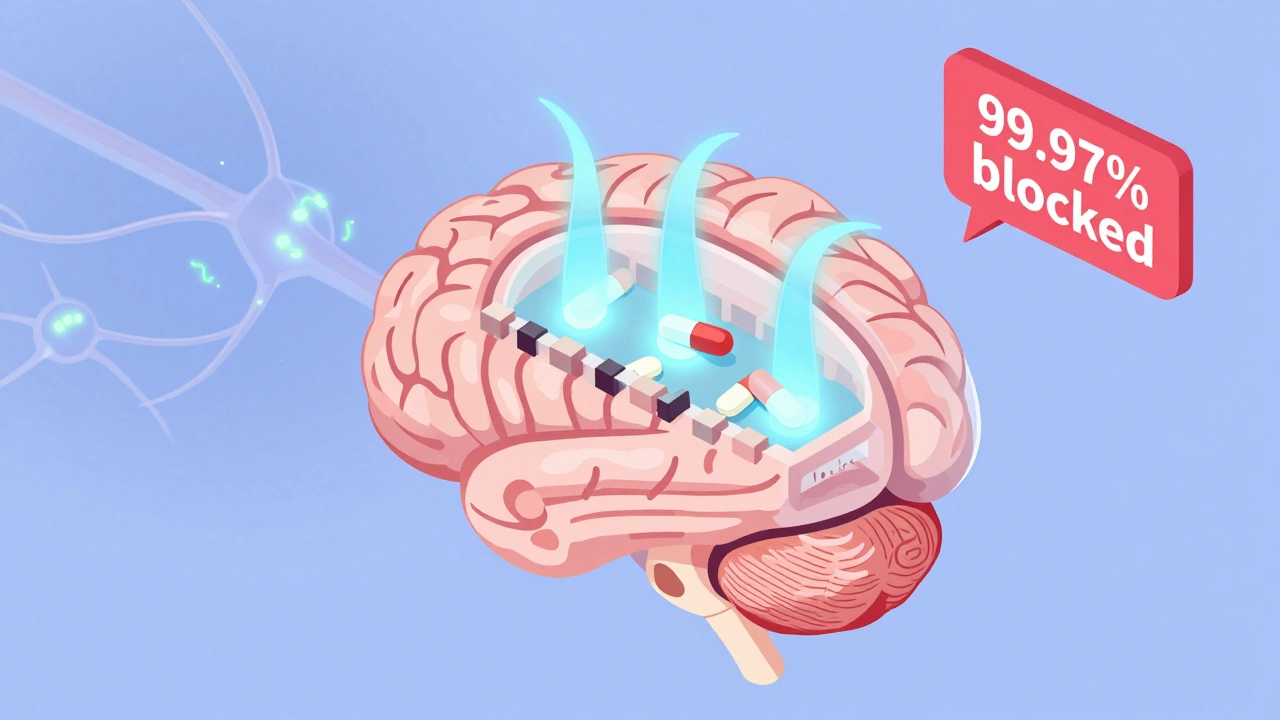
GABA Bioavailability Calculator
See how much GABA actually reaches your brain based on your supplement dosage. This tool illustrates why GABA supplements rarely cause additive CNS depression with sedatives.
Based on the science: Less than 0.03% of oral GABA crosses the blood-brain barrier. This calculator demonstrates why GABA supplements rarely increase sedation when taken with prescription sedatives.
It’s a common worry: you’re taking a prescription sedative like Xanax or Valium for anxiety or sleep, and then you hear GABA supplements might help too. So you start taking them-only to wonder, are you risking dangerous over-sedation? The fear makes sense. Both GABA and sedatives slow down your brain. But here’s the twist: the real danger might be much smaller than you think.
What GABA Actually Does in Your Brain
Gamma-aminobutyric acid, or GABA, is your brain’s main calming signal. It’s not a drug-it’s a natural neurotransmitter. When GABA binds to receptors on nerve cells, it opens chloride channels, making those cells harder to fire. Think of it like turning down the volume on your brain’s noise. This reduces anxiety, relaxes muscles, and helps you fall asleep.
Prescription sedatives-like benzodiazepines (alprazolam, diazepam), barbiturates, and even alcohol-work by boosting GABA’s effect. They don’t replace GABA. Instead, they make your brain’s existing GABA work better. That’s why they’re powerful. Too much, and you risk slowed breathing, low blood pressure, or even coma.
What’s in GABA Supplements?
Most GABA supplements you buy online or at a health store contain 250 to 750 milligrams of oral GABA. The idea is simple: if your brain needs more calming, why not just swallow some? But here’s the catch: your blood-brain barrier blocks almost all of it.
Studies show less than 0.03% of oral GABA actually reaches your brain. Why? Because GABA is water-soluble and too large to slip through the barrier naturally. Your body even has active pumps that push it back out. A 2012 double-blind study with 42 people found no rise in GABA levels in spinal fluid after taking 500 mg of oral GABA. That’s not a fluke-it’s been repeated across multiple trials.
Compare that to prescription drugs. Diazepam (Valium) is 80-90% absorbed. It crosses the blood-brain barrier in minutes. GABA supplements? They barely make it past your stomach.
So Why Do People Say They Feel Calmer?
If GABA doesn’t reach the brain, why do some users report feeling less anxious or sleepier? The answer isn’t in the brain-it’s in the gut.
Your intestines have their own nervous system, called the enteric nervous system. It’s packed with GABA receptors. Some researchers believe oral GABA may calm this system, which then sends signals to the brain via the vagus nerve. It’s not direct brain sedation. It’s more like a gentle nudge.
That’s also why people report mixed results. Some feel relaxed. Others feel nothing. A 2023 analysis of 147 Reddit posts from people using GABA with alcohol or benzodiazepines found 62% noticed no extra drowsiness. Only 23% felt slightly sleepier-enough to notice, but not enough to need medical help.
Is There Any Real Risk of Overdose?
Let’s look at the data. The FDA’s adverse event database (FAERS) tracked 12 years of supplement reports. Only three cases even hinted at GABA interacting with sedatives. None met the standard criteria to be called a confirmed interaction. In the same period, there were over 12,800 confirmed cases of dangerous interactions between benzodiazepines and opioids.
A 2018 meta-analysis of 17 studies with over 1,200 participants found no significant increase in sedation when people took GABA supplements alongside benzodiazepines. Their sleepiness scores didn’t change. The Stanford Sleepiness Scale, used in clinical trials, showed no difference between placebo and GABA groups.
Even the European Medicines Agency and the FDA agree: current evidence doesn’t support clinically meaningful interactions between oral GABA and sedatives. The FDA’s 2023 draft guidance on supplement-drug interactions specifically left GABA out of high-risk categories.
But What About Other Supplements?
Here’s where things get tricky. GABA supplements aren’t the only thing people mix with sedatives. Many use herbal products that do affect the brain.
Valerian root, kava, and phenibut all work differently. Valerian boosts GABA release. Kava blocks GABA reuptake. Phenibut mimics GABA and crosses the blood-brain barrier easily. A 2020 review found kava increased sedation by 37% when combined with zolpidem (Ambien). That’s a real risk.
Emergency room data from 2022 shows 41% of supplement-sedative visits involved melatonin, kava, or valerian-not GABA itself. So if you’re worried about interactions, focus on these. GABA? Probably not your biggest concern.
What Do Experts Really Say?
Dr. Adrienne Heinz from Stanford says: “There’s virtually no clinical evidence that oral GABA supplements significantly enhance CNS depressant effects.”
Dr. David Eagleman, neuroscientist and author of The Brain: The Story of You, puts it bluntly: “The blood-brain barrier effectively filters out 99.97% of orally consumed GABA.”
The American Academy of Neurology’s 2022 position paper says GABA supplements are “unlikely to contribute meaningfully to CNS depression.”
Even Dr. Charles P. O’Brien, who urges caution, admits the risk isn’t from direct brain effects. He’s concerned about the gut-brain connection-something still being studied, but not yet proven dangerous.
Practical Advice: What Should You Do?
If you’re on a sedative and thinking about trying GABA:
- Don’t panic. The science says it’s extremely unlikely to cause dangerous over-sedation.
- Don’t assume it works. Most people report no noticeable effect. Those who do feel calmer are likely responding to placebo or gut-brain signaling.
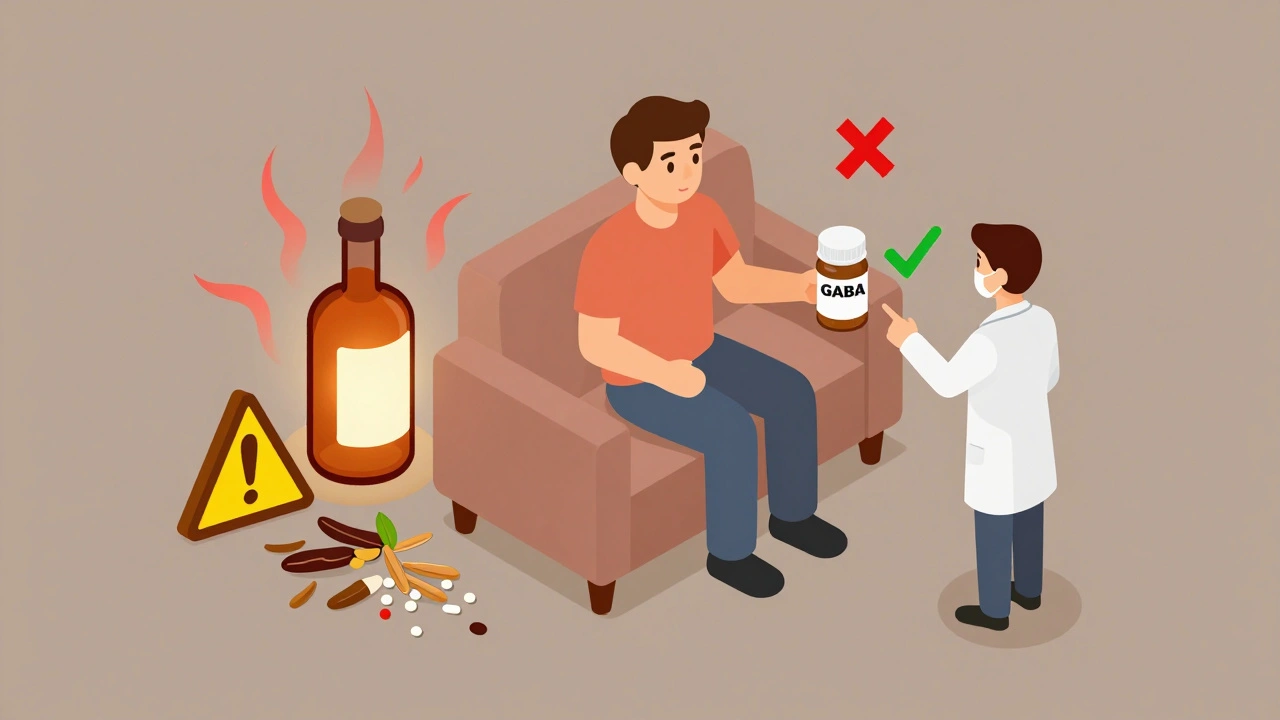
- Avoid alcohol. That’s the real danger. Alcohol boosts sedative effects by 45% and is far riskier than any GABA supplement.
- Start low if you try it. If you want to experiment, begin with 100-200 mg. Monitor for drowsiness. If you feel unusually sleepy, stop.
- Watch for other supplements. If you’re taking valerian, kava, or phenibut, talk to your doctor. Those have proven interaction risks.
- Always tell your prescriber. Even if the risk is low, your doctor needs to know everything you’re taking. A 2021 study found 97% of primary care physicians want patients to disclose supplement use.
The Future: Will GABA Supplements Change?
Right now, oral GABA is mostly ineffective for brain effects. But science is working on it.
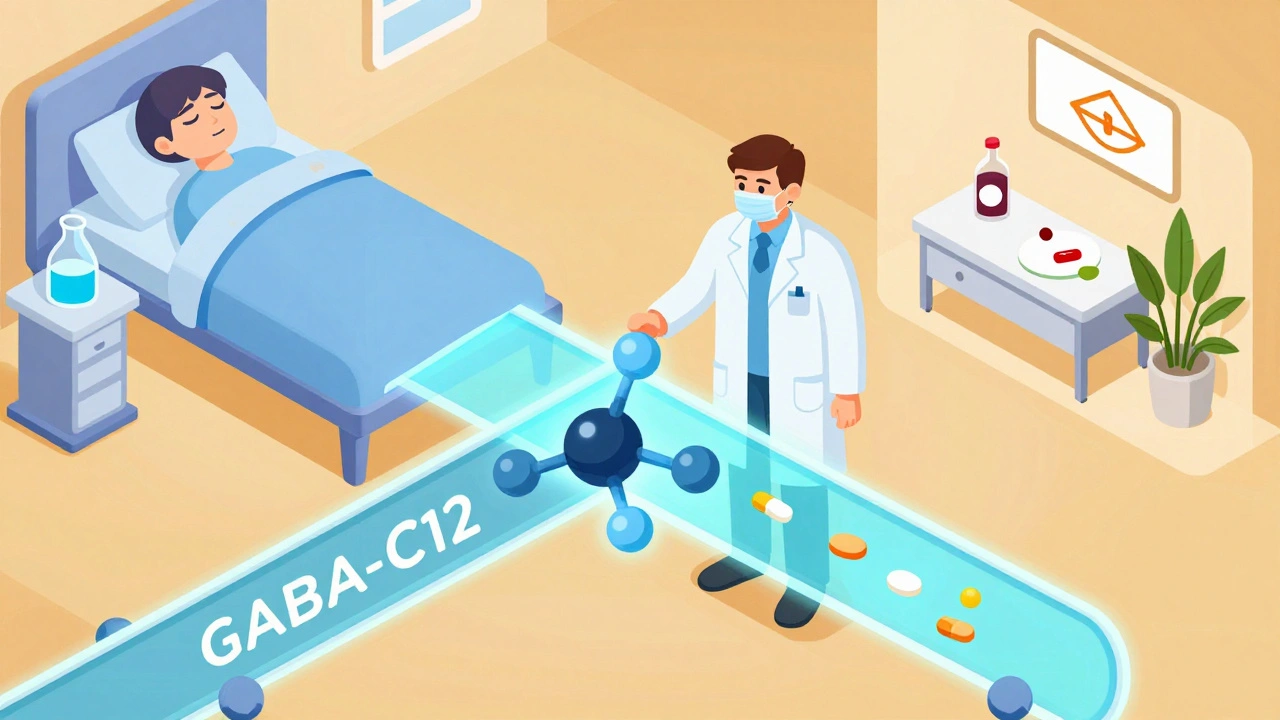
A new compound called GABA-C12 is being tested in a 2023 clinical trial. It’s GABA attached to a fatty acid chain, designed to sneak through the blood-brain barrier. Early animal studies show 12.7 times more brain uptake. If it works in humans, everything changes. That could mean real sedative interactions down the line.
For now? Stick with what we know. Your GABA supplement isn’t going to knock you out when combined with your prescription. But it probably won’t help much either.
Bottom Line
The idea that GABA supplements cause additive CNS depression with sedatives sounds scary. But the science doesn’t back it up. Your brain doesn’t get enough GABA from pills to make a difference. The real risks come from alcohol, herbal supplements like kava, or combining multiple CNS depressants.
If you’re on a sedative, you don’t need to avoid GABA supplements out of fear. But don’t expect miracles either. If you want calm, focus on sleep hygiene, stress reduction, and talking to your doctor about your real options-not marketing claims.
Can GABA supplements make my sedatives stronger?
Based on current evidence, no. Oral GABA supplements have less than 0.03% bioavailability in the brain due to the blood-brain barrier. Prescription sedatives like benzodiazepines work by enhancing your brain’s natural GABA, but supplemental GABA doesn’t reach the brain in meaningful amounts. Studies show no increase in sedation scores when GABA supplements are taken with sedatives.
Is it safe to take GABA with alcohol and a sleeping pill?
It’s not recommended. While GABA supplements themselves aren’t the issue, alcohol is. Alcohol increases CNS depression by up to 45% when combined with sedatives like zolpidem or benzodiazepines. This combination can lead to dangerously slowed breathing, low blood pressure, or loss of consciousness. GABA supplements won’t add much risk-but alcohol will.
Why do some people say GABA makes them sleepy?
The sleepiness isn’t from brain sedation. GABA may act on receptors in the gut, triggering signals through the vagus nerve to the brain. This gut-brain pathway can cause mild relaxation or drowsiness in some people. It’s not the same as a drug effect. Many users report no effect at all, and clinical studies show no consistent change in sedation levels.
Are there any supplements that DO interact dangerously with sedatives?
Yes. Valerian root, kava, phenibut, and melatonin all affect GABA pathways differently and can significantly increase sedation. Kava, for example, has been shown to increase sedation by 37% when taken with zolpidem. These substances are far more likely to cause dangerous interactions than GABA supplements themselves.
Should I stop taking GABA if I’m on Xanax or Valium?
There’s no medical need to stop GABA supplements solely because you’re on a sedative. The risk of additive CNS depression is negligible based on current evidence. However, if you’re taking them for anxiety or sleep, they’re likely not helping much. Talk to your doctor about better alternatives if you’re not getting results.
What does the FDA say about GABA and sedatives?
The FDA has not issued any warnings about GABA supplements interacting with sedatives. Unlike opioids and benzodiazepines-which carry black box warnings-GABA is not classified as a high-risk supplement for CNS interactions. The FDA’s 2023 draft guidance specifically excluded GABA due to insufficient evidence of meaningful brain exposure.
Do GABA supplements work for anxiety or sleep at all?
For most people, no. Clinical trials show inconsistent or minimal effects. Amazon reviews of top-selling GABA products show 78% of negative feedback says “no noticeable effects.” While some users report mild relaxation, this is likely due to placebo or gut-brain signaling-not direct brain action. Better alternatives include cognitive behavioral therapy, sleep hygiene, or FDA-approved medications if needed.


