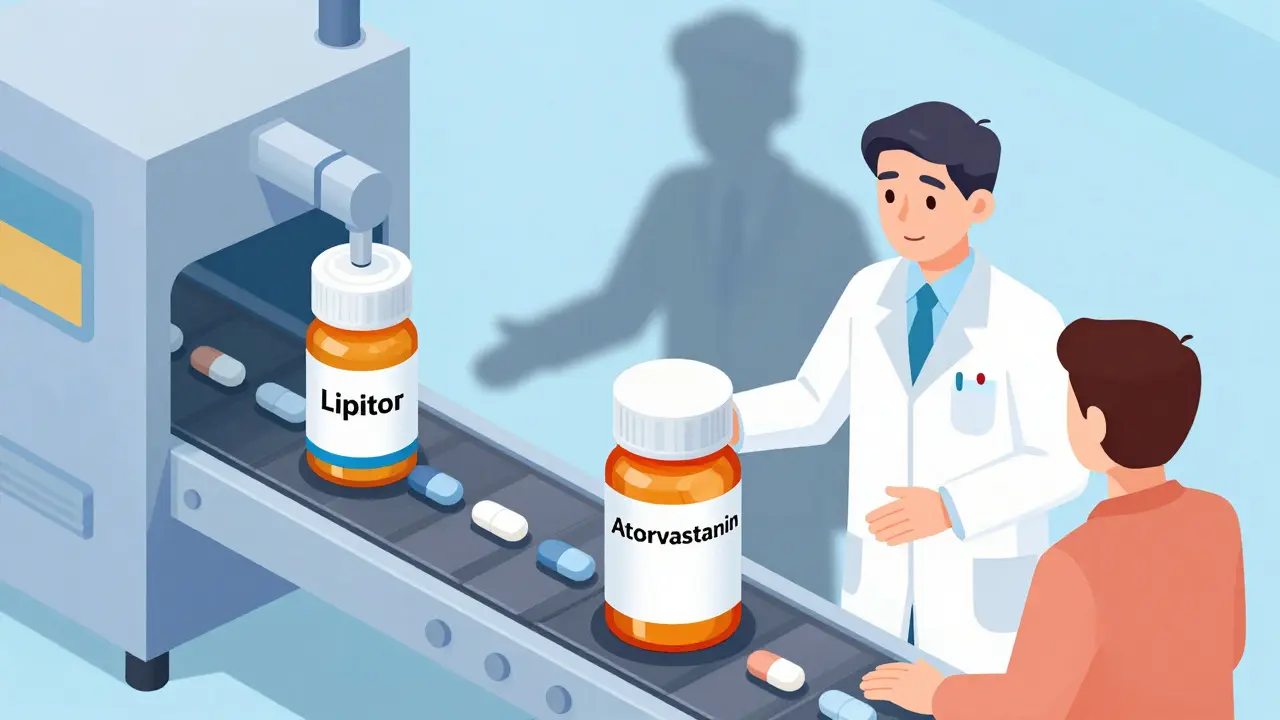
When a brand-name drug loses its patent, you’d expect prices to drop fast-thanks to generic competitors stepping in. But what if the same company that made the original drug also starts selling a cheaper version under a different label? That’s an authorized generic. It’s not a knockoff. It’s the exact same pill, same factory, same formula-but sold without the brand name. And in the next five years, these products are set to play a bigger, more complex role in how drugs are priced and distributed across the U.S. healthcare system.
What Exactly Are Authorized Generics?
Authorized generics aren’t approved through the usual generic drug pathway. Traditional generics come from companies that file an Abbreviated New Drug Application (ANDA) with the FDA, proving their version is bioequivalent to the brand drug. Authorized generics? They’re made by the brand manufacturer themselves and sold under a generic label. Think of it like Coca-Cola launching a "Cola" version with no logo on the bottle. The taste? Identical. The price? Lower. The company behind it? Still the same one. The FDA has tracked these since 1999. Between 2010 and 2019, there were 854 authorized generic launches. Most of them came after the first traditional generic hit the market-not before. Why? Because brand manufacturers didn’t want to hurt their own sales. They waited until generic competition started biting into profits, then rolled out their own cheaper version to steal market share from the competition.Why Do Brand Companies Use Them?
It’s a smart business move. When a blockbuster drug like Lipitor or Nexium loses patent protection, revenue can plummet by 80% within a year. Traditional generics flood the market, often priced 90% lower. But if the brand company launches an authorized generic at the same time, they keep a slice of that market. They don’t lose everything. They get to control the supply, pricing, and distribution-even as the brand name fades. And they time it carefully. In markets where a generic company gets 180 days of exclusivity, about 70% of authorized generics launched before or during that window. That’s not an accident. It’s a tactic to undercut the exclusive generic before they can build momentum. The brand company gets to be both the competitor and the supplier.Where Are They Most Common?
Oral solid drugs-tablets and capsules-are where authorized generics thrive. Why? Because they’re easier to copy. The chemistry is straightforward. Manufacturing is scalable. The FDA approves ANDAs for these faster than for complex injectables or biologics. So, it’s no surprise that the majority of authorized generics are pills you swallow. Therapeutic areas with high revenue and intense competition see the most activity. Think cholesterol meds, blood pressure drugs, antidepressants, and pain relievers. These are the drugs that make up the bulk of prescriptions-and the bulk of patent expirations.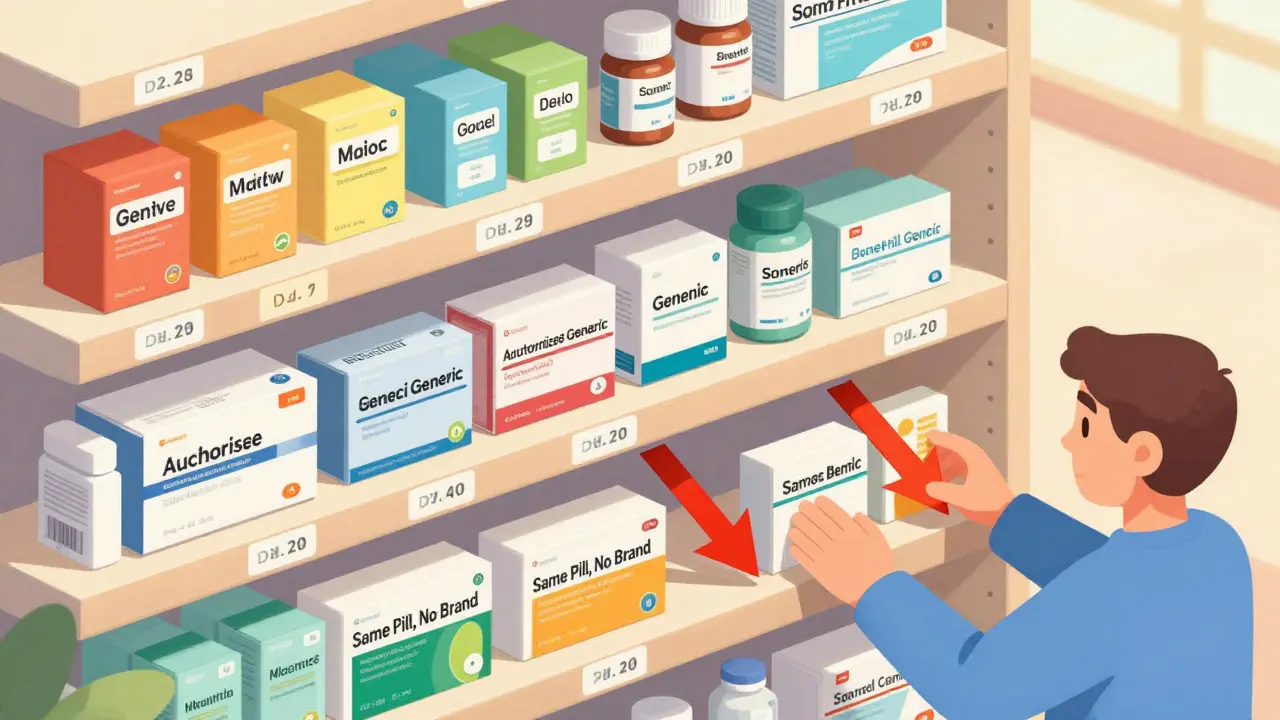
The Market Is Growing-Fast
The U.S. generic drug market hit $138.24 billion in 2024. By 2034, it’s expected to hit nearly $197 billion. That’s a 3.6% annual growth rate. But the real driver isn’t just more generics. It’s more patents expiring. Between 2025 and 2030, drugs generating $217 billion to $236 billion in annual sales will lose exclusivity. That’s a tidal wave of opportunity for generics-and authorized generics. Monoclonal antibodies like ustekinumab and vedolizumab are hitting their patent cliffs in 2025. These are high-cost biologics used for autoimmune diseases and cancer. While biosimilars will compete here, authorized generics could still play a role if the original makers decide to offer lower-priced versions of their own biologics after patent expiry. Meanwhile, the global generic drug market is projected to grow from $500 billion in the mid-2020s to over $700 billion by the early 2030s. That’s a 5% to 8% annual growth rate. Authorized generics won’t dominate, but they’ll be a persistent tool in the brand manufacturer’s toolbox.Regulatory Shifts Are Changing the Game
In October 2025, the FDA announced a new pilot program: faster ANDA reviews for generic drugs made and tested entirely in the United States. This isn’t just about speed. It’s about supply chain security. After years of relying on overseas manufacturing-especially from India and China-the U.S. government wants domestic production to be more attractive. For authorized generics, this could mean a big shift. Brand manufacturers might now choose to produce their authorized generics in U.S. facilities to get faster approval. That could raise costs slightly-but it also reduces risk. Fewer supply chain delays. More control. More trust from regulators and patients. This change doesn’t just affect traditional generics. It reshapes the entire competitive landscape. If making a generic in the U.S. becomes faster and more reliable, brand companies might feel less pressure to delay their authorized generics. Why wait? If you can launch quickly, you might as well move early.Are Authorized Generics Helping or Hurting Patients?
On the surface, they seem good. Lower prices. More access. But the reality is messier. A 2022 study in Health Affairs found that authorized generics often delay true competition. When a brand company launches its own generic, it can suppress price drops from independent generic makers. That means patients don’t always get the lowest possible price. In some cases, the authorized generic becomes the only option-because the brand company bought out or outlasted the real competitors. And here’s the kicker: a 2025 study in the JAMA Health Forum estimated that extending market exclusivity-even by a few years-costs commercial insurers and Medicare over $2.5 billion each. Authorized generics can be part of that strategy. By introducing their own version just as competition heats up, brand companies can prolong high prices longer than they otherwise would. But there’s another side. In markets with no competition, an authorized generic can be the only thing keeping prices from soaring. If a drug has only one manufacturer left, and no other generics are coming, an authorized generic might be the only affordable option available.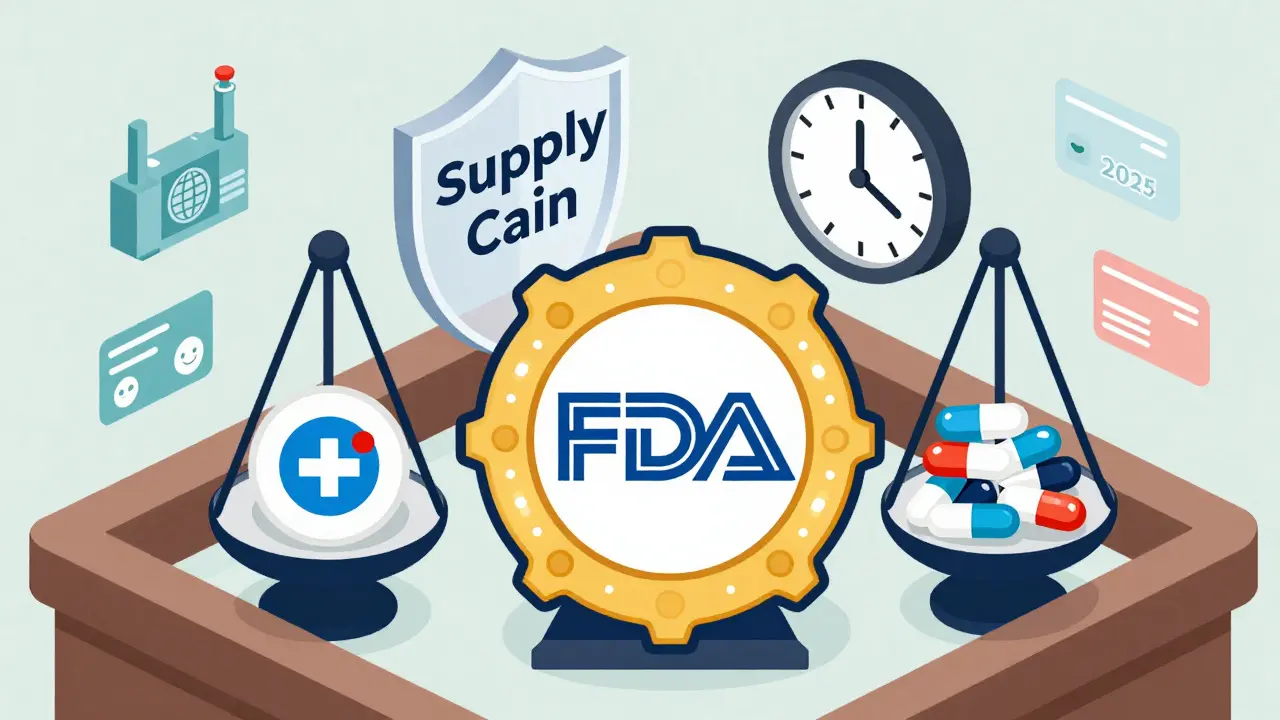
The Trend Is Changing
Here’s the most important update: the practice of delaying authorized generic launches is declining. According to RAPS in June 2025, brand manufacturers are launching these products sooner-sometimes even before the first traditional generic hits the market. Why? Three reasons:- Regulators are watching more closely. The FDA and Congress are asking harder questions about anti-competitive behavior.
- Payers (insurance companies, Medicare) are pushing back. They want lower prices, not just "cheaper" versions of the same brand.
- Supply chain risks are too high. Waiting too long to launch means missing the window when demand is highest.
What Does This Mean for the Future?
Authorized generics aren’t going away. But their role is evolving. In the next five years, expect to see:- More authorized generics launched alongside-or even before-traditional generics.
- Increased domestic production, thanks to the FDA’s new pilot program.
- Greater scrutiny from regulators and payers, reducing the ability to manipulate pricing.
- More use in complex drug categories, including biologics and injectables, as manufacturing technology improves.
Final Thoughts
Authorized generics are a double-edged sword. They offer lower prices, but they also let brand companies hold onto control. As the market grows and regulations tighten, their role is shifting from a tactic to a standard option. The real winners? Patients who get access to affordable drugs. The real losers? Companies that try to game the system. The future of authorized generics isn’t about tricking the market. It’s about adapting to it. And that’s good news for everyone who needs medicine to be affordable.Are authorized generics the same as regular generics?
Yes, in every way that matters. Authorized generics contain the exact same active ingredients, dosage, strength, and formulation as the brand-name drug. The only difference is the label-they’re sold without the brand name and usually at a lower price. They’re made by the same company that makes the brand version, often in the same factory.
Why do brand companies sell authorized generics?
To stay competitive after patent expiration. Instead of losing all their market share to independent generic makers, brand companies launch their own cheaper version. This lets them keep some revenue, control the supply, and undercut competitors before they can gain traction.
Do authorized generics lower drug prices for patients?
Sometimes, but not always. In markets with little competition, they can be the only affordable option. But in markets with multiple generic makers, authorized generics can suppress price drops by reducing competition. Studies show they often delay the deepest discounts patients see.
Is the FDA doing anything to change how authorized generics work?
Yes. In October 2025, the FDA launched a pilot program to fast-track approval for generic drugs made and tested entirely in the United States. This encourages domestic production and may make it easier and faster for brand companies to launch authorized generics at home, reducing reliance on overseas manufacturing.
Are authorized generics becoming more or less common?
Their use is becoming more common, but their timing is changing. While the total number of launches remains high, the practice of delaying launches to protect brand sales is declining. Companies are now launching authorized generics sooner-sometimes even before traditional generics enter the market-due to regulatory pressure and supply chain concerns.


