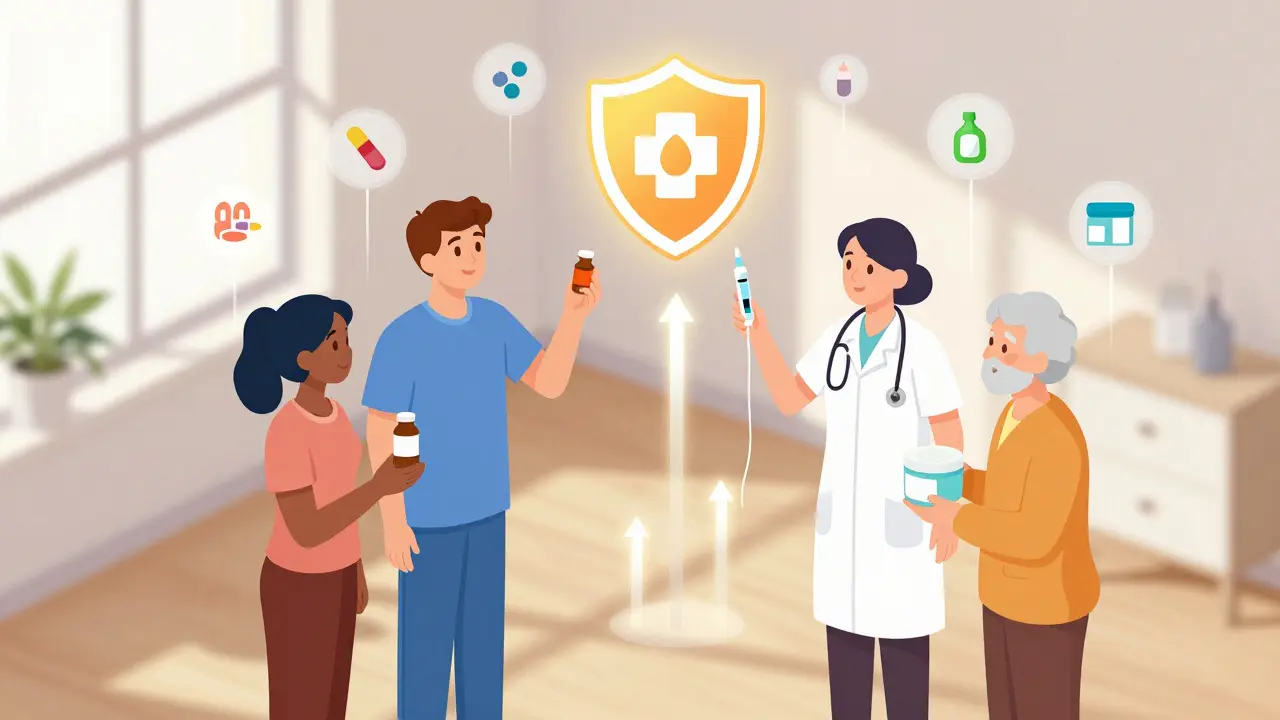
MedWatch Report Eligibility Checker
Is this a reportable event?
This tool helps you determine if your experience meets FDA criteria for reporting. If you answered "yes" to any question, your report could help protect others.
What to Report
When reporting:
- Include product name (brand and generic)
- When you started using it
- What happened and when it started
- Whether you went to the hospital or saw a doctor
- Any other medicines you were taking
Note: If you're unsure about any terms on the FDA form, take it to your healthcare provider. They can help you complete it accurately.
Every year, millions of people take prescription drugs, over-the-counter medicines, and medical devices. Most of them work as expected. But sometimes, something goes wrong. A medication causes a dangerous reaction. A glucose monitor gives wrong readings. A cream leads to a severe skin rash. When that happens, your report could help prevent someone else from getting hurt.
The U.S. Food and Drug Administration (FDA) has one main system for collecting these reports: MedWatch. It’s not a secret. It’s not complicated. And you don’t need to be a doctor to use it. Whether you’re a patient, a caregiver, or a healthcare provider, your report matters. This is how it works.
What Exactly Is MedWatch?
MedWatch is the FDA’s official system for tracking problems with medical products. It stands for The FDA Safety Information and Adverse Event Reporting Program. Think of it as a national early warning system. When someone reports a bad reaction, the FDA looks for patterns. If enough people report the same issue with a drug or device, the agency can issue warnings, change labels, or even pull products off the market.
MedWatch covers a wide range of products:
- Prescription and over-the-counter medicines
- Biologics like blood transfusions and gene therapies
- Medical devices - from insulin pumps to pregnancy tests
- Combination products like prefilled syringes
- CBD products and other hemp-derived items
- Cosmetics like hair dyes and skin creams
It does not cover vaccines (those go to VAERS), animal drugs, or tobacco. But for nearly everything else you take or use for health, MedWatch is the only official channel to report problems to the FDA.
Who Can Report?
Anyone can report. You don’t need permission. You don’t need a medical degree. The FDA encourages reports from:
- Patients and consumers - if you or a loved one had a bad reaction
- Healthcare professionals - doctors, nurses, pharmacists, and others
- Manufacturers and distributors - they’re legally required to report
- Hospitals and clinics - they must report device failures
Here’s the truth: most reports come from professionals. About 80% of the 1.2 million reports the FDA gets each year are from doctors, hospitals, or drug companies. That leaves 20% from regular people. But experts say only 1 to 10% of serious reactions are ever reported. That means thousands of warning signs are going unnoticed.
Your report might be the one that sparks a change.
How to Report: Two Simple Forms
The FDA made reporting easy - but not identical - for different people. There are two main forms:
Form FDA 3500B - For Patients and Consumers
This is the one you use if you’re not a healthcare worker. It’s shorter. It’s simpler. It’s available in English and Spanish.
You’ll need:
- Your name and contact info
- The name of the product (brand and generic, if you know it)
- When you started using it
- What happened - symptoms, when they started, how long they lasted
- Whether you went to the hospital or saw a doctor
- Any other medicines or supplements you were taking
It takes 10 to 20 minutes. You can do it online, by mail, or by fax. The online form has big buttons, clear fields, and large text. It’s designed to be easy to read.
But here’s the catch: some terms still confuse people. Words like “event abated” or “dose frequency” show up on the form. A 2019 FDA study found that 62% of consumers needed help understanding at least three terms. If you’re unsure, take the form to your doctor. They can help you fill it out. The FDA says: “Your health care provider is NOT required to report to the FDA - but they can help you.”
Form FDA 3500 - For Healthcare Professionals
If you’re a nurse, pharmacist, or doctor, you use this version. It’s more detailed. You’ll be asked for:
- Your profession and specialty
- Your contact info
- Whether you also told the manufacturer
- Exact timing of symptoms
- Lab results or test findings
- Whether the reaction was fatal, life-threatening, or caused hospitalization
Most professionals finish this in 10 to 15 minutes. One nurse practitioner said she got a letter back from the FDA confirming her report was received - and that made her feel heard.
What Counts as a Reportable Event?
Not every side effect needs to be reported. The FDA defines a serious adverse event as one that:
- Caused death
- Was life-threatening
- Required hospitalization
- Resulted in permanent disability
- Caused birth defects
- Needed intervention to prevent permanent harm
Examples:
- A diabetic patient’s glucose monitor gave false readings, leading to a coma
- A new painkiller caused severe liver damage in someone with no prior liver issues
- A skin cream led to scarring and permanent discoloration
Even if you’re not sure, report it. The FDA doesn’t mind getting extra reports. They’d rather see too many than miss one.

What Happens After You Report?
You might think your report disappears into a black hole. It doesn’t.
Every report goes into a database. Analysts look for patterns. If 10 people report the same reaction to a new blood pressure drug, that’s a signal. If 50 people report the same device failure, the FDA investigates.
Outcomes can include:
- Updated drug labels with stronger warnings
- Recalls of defective devices
- Changes in dosing recommendations
- New safety alerts sent to doctors and pharmacies
Between 2018 and 2022, over 1,200 safety alerts were issued based on MedWatch reports. Some led to changes in how a drug is prescribed. Others led to redesigned medical devices.
You won’t get a call. You won’t get a follow-up. But if your report helped trigger a change, someone else will be safer because of you.
Why Do So Few People Report?
The FDA admits it: underreporting is a huge problem. Experts estimate 90% to 99% of consumer-reported side effects never make it into the system.
Why?
- People don’t know they can report - most assume only doctors can.
- The form looks too official - even though it’s designed to be simple, the language still feels clinical.
- They think it won’t matter - “What’s one report?” they say. But one report can be the first in a pattern.
- They’re too busy - recovering from an adverse reaction is hard. Filling out paperwork isn’t a priority.
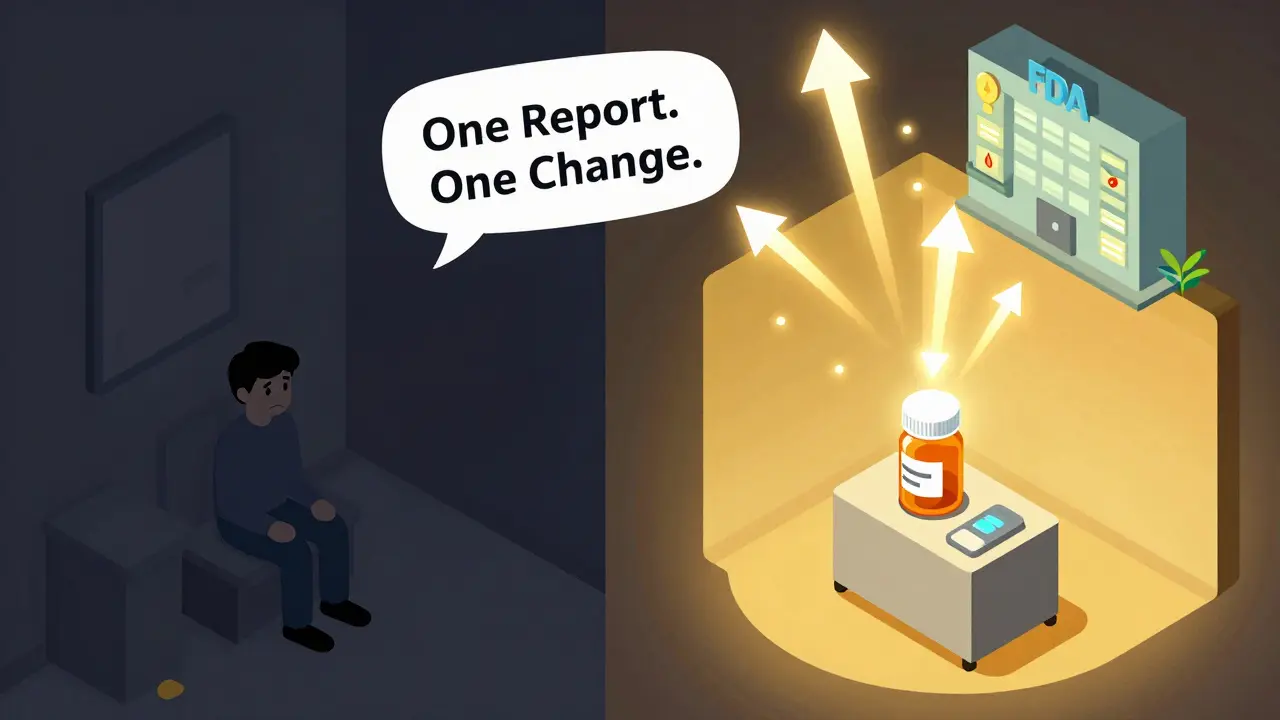
But here’s what the FDA says: “Your report may be the critical action that prompts a modification in use or design of the product.”
That’s not a marketing line. It’s a fact. One report led to a change in how a popular diabetes device warns users of low blood sugar. Another led to a warning about a common antibiotic that caused rare but deadly nerve damage.
How to Get Help
If you’re unsure what to report or how to fill out the form:
- Visit the official MedWatch page - it has downloadable forms and step-by-step guides
- Check the MedWatch Safety Alerts page - see what’s been reported recently
- Sign up for email alerts - get updates on drug recalls and safety changes
- Use the Drug Labeling section - search for changes in medication instructions going back to 2002
You can also call the FDA at 1-800-FDA-1088. A live person will help you. No appointment needed. No judgment.
The Bigger Picture: What’s Next for MedWatch?
The FDA is working to make reporting easier. In 2021, they launched a redesigned online portal with mobile-friendly forms. By 2025, they plan to connect MedWatch directly to electronic health records - so when a doctor sees a patient with a reaction, the system can auto-fill a report.
They’re also testing AI tools that help patients understand terms like “dose frequency” or “event abated” by offering simple definitions right on the form.
As personalized medicine grows - treatments based on your genes, your age, your health history - rare side effects will become more common. MedWatch will need to get smarter. But it will still need you.
Final Thought: Your Report Matters
You don’t need to be an expert. You don’t need to know medical jargon. You just need to know something went wrong.
If your child had a rash after using a new lotion. If your elderly parent had a dangerous drop in blood pressure after starting a new pill. If your insulin pump failed and you almost lost a limb - report it.
The FDA doesn’t have magic eyes. They don’t have secret sensors. They rely on people like you to tell them when something’s off.
One report. One voice. One moment of courage. That’s all it takes to make a difference.
Can I report a side effect even if I’m not sure it was caused by the drug?
Yes. The FDA encourages reports even if you’re uncertain. They don’t require proof - just your experience. If multiple people report similar issues, experts investigate further. It’s better to report and have it dismissed than to stay silent and risk someone else being harmed.
Do I need to tell my doctor before I report?
No, you don’t need permission. But if you have access to your medical records - like lab results, dosage history, or doctor’s notes - sharing those with the FDA can help them understand your case better. Your doctor is not required to report for you, but they can help you complete the form accurately.
How long does it take for the FDA to act on a report?
There’s no fixed timeline. Some reports lead to action within weeks if they match a pattern. Others sit in the system for months or years until enough similar reports appear. The FDA doesn’t respond to individual reports - they look at trends. So your report is part of a larger puzzle.
Can I report a problem with a supplement or CBD product?
Yes. MedWatch covers CBD products, herbal supplements, and other dietary ingredients regulated by the FDA. Even though these aren’t always approved like prescription drugs, the FDA still tracks safety issues. If a CBD oil caused seizures or liver damage, report it.
Is MedWatch only for U.S. residents?
Yes. MedWatch is for products sold or used in the United States. If you’re outside the U.S., you should report to your country’s health authority - like the UK’s Yellow Card Scheme or the EU’s EudraVigilance. But if you took a U.S.-marketed product abroad and had a reaction, you can still report it to the FDA.
Next Steps
If you’ve had a bad reaction:
- Write down what happened - dates, symptoms, how long it lasted
- Gather product info - name, lot number, expiration date
- Decide: use Form FDA 3500B (if you’re a patient) or 3500 (if you’re a professional)
- Go to www.fda.gov/medwatch to report online
- Keep a copy of your submission - you’ll get a confirmation number
If you’re a healthcare provider: make reporting part of your routine. When a patient mentions a side effect, ask: “Have you reported this to the FDA?”
It’s not just paperwork. It’s protection. For others. For future patients. For you.