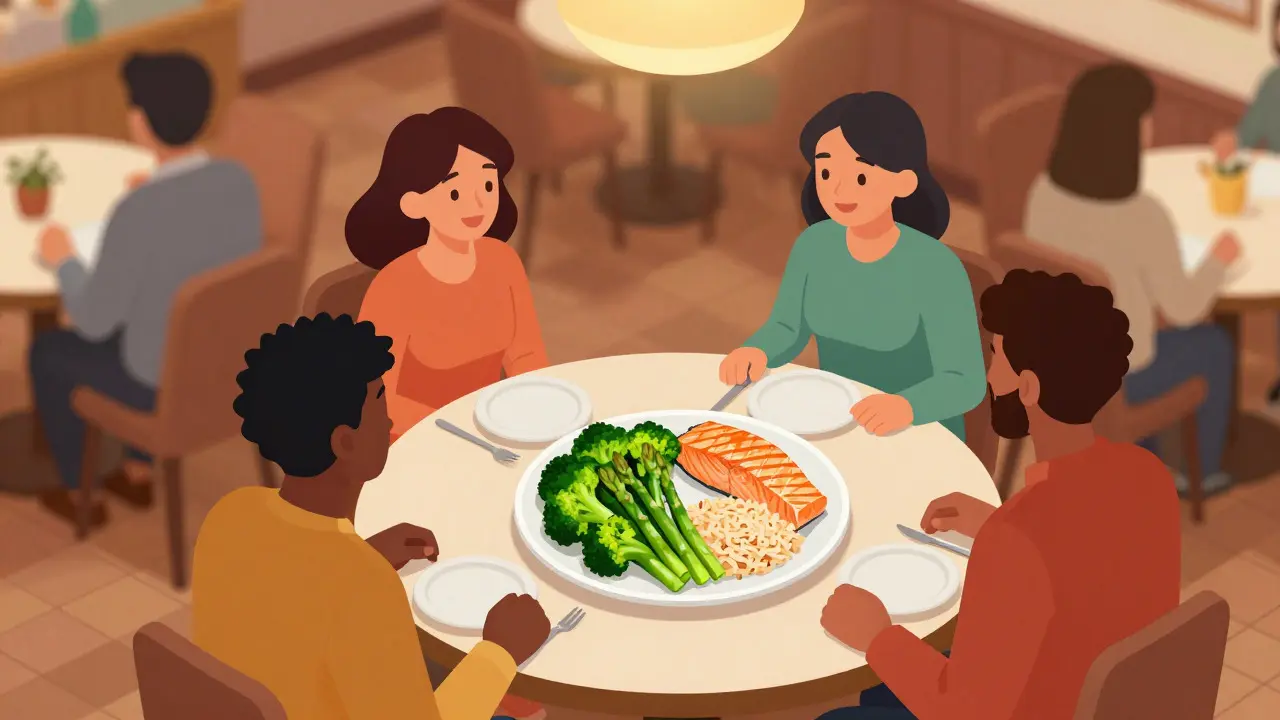
Walking into a busy restaurant with diabetes is a common health condition that affects how your body turns food into energy can feel like navigating a minefield. You want to enjoy the evening, but you also know that one wrong choice could send your blood glucose levels soaring. The good news? You don’t have to skip social dinners or stick to plain chicken and broccoli forever. With a few smart strategies for carb choices are strategic decisions about which carbohydrate-rich foods to eat to manage blood sugar levels and strict portion control, you can dine out confidently without compromising your health.
The Reality of Restaurant Portions
The biggest hurdle you’ll face isn’t necessarily what’s on the menu-it’s how much of it arrives on your plate. Studies published in the Journal of Nutrition Education and Behavior show that standard restaurant entrées average around 1,200 calories, which is more than double the recommended 500-600 calorie meal for many adults managing diabetes. When you order a pasta dish or a steak dinner, you’re often getting two or three servings worth of food in one bowl.
This isn’t just about calories; it’s about carbohydrates. A single serving of rice at home might be half a cup, containing roughly 20 grams of carbs. At a restaurant, that same side dish could easily contain 1.5 to 2 cups, packing in 60 to 80 grams of carbs. That’s a massive difference that can spike your blood sugar quickly if you aren’t prepared.
- Fast-food traps: A 'Big Mac' contains 46 grams of carbs and over 1,000 calories. Opting for a grilled chicken salad (with limited dressing) drops that to 15-20 grams.
- Buffet dangers: Research from the University of Illinois College of Medicine found that buffet meals caused blood glucose spikes averaging 65 mg/dL higher than controlled restaurant meals due to unlimited access to high-carb options.
- Hidden sugars: Sauces and gravies often add 10-15 grams of hidden carbs per serving without any visual indication.
Mastering the Diabetes Plate Method
You don’t need a calculator to eat well out. The most effective tool endorsed by both the American Diabetes Association (ADA) and the Centers for Disease Control and Prevention (CDC) is the Diabetes Plate Method is a visual guide for creating balanced meals by dividing a plate into specific sections for vegetables, protein, and carbs. It’s simple, intuitive, and works across almost any cuisine.
Imagine your standard nine-inch dinner plate. Here’s how you divide it:
- Half the plate (50%): Fill this section with non-starchy vegetables. Think leafy greens, broccoli, bell peppers, asparagus, or cauliflower. These provide volume and nutrients with minimal impact on blood sugar.
- One-quarter of the plate (25%): Reserve this space for lean protein sources. Grilled chicken, baked fish, skinless turkey, or tofu work perfectly. Aim for a portion size of 3-4 ounces, which is roughly the size of a deck of cards.
- One-quarter of the plate (25%): This is where your carbohydrate-containing foods go. Limit this to 15-30 grams of carbs per meal, depending on your personalized plan. Examples include half a cup of brown rice, a small potato, or a slice of whole-grain bread.
By visually structuring your meal this way, you automatically balance your intake without needing to count every gram. It’s a strategy that reduces mental load while keeping your glycemic levels stable.
| Dining Scenario | Average Carbs (g) | Blood Glucose Impact | Control Level |
|---|---|---|---|
| Home-Cooked Meal | 45-60 | Minimal | High |
| Standard Restaurant Entrée | 90-120+ | Significant Spike | Low |
| Buffet Meal | 150+ (unlimited) | Severe Spike (+65 mg/dL avg) | Very Low |
| Modified Plate Method Order | 45-60 | Stable | High |
Navigating Menus Like a Pro
Before you even sit down, do some homework. Dr. Susan Spratt, an endocrinologist at Duke University Medical Center, notes that reviewing menus online before arrival reduces impulsive ordering by 42%. Knowing what you’re going to order takes the pressure off when you’re hungry and surrounded by tempting aromas.
When scanning the menu, watch out for "red flag" terms that signal hidden carbohydrates or excessive fats:
- Crispy / Breaded: Indicates extra flour and oil, adding 10-15 grams of carbs.
- Creamed / Au Gratin: Often contains heavy cream and cheese, plus hidden starches.
- Sweet and Sour / General Tso’s: Asian sauces are frequently loaded with sugar, adding 20-30 grams of carbs.
- Fried / Crisped: Adds significant calories and unhealthy fats, which can indirectly affect insulin sensitivity.
Instead, look for keywords like grilled, baked, steamed, roasted, or poached. If you’re craving pizza, opt for thin crust with vegetable toppings. This simple swap can reduce carb content from 60-80 grams in deep-dish to just 30-40 grams.
Practical Portion Control Hacks
Even if you choose the right dish, the portion size might still be too large. Here are some proven techniques to keep your portions in check without feeling deprived:
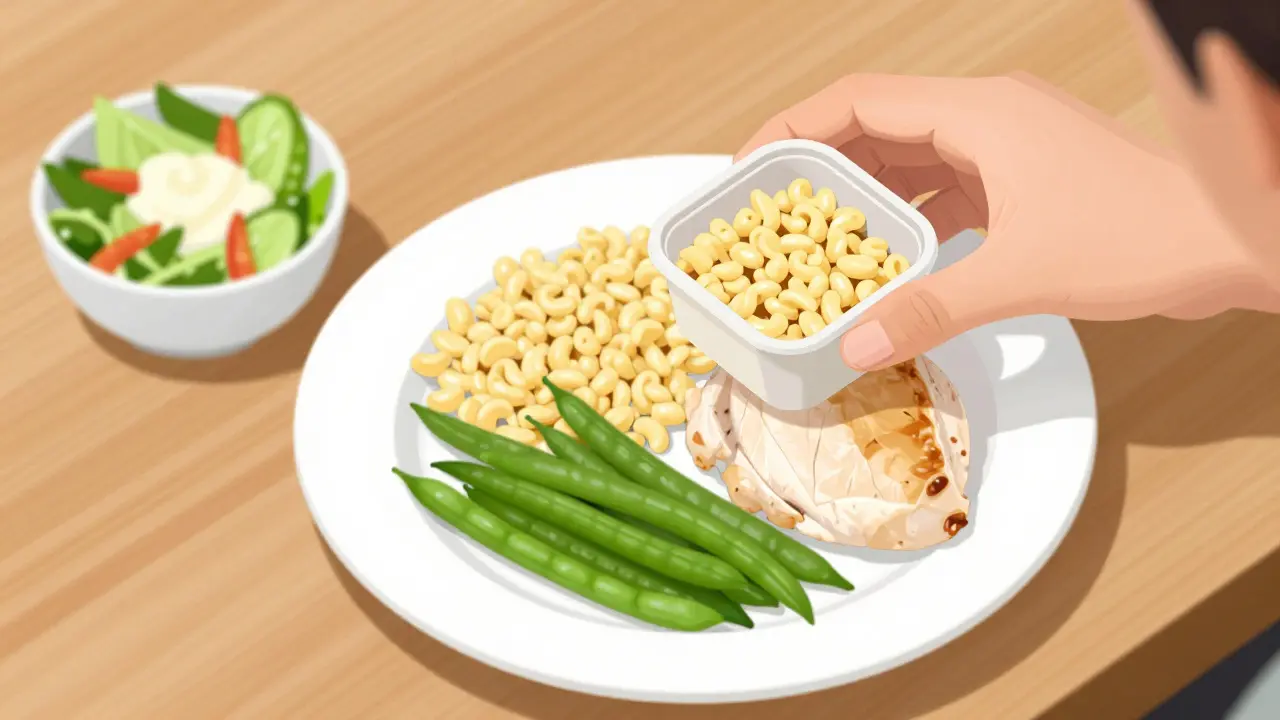
- Box it early: As soon as your meal arrives, ask for a takeout container. Immediately set aside half the meal (or half the starchy sides) before you start eating. This prevents the "clean plate club" mentality from leading to overconsumption.
- Share the entrée: If you’re dining with a friend or partner, consider sharing a main course. Cut the portion by 50% and fill up on extra veggies instead.
- Request substitutions: Don’t be afraid to ask for changes. Swap French fries for steamed vegetables, or ask for dressings and sauces on the side. Limiting sauce to two tablespoons can save you 10-15 grams of carbs.
- Start with soup or salad: Beginning your meal with a broth-based soup or a green salad with light dressing helps fill you up, reducing the likelihood of overeating during the main course.
Janice Baker, a Registered Dietitian Nutritionist, recommends arriving at restaurants "gently hungry" rather than starving. Being overly hungry increases the chance of selecting high-carb comfort foods by 37%. Eating a small, low-carb snack like a handful of almonds or a hard-boiled egg an hour before your reservation can help curb those cravings.

Handling Social Pressure and Emergencies
Eating out with diabetes isn’t just a physical challenge; it’s a social one too. A 2022 survey in the journal Diabetes Care found that 68% of respondents felt self-conscious about making portion control requests. Remember, waitstaff are used to dietary modifications. Phrasing your request positively-"Could I please have the dressing on the side?" or "Can I substitute rice with extra broccoli?"-makes it easy for everyone involved.
Always be prepared for emergencies. Bring your portable glucose meter and fast-acting glucose tablets (minimum 15 grams of carbs) with you. Delayed meal service can cause hypoglycemia in insulin users. In fact, 23% of patients reported at least one hypoglycemic episode while dining out in the previous year according to ADA data. If your blood sugar drops, treat it immediately with juice or glucose tabs, then reassess your meal plan.
Technology is also becoming a helpful ally. The American Diabetes Association launched the 'Restaurant Ready' mobile application in 2023, which provides verified carb counts for over 15,000 menu items across 500+ chains. Using such tools can give you peace of mind and accurate data when making decisions.
Building Long-Term Confidence
Mastering restaurant dining with diabetes takes practice. The Joslin Diabetes Center suggests that patients typically require 3-5 structured outings with a diabetes educator to become proficient in carb estimation and portion control. Mastery is defined as maintaining postprandial blood glucose levels below 180 mg/dL in 80% of dining occasions.
Don’t get discouraged if you slip up. One high-carb meal doesn’t ruin your progress. Use it as a learning opportunity. Analyze what happened, adjust your medication or activity level accordingly, and move forward. Over time, these strategies become second nature, allowing you to focus on enjoying your company and your meal rather than stressing over numbers.
How many carbs should I eat per meal when dining out?
Most adults with diabetes should aim for 45-60 grams of carbohydrates per meal, according to the American Diabetes Association. However, this varies based on age, activity level, and medication regimen. Always consult your healthcare provider for personalized targets.
What are the best substitutes for high-carb sides?
Replace French fries, mashed potatoes, or rice with steamed vegetables like broccoli, green beans, or asparagus. This substitution can reduce carbohydrate intake by approximately 30-45 grams per serving.
Is it safe to eat at buffets with diabetes?
Buffets are challenging because they encourage overeating and lack portion control. If you must eat at a buffet, fill half your plate with non-starchy vegetables first, limit yourself to one small scoop of starchy items, and avoid sugary drinks and desserts.
How can I avoid hidden carbs in sauces?
Ask for all sauces, dressings, and gravies to be served on the side. Limit your usage to two tablespoons maximum. Be wary of sweet and sour, teriyaki, and creamy sauces, which often contain added sugars and starches.
Should I check my blood sugar before eating out?
Yes, checking your blood glucose before dining helps you make informed decisions about your meal and medication. It also allows you to treat hypoglycemia if needed, especially if there will be delays in food service.