
You took a pill, and within an hour, your skin broke out in a rash. Or maybe your stomach churned after your first dose of antibiotics. You might assume it’s an allergy - and you’re not alone. But here’s the truth: drug allergies are rare. Most reactions people call allergies are just side effects. And confusing the two can cost you more than discomfort - it can cost you effective treatment, safer options, and even your health.
What’s Really Happening in Your Body?
A drug allergy isn’t just a bad reaction. It’s your immune system going into overdrive. Your body mistakes the medication for a dangerous invader - like a virus or pollen - and sends out antibodies to fight it. That triggers histamine release, swelling, hives, or worse: anaphylaxis. These reactions are unpredictable, can get worse with each exposure, and require complete avoidance of the drug.
Side effects? Those are different. They’re built into the drug’s chemistry. Think of them as the unintended byproducts of how the medicine works. For example, ACE inhibitors for high blood pressure often cause a dry cough because they increase bradykinin in your lungs. Statins can cause muscle aches because they interfere with cholesterol production in muscle cells. These aren’t immune responses. They’re pharmacological side effects - and they’re common.
Here’s the kicker: only 5-10% of all adverse reactions to drugs are true allergies. The other 90-95%? Side effects, intolerances, or unrelated symptoms. Yet nearly 10% of Americans say they have a drug allergy - and 90% of those with a penicillin label can actually take it safely.
Timing Tells the Story
One of the clearest ways to tell the difference? When the reaction happens.
True allergic reactions to penicillin or other beta-lactam antibiotics usually show up within minutes to an hour. Think: hives, swelling of the lips or tongue, trouble breathing, or a sudden drop in blood pressure. These are emergencies. If you’ve had one, you need to avoid the drug forever - unless you’ve been tested.
Delayed allergic reactions, like DRESS syndrome (Drug Reaction with Eosinophilia and Systemic Symptoms), take longer - 2 to 8 weeks. They come with fever, rash, swollen lymph nodes, and organ involvement. These are rare but dangerous, with a 10% death rate if untreated.
Side effects? They show up sooner and fade with time. Nausea from antibiotics? It often hits within the first 24-72 hours and gets better after a few days. Diarrhea from metformin? Happens in 20-30% of users, but usually improves as your body adjusts. Muscle pain from statins? It’s dose-dependent - higher doses = more pain. But it doesn’t mean your immune system is attacking the drug.
Which Drugs Cause What?
Not all drugs are equal when it comes to reactions.
Penicillin and related antibiotics (amoxicillin, ampicillin) cause 80% of documented drug allergies. That’s why so many people carry a penicillin allergy label - even if it’s wrong. But other drugs? They’re more likely to cause side effects.
Antibiotics (like azithromycin or ciprofloxacin) often cause nausea or diarrhea - not allergies. NSAIDs like ibuprofen can cause stomach upset or kidney issues, especially if you’re dehydrated. But true NSAID allergies? Rare. More common: aspirin-exacerbated respiratory disease in people with asthma.
Sulfa drugs? People say they’re allergic - but often it’s just a rash from a virus they had while taking the drug. Same with amoxicillin in kids: a rash during an Epstein-Barr infection is mistaken for an allergy 90% of the time.
And then there are the sneaky ones. SGLT2 inhibitors for diabetes cause increased urination - that’s not an allergy, it’s how they work. Opioids cause itching in 30-50% of people because they activate histamine receptors - again, not an immune response. You can treat the itch with antihistamines and keep the pain relief.
The Real Cost of Getting It Wrong
Mislabeling a side effect as an allergy doesn’t just inconvenience you - it puts you at risk.
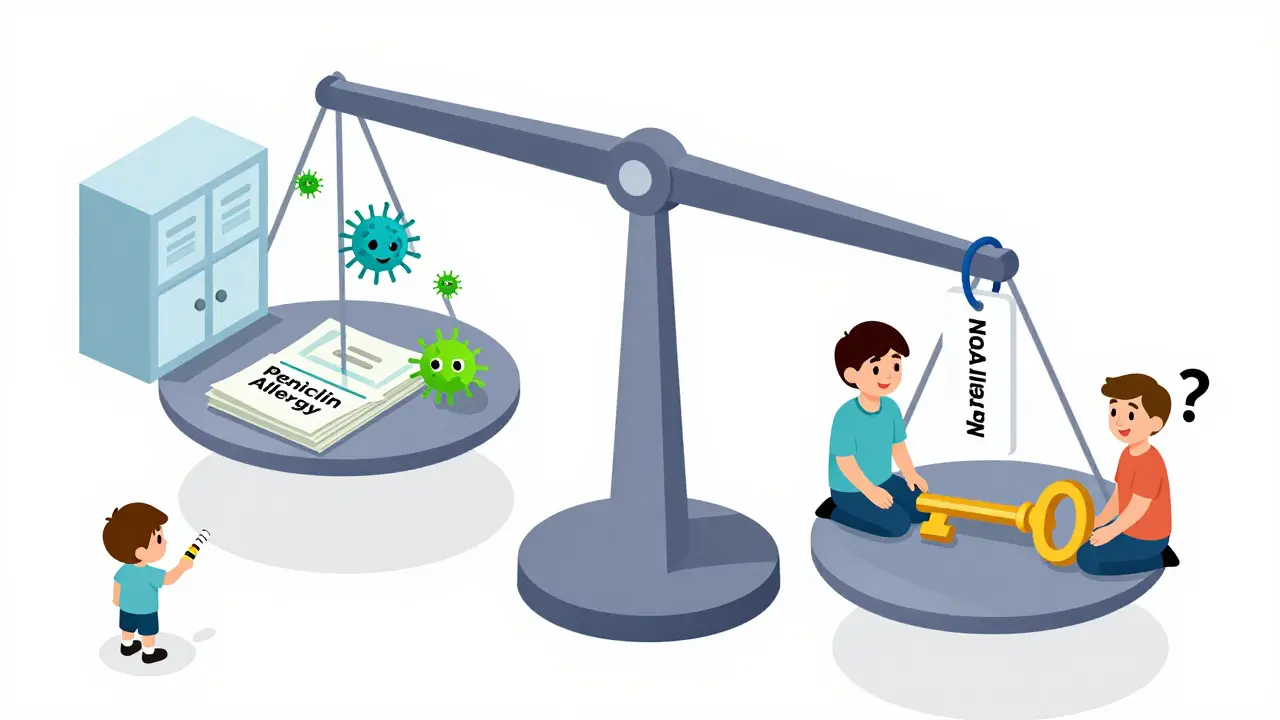
If you’re labeled penicillin-allergic, doctors avoid the safest, cheapest, most effective antibiotic. Instead, they give you vancomycin, clindamycin, or fluoroquinolones. These are broader-spectrum, more expensive, and increase your risk of Clostridioides difficile infection - a dangerous gut bug that causes severe diarrhea and can be fatal. Patients with mislabeled penicillin allergies are 2.5 times more likely to get this infection.
The financial cost? Up to $1,025 more per hospital stay. Across the U.S., mislabeling costs over $1 billion a year in unnecessary antibiotics, longer hospital stays, and avoidable complications.
And it’s not just penicillin. People avoid sulfa drugs, NSAIDs, or even aspirin because they once had a rash or stomach upset. But if you never get tested, you might be denying yourself life-saving treatments - like antibiotics for a UTI, or aspirin after a heart attack.
How to Know for Sure
If you think you have a drug allergy, ask: What exactly happened? When? How long did it last? Did you need emergency treatment?
Don’t just write “allergic to penicillin” in your records. Write: “Rash 3 days after starting amoxicillin, no breathing trouble, resolved in 5 days with antihistamines.” That’s a side effect. Not an allergy.
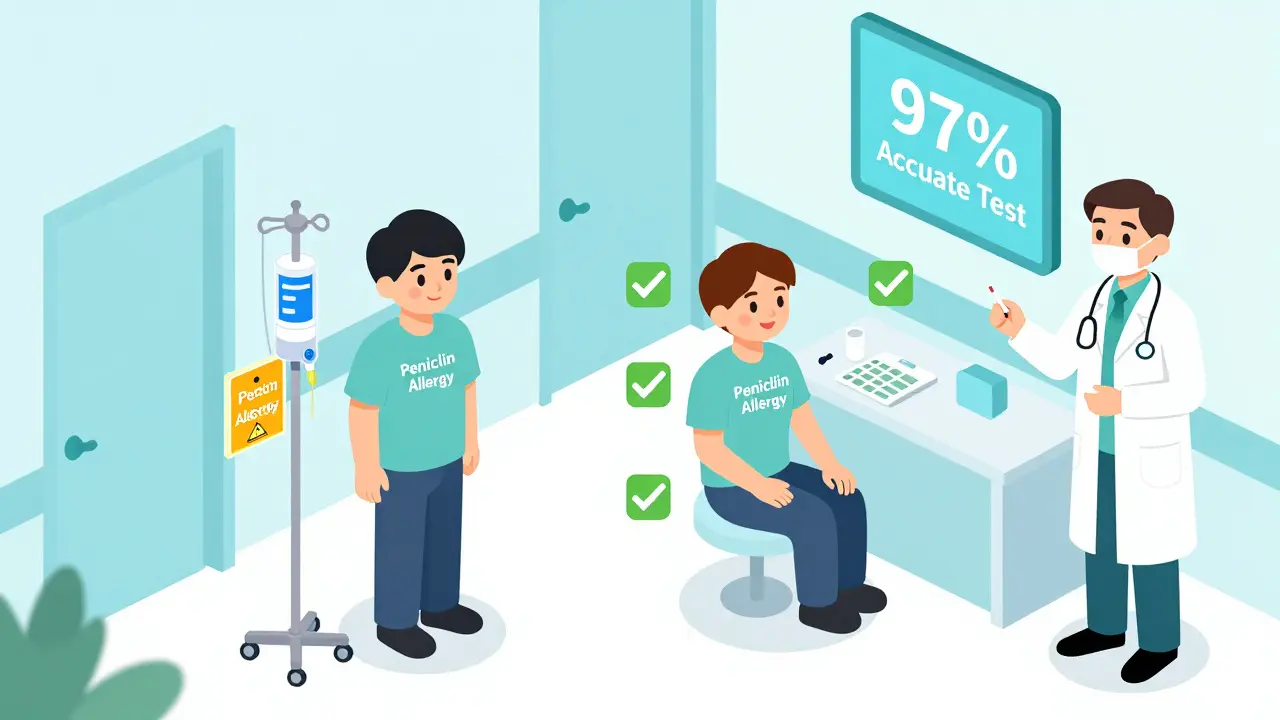
For high-risk drugs like penicillin, skin testing is the gold standard. It involves a tiny prick or injection of the drug under the skin. If there’s no reaction, you’re likely not allergic. A negative test has a 97-99% accuracy rate. If the test is negative, doctors may do a supervised oral challenge - giving you a small dose and watching you for an hour. Over 85% of people who’ve been labeled allergic pass this test.
Pharmacists are now leading these assessments in many hospitals. In the Veterans Health Administration, pharmacist-led programs cut inappropriate penicillin avoidance by 80%. That’s huge.
What You Can Do Today
You don’t need to wait for a crisis to act.
- Review your allergy list. If it’s vague - “allergic to antibiotics” - ask your doctor to clarify.
- If you had a rash as a child after taking amoxicillin, consider getting tested. Most kids outgrow or misinterpret these reactions.
- Keep a written log: drug name, symptom, timing, treatment, outcome. Bring it to your next appointment.
- Ask: “Could this be a side effect? Is there a test to confirm it’s an allergy?”
- Don’t avoid a drug just because someone else had a reaction. Your body is different.
Many people who get tested find out they’ve been avoiding safe, effective medications for decades. One patient told me: “I avoided penicillin for 20 years because of a childhood rash. After testing, I saved $5,000 on my surgery antibiotics - and didn’t have to take a drug that gave me dizziness.”
When to Worry - and When to Breathe
Some reactions demand immediate action:
- Swelling of the face, lips, or throat
- Wheezing or trouble breathing
- Drop in blood pressure, dizziness, fainting
- Severe blistering skin rash (like Stevens-Johnson syndrome)
These are true allergic emergencies. Call 999 or go to A&E.
But if you got a mild rash, upset stomach, or headache - and you didn’t need emergency care - it’s probably not an allergy. Talk to your GP or pharmacist. Get it checked. You might be able to take the drug safely again.
And if you’ve been told you’re allergic to penicillin? Ask for a referral to an allergist. It’s a simple test. It could change your life.
What’s Changing in Medicine
Hospitals are waking up. In 2018, only 15% of U.S. hospitals had formal drug allergy assessment programs. By 2023, that jumped to 65%. The FDA now requires drug labels to clearly separate allergy warnings from side effects. The Choosing Wisely campaign calls mislabeled penicillin allergies one of the top five overused treatments in medicine.
Electronic health records are improving too. Systems like Epic now use structured codes (SNOMED CT) to capture exact symptoms - not just “allergy.” That helps doctors make smarter choices.
By 2027, most U.S. hospitals will have automated alerts that pop up when a doctor tries to prescribe a broad-spectrum antibiotic to someone labeled penicillin-allergic. The system will ask: “Have you verified this allergy?”
This isn’t just about saving money. It’s about saving lives. Better classification means fewer superbugs. Fewer hospital stays. Fewer people denied the best treatment because of a mistake.
Next time you’re prescribed a new medication, don’t just accept the label. Ask questions. Know the difference. Your body - and your health - will thank you.


