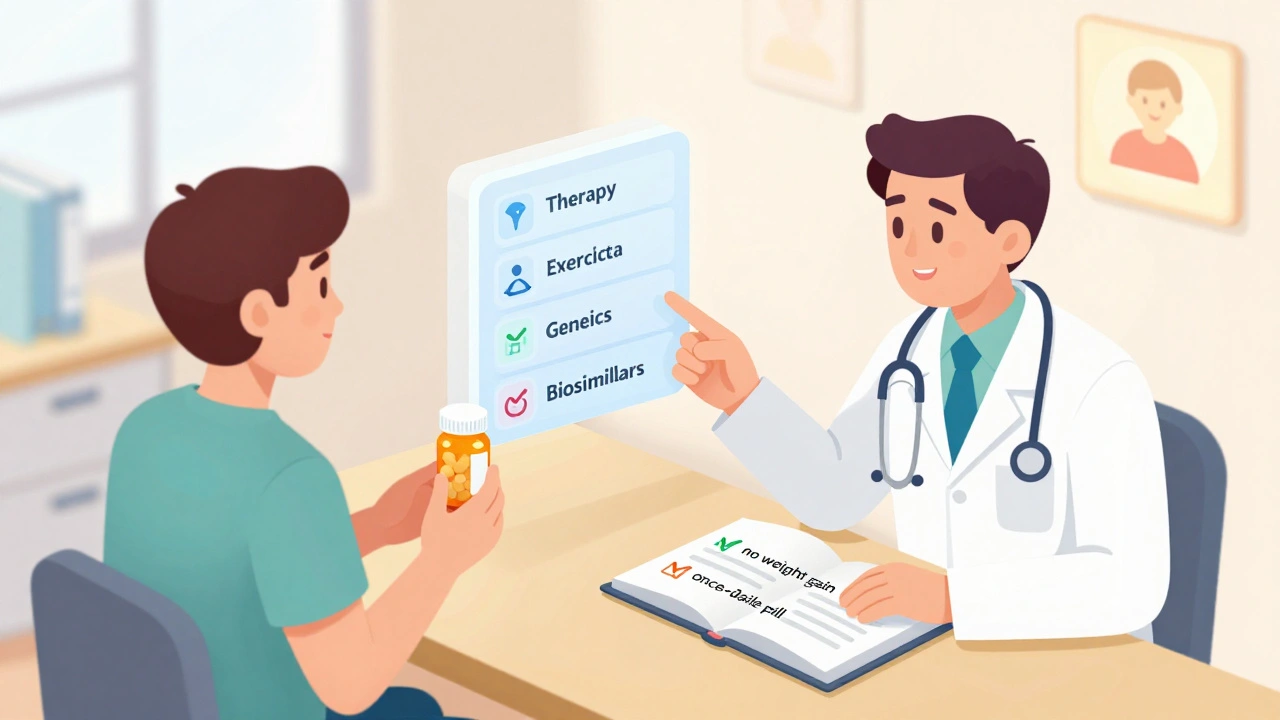
When your doctor hands you a prescription, do you feel like you’re making a choice-or just accepting an order? For too long, medication decisions have been treated like a one-way street: doctor prescribes, patient takes. But that’s changing. More people are asking: What if I don’t want this drug? What are my other options? Can I afford it? These aren’t just questions-they’re rights. And they’re at the heart of something called medication autonomy.
What Medication Autonomy Really Means
Medication autonomy isn’t about being difficult or refusing treatment. It’s about having real power over what goes into your body. It means you can say no to a pill-even if your doctor thinks it’s the best choice. It means you can ask for alternatives, compare costs, weigh side effects, and pick what fits your life, not just your diagnosis. This isn’t new. The idea grew out of medical ethics after World War II, when abuses in human experimentation forced the world to recognize that patients must give informed consent. In 1972, a U.S. court ruled that doctors must explain all material risks before treatment. That ruling became the foundation for today’s practice. Today, autonomy isn’t just ethical-it’s expected. Eighty-seven percent of U.S. hospitals now have formal shared decision-making programs for medications, according to the Agency for Healthcare Research and Quality. But here’s the catch: having the policy doesn’t mean you’re getting the conversation.How Autonomy Works in Practice
True medication autonomy requires more than a signature on a form. It needs four things:- Understanding-You need to know what the drug does, how well it works, and what it might do to you.
- Alternatives-You should hear about other options, including non-drug treatments.
- Cost transparency-If a pill costs $6,000 a month and you’re on Medicare, you deserve to know that a biosimilar exists for $3,500.
- Time-You can’t make a thoughtful choice in a 10-minute visit.
Why Medication Autonomy Is Different
Unlike surgery-where you say yes or no to one procedure-medication decisions keep happening. You take pills every day, for months or years. You feel the side effects. You notice if it’s working. You get tired of the cost. You might even feel guilty for not being "compliant." That’s why autonomy here is more complex. A 2022 JAMA survey found 73% of patients worry more about medication side effects than about the risks of diagnostic tests. Why? Because drugs go inside you. They change how you feel, how you look, how you live. You don’t just get a scar from a pill-you get a new reality. And it’s not just clinical. Cost plays a huge role. One in three Medicare beneficiaries changes or skips doses because of price. That’s not noncompliance-it’s survival. A doctor might prescribe a $7,000 biologic. But if you’re working two jobs and can’t afford copays, your autonomy means saying, “I need something cheaper.” And you should be able to say that without being judged.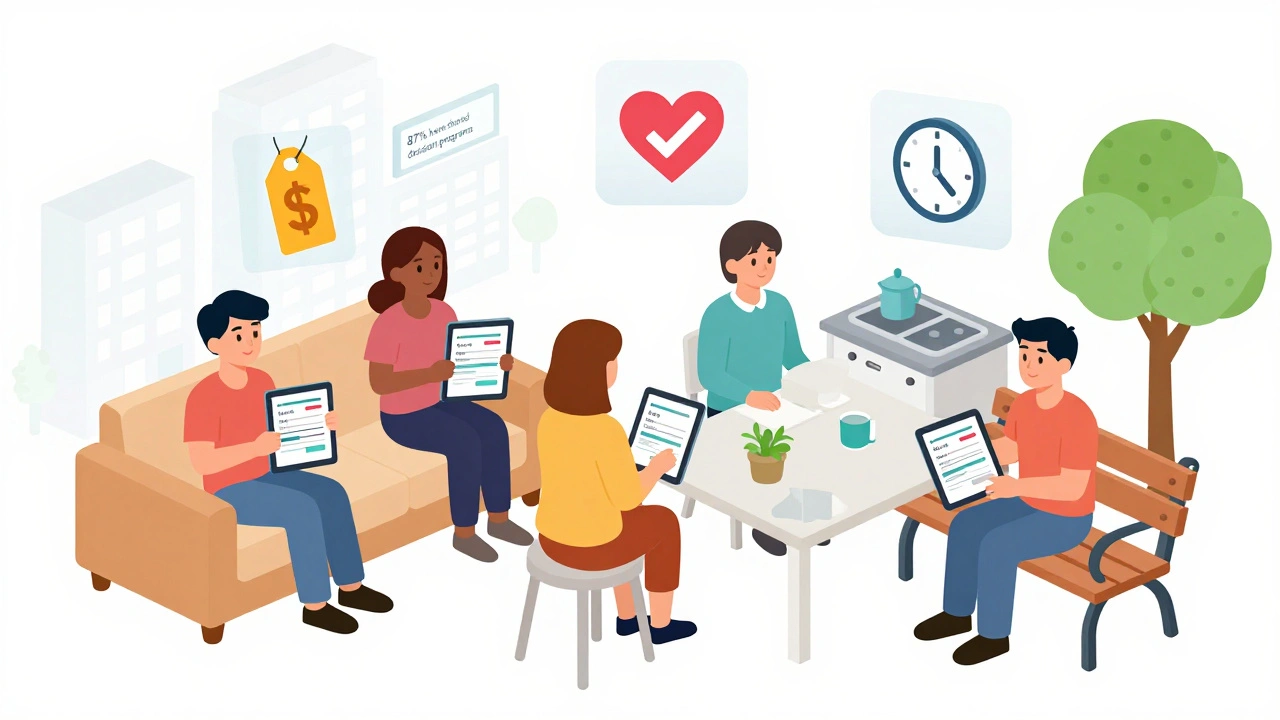
Where Autonomy Falls Short
Here’s the uncomfortable truth: autonomy isn’t equal. A 2023 survey of 15,000 U.S. adults showed that 74% of white patients felt involved in medication decisions. Only 49% of Black patients and 53% of Hispanic patients said the same. Why? Bias, time, language barriers, and assumptions. Too often, doctors assume low-income patients won’t adhere to complex regimens-and so they don’t even offer them the best options. One doctor on Reddit shared a story about a cancer patient who refused opioids because of her religious beliefs. Instead of pushing, the team worked with her to build a non-opioid pain plan. That’s autonomy in action. But another patient on PatientsLikeMe wrote: “My doctor prescribed Ozempic but wouldn’t talk about alternatives when I mentioned nausea. I switched providers.” That’s the norm, not the exception. Electronic health records make it worse. Only 38% of Epic systems-the most common EHR in U.S. hospitals-have a place to document patient preferences for medications. If your choice isn’t recorded, it doesn’t exist in the system. And if it doesn’t exist in the system, it’s easy for the next doctor to ignore it.What’s Changing
Change is coming, but slowly. The American Society of Health-System Pharmacists launched the Medication Autonomy Framework in January 2024. It’s a 12-point guide for clinics to actually do this right. Medicare is requiring plans to document patient preferences by 2025. The FDA now asks drug companies to collect patient input during drug development. New tools are helping. Decision aids from the Mayo Clinic break down drug options in plain language. Pharmacy-led medication therapy management (MTM) services-where pharmacists spend 30 minutes with you-boost autonomy by 31%. Pre-visit apps that ask you to rank your values (“I care more about avoiding weight gain than about taking fewer pills”) cut decision stress by 42%. And then there’s pharmacogenomics. In 2020, genetic testing to see how your body processes drugs cost $1,200. Now it’s $249. Soon, your doctor might know you metabolize antidepressants slowly-and avoid prescribing one that would make you sick.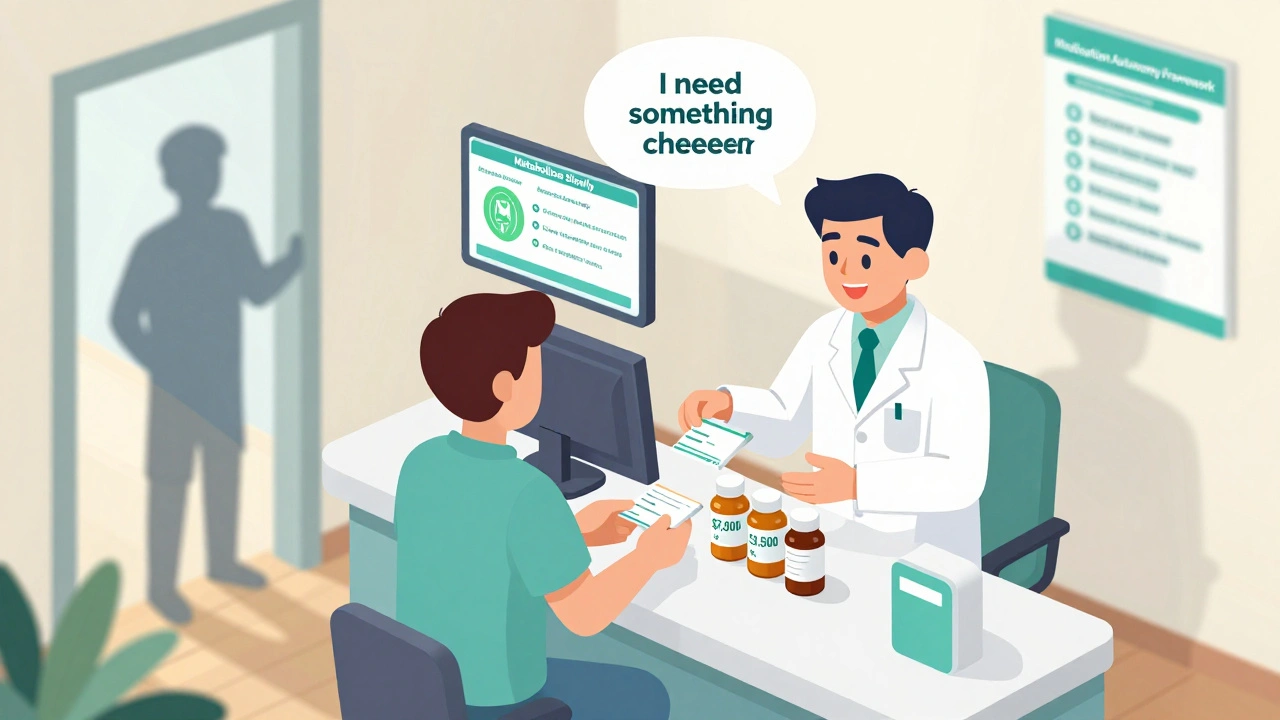
What You Can Do Right Now
You don’t need to wait for the system to catch up. Here’s how to take back control:- Ask: “What are my options?” Not just “What’s the best?” but “What else?”
- Ask: “What are the side effects?” Not just “What are the risks?” but “What do most people actually experience?”
- Ask: “How much will this cost me?” Don’t assume the price is fixed. Ask about generics, coupons, patient assistance programs.
- Ask: “Is there a non-drug option?” Therapy, exercise, diet, sleep-these aren’t second choices. They’re part of the plan.
- Bring a list. Write down your priorities. “I can’t take something that makes me sleepy during the day.” “I need a pill I can take once.” “I don’t want to gain weight.” Say it out loud.
The Bigger Picture
Medication autonomy isn’t just about pills. It’s about trust. For decades, patients were told to obey. Now, we’re learning that the best outcomes come when people are partners-not subjects. The data is clear: when patients choose, they stick with treatment. They feel respected. They live better. Even when the drug isn’t perfect, the process is. And that’s the real win.Can I refuse a medication even if my doctor recommends it?
Yes. If you have decision-making capacity-meaning you understand the information, appreciate the consequences, and can communicate your choice-you have the legal and ethical right to refuse any medication, even if it’s considered medically appropriate. Doctors are required to respect your choice, though they may explain the risks and suggest alternatives. This right is protected under U.S. law since the 1972 Canterbury v. Spence ruling and is reinforced by the American Medical Association’s ethical guidelines.
What if I can’t afford my prescribed medication?
Cost should never be a hidden barrier. Ask your doctor for generic alternatives, biosimilars, or patient assistance programs. Many drug manufacturers offer coupons or free trials. Pharmacies often have discount programs-for example, some generics cost under $4 at Walmart or CVS. Medicare Part D beneficiaries can also apply for Extra Help or state pharmacy assistance programs. If cost is forcing you to skip doses, tell your provider. They’re obligated to help you find an affordable option.
How do I know if I’m being pressured into a medication?
Pressure shows up in subtle ways: if your doctor talks over you, dismisses your concerns, says “this is the only option,” or implies you’re “noncompliant” for asking questions, that’s not shared decision-making. Real autonomy means hearing multiple options, weighing pros and cons together, and feeling safe to say no. If you feel rushed, confused, or judged, you’re not being given real choice. Consider seeking a second opinion or switching providers.
Do I need to understand all the medical jargon to make a good choice?
No. You don’t need to know what “SSRI” or “biosimilar” means to make a smart decision. Ask your doctor to explain things in plain language: “What does this drug do?” “How often do people feel worse instead of better?” “What happens if I don’t take it?” Reliable patient decision aids from places like the Mayo Clinic or the National Institutes of Health are designed to simplify complex information. Your job isn’t to be a medical expert-it’s to be the expert on your own life.
Why don’t more doctors talk about medication choices?
Time is the biggest barrier. Most primary care visits last 10-15 minutes. Talking through options takes longer. Many doctors weren’t trained in shared decision-making. Others assume patients won’t understand or won’t want to be involved. Some fear legal risk if a patient chooses poorly. But research shows that when doctors do take the time, patients are more satisfied, more adherent, and less likely to sue. Training programs are improving, but systemic change is slow. You can help by asking for it.


