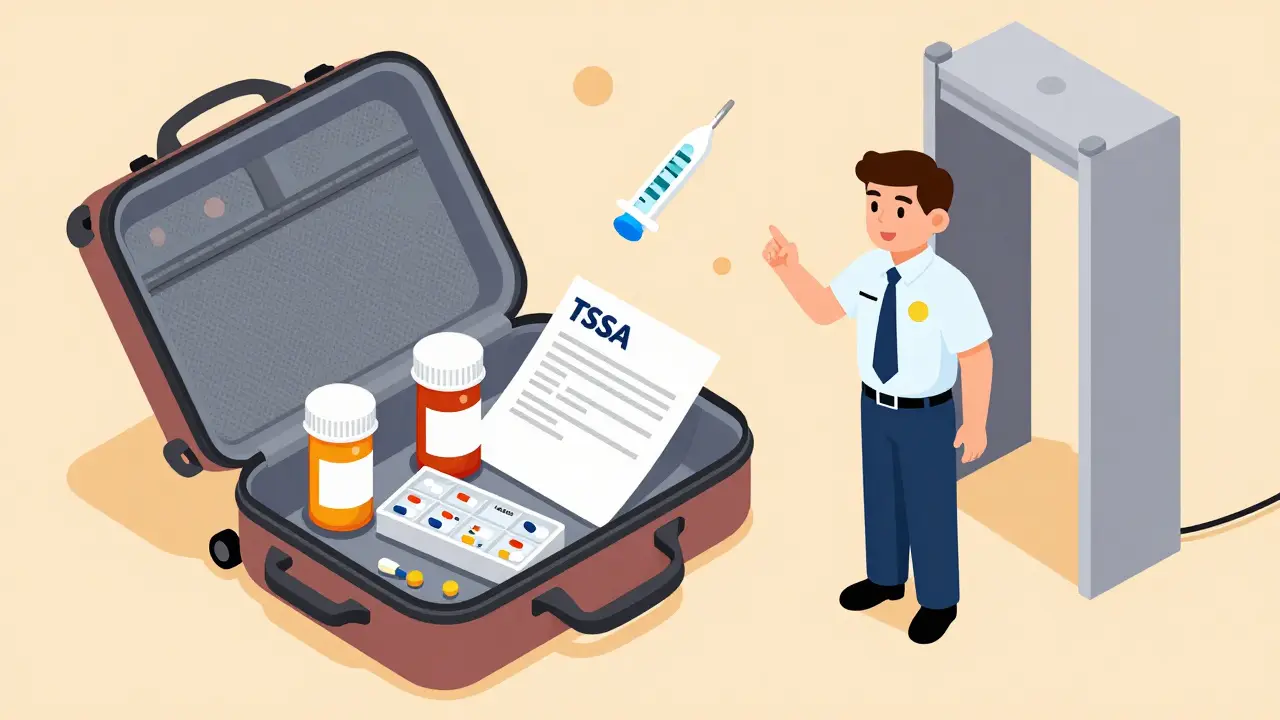
When you’re packing for a trip, your meds shouldn’t be an afterthought. Yet every year, travelers get stopped at security, delayed at customs, or even fined because they didn’t keep their prescriptions in the right containers. It’s not just about following rules-it’s about making sure your medicine works when you need it, and that you don’t end up stranded in a foreign country without access to your treatment.
Why Original Containers Matter More Than You Think
The TSA doesn’t legally require you to keep pills in their original bottles. That’s a common myth. But here’s the real story: while federal security rules are flexible, state laws and international customs are not. In 37 U.S. states-including California, New York, and Texas-it’s illegal to carry prescription medication without the original pharmacy label. That means if you’re flying from Texas to Florida and get pulled aside, you could face legal trouble even if you’re not breaking any federal rules. Original containers aren’t just for show. They tell security officers exactly what the drug is, who it’s prescribed to, and how much you’re allowed to carry. A pill organizer with no labels looks suspicious. A bottle with a pharmacy stamp, your name, and the doctor’s signature? That’s clear, legal, and fast-tracked through screening.What the TSA Actually Allows
TSA guidelines say you can bring any amount of solid medication in your carry-on. No limits. No need to declare it unless asked. Liquids? You can bring more than 3.4 ounces if it’s medically necessary-but you have to tell the officer at the start of screening. No exceptions. Don’t wait until they ask. Say it upfront: “I have liquid medication.” Here’s what TSA won’t stop you from carrying:- Pills in any container
- Liquid meds over 3.4 oz (if declared)
- Injectables like insulin
- Ice packs for temperature-sensitive drugs
- Unlabeled pills
- Medications in unlabeled bottles
- Large quantities without documentation
International Travel Is a Different Game
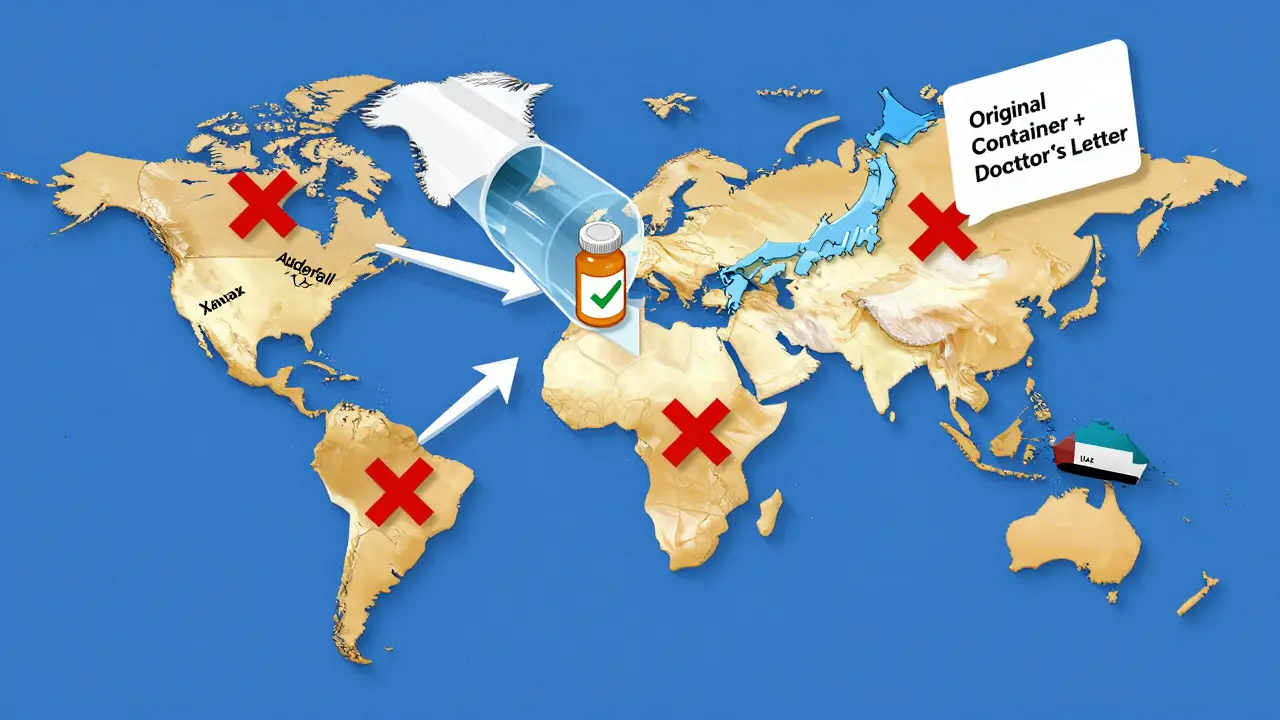
This is where things get serious. Many countries treat common U.S. medications as controlled substances-even if they’re legal here. For example:- Pseudoephedrine (found in Sudafed) is banned in Japan, UAE, and South Korea.
- Codeine requires special permits in Thailand, Singapore, and the UAE.
- Adderall and Ritalin are illegal in over 30 countries, including the UK, Germany, and Australia.
- Benzodiazepines like Xanax are tightly controlled across the EU and Middle East.
What to Pack: The Real Checklist
Forget vague advice. Here’s exactly what to bring:- Original bottles with pharmacy labels intact-don’t remove them.
- A copy of your prescription with the generic drug name, dosage, and prescribing doctor’s info.
- A doctor’s letter on official letterhead. It should state your diagnosis, the medication name, dosage, and that it’s medically necessary. Include the doctor’s license number and contact info.
- Extra medication-at least 10% more than your trip length. Delays happen. Lost luggage happens.
- Photos of your original bottles saved on your phone. If a bottle breaks or gets lost, you’ve got proof.
- For liquids: Keep them in your carry-on. Declare them. No exceptions.
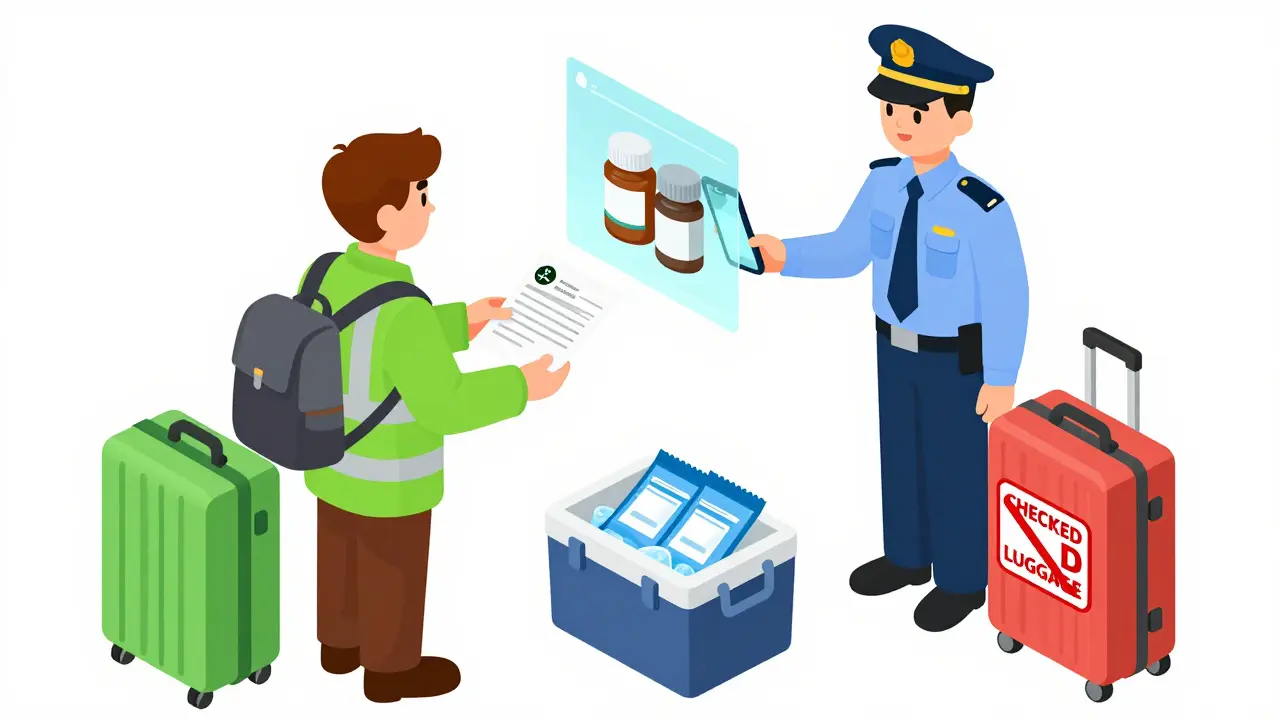
- For temperature-sensitive drugs (like insulin or certain biologics): Use a cooler with ice packs. Declare the ice packs at screening. Don’t rely on airport refrigerators-they’re not guaranteed.
Why Carry-On Only? Always.
Never, ever check your meds. Not even if you think you won’t need them during the flight. The International Air Transport Association found that 17.3% of medications placed in checked luggage experienced temperature extremes that damaged the drugs. That’s not just inconvenient-it’s dangerous. Your insulin could spoil. Your seizure medication could lose potency. Airlines don’t monitor cargo temperatures. You’re taking a huge risk. Your carry-on is your lifeline. Keep your meds with you. Always.What If You Can’t Use Original Containers?
Some people prefer pill organizers for convenience. That’s fine-if you do it right. If you use a pill case:- Label each compartment clearly: drug name, dose, frequency, expiration date.
- Carry a printed copy of the original prescription label for each drug.
- Have the doctor’s letter ready.
- Take a photo of each original bottle and store it on your phone.
What Happens If You Get Questioned?
Stay calm. Be polite. Don’t argue. If an officer asks about your meds:- Hand them your doctor’s letter and prescription copy.
- Point to the original bottle labels.
- Explain clearly: “This is my medication for [condition]. I have a prescription and a letter from my doctor.”
Special Cases: Controlled Substances and Chronic Conditions
If you take opioids, benzodiazepines, ADHD meds, or other controlled substances, you’re in a higher-risk category. Many countries treat these like illegal drugs-even if you’re legally prescribed them. Before you travel:- Check the U.S. Department of State’s travel advisories for your destination.
- Contact the embassy of the country you’re visiting. Ask: “Is [medication name] allowed? Do I need a permit?”
- Get a letter from your doctor that includes your diagnosis, dosage, and the fact that this is a long-term treatment.
- Bring no more than a 30-day supply unless you have official permission.
What About Buying Medications Abroad?
Don’t do it. The FDA warns that 11.7% of medications bought overseas are counterfeit or substandard. In Southeast Asia, that number jumps to 28.4%. Even if the packaging looks real, the pills could be fake, expired, or contaminated. If you run out while traveling:- Go to a local hospital or clinic.
- Ask for the generic name of your drug.
- Have your doctor’s letter ready to show them.
- Don’t buy from street vendors or unlicensed pharmacies.
Final Rule: When in Doubt, Pack It Like You’re Going to Court
Think of your medication bag like legal evidence. You’re not just carrying pills-you’re carrying proof that you’re not a threat, that you’re not smuggling drugs, that you’re a responsible patient. Original containers + doctor’s letter + prescription copy + extra supply + carry-on only = peace of mind. It’s not about being paranoid. It’s about being prepared. The world doesn’t follow U.S. rules. Your meds shouldn’t be the reason your trip goes sideways.Can I bring my medications in a pill organizer?
Yes, you can. The TSA doesn’t require original bottles. But you must label the organizer clearly with the drug name, dosage, frequency, and expiration date. Always carry a printed copy of your prescription or a doctor’s letter. Without documentation, unlabeled pills will raise red flags at security or customs.
Is it illegal to carry medication without a prescription bottle in the U.S.?
It depends on the state. In 37 states, including California, New York, and Texas, it’s illegal to carry prescription medication without the original pharmacy label. Even if you’re not breaking federal law, you could face legal consequences at state level. Always keep your meds in original containers unless you have backup documentation.
Can I bring liquid medication on a plane?
Yes. Medications, including liquids, are allowed in quantities over 3.4 ounces if they’re medically necessary. You must tell the TSA officer at the start of screening. Never put liquid meds in checked luggage. Ice packs for cooling meds are allowed but must also be declared.
What if my medication is banned in my destination country?
Don’t bring it. Countries like Japan, UAE, and Thailand ban common U.S. drugs like Sudafed, Adderall, and codeine. Even with a prescription, you can be denied entry or arrested. Check the U.S. State Department’s travel advisories or contact the destination’s embassy before you go. If you need the medication abroad, ask your doctor for alternatives that are legal there.
Should I bring extra medication?
Yes. Always bring at least 10% more than you think you’ll need. Flights get delayed. Luggage gets lost. Pharmacies abroad may not carry your exact brand or dosage. Having extra protects you from running out in an emergency.
Can I buy medication overseas and bring it back to the U.S.?
No, unless it’s for personal use and matches your U.S. prescription. The FDA prohibits bringing in unapproved drugs, even if they’re legal in another country. Many overseas meds are counterfeit or contaminated. Stick to your own supply. If you run out, see a local doctor and get a new prescription.
Do I need a doctor’s letter for every medication?
For controlled substances (like opioids, ADHD meds, or benzodiazepines), yes. For regular prescriptions, it’s not always required-but highly recommended. A letter on official letterhead with your diagnosis, medication names, dosage, and doctor’s contact info makes screening faster and prevents misunderstandings, especially internationally.
What if I have an insulin pump or other medical device?
You can bring it through security. Inform the officer before screening. You don’t need to remove it. Carry a doctor’s note explaining the device. TSA has trained officers for medical equipment. Never check your pump or device in luggage. Always keep it with you.


