Did you know that improper use of antibiotics at home is a major driver of drug-resistant infections? While hospitals have strict protocols for managing these drugs, your living room lacks the same oversight. This gap leaves millions of households vulnerable to mistakes that can turn a simple infection into a serious health crisis. You might feel better after two days of pills, but stopping early doesn't mean the job is done. Similarly, flushing leftover meds down the toilet or keeping them in the cabinet for "next time" are common habits that actually harm public health.
This guide breaks down exactly how to manage antibiotic stewardship in your own home. We will cover practical steps to ensure you finish every course as prescribed and explain the safest ways to get rid of unused medications. By following these evidence-based practices, you protect your own recovery and help slow the spread of superbugs in your community.
Why Finishing Your Course Matters More Than You Think
Many people stop taking antibiotics as soon as their fever drops or their sore throat clears. It feels logical, right? If you're not sick, why keep taking medicine? The problem is that symptoms often disappear before the bacteria are fully eliminated. When you stop early, the weakest bacteria die off, but the strongest ones survive. These survivors multiply, creating a population that is harder to kill next time you get infected.
Data from the Infectious Diseases Society of America (IDSA) shows that incomplete courses increase the risk of developing resistance by up to 37%. Furthermore, partial treatment raises the chance of treatment failure by nearly 19%. For seniors, this risk is even higher. Studies indicate that non-completion rates among older adults reach 38%, leading to significantly more hospital readmissions. In short, finishing the course isn't just about feeling better; it's about ensuring the current infection is truly gone and preventing future complications.
Building a Reliable Dosing System at Home
The biggest barrier to finishing a course is simply remembering to take the pills at the right times. Antibiotics like amoxicillin or doxycycline require precise intervals-often every 8 or 12 hours-to maintain therapeutic levels in your blood. Missing a dose by even a few hours can drop the drug concentration below the level needed to fight the infection.
You don't need expensive technology to solve this. Simple, consistent systems work best. Here are effective strategies used by caregivers and patients alike:
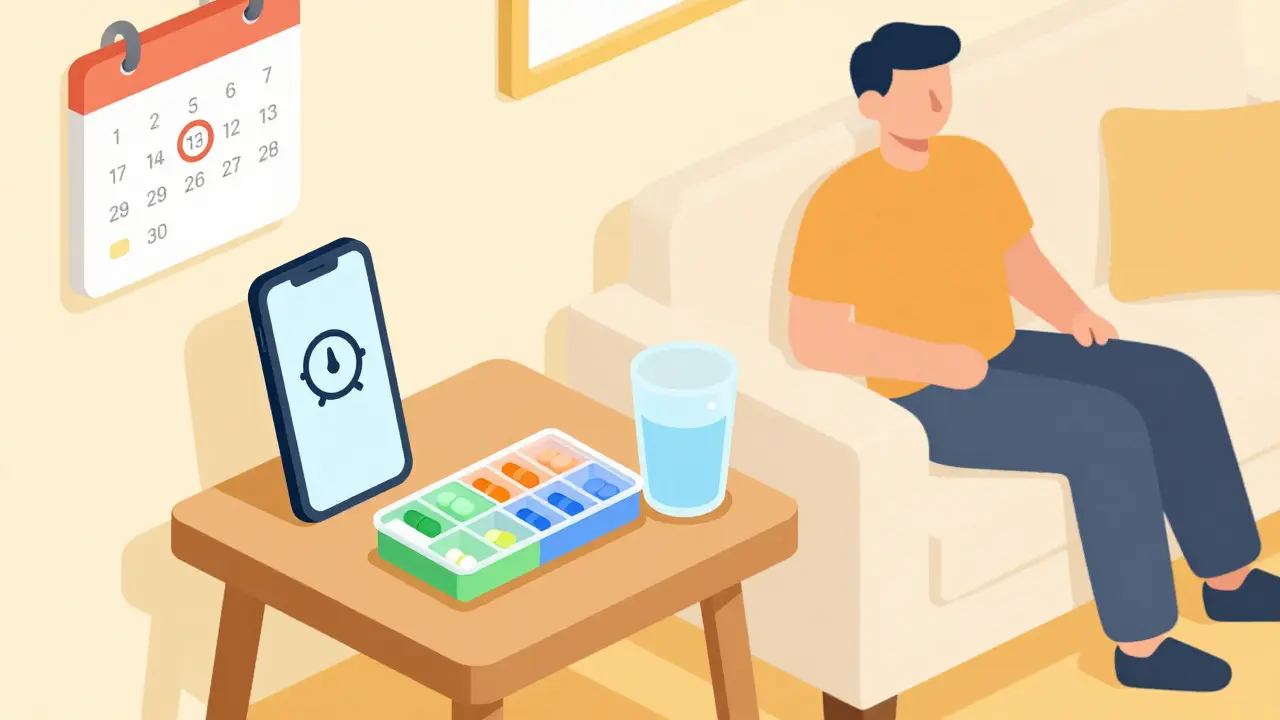
- Pill Organizers with Alarms: These devices physically separate doses and alert you when it's time to take them. They are particularly useful for complex schedules involving multiple medications.
- Smartphone Reminders: Set specific alarms for each dose. Label them clearly, such as "AMOXICILLIN - DOSE 1," rather than generic "Medication Time."
- Habit Stacking: Link your antibiotic dose to an existing daily habit, like brushing your teeth or having lunch. This creates a mental cue that reduces reliance on memory alone.
- Caregiver Checklists: If someone else is helping, create a written log where they mark each dose given. This prevents double-dosing or missed doses during shifts.
For those managing multiple medications, apps like Medisafe can sync reminders across devices, ensuring that if one phone dies, another still alerts you. Consistency is key. Treat the dosing schedule like a non-negotiable appointment.
The "Antibiotic Timeout": When to Re-evaluate
Completing a course doesn't mean blindly pushing through side effects or ignoring worsening symptoms. Hospitals use a concept called an "antibiotic timeout" to reassess treatment after 48 to 72 hours. You can adapt this for home use by setting a check-in point with your healthcare provider around day three of your prescription.
During this window, monitor for specific signs. Are your symptoms improving? If not, the antibiotic might not be working, or the diagnosis could be wrong. Conversely, if you develop severe side effects like a rash, diarrhea, or difficulty breathing, contact your doctor immediately. This proactive approach ensures you aren't taking unnecessary medication while catching issues early. It’s a balance between commitment to the full course and responsiveness to your body's actual needs.
Safely Disposing of Leftover Antibiotics
Once you've finished your course, what happens to the extra pills? Keeping them for "next time" is a dangerous habit. Old antibiotics may have degraded, losing their effectiveness. Worse, using them without a new prescription skips the diagnostic process, potentially masking other conditions. Sharing them with friends or family is equally risky, as the wrong drug for the wrong bug contributes directly to resistance.
Proper disposal protects both your household and the environment. Improperly disposed antibiotics can end up in waterways, where they contribute to environmental resistance. A 2022 study found detectable antibiotic residues in 63% of U.S. waterways near population centers. To dispose of leftovers safely, follow these FDA-recommended steps:
- Check for Take-Back Programs: Many pharmacies offer secure collection bins for expired or unused medications. This is the preferred method as it prevents any environmental release.
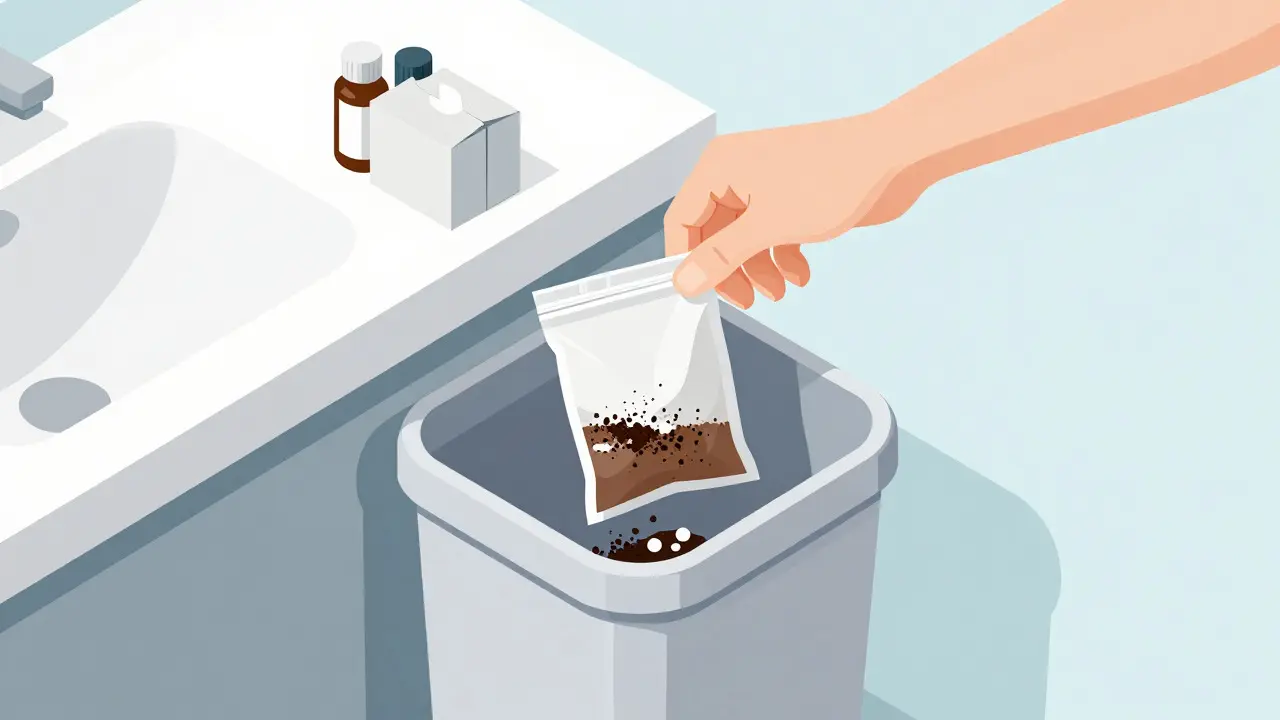
- Mix with Unpalatable Substances: If no take-back bin is available, mix the pills with coffee grounds, cat litter, or dirt in a sealed bag. This makes them unappealing to children or pets.
- Discard in Household Trash: Place the sealed bag in your regular garbage. Do not flush unless specifically instructed, as most antibiotics should not go down the drain.
- Scrub Labels: Before throwing away the bottle, scratch out or remove the label to protect your privacy and prevent accidental reuse.
Note that some medications, like liquid suspensions, may have specific instructions. Always check the package insert or ask your pharmacist if you are unsure. The goal is to ensure the drug never enters the water supply or falls into the wrong hands.
Common Mistakes to Avoid
Even well-intentioned patients make errors that undermine stewardship efforts. Being aware of these pitfalls can save you from future health headaches.
| Common Error | Risk Involved | Correct Practice |
|---|---|---|
| Stopping early because you feel better | Surviving bacteria become resistant; infection relapses | Complete the full prescribed duration regardless of symptom improvement |
| Keeping leftovers for future use | Using outdated or incorrect medication; skipping diagnosis | Dispose of all unused medication after the course ends |
| Sharing antibiotics with others | Wrong drug for the condition; accelerated resistance | Only take antibiotics prescribed specifically for you |
| Flushing pills down the toilet | Environmental contamination; waterway resistance | Use take-back bins or trash with unpalatable mixtures |
Avoid assuming that natural remedies can replace antibiotics once a bacterial infection is diagnosed. While probiotics can help manage side effects like diarrhea, they do not cure the infection itself. Stick to the plan, and let the data guide your actions.
Frequently Asked Questions
What if I miss a dose of my antibiotic?
Take the missed dose as soon as you remember, unless it is almost time for your next dose. In that case, skip the missed dose and continue with your regular schedule. Never double up on doses to make up for a missed one, as this can increase the risk of side effects without providing additional benefit.
Can I stop antibiotics if my test results come back negative?
Only if your doctor explicitly tells you to stop. Sometimes, cultures take time to grow, and initial tests might be inconclusive. Your healthcare provider will assess whether to continue based on clinical signs and lab results. Self-discontinuing based on a single negative result can be risky if the infection persists.
Is it safe to give leftover antibiotics to a pet?
Generally, no. Human antibiotics are dosed differently for animals, and some medications can be toxic to pets. Additionally, using human meds for pets contributes to cross-species resistance. Always consult a veterinarian for appropriate animal prescriptions.
How long does it take for antibiotic resistance to develop?
Resistance can develop over many years of cumulative misuse, but individual instances of treatment failure due to resistance can happen within a single course if the dosage was insufficient or the course was cut short. There is no single timeline, but consistent proper use slows the overall rate of development.
Where can I find local antibiotic take-back programs?
Most chain pharmacies and many independent drugstores have collection boxes. You can also check with your local county health department or search online databases provided by the EPA or FDA for authorized collection sites in your area.