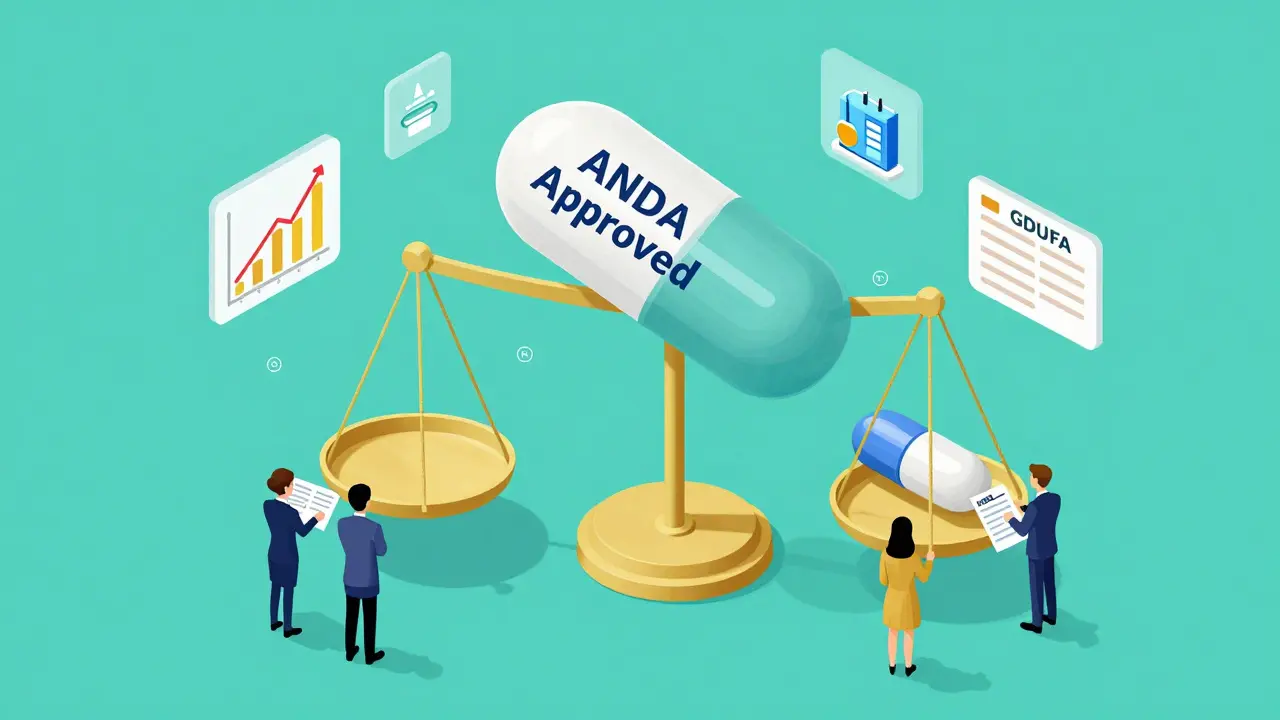
The ANDA process is the legal pathway in the United States that lets generic drug makers get their products approved without repeating expensive clinical trials. It’s not a shortcut-it’s a carefully designed system that balances innovation with affordability. Since the Hatch-Waxman Act became law in 1984, this process has enabled 90% of all prescriptions in the U.S. to be filled with generic drugs, saving consumers over $2.2 trillion in the last decade. But getting that approval isn’t simple. Behind every generic pill on the shelf is a mountain of legal, scientific, and regulatory work that must meet strict FDA standards.
What the Hatch-Waxman Act Really Changed
Before 1984, generic drug makers had to prove safety and effectiveness from scratch, just like brand-name companies. That meant spending hundreds of millions and waiting over a decade. The Drug Price Competition and Patent Term Restoration Act-better known as the Hatch-Waxman Act-fixed that. It let generic companies rely on the FDA’s prior approval of the brand-name drug, called the Reference Listed Drug (RLD). In exchange, it gave brand-name makers extra patent protection to recover R&D costs. This trade-off created the modern generic market. Today, if a brand drug’s patent expires, a generic company can file an ANDA. But they must also navigate patent certifications, exclusivity periods, and potential lawsuits-all legally required steps.Core Legal Requirements for an ANDA
To get approved, a generic drug must match the brand-name drug in five key ways, as defined by the FDA under Section 505(j) of the Federal Food, Drug, and Cosmetic Act:- Identical active ingredient: The same molecule, in the same amount. No exceptions unless the company files a suitability petition.
- Same dosage form and strength: If the brand is a 20mg tablet, the generic must be a 20mg tablet. No switching to capsules or liquids without extra approval.
- Same route of administration: Oral, injectable, topical-no changes allowed without justification.
- Same conditions of use: The generic must be approved for the exact same medical uses as the brand drug.
- Therapeutic equivalence: Proven through bioequivalence studies showing the generic delivers the same amount of drug into the bloodstream at the same rate as the brand.
These aren’t suggestions-they’re legal requirements. Failure on any one point triggers a refusal to receive or a complete response letter from the FDA.
Bioequivalence: The Scientific Backbone
Bioequivalence isn’t just a technical step-it’s a legal requirement. The FDA demands that generic drugs show they perform the same way in the body as the brand. This is proven through pharmacokinetic studies in healthy volunteers. The data must show that the area under the curve (AUC) and maximum concentration (Cmax) of the generic fall within 80-125% of the brand’s values, with 90% confidence. These aren’t arbitrary numbers-they’re based on decades of clinical evidence showing that deviations outside this range can affect safety or effectiveness.For simple oral tablets, this is straightforward. But for complex products-like inhalers, topical creams, or injectables-the science gets harder. The FDA’s 2023 guidance on locally acting GI drugs was the first major update in years because these products don’t rely on blood levels to work. Instead, they need new methods to prove they behave the same in the body. Many companies fail their first ANDA submission because their bioequivalence protocol doesn’t meet the latest FDA expectations.
Chemistry, Manufacturing, and Controls (CMC): Where Most ANDAs Fail
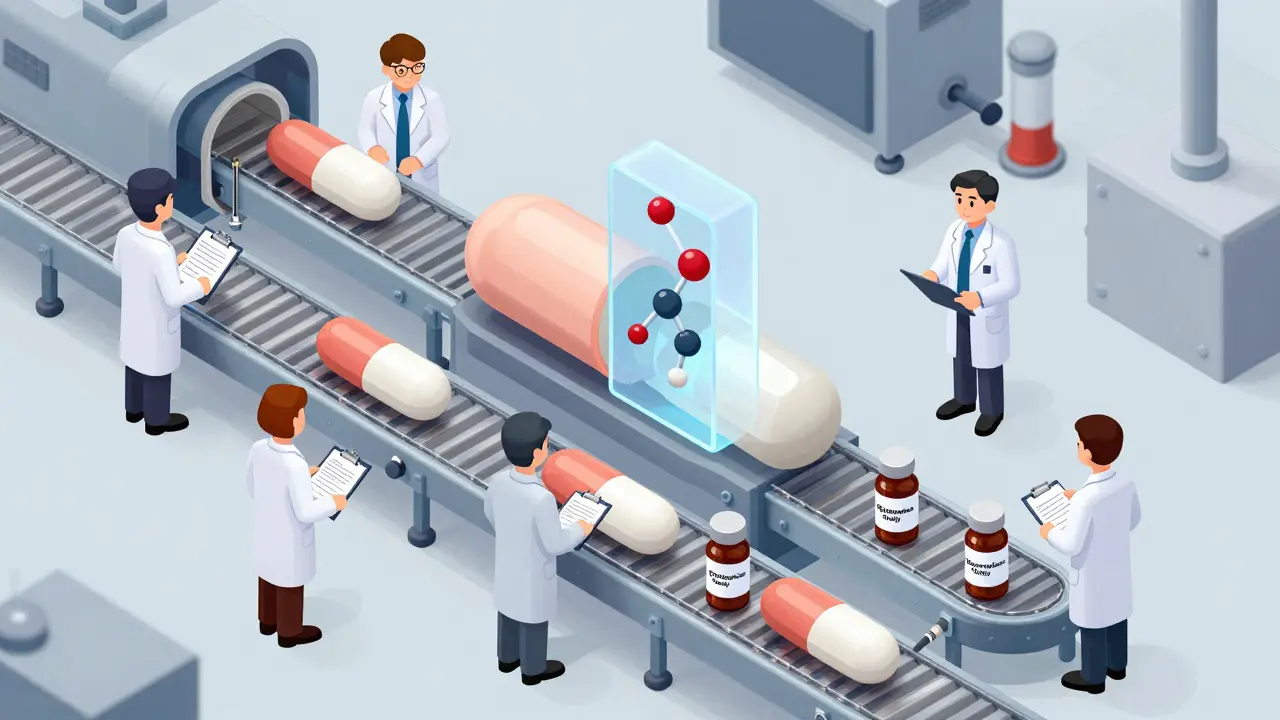
The CMC section is the most common reason ANDAs get rejected. It’s not glamorous, but it’s legally mandatory. This part of the application proves the generic drug can be made consistently, safely, and at scale. The FDA checks:- Manufacturing processes and equipment
- Raw material specifications
- Quality control testing methods
- Stability data over time
- Container closure system validation
One company lost three ANDAs because their vial stoppers didn’t meet FDA standards for chemical interaction. Another was rejected because their tablet coating process wasn’t fully documented. These aren’t minor oversights-they’re legal compliance failures. The FDA requires exhibit batches made at commercial scale (at least 100,000 units or 10% of planned batch size). If you can’t prove you can make it at real-world volumes, your application won’t pass.
Patent Certifications and Legal Hurdles
Filing an ANDA triggers a legal dance with the brand-name company. You must certify one of four things about the patents listed in the FDA’s Orange Book:- Paragraph I: No patent listed
- Paragraph II: Patent expired
- Paragraph III: Patent expires on a future date (you’ll wait)
- Paragraph IV: Patent is invalid or won’t be infringed
Paragraph IV is the most controversial. It’s a legal challenge. If you file one, the brand company has 45 days to sue you. If they do, the FDA can’t approve your drug for 30 months-unless the court rules in your favor sooner. This is why some companies delay filing until a patent is close to expiration. Others use it strategically to enter the market early. Either way, it’s a legal risk that can add years to your timeline.
User Fees and the GDUFA Timeline
The Generic Drug User Fee Amendments (GDUFA) fund the FDA’s review process. For fiscal year 2024, the fee for a new ANDA is $129,500. That’s non-negotiable. If you don’t pay, your application isn’t even reviewed. But you get something in return: performance goals. Under GDUFA III (2023-2027), the FDA aims to approve 90% of standard ANDAs within 10 months. For priority applications-like those for drugs with shortages-the goal is 8 months. In 2022, the average review time was 36 months. Today, it’s dropping. Companies that submit clean, complete applications with pre-ANDA meetings are seeing approvals in under 12 months.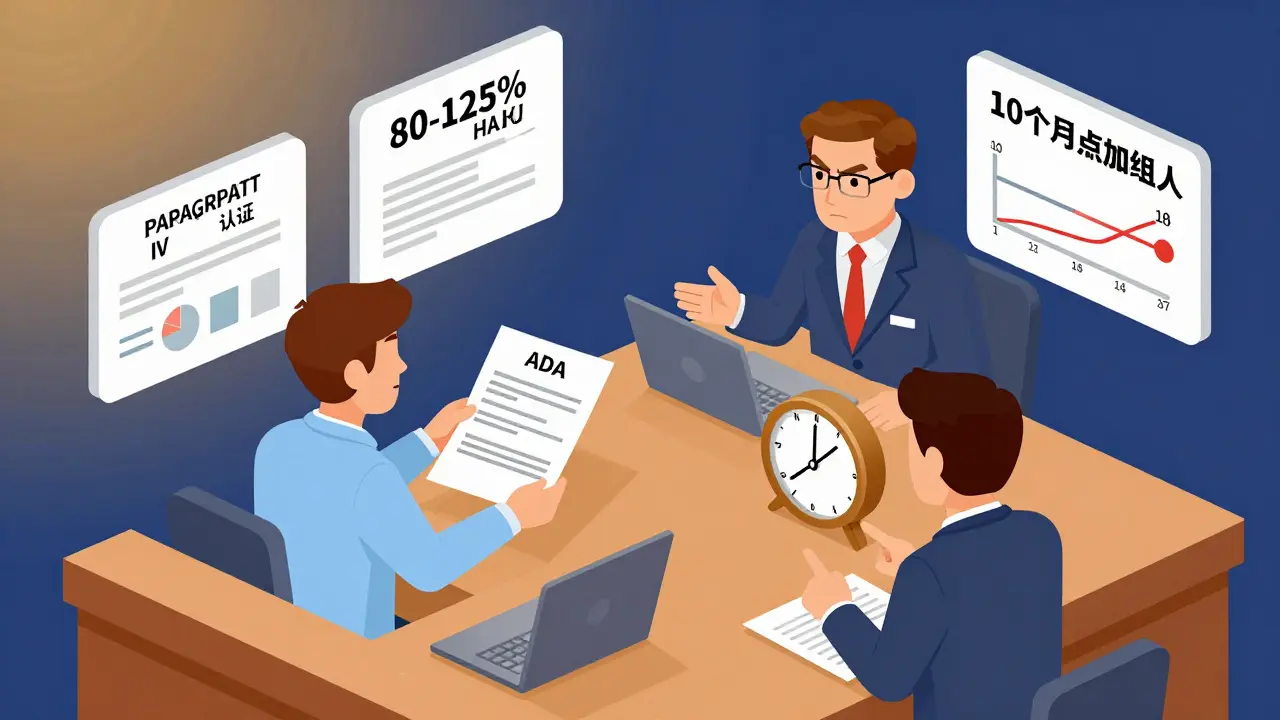
Real-World Challenges and Industry Insights
Teva spent $28 million and 42 months getting approval for a generic version of Advair Diskus. Why? The device-the inhaler-was complex. The FDA needed proof the generic delivered the same dose as the brand, not just the same chemical. That meant testing airflow, particle size, and actuator function. Many companies underestimate these requirements.On the flip side, Lupin got approval for a generic version of Jardiance in just 9.5 months. Their secret? A clean application. No missing data. No vague descriptions. Every CMC detail was documented. Every bioequivalence study followed the latest FDA guidance. They didn’t cut corners-they followed the rules.
According to a 2023 survey of 45 generic manufacturers, 68% said bioequivalence for complex products was their biggest hurdle. Forty-two percent said FDA feedback was inconsistent. That’s why more companies are hiring regulatory consultants or using pre-ANDA meetings. These aren’t optional-they’re strategic. In 2022, the FDA held over 1,800 pre-ANDA meetings. Companies that used them had a 30% higher first-time approval rate.
Why This System Works
The ANDA process isn’t perfect. Patent thickets, delays, and complex products still block competition. But the system works. Generic drugs now make up 90.5% of prescriptions in the U.S. but only 18.1% of spending. That’s the power of competition. The law didn’t just lower prices-it forced innovation in manufacturing, quality control, and regulatory science. Every time a generic enters the market, prices drop by 80-85% within a year. That’s not speculation-it’s data from the Congressional Budget Office.The real challenge now isn’t proving bioequivalence for simple pills. It’s doing it for inhalers, injectables, and topical products that don’t rely on blood levels. The FDA is investing $15 million in 2024 to develop new tools for these. The next wave of generics won’t just be cheaper-they’ll be smarter.
What is the main purpose of the ANDA process?
The main purpose of the ANDA process is to allow generic drug manufacturers to gain FDA approval for drugs that are identical to brand-name medications without repeating costly clinical trials. It promotes competition, lowers drug prices, and increases patient access while maintaining safety and efficacy standards.
Can a generic drug have different inactive ingredients than the brand?
Yes. Generic drugs can have different inactive ingredients-like fillers, dyes, or preservatives-as long as they don’t affect the drug’s safety, strength, or performance. The FDA requires that these differences don’t change how the drug works in the body. If they might, the company must provide additional data or file a suitability petition.
How long does it take to get an ANDA approved?
Under current GDUFA III targets, the FDA aims to approve 90% of standard ANDAs within 10 months. For priority applications, the goal is 8 months. However, complex generics or applications with deficiencies can take 24-42 months. The average approval time has dropped from 36 months in 2022 to around 20 months in 2025 due to improved application quality and FDA efficiency.
What happens if the FDA issues a refusal to receive letter?
A refusal to receive means the application is incomplete or doesn’t meet basic submission standards. It’s not a rejection-it’s a request to fix errors before review begins. Common reasons include missing forms, incorrect eCTD format, or incomplete bioequivalence protocols. The company must correct the issues and resubmit, which delays approval by months. About 58% of first-time ANDAs receive some form of deficiency notice.
Are ANDAs approved for all types of drugs?
No. ANDAs are only for small-molecule drugs that are chemically identical to brand-name products. Biological products-like insulin, monoclonal antibodies, or vaccines-require a different pathway called 351(k) under the Biologics Price Competition and Innovation Act. Complex generics like inhalers, nasal sprays, and topical products can use ANDAs but face stricter review standards and longer timelines.


