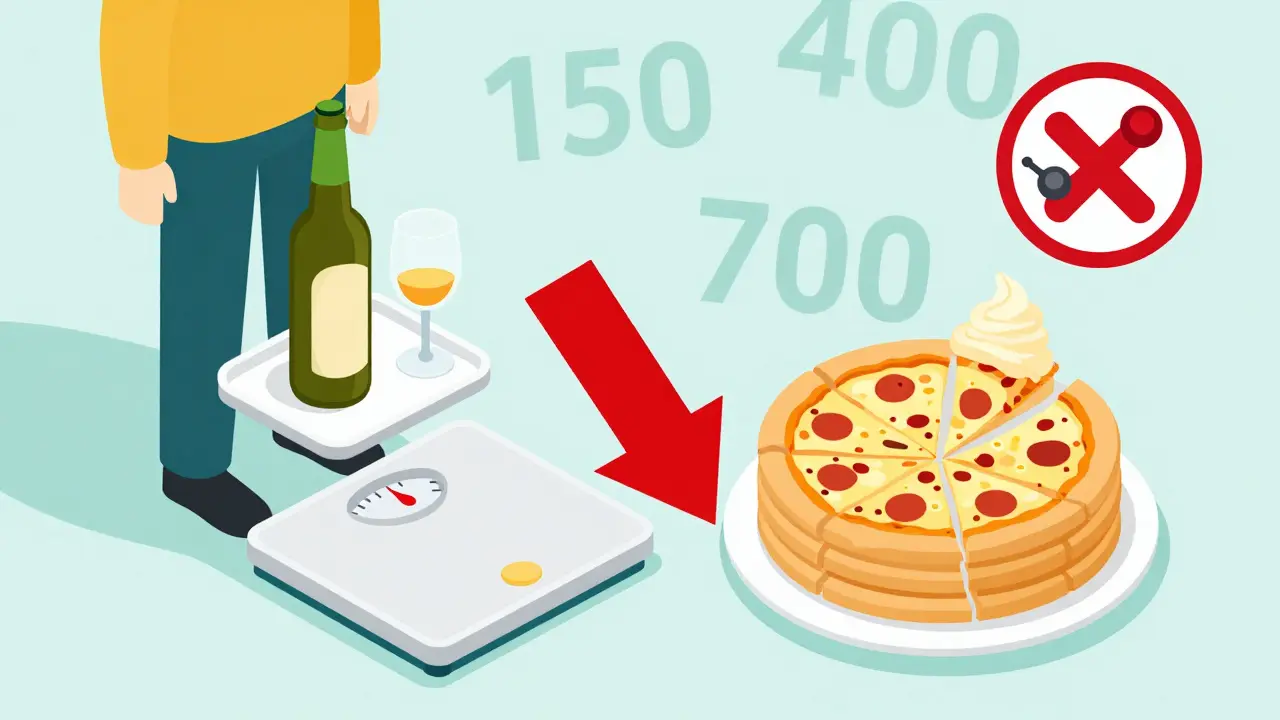
When you're trying to lose weight, alcohol might be the one thing you think you can’t give up - but it’s also one of the biggest hidden obstacles. You’re not alone. Most people don’t realize how much alcohol sabotages their progress, not because it’s inherently evil, but because of how your body handles it. Alcohol doesn’t just add empty calories - it changes how your body burns fat, makes you hungrier, and turns good intentions into late-night pizza runs.
Alcohol Is a Calorie Bomb in Disguise
One gram of alcohol has 7 calories. That’s almost double the calories in protein or carbs, and only a step below fat. A 12-ounce beer? Around 150 calories. A 5-ounce glass of wine? 120 to 125. Sounds harmless, right? But here’s the catch: those calories don’t come with nutrients. No fiber, no protein, no vitamins. Just pure energy your body doesn’t need.
And it gets worse with mixed drinks. A piña colada can pack 400 to 500 calories - that’s a full meal. Some fancy cocktails? Over 700. If you’re having two drinks a week, you’re adding 300 to 1,400 extra calories. That’s the same as eating a slice of pizza or an ice cream sundae every single day without realizing it.
Unlike food, alcohol doesn’t trigger fullness. Your brain doesn’t register it as fuel. So you keep eating. Studies show people consume 20% more food after drinking than when they drink soda or water. That’s not willpower - that’s biology.
Your Body Stops Burning Fat When You Drink
Here’s the most surprising part: when you drink alcohol, your body treats it like poison. It doesn’t wait. It doesn’t store it. It drops everything else - including fat burning - to get rid of it. Research from UC San Diego found that for every standard drink, your body pauses fat oxidation for 1 to 2 hours. During that time, any fat you’ve eaten? It’s more likely to be stored.
This isn’t theoretical. A 2021 study in the American Journal of Clinical Nutrition showed that after alcohol consumption, dietary fat storage increased by 30 to 40%. So even if you’re eating clean, one glass of wine can turn your body into a fat-storage machine for hours.
And it’s not just about the drink. That extra fat tends to stick around your belly. Dr. Charles Mueller from Iowa Weight Loss Center says, “When you drink alcohol, your body treats it like a toxin and works to break it down first… the food you’ve eaten is more likely to be stored as fat, especially in the abdominal area.” That’s why many people notice their waistline expanding even when they’re eating less.
Alcohol Makes You Eat More - Even When You’re Not Hungry
It’s not just the calories in the drink. It’s what happens after. Alcohol lowers your inhibitions. It dulls your judgment. And it turns on your appetite.
A review of 78 studies in the European Journal of Clinical Nutrition found that alcohol increases hunger in nearly 8 out of 10 people. It doesn’t matter if you ate dinner. It doesn’t matter if you’re full. Your brain starts screaming for snacks - especially high-fat, high-sugar ones.
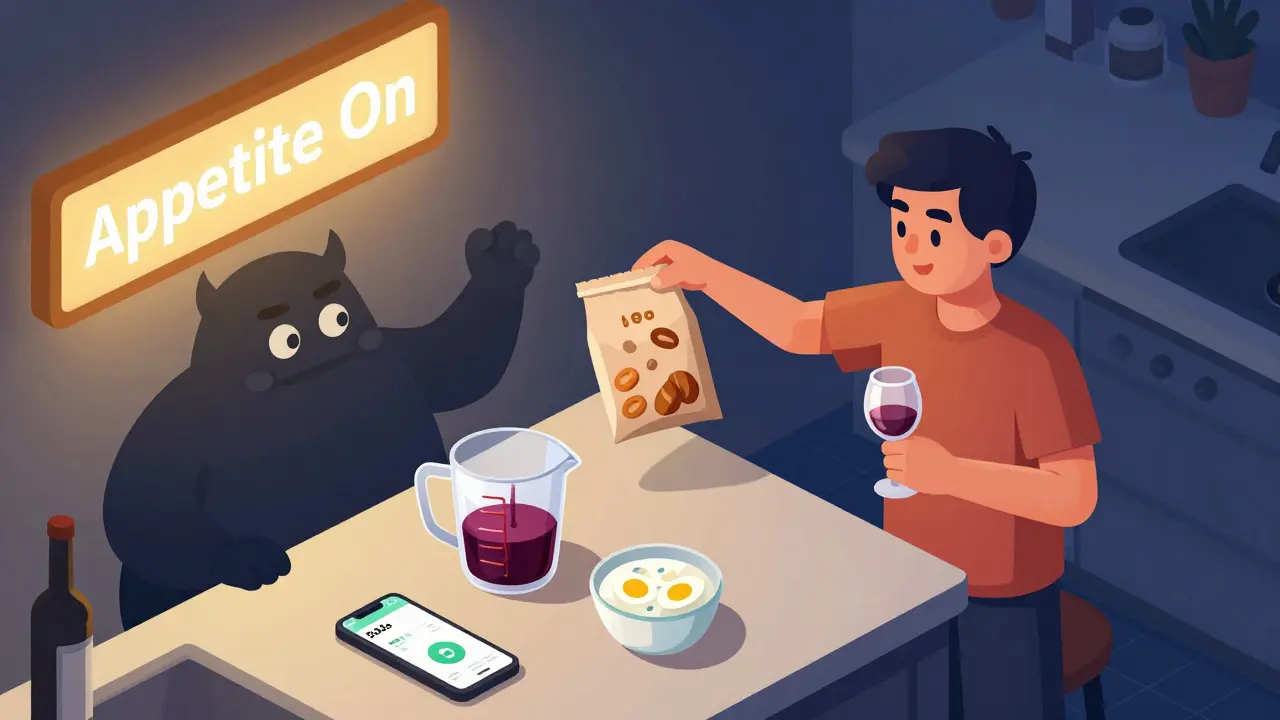
UC San Diego’s 2022 research found alcohol increases late-night snacking by 45%. That’s not coincidence. It’s a direct effect. You walk into the kitchen after a few drinks, tell yourself it’s just a handful of chips, and end up eating half the bag. Then you wonder why you’re not losing weight.
Compare this to soda. A can of soda has similar calories, but it doesn’t make you crave pizza. Alcohol does. That’s the real problem.
Who’s Losing Weight by Cutting Alcohol?
People who cut alcohol out - even without changing anything else - are losing weight. A 2022 randomized trial in Obesity Science & Practice gave two groups the same calorie target. One group eliminated alcohol. The other didn’t. After 12 weeks, the group that quit alcohol lost 3.2% more body fat.
Another study tracked 12,500 adults over five years. Those who cut back from heavy drinking (more than 14 drinks a week for men, more than 7 for women) to moderate levels lost an average of 3.7 pounds - just by reducing alcohol. No diet changes. No exercise plan. Just less drinking.
And the numbers add up fast. Regular drinkers who have 8 or more drinks a week are 23% more likely to be obese, according to the 2022 NHANES survey. For many, alcohol is contributing 10 to 12% of their daily calories - enough to wipe out a 500-calorie daily deficit needed for steady weight loss.
Smart Strategies That Actually Work
You don’t have to quit alcohol entirely to lose weight. But you do need to be smarter about it. Here’s what works, based on real data from clinics and studies.
- Choose lower-calorie drinks. Vodka or gin with soda water and lime: 100 calories. Skip the tonic, juice, or syrup. A simple swap can save 150 to 200 calories per drink.
- Don’t drink on an empty stomach. Eat 20 to 30 grams of protein before you drink - like a hard-boiled egg, Greek yogurt, or chicken. Cleveland Clinic research shows this cuts post-drinking food intake by 18%.
- Set alcohol-free days. Try 3 to 4 days a week with zero alcohol. For a moderate drinker, that’s 750 to 1,200 fewer calories a week. That’s a pound of fat lost every 3 weeks, just from cutting days.
- Pour your own drinks. Wine glasses at home are often 30% bigger than standard 5-ounce pours. That’s 35 extra calories per glass. Use a measuring cup once, then stick to that pour.
- Track your drinks. Most people underestimate alcohol calories by 47%. Use an app. Log it like food. If you don’t track it, you won’t see the impact.
The Biggest Mistakes People Make
People think they’re being careful. They pick “light” beer. They say, “I only have one.” But the real problem isn’t the drink - it’s the mindset.
One common myth: “I’ll make up for it tomorrow.” That doesn’t work. Your body doesn’t reset overnight. The fat-storage effect lingers. The hunger spikes don’t vanish. And tomorrow, you’re still hungry, still tired, still craving carbs.
Another mistake: thinking moderation means “a few drinks a week.” For many, that still adds up to 1,000+ extra calories. And social pressure makes it hard to say no. You’re at dinner, everyone’s drinking, and you feel awkward saying you’re cutting back. But here’s the truth: you don’t owe anyone an explanation. Just say, “I’m focusing on my health right now.” That’s enough.
And don’t fall for the “I deserve this” trap. Alcohol isn’t a reward. It’s a barrier. If you’re trying to lose weight, every drink is a step backward.

What About Low-Alcohol and Non-Alcoholic Drinks?
The market for low-alcohol and non-alcoholic beverages is exploding. Sales are projected to hit $19.2 billion by 2027. And for good reason. Many NA beers now have under 30 calories. Some wines are under 60. That’s a game-changer.
But check the labels. Some “non-alcoholic” drinks are loaded with sugar to make up for flavor. A 12-ounce NA beer might have 150 calories - same as regular. Look for drinks with less than 5 grams of sugar per serving. Club soda with lime, sparkling water with a splash of cranberry, or a mocktail made with fresh herbs and a splash of bitters? Those are winners.
Is It Possible to Drink and Still Lose Weight?
Yes - but only if you’re extremely mindful. The American Society of Nutrition says some people can fit moderate alcohol into a weight loss plan. But that’s rare. Most people can’t. The data shows: when alcohol is removed, weight loss is faster, more consistent, and easier to maintain.
And here’s the kicker: even if you lose weight while drinking, you’re not optimizing. You’re working harder for less. You’re burning more calories just to process the alcohol. You’re fighting your own biology.
For most people, cutting back - or cutting out - is the easiest, fastest way to unlock progress. It’s not about giving up fun. It’s about removing a barrier you didn’t even know was there.
Long-Term Results: Does It Last?
Some people lose weight after cutting alcohol - then regain it. A 2023 study in the International Journal of Obesity found 68% of those who lost weight by reducing alcohol regained it within a year - unless they added structure.
But here’s the hopeful part: when alcohol reduction is paired with meal planning, 82% of people keep the weight off, according to Iowa Weight Loss Center’s 500-patient tracking study. That’s the key. Alcohol isn’t the only problem. It’s the symptom. The real fix is building habits that support your goals - not just removing one thing.
If you want to keep the weight off, don’t just stop drinking. Start planning meals. Track calories. Eat protein first. Sleep well. Move your body. Alcohol is one piece. But when you fix the whole system, the rest falls into place.
Does alcohol make you gain belly fat specifically?
Yes. When you drink alcohol, your body prioritizes breaking it down over burning fat. This causes fat - especially around your abdomen - to be stored more easily. Studies show that regular drinkers are more likely to carry excess weight in the belly area, even if their overall weight hasn’t changed much.
Can I still drink wine and lose weight?
You can, but it’s harder. A 5-ounce glass of wine has 120-125 calories - not terrible. But wine often leads to more eating, and many people pour larger servings at home. If you drink wine, stick to one glass, have it with food, and avoid sugary mixers. For best results, make it an occasional treat, not a daily habit.
Are low-calorie alcoholic drinks really better?
Yes - if you choose wisely. Vodka with soda water and lime is about 100 calories. But many “light” beers and flavored spirits are loaded with sugar. Always check the label. Look for drinks under 5g of sugar and under 100 calories per serving. Avoid anything with juice, syrup, or cream.
How many calories am I really drinking per week?
If you have 3 drinks a week, each with 150 calories, that’s 450 calories - roughly 13,500 calories a year. That’s nearly 4 pounds of fat. If you drink 7 drinks a week, you’re adding over 30,000 calories a year - nearly 9 pounds. Track your drinks for one week. You’ll be shocked.
Should I quit alcohol completely to lose weight?
Not necessarily - but you should reduce it. Most people lose weight faster and easier without alcohol. If you can’t quit, aim for 3-4 alcohol-free days a week. Combine that with protein-rich meals and mindful portions, and you’ll see results without feeling deprived.
If you’ve been stuck on your weight loss journey, try cutting alcohol for 30 days. Track your hunger, your energy, and your waistline. You might be surprised how much better you feel - and how much easier it becomes to lose weight when you stop fighting your own body.


