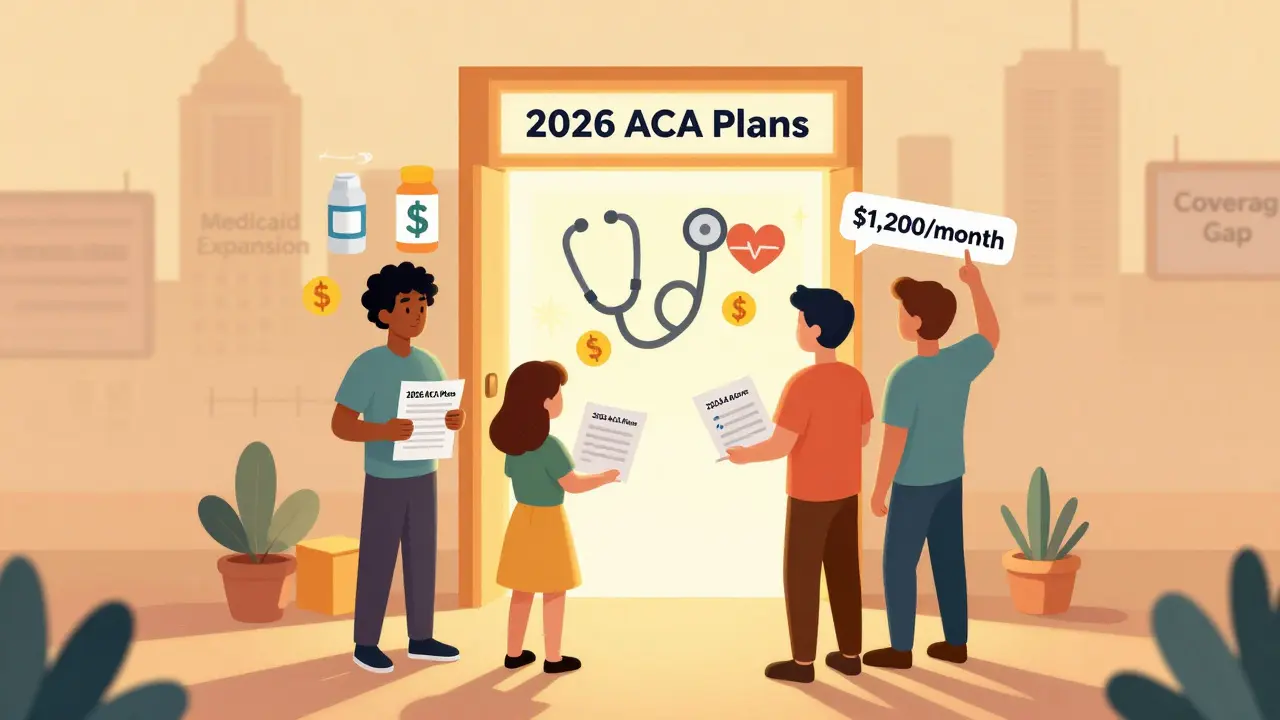
By January 2026, the Affordable Care Act (ACA) is at a turning point. Millions of Americans rely on its Marketplace plans for coverage - but the rules are changing fast. If you’re signing up for 2026 coverage, you need to know what’s staying, what’s disappearing, and how it affects your wallet. The big news? The enhanced premium tax credits that slashed monthly bills since 2021 are set to expire at the end of this year. Without them, the average person could pay over $1,000 more per year for the same plan. That’s not a small bump - it’s a shockwave.
What ACA Plans Actually Cover
ACA Marketplace plans don’t just offer basic coverage. They’re required to include ten essential health benefits. That means no matter which Silver or Bronze plan you pick, you’re getting:- Ambulatory patient services (outpatient care)
- Emergency services
- Hospitalization
- Pregnancy, maternity, and newborn care
- Mental health and substance use disorder services
- Prescription drugs
- Rehabilitative and habilitative services
- Laboratory services
- Preventive and wellness services
- Pediatric services, including dental and vision
These aren’t optional add-ons. Every insurer offering a Marketplace plan must include them. That’s why someone with diabetes, asthma, or depression can’t be denied coverage or charged more. It’s also why you can’t hit a lifetime cap on care - something that was common before the ACA.
How Metal Tiers Work - And Why They Matter
ACA plans are grouped into four metal tiers: Bronze, Silver, Gold, and Platinum. Each one tells you how much of your medical costs the plan will cover on average.- Bronze: Covers 60% of costs. You pay 40%. Lowest monthly premiums, highest out-of-pocket costs.
- Silver: Covers 70%. This is the most popular tier because it’s the only one eligible for cost-sharing reductions (CSRs) if your income is below 250% of the poverty line.
- Gold: Covers 80%. Higher premiums, lower deductibles.
- Platinum: Covers 90%. Highest premiums, lowest out-of-pocket costs.
Most people who get subsidies pick Silver plans because they unlock extra help with copays and deductibles. For example, a 40-year-old earning $50,000 a year might pay $0 for a Silver plan with tax credits - and still have their doctor visits cost only $15 instead of $50. That’s the power of cost-sharing reductions. But if the enhanced credits expire, that $0 plan could jump to $400 a month.
Who Qualifies for Subsidies - And What’s Changing
Before 2021, only people earning between 100% and 400% of the Federal Poverty Level (FPL) got subsidies. Now, thanks to pandemic-era laws, even those earning above 400% FPL could get help - until the end of 2025. That’s changing fast.In 2026, the subsidy cap returns. If you make more than $60,000 as a single person (roughly 400% FPL), you won’t get any tax credits. That hits middle-income families hard. A family of four making $70,000 used to get $500/month off their premium. In 2026? Nothing. That’s a $6,000 annual increase.
And it’s not just income. The 2025 Final Rule from CMS has tightened eligibility. DACA recipients are no longer eligible for Marketplace plans. That’s removing around 550,000 people from coverage. Also, the monthly Special Enrollment Period for people under 150% FPL is gone. That means if you lose your job in March, you can’t sign up until next open enrollment unless you qualify for another life event - like marriage or having a baby.

What You Need to Apply
Applying for an ACA plan isn’t hard - but it’s messy if you’re self-employed or have variable income. You’ll need:- Your Social Security number
- Proof of income (W-2s, pay stubs, or tax returns)
- Immigration documents if you’re not a U.S. citizen
- Details of any employer-sponsored insurance for you or your family
For most W-2 employees, the process takes 45 minutes. For freelancers, contractors, or gig workers? It can take 6 to 8 hours. Why? Because the system uses Modified Adjusted Gross Income (MAGI) to calculate subsidies - and that’s not always clear when you have side gigs, irregular pay, or business expenses. The CMS reports a 32% error rate in initial subsidy estimates for self-employed applicants. That means you might think you’re getting $300/month off - then get hit with a $2,000 tax bill when you file.
The Real Cost: Out-of-Pocket Maximums and Networks
ACA plans have out-of-pocket maximums - the most you’ll pay in a year before the plan covers 100%. In 2025, that’s $9,450 for an individual. Compare that to Medicare Advantage plans, which cap at $8,300. So while ACA plans are great for people without employer coverage, they’re not always cheaper than Medicare for older adults.Another hidden issue: provider networks. ACA plans often have narrower networks than employer plans. You might find your favorite doctor isn’t in-network. That’s why checking the provider directory before you enroll is critical. A plan might look cheap - until you realize your specialist is out-of-network and you’re paying $500 for a visit.
Who Benefits Most - And Who Gets Left Behind
The ACA works best for people between 100% and 400% FPL who live in states that expanded Medicaid. In those states, you get the full safety net: low premiums, low copays, and access to care. But in non-expansion states, the gap is brutal. Someone earning $18,000 a year might make too much for Medicaid but too little to afford a Silver plan without subsidies. That’s the “coverage gap.”And then there’s the family glitch fix - a 2023 update that finally lets spouses and kids get subsidies even if the employer plan is affordable for the worker, but not the whole family. That’s huge. Before, families were stuck paying $1,200/month for coverage because the employer offered a $300/month plan for the employee only. Now, they can shop on the Marketplace and get help.
But the biggest winners? People with chronic conditions. 92% of enrollees with diabetes, cancer, or heart disease say the elimination of pre-existing condition exclusions changed their lives. Before the ACA, one hospital stay could bankrupt you. Now, you know your care is covered.
What’s Coming in 2026
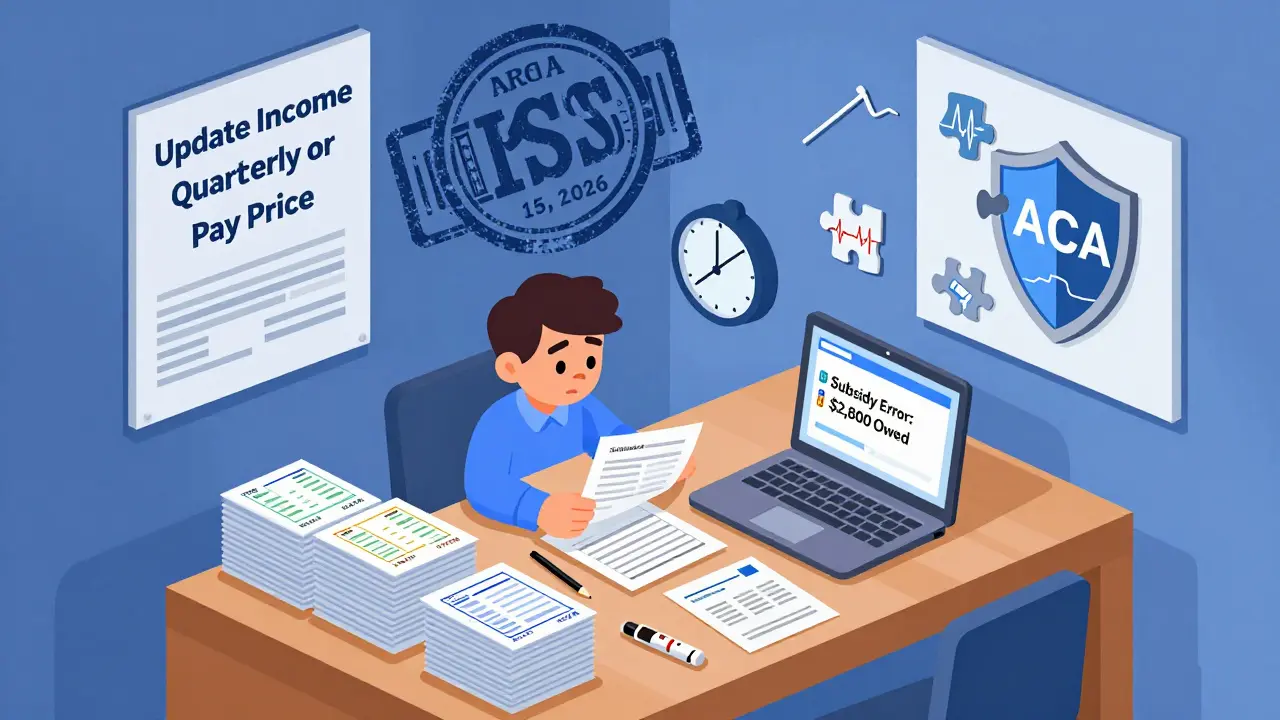
Starting January 1, 2026, the Marketplace will switch to new subsidy rules based on IRS caps. Premiums will rise - but not uniformly. Older adults will get hit hardest. A 60-year-old in Texas could see premiums jump 192%. That’s not a typo. The Kaiser Family Foundation’s calculator shows some seniors paying over $1,200/month for a Silver plan without subsidies.Also, starting in 2026, you’ll have to update your income every quarter. That’s new. Right now, you report once a year. In 2026, if your income drops or rises, you need to tell the Marketplace within 30 days. Otherwise, you risk owing money at tax time. CMS says this will cut reconciliation errors by 40%. But for people with unpredictable income - artists, seasonal workers, small business owners - it’s another burden.
Real Stories, Real Impact
Sarah K., a freelance writer in Ohio, told HealthCare.gov: “I earn $32,000 a year. With subsidies, my Silver plan costs $0. I get free preventive care, my insulin is $10, and I haven’t missed a checkup in three years.”But u/ACA_Warrior on Reddit shared a nightmare: “My income dropped 30% mid-year. I couldn’t adjust my subsidy until tax season. I ended up with $2,800 in medical bills I couldn’t pay.” That’s the risk of delayed subsidy updates.
And then there’s the tax reconciliation trap. 58% of negative reviews on Trustpilot mention unexpected tax bills. You got $400/month in subsidies - but your actual income was higher. The IRS says you owe $3,500. That’s not a glitch. It’s the system.
What You Should Do Now
If you’re enrolled in a 2025 plan:- Check your income projections for 2026. Are you still under 400% FPL?
- Use the HealthCare.gov plan comparison tool (live since October 1, 2025) to see what your 2026 premiums will be without subsidies.
- If you’re self-employed, start tracking your income monthly. You’ll need to report changes starting in 2026.
- Don’t assume your current plan will be available. Networks change. Premiums shift. Compare at least three options.
- If you’re over 60 or have chronic illness, talk to a certified enrollment counselor. The stakes are higher.
The Affordable Care Act didn’t fix everything. But it gave millions of people access to care they’d never had before. The question now isn’t whether it works - it’s whether it survives. If Congress doesn’t act, the cost of coverage will spike, enrollment will drop, and the system could spiral. For now, your best move is to understand your plan, know your rights, and prepare for change.


